










Executive Overview
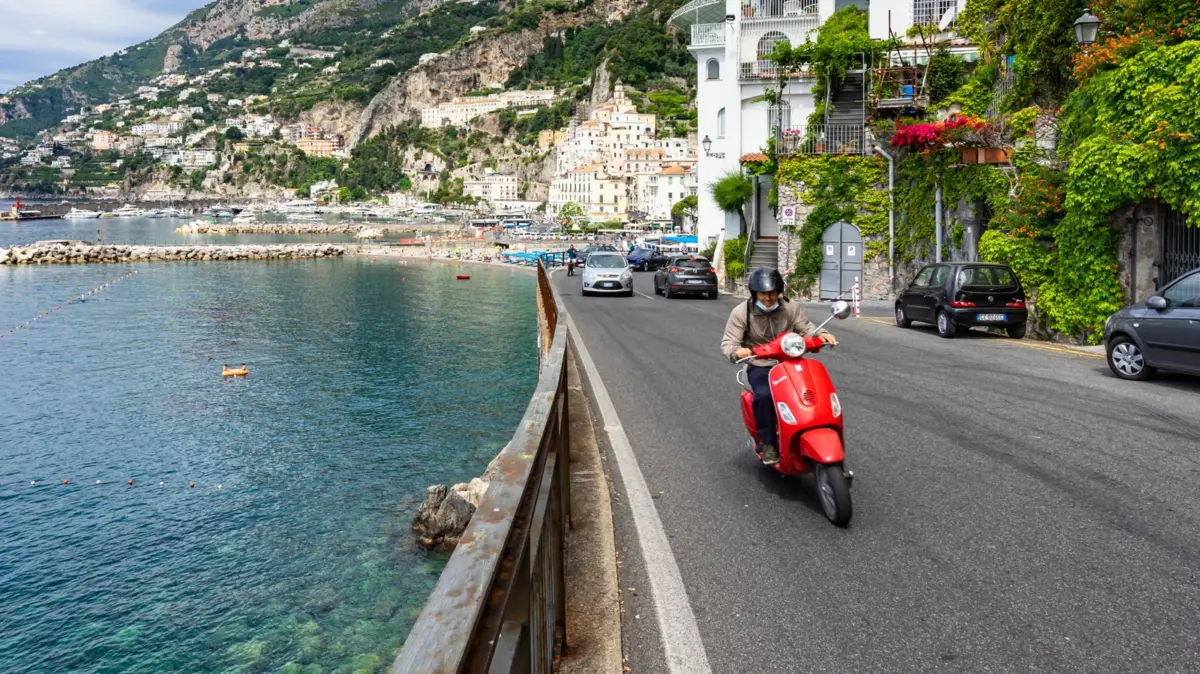
Picture the scene: You have just arrived in Italy. The warm Mediterranean sun bounces off the pastel-colored stucco of a centuries-old villa, church bells chime in the distance, and the unmistakable, cheerful buzz of a two-stroke engine idles beneath you. You slip on your sunglasses, channel your inner Audrey Hepburn or Gregory Peck in Roman Holiday, and twist the throttle. You are finally living the quintessential Italian dream, weaving effortlessly through ancient alleyways and cypress-lined country roads.
Yet, within the first ten minutes of this idyllic cinematic fantasy, reality crashes down in the form of flashing blue lights, an authoritative whistle, and a bewildered American tourist facing a four-digit fine.
While the Vespa remains an enduring symbol of Italian style, freedom, and romance, renting one as a foreign visitor requires navigating a complex, unforgiving labyrinth of motor vehicle laws, municipal restrictions, and strict licensing criteria. Far from the lawless, carefree joyrides depicted in Hollywood, Italy’s roads are heavily regulated by the Codice della Strada (Italy’s Highway Code), monitored by automated surveillance networks, and strictly enforced by local police forces (vigili urbani).

For American travelers accustomed to the relative leniency or varying state-by-state nuances of U.S. traffic enforcement, slipping up on Italian soil is remarkably easy. From missing a single piece of supplementary paperwork to straying into automated camera zones, unfamiliarity with local regulations can transform a dream vacation into a bureaucratic nightmare. This investigative report breaks down the five most common Vespa rules American tourists violate within the first ten minutes of their ride—and offers a definitive guide on how to stay legal, safe, and solvent.
Detailed Chronology: The Anatomy of a Tourist Traffic Violation
To understand how quickly an innocent sightseeing trip can spiral into a legal headache, it helps to examine the typical lifecycle of a rental mishap. The breakdown usually follows a predictable, chronological path from the moment the rental contract is signed to the inevitable encounter with law enforcement.
Minute 0 to 2: The Paperwork Oversight
The journey begins at a local rental agency. Eager to hit the road, tourists frequently hand over a standard U.S. driver’s license and a credit card. The rental agent, often focused on processing the transaction and securing insurance waivers, may not explicitly demand an International Driving Permit (IDP). Believing they are fully cleared to drive, the tourist mounts the Vespa. However, under Italian law, driving without an IDP or an official Italian translation is a severe infraction. The moment the vehicle enters public roadways without this supplementary document, the driver is legally non-compliant.
Minute 2 to 5: The Unseen Camera Flash
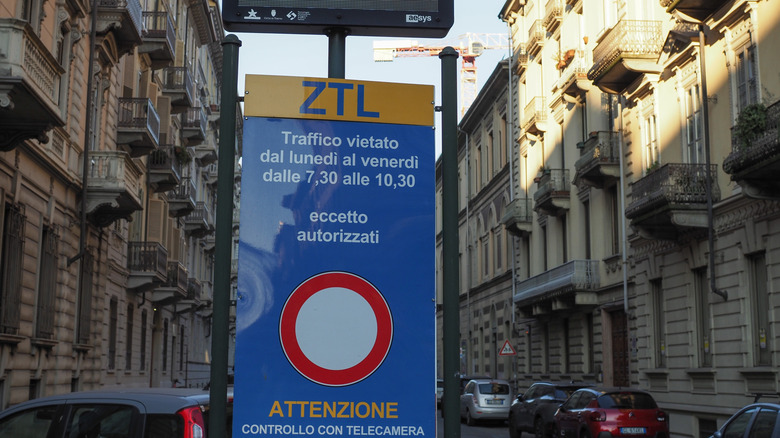
Next comes navigation. Relying on digital mapping apps optimized for pedestrians or cars, the unsuspecting traveler steers their scooter toward the historic heart of a city—perhaps aiming for a piazza or a famous monument. Unbeknownst to them, they have just crossed the threshold of a Zona a Traffico Limitato (ZTL). Unlike physical toll booths or checkpoints, these limited traffic zones are guarded by invisible, high-tech automated cameras. The camera scans the Vespa’s license plate instantly, logging an unauthorized entry into a protected historical district. There is no police officer to wave them down at this exact second, meaning the violation goes unnoticed by the driver—only to surface weeks or months later as an expensive international mail delivery.

Minute 5 to 8: The Equipment and License Mismatch
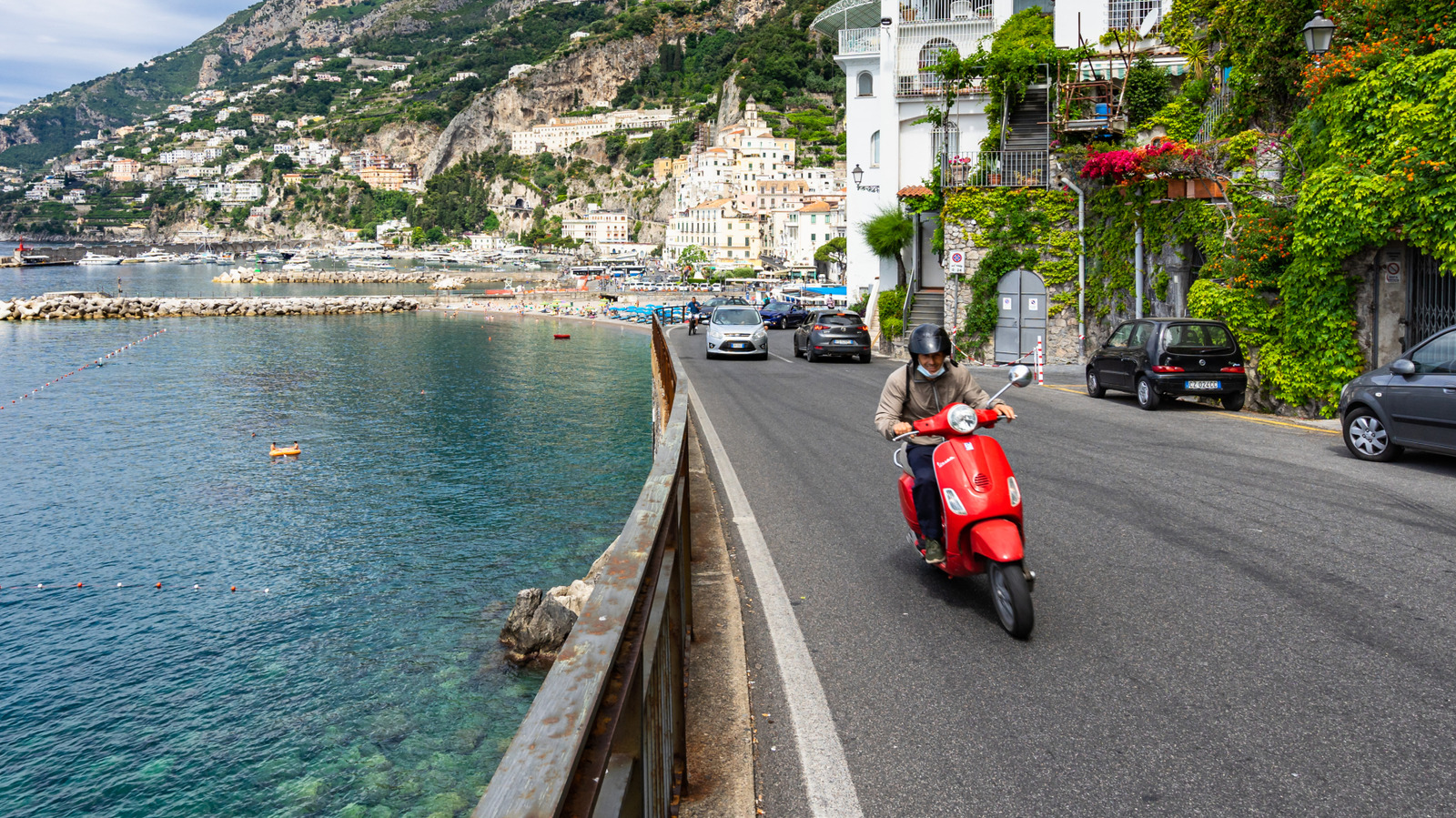
Cruising along a coastal boulevard or a suburban avenue, the rider may feel a sudden breeze and realize their helmet chin strap is resting loosely against their neck rather than tightly buckled under their chin. Alternatively, they might be piloting a high-capacity scooter—such as a 300cc model—while holding a standard U.S. driver’s license that only legally covers lower-tier motor sizes back home. Each of these oversights compounds the legal risk, turning a single journey into a cascade of compounding violations.
Minute 8 to 10: The Sidewalk Shortcut and the Traffic Stop
Faced with sudden, aggressive Italian traffic or a blocked lane, the temptation arises to slip onto a shaded sidewalk or nip across a pedestrianized piazza to bypass the congestion. Within seconds, a municipal officer (vigili urbani) spots the maneuver. The scooter is flagged down, the journey comes to an abrupt halt, and the tourist discovers that sidewalks and pedestrian zones are strictly off-limits to motor vehicles.
Supporting Context & Metrics: The 5 Rules Broken Instantly
To avoid falling victim to these common pitfalls, travelers must master the specific legal boundaries governing motor scooters in Italy. Below are the five critical rules broken by American tourists within the opening minutes of their journey.
+-----------------------------------------------------------------------------------+
|                        THE 5 FATAL VESPA MISTAKES IN ITALY                        |
+-----------------------------------+-----------------------------------------------+
| Infraction                        | Potential Fine / Consequence                  |
+-----------------------------------+-----------------------------------------------+
| 1. Missing International Permit   | €408 to €1,634                                |
| 2. Unauthorized ZTL Entry         | €83 to €332 + Automated Camera Tracking       |
| 3. Improperly Fastened Helmet     | €83 to €332 + Up to 60-Day Scooter Seizure    |
| 4. Inadequate License Class       | Thousands of Euros (Severe Licensing Breach)  |
| 5. Sidewalk/Pedestrian Shortcut   | €100s in Fines + Impound Risk                 |
+-----------------------------------+-----------------------------------------------+
1. Operating Without an International Driving Permit (IDP)
Many American travelers assume that a state-issued driver’s license is universally accepted across the globe. While this may hold true for driving private passenger cars in certain foreign jurisdictions, it is explicitly false for motorized two-wheelers in Italy.
According to the Automobile Club d’Italia (ACI), motorists holding licenses issued outside the European Union (EU) or the European Economic Area (EEA) must carry their valid domestic license alongside either an International Driving Permit or an officially sworn Italian translation.
The financial penalty for neglecting this requirement is steep. As outlined in Italy’s Highway Code, operating a vehicle without the required IDP carries fines ranging from €408 to €1,634. Obtaining an IDP is remarkably straightforward via organizations like AAA or the AATA before departing the United States; failing to secure one is an entirely avoidable expense.
2. Blundering Into a Zona a Traffico Limitato (ZTL)
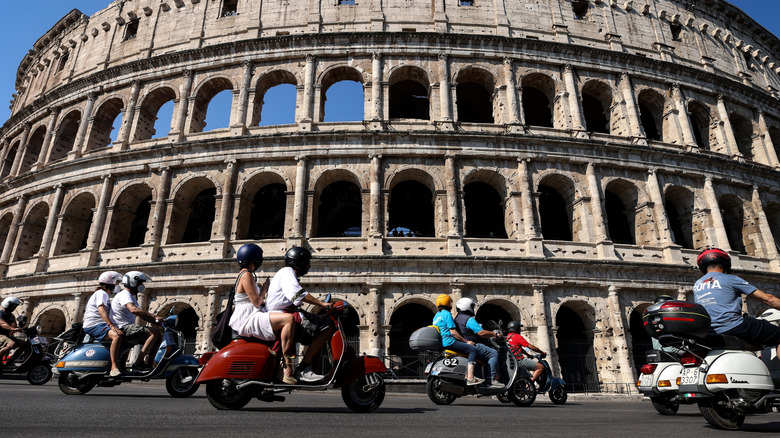
The historic centers (centro storico) of Italy’s most famous cities—including Rome, Florence, Milan, and Naples—are protected treasures. To preserve ancient architecture and pedestrian safety from vehicular pollution and congestion, these areas are designated as Zone a Traffico Limitato (ZTL).
ZTL access is heavily restricted and monitored by optical character recognition cameras. While certain cities exempt small electric or gas mopeds from specific ZTL restrictions (such as Rome’s policy allowing mopeds in most ZTLs except the Tridente district), blanket exemptions do not exist nationwide. Entering a restricted zone without authorization triggers automated fines ranging from €83 to €332. Tourists must carefully inspect signage at entry points, looking specifically for motor-scooter exemption icons beneath the primary ZTL warning sign.
3. Failing to Wear or Properly Fasten an Approved Helmet
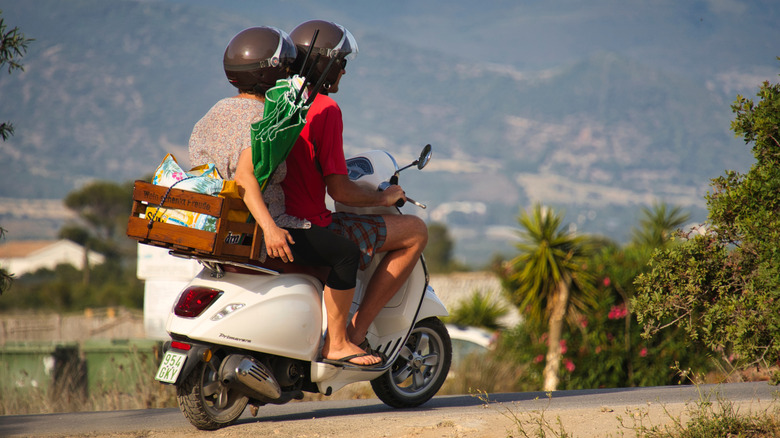
The cinematic trope of wind-swept hair while riding a scooter is thoroughly illegal in modern Italy. Article 171 of Italy’s Highway Code dictates that both the driver and any passenger must wear an approved protective helmet, keeping it securely fastened at all times while the vehicle is in motion.
Violating this law results in a fine ranging from €83 to €332, accompanied by a severe penalty: the impoundment and confiscation of the scooter for up to 60 days. Furthermore, travelers bringing their own helmets from the United States must ensure they carry official EU type-approved gear (identifiable by an "E" mark). Half-shell helmets and uncertified novelty headwear are strictly prohibited.
4. Piloting a Scooter That Exceeds License Classifications
Not all Vespas are created equal. Models range from lightweight 50cc variants up to powerful 300cc touring machines like the Vespa GTS 300. In the United States, licensing requirements vary widely by state, and many drivers possess standard automobile licenses that do not grant motorcycle privileges.
In Italy, vehicle classes dictate strict licensing tiers. Riding a motor scooter with an engine capacity that exceeds the legal limitations of your home license constitutes a major licensing breach, carrying penalties that can escalate into thousands of euros. Before reserving a rental, travelers must verify the engine displacement (cc) of the scooter and ensure their domestic credentials—paired with an IDP featuring the appropriate motorcycle endorsement—fully cover that vehicle class.
5. Treating Sidewalks and Pedestrian Plazas as Shortcuts
The Vespa’s legendary agility makes it tempting to navigate tight spaces, but sidewalks, walking paths, and pedestrian squares (aree pedonali) are sacrosanct spaces reserved strictly for foot traffic.
Under Article 3 of the ACI code, driving a motor vehicle onto pedestrian infrastructure is illegal. Municipal police forces (vigili urbani) actively target sidewalk riders and unauthorized plaza transits. For instance, high-profile crackdowns—such as those executed by the Polizia di Stato in cities like Bari—routinely issue dozens of code violations for drivers treating pedestrian zones as traffic bypasses. Violators face substantial fines and the immediate termination of their ride.
Official Statements and Regulatory Guidance
Authorities and motoring organizations across Europe and the United States continuously emphasize the importance of regulatory compliance for foreign travelers.
The Automobile Club d’Italia (ACI) maintains strict advisories regarding non-EU drivers:
"Holders of driving licenses issued by non-EU states are authorized to drive in Italy provided that they are accompanied by an International Driving Permit conforming to international conventions, or an official translation into Italian. Failure to present these documents alongside a valid national license invalidates the right to operate motor vehicles and incurs mandatory statutory fines."
Similarly, historical travel experts and institutional bodies urge extreme caution when interacting with municipal traffic grids. Rick Steves, a renowned authority on European travel, regularly counsels American tourists on the absolute necessity of administrative preparation:
"Never underestimate European traffic enforcement. Automated cameras do not sleep, and rental agencies will readily hand over your credit card details to local municipalities to pay for ZTL violations accrued weeks after you have returned home."
Local Italian law enforcement agencies also reiterate that foreign citizenship does not grant immunity from local codes. The Polizia di Stato notes that targeted enforcement campaigns inside historic districts are designed specifically to curb reckless scooter behavior, protecting pedestrians and historic infrastructure alike.
Future Outlook: Technology, Enforcement, and Sustainable Tourism
As Italy grapples with record-breaking tourism numbers and the environmental strain of urban congestion, municipal governments are tightening regulations on personal mobility devices and motor scooters.
Looking ahead, several major regulatory shifts are on the horizon:
- Stricter ZTL Expansions: Cities like Milan and Florence are expanding their digital surveillance grids. Milan’s upcoming bans on mopeds within specific upscale retail zones (such as the Quadrilatero della Moda set for full implementation phases by 2028) signal a trend toward zero-emission and ultra-low-traffic zones where internal combustion scooters will face total bans.
- Automated Cross-Border Collections: European municipal authorities are increasingly partnering with international collection agencies. This means American tourists who rack up ZTL fines and fly home thinking they have escaped punishment will find enforcement notices arriving directly at their U.S. residential addresses months later, complete with late fees and currency conversion charges.
- Stricter Rental Verification: Rental companies face mounting pressure from local governments to verify IDPs and motorcycle endorsements physically at the counter before handing over keys, shifting liability away from the renter and onto commercial operators who fail to vet customers.
Final Takeaway for Travelers
Riding a Vespa through the rolling hills of Tuscany or the sun-drenched coastlines of Amalfi remains one of the world’s great travel experiences. However, preserving the romance of the journey requires ditching cinematic illusions in favor of legal preparedness. By securing an International Driving Permit, respecting historic traffic zones, fastening your helmet, matching your license to the engine size, and staying strictly off the sidewalks, you can ensure your Italian adventure is remembered for its breathtaking views rather than its expensive traffic citations.