









Executive Overview
For years, the global conversation surrounding maritime decarbonization has suffered from a myopic focus on the vessel itself. Drop a massive battery pack into an inland cargo ship, swap out a rattling diesel engine for a silent electric motor, and the green transition narrative appears clean, simple, and technologically complete. This vessel-centric illusion has dominated Western policymaking and pilot projects, treating green shipping as a hardware upgrade rather than an industrial systems overhaul.
China’s emerging electric-shipping sector is dismantling that assumption. As Beijing rapidly scales its inland green fleet, the true innovation is no longer happening inside the shipyards alone. Instead, China is weaponizing its vast industrial capacity to co-develop ports, battery manufacturers, energy utilities, logistics giants, and state-backed financial institutions into a unified freight architecture.
While Western nations like the Netherlands and Germany have pioneered individual pieces of the puzzle—such as interchangeable battery containers and localized harbor charging—they have often struggled with commercial scalability. High operating costs, fragmented infrastructure, and misaligned stakeholder incentives continue to plague European pilot corridors. China, by contrast, is demonstrating that the future of green logistics belongs not to those who build the best electric ship, but to those who orchestrate the entire commercial and infrastructural ecosystem required to keep that ship profitably moving freight.
This deep-dive investigation examines how China is transforming electric ships into core freight infrastructure, the lessons and pitfalls awaiting Western policymakers, and why the ultimate metric for maritime success is shifting away from equipment counts and toward sustainable, recurring service models.
Detailed Chronology and Evolution of the Transition
To understand how China arrived at its current dominance in inland electric shipping, it is necessary to trace the transition from isolated technological curiosities to coordinated industrial policy.
Phase I: The Vessel-Level Pilot Era (2020–2022)
In the early days of inland vessel electrification, Chinese shipyards and tech firms treated electric propulsion much like the early days of electric passenger cars: as a direct one-for-one replacement of an internal combustion engine. Early adopters focused heavily on localized, short-distance routes—primarily passenger ferries, harbor tugs, and small-scale tourist boats.
During this phase, according to data from the International Council on Clean Transportation (ICCT), China’s electric cargo ship fleet numbered a mere four vessels at the close of 2022. These early ships faced severe operational bottlenecks. Recharging times were notoriously long, pulling vessels out of active service for hours. Grid connections along rural or semi-industrial riverbanks were frequently incapable of handling high-voltage multi-megawatt draws without triggering local outages. The technology worked splendidly on paper and during ceremonial launch events, but it lacked the commercial velocity required for competitive freight logistics.

Phase II: The Regional Scaling and Programmatic Push (2023–2025)
Recognizing that individual ship upgrades were hitting a wall, Chinese provincial governments and industrial conglomerates shifted strategy. Instead of subsidizing vessel purchases in a vacuum, policy intervention began targeting the entire supply chain.
A prime example is Hubei Province’s ambitious "Thousand Sails" program. Rather than merely setting arbitrary green targets, Hubei designed a multi-sectoral framework that simultaneously brought together regional ports, municipal utilities, major shipbuilders, and financial institutions. Demonstration routes were mapped out not by where ships could float, but by where heavy, persistent cargo flows intersected with viable energy upgrade zones.
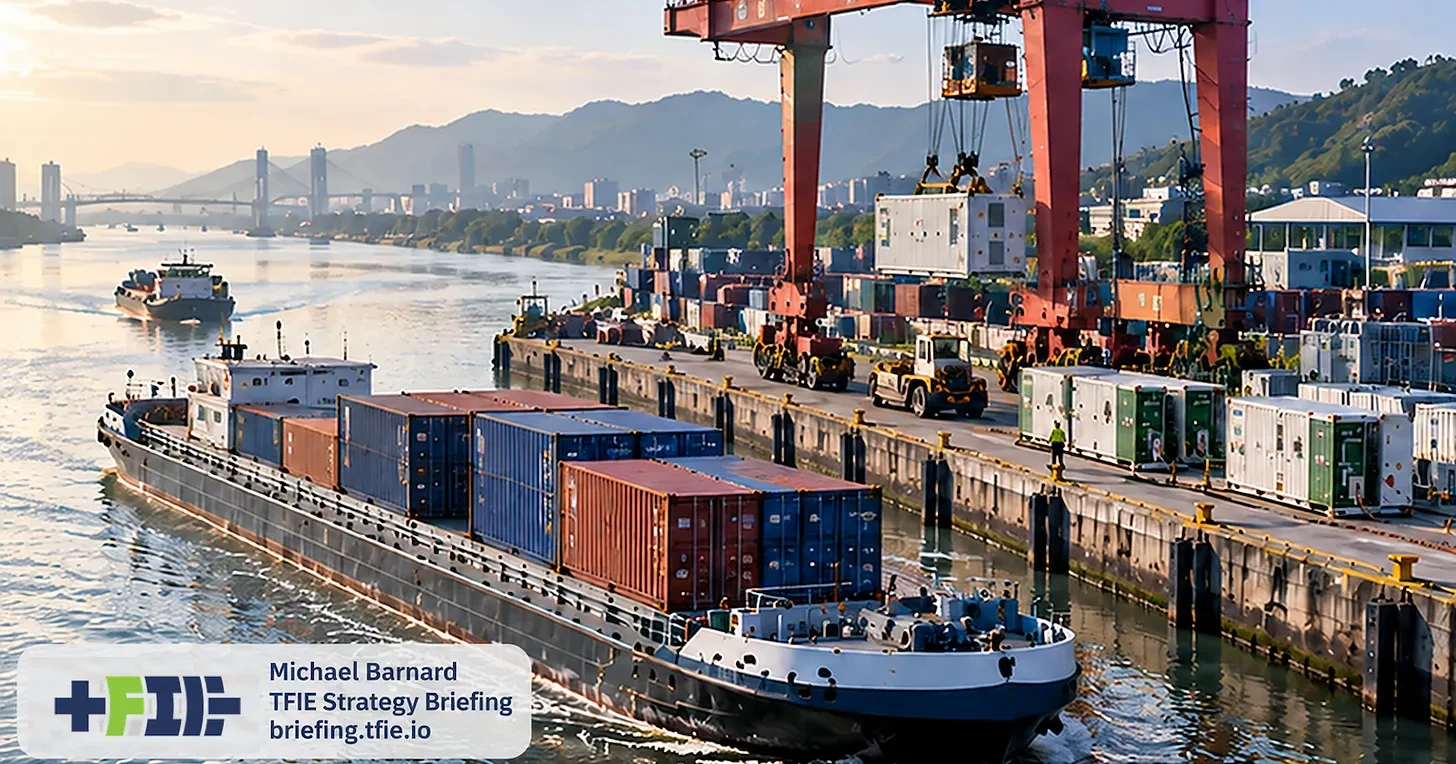
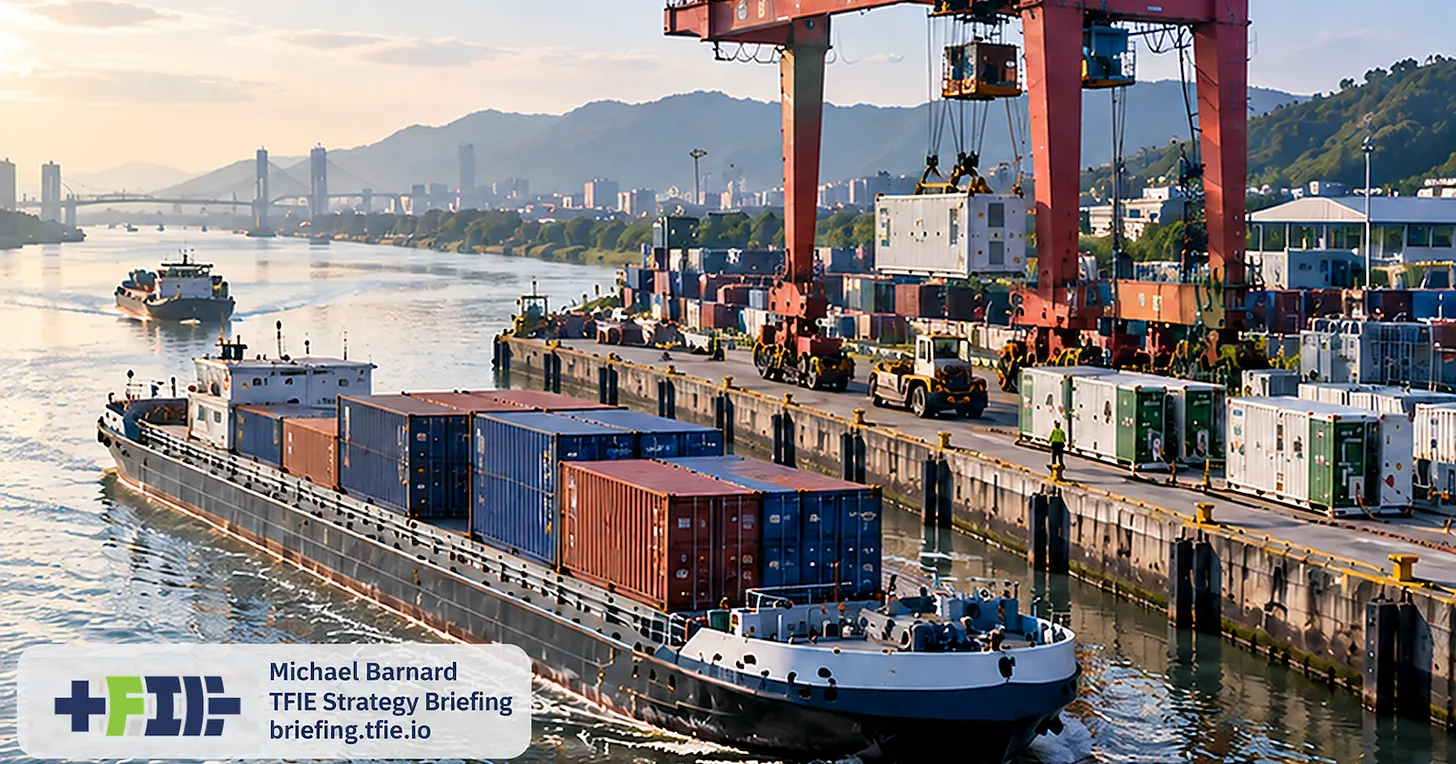
Simultaneously, massive infrastructure investments—such as the construction of the Pinglu Canal—provided a blank slate for integrated design. Rather than retrofitting legacy waterways, projects like Pinglu were engineered from day one to accommodate advanced logistics infrastructure. Heavyweight battery giant CATL stepped in not just as a cell manufacturer, but as an infrastructure partner, coordinating battery leasing, automated swapping terminals, localized renewable generation, and microgrid storage systems directly into the canal’s operational blueprint.
By the end of 2025, this systemic approach yielded dramatic results. The ICCT identified 42 dedicated electric cargo ships operating in China—a tenfold increase in three years—while broader counts by firms like CATL tallied nearly 900 battery-equipped commercial vessels when factoring in ferries, harbor craft, and specialized river transport.
Supporting Context, Metrics, and Comparative Economics
Evaluating the true scale of China’s transformation requires looking past the raw numbers to understand how different counting methodologies paint divergent pictures of the industry.
The Metrics Breakdown
- ICCT Cargo Ship Count (42 Vessels by late 2025): This figure focuses exclusively on heavy, battery-electric cargo-carrying vessels engaged in commercial freight. It represents the sharp tip of the spear in terms of actual decarbonized logistics weight.
- CATL Fleet Count (~900 Vessels by late 2025): This broader industrial tally includes passenger ferries, harbor tugboats, and specialized harbor craft alongside cargo ships. It highlights the sheer depth of CATL’s market penetration and the normalization of lithium-ion marine propulsion across all categories of inland watercraft.
- Regional Program Targets (e.g., Hubei’s 1,000 Green Ships by 2030): Provincial targets often encompass a wide spectrum of green propulsion, including hydrogen fuel cells, Liquefied Natural Gas (LNG) hybrids, and smart-routing efficiency upgrades. These targets reflect long-term governmental roadmaps rather than immediate battery-electric deployments.
The Battery-Swapping Revolution vs. Direct Charging
One of the most critical structural insights from China’s scaling efforts is the widespread adoption of containerized battery swapping.
For an inland cargo vessel, waiting four to six hours for a massive onboard battery pack to recharge represents a devastating loss of revenue-generating uptime. To solve this, Chinese ports and engineering firms have embraced standardized, containerized battery packs that can be lifted out and replaced via heavy terminal cranes in a matter of minutes.
However, battery swapping introduces an entirely new set of logistical hurdles:
- Terminal Real Estate: Cranes and staging yards must handle multi-ton battery modules without disrupting traditional containerized cargo handling.
- Grid Strain: Swapped batteries must be charged ashore at a controlled, less damaging rate, requiring dedicated stationary energy storage and robust local grid capacity.
- Inventory Balancing: Terminals must maintain a healthy buffer of fully charged batteries to service arriving vessels, meaning capital is permanently tied up in static storage pools.
The European Precedent: Lessons from the Netherlands
Europe is far from blind to these challenges. Since 2021, the Netherlands’ Zero Emission Services (ZES) has operated interchangeable battery containers on inland waterways, offering deep operational insights into the concept.
While ZES successfully proved the technical viability of the "pro-paas" (power-as-a-service) model, it also exposed a harsh commercial reality: operating costs for these early electric vessels have consistently remained above those of conventional diesel ships. The core issue in Europe is rarely whether swapping works from an engineering standpoint; rather, it is whether a sufficient volume of vessels uses the network frequently enough to amortize the immense capital expenditure of the infrastructure.
Official Perspectives and Strategic Analysis
Industry strategists and economic analysts emphasize that the widening gap between China and Western green shipping models comes down to structural alignment and risk distribution.
According to recent strategy briefings from the Transportation and Future Infrastructure Economy (TFIE) initiative, China’s primary competitive advantage is its ability to eliminate the "chicken-and-egg" dilemma that paralyzes Western infrastructure rollouts:
"China’s advantage is becoming less about any one electric ship and more about coordinating vessels, batteries, ports, electricity and finance. When a single industrial ecosystem—spanning CATL, provincial energy utilities, state-backed shipyards, and port authorities—co-invests in a canal or river corridor, the financial and operational friction that stalls Western projects evaporates."
The Risk of Mechanical Electrification
Western policymakers frequently fall into the trap of subsidizing equipment counts over economic utility. A regional port authority can install expensive high-power chargers without establishing a viable, recurring freight route. A shipowner can purchase an electric vessel only to find that grid availability fluctuates wildly along their delivery route.
Furthermore, analysts warn against "mechanical electrification"—the error of electrifying legacy freight routes that are fundamentally shrinking. As the global energy transition accelerates, long-term trade volumes of coal, petroleum products, and refinery-linked bulk cargoes will inevitably decline. Ports that blindly electrify existing routes without analyzing structural shifts in cargo demand risk sinking billions into green infrastructure for dying industries.

To avoid this dead end, the strategic starting point must always be the freight itself. Port authorities and logistics planners must first identify sticky cargo flows that will remain robust throughout the energy transition—such as construction aggregates, agricultural commodities, industrial chemicals, scrap metals, and containerized consumer goods. Only when persistent demand and high vessel utilization are mathematically verified should planners overlay charging, battery-swapping, or hybrid energy solutions.
Future Outlook: The Investment Test and Europe’s Strategic Response
As the electric shipping sector matures past its demonstration phase, the financial architecture supporting it is undergoing a fundamental transformation.
From Hardware Sales to Recurring Energy Services
For investors and industrial suppliers, the most lucrative opportunity is shifting away from one-off sales of marine battery packs and toward Energy-as-a-Service (EaaS) models.
By offering battery leasing, shared regional battery pools, automated swapping, scheduled maintenance, and availability guarantees, specialized service providers can lift the crushing upfront capital costs off individual shipowners. These business models generate predictable, recurring revenues for infrastructure operators, but they require exceptionally high fleet utilization rates to remain solvent.
Can Europe Catch Up?
Europe cannot blindly replicate China’s top-down state planning, centralized industrial mandates, or massive domestic shipbuilding capacity. However, European policymakers and maritime conglomerates can fundamentally alter their approach to project development.
The most effective European response relies on the creation of a select few high-integrity electric freight corridors. Rather than spraying subsidies across scattered, uncoordinated local grants, European funding bodies should mandate that cargo customers, vessel operators, terminal managers, electric utilities, and private financiers are fully contracted and aligned before a single euro of capital is committed.
Public funding should be strictly utilized to solve the initial first-mover coordination problem—the friction that occurs when multiple interdependent stakeholders must invest simultaneously to make a green corridor viable.
Conclusion
Ultimately, the transition of inland shipping is graduating from an engineering exercise to an industrial economics test. The sheer number of electric vessels commissioned tells us how rapidly technology is being adopted; the number of installed chargers tells us how much capital is being deployed.
Neither metric, however, answers the ultimate commercial question: Is freight moving reliably, at a cost that customers will sustainably pay, long after government demonstration subsidies dry up? China has recognized that electric shipping is, at its core, an infrastructure puzzle. For the rest of the world, the competitive challenge is learning how to assemble those disparate technological pieces into a seamless, self-sustaining freight machine before the window of global leadership closes.