





Executive Overview
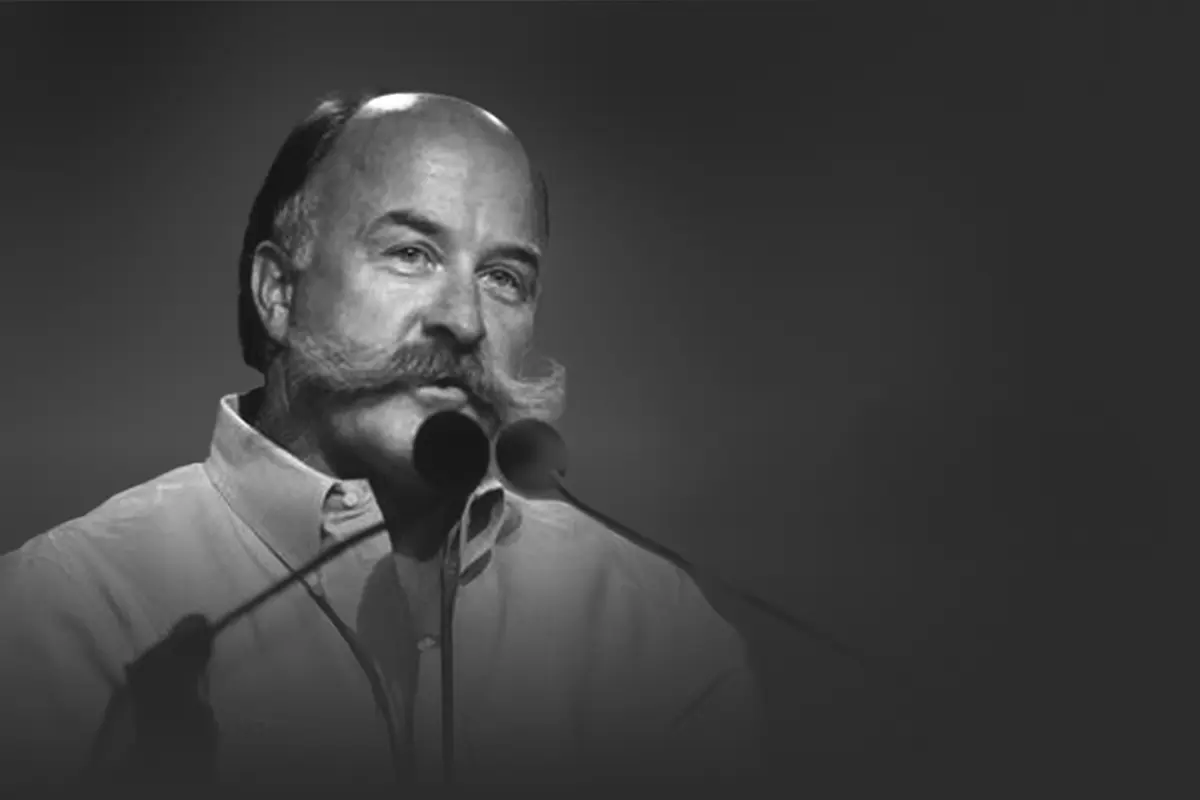
In the specialized, often tempestuous world of marine journalism, few figures achieved the legendary status, unmistakable literary voice, and enduring impact of Chris Caswell. Known to colleagues, readers, and industry insiders simply as "The Caswell," he spent decades shaping the cultural and technical narrative of yachting. Whether he was evaluating the sleek lines of a newly launched superyacht, recounting the history of classic wooden hulls, or finding the ideal onboard nook to read his beloved trashy spy novels, Caswell’s presence was formidable, inimitable, and deeply respected.
Caswell passed away on May 13, 2026, at the age of 80, leaving behind a profound legacy in the pages of Yachting magazine and numerous other premier marine publications. To the broader public, he was a witty, authoritative voice who could make the technical specifications of a multi-million-dollar vessel read like a high-stakes adventure. To those who knew him best, however, his public persona masked an astonishing private trial: for 28 years, Caswell fought a fiercely private, relentless battle against cancer. Navigating decades of radiation, chemotherapy, and surgeries with a signature blend of grit and self-deprecating humor, he continued to write, report, and inspire without missing a beat.
This retrospective examines the extraordinary life and career of a journalistic titan—tracing his rise through the ranks of marine publishing, his unique writing style, his profound influence on generations of editors, and the astonishing resilience that defined his final, hard-fought chapters.
Detailed Chronology: The Making of "The Caswell"
Early Roots and the West Coast Connection
Long before he became an institutional fixture at Yachting, Chris Caswell was carving out his niche in the sun-drenched, fast-paced world of West Coast boating. During the formative decades of modern recreational boating in the United States, Caswell developed an encyclopedic knowledge of vessels, naval architecture, and the maritime lifestyle.
His early career established him as a premier authority on West Coast yachting, eventually earning him the role of West Coast Editor for Yachting. In an era when regional boating cultures heavily influenced national trends, Caswell served as a vital bridge between West Coast innovations and the broader national readership. However, media landscapes are notoriously volatile; shifts in publishing ownership and editorial direction eventually led to him being unceremoniously dropped from his post—an event that would typically derail a lesser journalist.
Instead, Caswell used the setback as a launchpad.
The 1992 Turning Point
The trajectory of modern marine journalism shifted in 1992, when a newly minted senior editor at Yachting in New York, Kenny Wooton, picked up the phone to answer a call from a familiar, formidable name.
As Wooton later recalled, the deep, resonant voice on the other end of the line uttered three words that would become a comforting, recurring motif for decades: "Caswell here."
Caswell was reaching out to the "new guy" to pitch freelance stories, cleverly capitalizing on their shared passion for the rich history and deep-seated traditions of the sport. That initial phone call established an immediate kinship. Caswell wasn’t just asking for assignments; he was offering a partnership rooted in mutual respect for the craft of storytelling. Over the next thirty-plus years, that phone call would repeat itself in various iterations across multiple marine publications.
The Art of the Disappearance and Return
Caswell operated on his own rhythm—a cadence that seasoned editors quickly learned to accept and even cherish. As Wooton noted, Caswell had a habit of "disappearing for months at a stretch."
During these hiatuses, Caswell was frequently living the life he chronicled. He would cast off lines and set sail for remote cruising grounds, exploring the crystalline waters of the British Virgin Islands or navigating the sun-bleached labyrinth of archipelagoes off the coast of Greece. These weren’t merely vacations; they were research trips of the soul. They allowed him to maintain authenticity in his writing, ensuring that when he described the handling characteristics of a cruiser in a heavy swell or the tranquility of a secluded Mediterranean anchorage, he was speaking from visceral, lived experience.
Eventually, the silence would break. The telephone would ring, or an email would ping into an inbox, carrying the unmistakable cadence of "The Caswell." Ready with a pitch, an assignment, or a fresh boat review, he would seamlessly step back into the journalistic fold.
Supporting Context & Metrics: The Mechanics of a Master Writer
Anatomy of a Caswell Byline
In an industry where ghostwriters, press releases, and homogenized content often blur the edges of journalistic integrity, Chris Caswell was a glaring, brilliant exception. Editors often remarked that if you stripped away the byline and read the opening sentence of an article, Caswell’s identity was instantly transparent.
His writing style was a masterclass in balance:
- Authoritative Technical Rigor: He understood marine engineering, hull design, and seamanship inside and out. Boat builders and naval architects could not pull wool over his eyes; he asked the hard questions and demanded precise answers.
- Effortless Wit: Caswell possessed a dry, bristling sense of humor. He never took himself too seriously, even when taking his subjects very seriously. This wit permeated his boat reviews, turning dry specification sheets into engaging narratives.
- Literary Flair: Rather than treating a yacht as a mere floating asset, Caswell treated it as a stage for human experience. He famously peppered his articles with observations about onboard life, such as finding the optimal shady deck chair to devour his favorite guilty-pleasure genre: trashy spy novels.
The 28-Year Private War
Perhaps the most staggering metric of Caswell’s life was the duration of his medical battle. Diagnosed with prostate cancer, Caswell embarked on a nearly three-decade war of attrition against the disease.
In an era where personal struggles are frequently broadcast across digital platforms for sympathy or attention, Caswell chose a path of radical stoicism. While undergoing grueling rounds of chemotherapy, radiation therapy, and surgical interventions, he maintained his professional output. Readers turning the glossy pages of Yachting in the 2000s and 2010s had no inkling that the man describing a multimillion-dollar flybridge cruiser was simultaneously managing advanced medical treatments.
His wife, Rhea, revealed the staggering reality of these trials only after his passing. She noted that Caswell approached his illness with the same sharp pragmatism and dark humor that defined his prose, frequently joking that he should be named the "poster boy for prostate cancer."
Official Statements & Tributes
The maritime community and professional guilds responded to Caswell’s passing with an outpouring of grief, reverence, and admiration for a life fully and courageously lived.
Patrick Sciacca (Editor-in-Chief, Yachting, 2015–2024)
Reflecting on Caswell’s distinct professional presence, former editor-in-chief Patrick Sciacca highlighted the rarity of genuine literary voice in modern publishing:
"I could always count on an email from Chris every few months letting me know which new yachts were in his area, and that ‘The Caswell’ was ready and willing to get the story for Yachting. And he did, often, and at a very high level. One thing a writer can’t learn is having a voice. You either have it or you don’t. Chris had a voice. You could cover up the byline, and by the end of the first sentence, you knew it was him."
Kenny Wooton (Editor-in-Chief, Yachting, 1992–2003)
Wooton, whose professional and personal relationship with Caswell spanned over three decades, encapsulated the sentiment of every editor who ever worked with the veteran journalist:
"Caswell here. I must have heard that a hundred times over the 35 years I knew Chris… My journey with him began with a phone call in 1992. I’d just started a job as senior editor at Yachting in New York. I knew of him, but we’d never met. He was rebounding from getting tossed as the magazine’s West Coast editor and was pinging the new guy for freelance work. The long conversation we had that day established that we were kindred spirits and had a shared passion for the history and traditions of the sport."
Wooton added, noting Caswell’s perennial catchphrase for assignments:
"’Easy peasy’ was always his reply to a story idea or assignment. He did have a habit of disappearing for months at a stretch, but eventually my phone would ring with him pitching stories or looking for assignments. ‘Caswell here.’ I never could resist hiring him."
Rhea Caswell & Boating Writers International
Rhea Caswell’s statements to Boating Writers International (BWI)—the professional organization where Chris was a foundational and longstanding member—offered profound insight into the inner strength that sustained him through 28 years of illness:
"Fighting cancer requires immense strength. Through it all, he kept courage and humor intact, always ready to share wit and wisdom along the way in his writing. He used to joke about being the poster boy for prostate cancer. He gave it one hell of run."
Future Outlook: Preserving a Legacy in Marine Media
As the marine publishing industry continues to evolve in the digital age, shifting rapidly toward short-form content, digital video reviews, and algorithmic search optimization, the archetype of the seasoned, voice-driven marine journalist is becoming increasingly rare. Figures like Chris Caswell represent an era when magazine journalism was built on deep personal relationships, uncompromising authority, and singular literary craftsmanship.
While a formal celebration of life is scheduled to be announced by his family, the true monument to Caswell’s life remains archived in the digital and physical libraries of Yachting and its sister publications. His articles serve as a masterclass for up-and-coming marine writers, demonstrating that technical precision and engaging prose are not mutually exclusive.
Ultimately, Kenny Wooton’s poignant final reflection captures the universal sentiment of an industry bidding farewell to one of its greats:
"It had been a while since we’d talked, but as with any friends who depart this world unexpectedly, I wish I’d had one more chat with him, at least just to hear him say, ‘Caswell out.’"
Fair winds and following seas, Chris. Caswell out.