








Executive Overview
A rapid offensive by Houthi forces along Yemen’s Red Sea coast has fundamentally altered the geopolitical dynamics of the Middle East, threatening to restrict some of the world’s most critical maritime trade routes. According to Yemeni government officials, regional intelligence sources, and Iranian diplomats, the lightning advance was executed under the direct operational guidance of Iran’s Islamic Revolutionary Guard Corps (IRGC). This coordinated campaign marks a significant escalation in the ongoing proxy confrontation between Tehran and Washington.
                    [ Strait of Hormuz ]
                             │ (Controlled by Iran)
                             ▼
                    [ Global Energy Markets ]
                             ▲
                             │ (Threatened by Houthis)
                    [ Bab el-Mandeb Strait ]
                             ▲
                             │ (Captured by Houthis)
                      [ Port of Mocha ]
By seizing the southwestern port city of Mocha, Houthi forces have tightened their grip on the Bab el-Mandeb Strait—a narrow, 18-mile-wide channel that serves as the southern gateway to the Red Sea and the Suez Canal. Coming on the heels of repeated Iranian threats and disruptions in the Strait of Hormuz, the Houthi consolidation of the Bab el-Mandeb establishes a dual-chokepoint threat to global energy and cargo flows.
While Tehran publicly distances itself from the offensive, characterizing the Houthis as an independent domestic movement, private admissions from regional diplomats and intercepted military communications reveal a different reality. The offensive was preceded by high-level strategic planning sessions in Tehran and the deployment of senior IRGC Qods Force commanders to Yemen.
As the Saudi-backed internationally recognized government of Yemen struggles with internal divisions, the Houthis’ newly acquired military capabilities—including advanced attack drones and precision-guided rocketry—have shifted the balance of power, creating a highly volatile security environment in one of the world’s most vital shipping corridors.
Detailed Chronology of the Tihama Campaign
[2022 Ceasefire] ──> [Re-Arming & Training] ──> [Tihama Blitz] ──> [Fall of Mocha]
  Consolidation        Smuggling of Drones        Rocket Barrages     Strategic Capture
The Post-Ceasefire Consolidation (2022–2024)
Following the United Nations-brokered ceasefire in 2022, major frontlines in Yemen experienced a prolonged, albeit fragile, lull in active combat. However, behind the scenes, Houthi forces utilized this period of reduced airstrikes to consolidate their administrative control, restructure their military hierarchy, and integrate advanced weaponry smuggled into the country.
During this phase, regional intelligence tracked a steady influx of Iranian-manufactured components, which were assembled locally into long-range attack drones, anti-ship cruise missiles, and loitering munitions.
The Planning Phase in Tehran
According to regional diplomatic sources, the blueprint for the Red Sea coast offensive was finalized in late summer during a series of meetings in Tehran. Facing increased economic and military pressure from the United States and its regional allies, the IRGC leadership sought to open a secondary front to divert Western naval assets and gain leverage in wider geopolitical negotiations.
The Houthis were instructed to escalate their operations, with Tehran promising a substantial increase in financial support, sophisticated hardware, and on-the-ground advisory personnel.
The Tihama Blitz
The offensive commenced on the Tihama—the flat, arid coastal plain stretching along Yemen’s western edge. Unlike the rugged mountainous terrain of northern Yemen, the Tihama’s open geography makes infantry advances highly vulnerable to air power. To mitigate this vulnerability, the IRGC-led command structure initiated the campaign with a highly coordinated blitz of rocket fire and drone swarms.
These synchronized strikes targeted defensive positions, communication hubs, and logistics depots belonging to the Saudi-backed Joint Forces, quickly overwhelming local defense lines.
      [Houthi Swarm Tactics]
       /        |
[Drones]   [Rockets]   [Artillery]
               |        /
      [Government Defenses] (Overwhelmed)
                │
                ▼
      [Rapid Coastal Retreat]
The Fall of Mocha
As government-aligned forces retreated southward along the coastal highway, Houthi mobile units advanced rapidly. Within days, the offensive culminated in the capture of Mocha, a historic port city situated just north of the Bab el-Mandeb Strait.
The capture of Mocha was not merely a territorial gain; it provided the Houthis with a forward operating base equipped with port infrastructure capable of launching fast-attack craft, deploying sea mines, and positioning coastal defense missiles directly overlooking the primary shipping lanes.
Supporting Context & Metrics
The Strategic Importance of the Bab el-Mandeb
The Bab el-Mandeb Strait is one of the world’s most critical maritime chokepoints, serving as the maritime highway connecting the Indian Ocean with the Mediterranean Sea via the Red Sea and Suez Canal.
| Metric | Estimated Volume / Value |
|---|---|
| Daily Oil Flow | ~6.2 million barrels of crude and refined petroleum products |
| Global Trade Value | Over $1 trillion annually |
| Suez Canal Traffic | ~12% of total global trade passes through this corridor |
| Physical Bottleneck | Just 18 miles wide at its narrowest point |
Any disruption or perceived threat of violence in this channel forces commercial shipping lines to make a costly operational choice: risk transit through a hostile zone or reroute vessels around the Cape of Good Hope, adding approximately 10 to 14 days to transit times and significantly increasing fuel costs, crew wages, and cargo insurance premiums.
[Route A: Suez Canal / Red Sea]  ===> 14 Days (Shorter, High-Risk Zone)
[Route B: Cape of Good Hope]     ===> 28 Days (Longer, Safe but Expensive)
The Mechanics of Iranian Material Support
Despite an international maritime embargo and naval patrols conducted by Western coalition forces, the IRGC has maintained highly resilient smuggling pipelines into Yemen.
- Transshipment Nodes: Shipments typically originate from Iranian ports such as Bandar Abbas, moving via commercial dhows to transshipment points off the coast of Somalia or Oman.
- Ship-to-Ship Transfers: Cargoes are transferred to smaller, local fishing vessels that blend in with regional maritime traffic.
- Overland Smuggling: Goods enter Houthi-controlled territory through remote landing sites along the southern and eastern coastlines of Yemen, utilizing bribe-paying networks and porous regional borders.
[Bandar Abbas, Iran]
       │
       ▼
[Transshipment (Somalia/Oman)] ──(Ship-to-Ship)──> [Local Fishing Dhows]
                                                          │
                                                          ▼
                                                 [Yemeni Coastline]
Coalition Fragmentation
The rapid collapse of government defenses along the Red Sea coast highlights the deep internal divisions within the anti-Houthi coalition. The forces nominally aligned under the Presidential Leadership Council (PLC) are fractured along ideological, regional, and political lines.
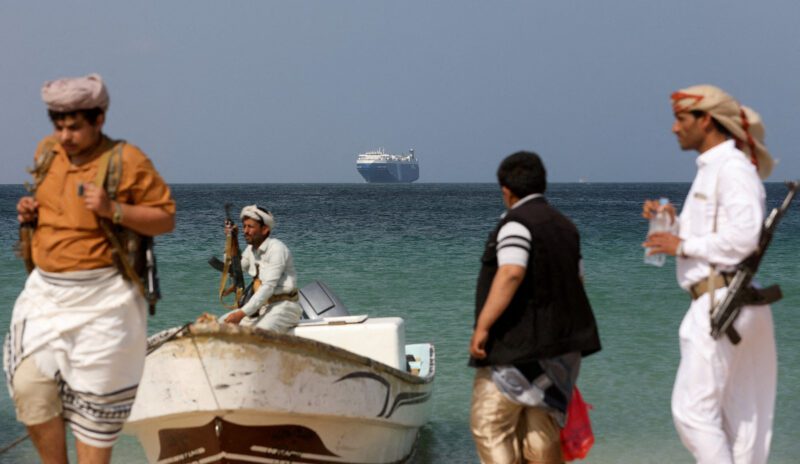
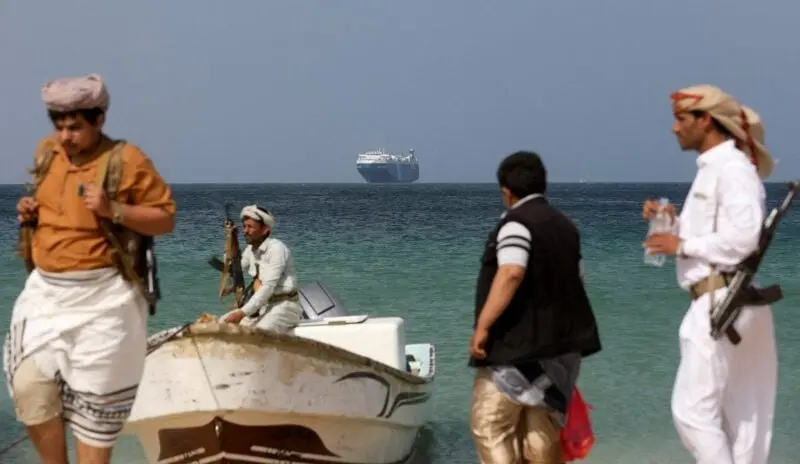
The southern coastal defenses are primarily manned by the Joint Forces—a coalition of local Tihama resistance fighters, southern separatists, and loyalists to former President Ali Abdullah Saleh. These factions frequently compete for resources, territorial control, and political influence, resulting in a fragmented command-and-control structure that proved incapable of organizing a unified defense against the highly centralized Houthi offensive.
Official Statements and Geopolitical Posturing
Iranian Denials and Private Admissions
Publicly, Tehran maintains a policy of plausible deniability regarding its operational control over the Houthis. Spokespersons for the Iranian Ministry of Foreign Affairs have consistently stated that the group operates independently:
"The decisions made by the Yemeni resistance forces are entirely autonomous, reflecting the will of the Yemeni people to resist foreign aggression and siege. Iran provides political support but does not direct or command their military operations."
However, behind closed doors, the narrative is markedly different. An Iranian official, speaking on the condition of anonymity, acknowledged that while the decision to seize Mocha was ultimately executed by Houthi commanders, the operation was highly advantageous to Tehran’s strategic objectives.
"The advance on the west coast serves to put upward pressure on global oil prices while demonstrating to the United States and Saudi Arabia that we possess the capability to disrupt global trade at times of our choosing," the official remarked.
Yemeni Government Accusations
Officials within Yemen’s internationally recognized government have been explicit in their condemnation of Iranian interference, pointing directly to high-ranking IRGC personnel on the ground. Military intelligence sources in Aden claim to have intercepted communication logs confirming the presence of Abdolreza Shahlaei, a senior commander within the IRGC’s Qods Force.
[Intercepted Comms] ──> Identifies: Abdolreza Shahlaei (IRGC Qods Force)
                    ──> Role: Operational Oversight of Tihama Campaign
A senior Yemeni military officer stated:
"This is not a civil war in the traditional sense; it is an active occupation. The tactical maneuvers, the coordinated drone strikes, and the intelligence-gathering methods utilized in the Tihama campaign carry the unmistakable signature of the Revolutionary Guards. Shahlaei and his team are directing these movements from command centers hidden within the mountainous regions of Sana’a and Dhamar."
Saudi Arabia’s Defensive Dilemma
The response from Riyadh has been characterized by strategic caution. Despite urgent appeals from the Yemeni government for intensive air support to halt the Houthi advance, the Saudi-led coalition limited its air operations to the northern fronts of Jawf and Marib.
Analysts suggest that Riyadh is hesitant to launch a major bombing campaign along the Red Sea coast or against strategic targets in Sana’a due to fears of provoking retaliatory Houthi drone and missile strikes against critical Saudi energy infrastructure, such as Aramco processing facilities. Having engaged in years of costly conflict, Saudi Arabia appears prioritized on protecting its domestic economic projects and maintaining its fragile detente with Tehran, even if it means accepting Houthi territorial gains along the Yemeni coast.
Future Outlook
The Militarization of the Bab el-Mandeb
The Houthi consolidation of territory around Mocha is likely to lead to the permanent militarization of the Bab el-Mandeb Strait. With direct access to deep-water ports, the Houthis can deploy sophisticated anti-ship cruise missiles (ASCMs), sea-skimming drones, and radar-guided sea mines. This transforms the strait from a high-risk transit zone into an active military theater, forcing international shipping companies to permanently reassess the safety of the Suez Canal route.
[Houthi Control of Mocha]
       │
       ├─► Deployment of Anti-Ship Cruise Missiles (ASCMs)
       ├─► Launching of Sea-Skimming Attack Drones
       └─► Seeding of Radar-Guided Sea Mines
Implications for Global Energy Markets
As the winter season approaches and energy demand rises, any prolonged instability in the Bab el-Mandeb will introduce significant volatility into global oil and liquefied natural gas (LNG) markets. Even in the absence of a complete physical blockade, the mere threat of missile strikes will drive up maritime insurance premiums, transit costs, and ultimately, consumer prices in Europe and Asia.
International Naval Responses
The inability of local Yemeni forces to secure the coastline will likely prompt a more robust, permanent international naval presence in the southern Red Sea. While existing coalitions like the U.S.-led Operation Prosperity Guardian have sought to escort commercial vessels, the proximity of Houthi missile batteries on the Tihama coast means that defensive naval escorts may no longer be sufficient.
Western powers may find themselves facing a difficult choice: launch direct, preemptive strikes against Houthi launch sites and command centers on Yemeni soil, or accept a status quo where a non-state actor, backed by Iran, holds a veto over global maritime trade.
                        [Geopolitical Crossroads]
                                   │
         ┌─────────────────────────┴─────────────────────────┐
         ▼                                                   ▼
[Preemptive Strikes on Land]                       [Accept Houthi Control]
• Risk of broader regional war                     • High shipping insurance rates
• Direct confrontation with IRGC                   • Vulnerability of global trade
The Future of the Yemeni Peace Process
The fall of Mocha deals a severe blow to any hopes of a negotiated political settlement in Yemen. Buoyed by their military successes and assured of continued Iranian support, the Houthi leadership is unlikely to make meaningful concessions at the negotiating table. Instead, the group will likely use its control over the western coast to demand further economic concessions from Saudi Arabia and the international community, cementing its position as the de facto authority over northern and western Yemen.