





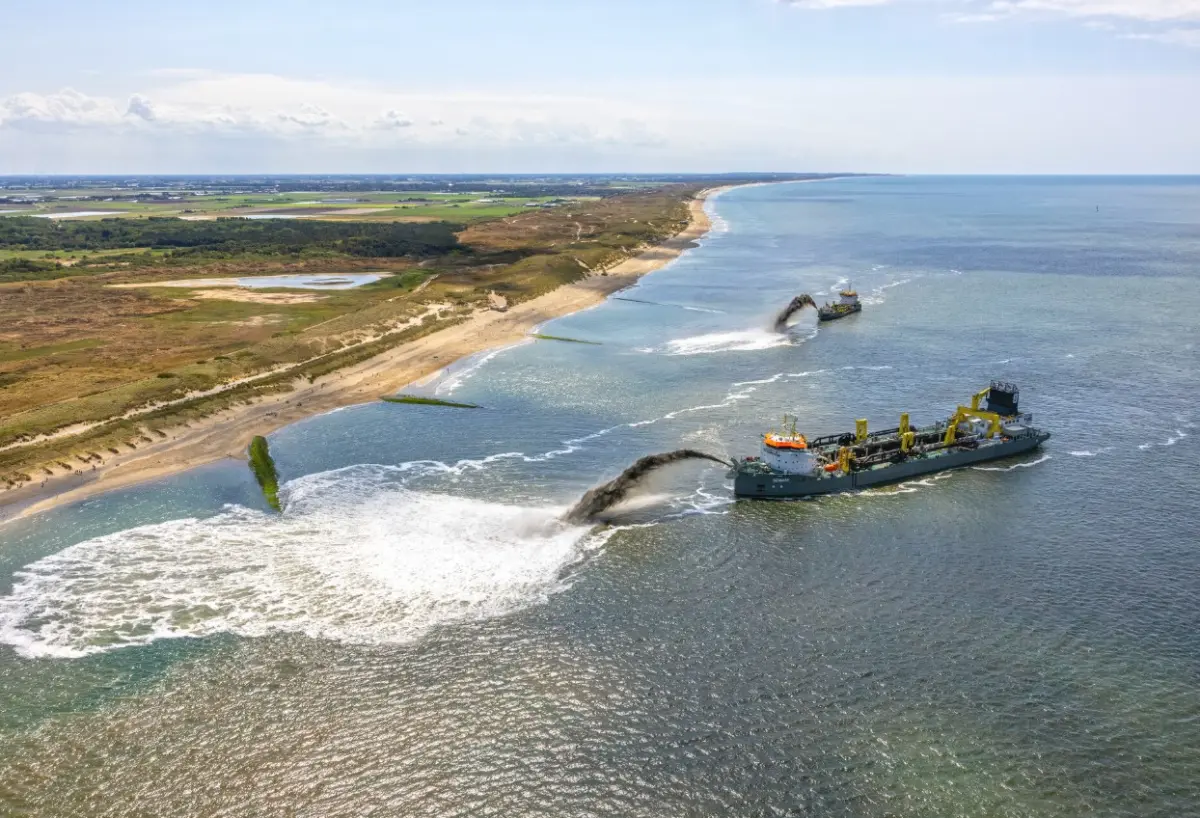
DEN HELDER, THE NETHERLANDS — In a milestone moment for maritime engineering and large-scale hydraulic infrastructure, Royal Boskalis Westminster has officially deployed its state-of-the-art, 31,000-cubic-meter trailing suction hopper dredger (TSHD), the Seaway, on its very first commercial assignment. Fresh off its delivery from shipbuilder Royal IHC in July 2026, the colossal vessel wasted no time proving its operational mettle, arriving directly on the front lines of European coastal protection off the wind-swept coast of Den Helder.
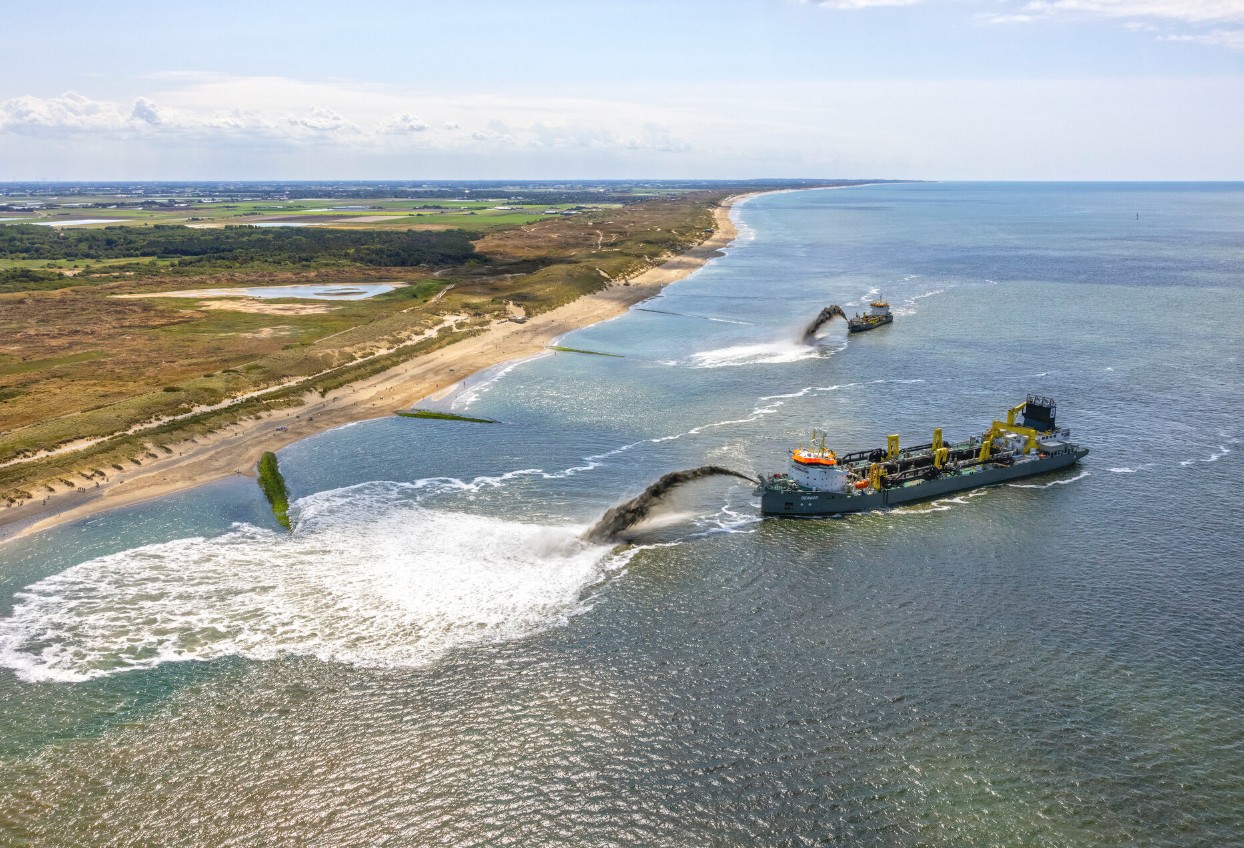
Deploying its massive rainbow installation—a high-pressure discharge technique that arcs immense volumes of sand directly onto shallow shorelines and embankment zones—the Seaway has set a formidable new standard for capital dredging and land reclamation. Operating under a high-profile contract awarded by Rijkswaterstaat, the executive arm of the Dutch Ministry of Infrastructure and Water Management, the vessel’s debut underscores an urgent, escalating commitment to fortifying the Low Countries against the compounding threats of rising sea levels, severe meteorological events, and relentless marine erosion.
Executive Overview
The arrival and commissioning of the TSHD Seaway represent a transformative leap forward for Boskalis’ global fleet capabilities and a critical strategic asset for the Netherlands’ national water safety framework. As climate change accelerates oceanic shifts, European coastal nations face unprecedented pressures to maintain and expand their natural and artificial sea defenses.
At 31,000 cubic meters of hopper capacity, the Seaway sits comfortably within the elite tier of mega-dredgers worldwide. Its entry into active service is not merely a routine fleet replacement; it is a direct technological response to the growing scale of modern maritime infrastructure projects, which demand higher production rates, greater fuel efficiency, and tighter environmental compliance.
The vessel’s inaugural assignment involves a multi-layered coastal defense initiative off Den Helder. By executing high-precision channel embankment nourishment, the Seaway is actively stabilizing vital marine pathways while buffering the mainland against North Sea storm surges. This project is the opening salvo of a broader, multi-year Rijkswaterstaat framework contract secured by Boskalis Nederland. Alongside the Den Helder works, the overarching program encompasses extensive beach nourishment on the Wadden Sea island of Texel and crucial foreshore replenishment near Julianadorp.
Industry analysts view the Seaway‘s deployment as a masterclass in operational readiness. Transitioning a vessel from shipyard delivery to active, heavy-duty dredging in complex nearshore environments within a matter of weeks is an extraordinary logistical feat. It signals that Boskalis is fully prepared to leverage its newest flagship to meet the exacting demands of public-sector clients navigating tight weather windows and strict environmental regulatory regimes.
Detailed Chronology: From Keel to Coastline
The journey of the TSHD Seaway from concept to active coastal guardian is a testament to modern European shipbuilding prowess and operational agility. Understanding the trajectory of this mega-vessel provides crucial context for its current performance off the Dutch coast.
Phase 1: Construction and Delivery (Late 2024 – July 2026)
Commissioned to meet the long-term strategic needs of Boskalis, the Seaway was constructed by renowned Dutch maritime builder Royal IHC. The build process leveraged cutting-edge naval architecture, incorporating advanced hydrodynamic hull designs, state-of-the-art automation systems, and high-capacity dredging pumps engineered to maximize sediment extraction while minimizing energy consumption.
Throughout its final outfitting and sea trials in mid-2026, the vessel underwent rigorous stress testing of its dredging gear, suction pipes, swell compensators, and propulsion systems. Following official handover and baptism into the Boskalis fleet in July 2026, the vessel was immediately mobilized for domestic deployment, bypassing the typical transit voyages to remote international markets in favor of serving its home waters first.
Phase 2: Mobilization and Site Arrival (Early August 2026)
Upon completion of administrative handovers and crew familiarization protocols, the Seaway sailed directly to the North Sea operational zone off Den Helder. The site presents a challenging marine environment characterized by strong tidal currents, unpredictable weather patterns, and heavy commercial maritime traffic heading toward the vital port of Den Helder—the primary offshore energy logistics hub of the Netherlands.
Phase 3: The Rainbow Technique Deployment (Mid-August 2026)
Executing its first operational milestone, the Seaway positioned itself within the designated nourishment zone and initiated discharge operations using its bow-mounted rainbow nozzle. This method involves expelling a high-velocity mixture of sand and water in a graceful, parabolic arc through the air, directly depositing massive quantities of sediment onto shallow foreshores and sub-aquatic embankments where traditional pump-ashore pipeline methods are unviable or economically inefficient.
By utilizing the rainbow technique, the Seaway dramatically reduced the time required to establish initial profile volumes along the Den Helder embankment, showcasing its ability to execute rapid-response coastal reinforcement under real-world marine conditions.
Supporting Context & Metrics: Engineering the Giant
To fully grasp the impact of the Seaway, one must examine the engineering specifications and strategic economic frameworks that govern contemporary mega-dredging operations.
Specifications and Operational Efficiency
With a hopper volume scaling to an impressive 31,000 cubic meters, the Seaway is engineered to transport massive payloads of sand, gravel, and clay per dredging cycle. Key operational advantages of a vessel of this scale include:
- Deep-Water Dredging Capability: Equipped with heavy-duty trailing suction pipes capable of dredging at substantial depths, allowing the vessel to source high-quality sand from designated offshore borrow areas far beyond the active coastal zone.
- Optimized Fuel Consumption & Emissions: Incorporating modern diesel-electric propulsion and energy recovery systems, the Seaway aligns with stringent International Maritime Organization (IMO) Tier III standards and Boskalis’ corporate sustainability targets.
- Advanced Automation: Integrated bridge systems and automated loading and discharge controls reduce manual operator error, ensuring precise bathymetric profiles are achieved during both capital dredging and maintenance campaigns.
The Rijkswaterstaat Framework and National Water Safety
The Netherlands is internationally recognized for its proactive, holistic approach to water management. Governed by Rijkswaterstaat, the national sand nourishment strategy relies on the annual injection of millions of cubic meters of sand along the Dutch coastline and offshore foreshores. This "building with nature" philosophy uses the sea’s natural currents to distribute sand along the shore, creating a dynamic, self-healing buffer against erosion rather than relying solely on hard infrastructure like seawalls and groynes.
The contract awarded to Boskalis Nederland is a cornerstone of this national strategy. Under the terms of the agreement, the scope of work is divided across multiple geographic nodes:
- Den Helder Channel Embankment: Protecting vital navigation channels and stabilizing the mainland interface against tidal scour.
- Texel Island Beaches: Preserving the recreational and ecological integrity of the Wadden Sea’s largest barrier island through targeted beach nourishment.
- Julianadorp Foreshore: Bolstering the underwater slope profile to attenuate wave energy before it reaches the vulnerable dune defenses protecting low-lying polder lands.
Official Statements and Industry Perspective
While commercial details of the overarching contract reflect standard competitive protocols within the European dredging sector, leadership from both Boskalis and industry observers has highlighted the profound strategic significance of the Seaway‘s deployment.
A spokesperson for Boskalis noted during the vessel’s rollout:
"The entry into service of the TSHD Seaway marks a pivotal moment for our trailing suction hopper dredger fleet. To deploy a vessel of this magnitude directly onto a critical national defense project off Den Helder demonstrates our unwavering commitment to safeguarding the Dutch coastline. Royal IHC has delivered a world-class asset that combines immense production capacity with advanced environmental efficiencies, ensuring we remain at the forefront of global hydraulic engineering."
Maritime economists and coastal engineers have similarly praised the deployment. Dr. Aris van der Meer, a senior infrastructure analyst based in Rotterdam, observed:
"What we are witnessing with the Seaway is the maturation of mega-scale coastal engineering. As sea level rise projections become more acute, the demand for high-capacity, highly mobile sediment transport assets will skyrocket. Boskalis has positioned itself exceptionally well. By deploying the vessel locally on a complex Rijkswaterstaat project, they are simultaneously validating the ship’s operational parameters and fulfilling an urgent national imperative."
Future Outlook: The Road Ahead for the Seaway and Boskalis
The commissioning of the Seaway is merely the prologue to what promises to be an intensely busy operational lifecycle. As climate adaptation funding scales up across Europe and international markets, the vessel is expected to be deployed across a diverse portfolio of mega-projects.
Near-Term Domestic Operations (2026–2028)
Over the next several years, the Seaway will remain a familiar sight along the Dutch coastline. Beyond the current works at Den Helder, Texel, and Julianadorp, the vessel is slated to rotate through routine maintenance dredging contracts in major European fairways and port approaches. Its ability to quickly mobilize and clear massive silt accumulations ensures that vital trade arteries—such as the approaches to the Port of Rotterdam and Amsterdam—remain fully navigable for ultra-large container ships and bulk carriers.
International Horizons and Capital Dredging
Looking beyond the Netherlands, the Seaway‘s massive hopper capacity and deep-dredging capabilities make it an ideal candidate for large-scale international land reclamation, port expansion, and energy infrastructure projects. Whether carving out new industrial land in the Middle East, deepening shipping channels in Asia, or participating in post-storm recovery efforts globally, the vessel is engineered to operate in remote environments with minimal external logistical support.
Sustainability and the Future of Dredging
As the maritime industry faces mounting pressure to achieve net-zero carbon emissions, vessels like the Seaway serve as transitional bridges toward fully decarbonized operations. Boskalis has heavily invested in exploring alternative fuels, such as biofuels and green methanol, for its existing and future fleets. Future retrofits of the Seaway could incorporate alternative propulsion technologies, ensuring that the vessel maintains its competitive edge not just in productivity, but in environmental stewardship.
In summary, the TSHD Seaway has transitioned seamlessly from shipyard creation to frontline defender. As it pumps millions of cubic meters of sand onto the shores of Den Helder, Texel, and Julianadorp, it stands as a towering symbol of human ingenuity meeting the primal forces of nature—protecting land, securing commerce, and safeguarding the future of the Dutch coastline for generations to come.