








Executive Overview
Croatia’s flagship maritime carrier, Jadrolinija, has released its operational and financial performance metrics for the first eight months of 2026, outlining a period marked by heavy seasonal transport volumes alongside tightening operating margins. As the central circulatory system of the Croatian archipelago, connecting dozens of inhabited islands to the mainland, the state-owned shipping line moved 9.3 million passengers and 2.8 million vehicles through August 2026. While overall passenger throughput registered a slight contraction compared to the corresponding period in 2025, vehicle traffic demonstrated notable resilience, exceeding previous seasonal records during the peak summer months.
Financially, the first half of 2026 (H1) presented a classic margin squeeze for the Rijeka-headquartered operator. Top-line revenue expanded by 3% year-on-year, propelled by sustained vehicle tariffs and strong peak-season demand. However, operating expenditure outpaced top-line growth, climbing by 5% over the same period. Corporate management has pointed to a confluence of persistent inflationary headwinds, including elevated marine fuel and energy prices, intensified drydocking and fleet maintenance expenses, and broader geopolitical complexities affecting global maritime supply chains.
       JADROLINIJA H1 2026 FINANCIAL TRENDS
       +------------------------------------+
       | Revenue Growth         [+3%]       |
       | Expenditure Growth     [+5%]       |
       +------------------------------------+

       EIGHT-MONTH 2026 OPERATIONAL METRICS
       +------------------------------------+
       | Passengers Carried     9.3 Million |
       | Vehicles Transported   2.8 Million |
       +------------------------------------+
In response to these cost pressures and an aging asset base, Jadrolinija is executing a strategic transition. Supported by the International Finance Corporation (IFC), the private-sector arm of the World Bank Group, the operator is embarking on a comprehensive fleet-renewal program designed to modernize its tonnage, improve fuel efficiency, and reduce emissions across its network.
The initial flagship project of this initiative is the construction of NOVA POSTIRA, a purpose-built passenger vessel dedicated to serving the southern Dalmatian coast around Dubrovnik and the neighboring Elaphiti Archipelago. Commercial and technical negotiations with shortlisted, qualifying shipyards are actively under way, marking a major milestone in the carrier’s efforts to revamp its regional lifeline routes.
Detailed Chronology of 2026 Operations
Q1–Q2 2026: Cost Inflation and Maintenance Off-Peaks
The operational year began under challenging macroeconomic conditions across the Mediterranean and Adriatic maritime sectors. During the first quarter and early Q2 2026, Jadrolinija undertook scheduled drydocking, class surveys, and preventative maintenance across its fleet of passenger ferries, roll-on/roll-off (Ro-Ro) vessels, and catamarans.
This winter maintenance cycle proved significantly costlier than in prior years. Global supply chain frictions, coupled with inflated prices for marine-grade steel, spare parts, and specialized shipyard labor, pushed technical operational expenditures upward. Simultaneously, lingering volatility in European energy markets elevated bunker fuel procurement costs, setting the stage for the 5% expenditure growth observed in H1.
Mid-2026: Financial Reporting and Margin Compression
By the conclusion of H1 2026, financial audits confirmed that while Jadrolinija achieved a 3% increase in gross revenues—supported by stable domestic island travel and international routes to Italy—this growth was insufficient to fully offset rising costs. The company reported that operating margins were under pressure due to three primary vectors:
- Structural maintenance backlogs on older tonnage,
- Sustained elevated energy and bunkering expenses, and
- Indirect cost increases stemming from geopolitical tensions impacting international shipping channels and procurement logistics.
Peak Summer Season (July–August 2026): Shifts in Vehicle and Passenger Density
During the peak holiday months of July and August 2026, the operator recorded strong traffic across its core coastal corridors, including lines serving Split, Zadar, Rijeka, and Dubrovnik. The final numbers for the eight-month period through August revealed an interesting divergence in transport trends:
                       TRAFFIC DEMOGRAPHICS (YOY TRENDS)
   -------------------------------------------------------------------------
   Metric                8-Month 2026 Volume    YoY Trend
   -------------------------------------------------------------------------
   Total Passengers      9.3 Million            Slight Decrease
   Total Vehicles        2.8 Million            Stable Overall / Summer Record
   -------------------------------------------------------------------------
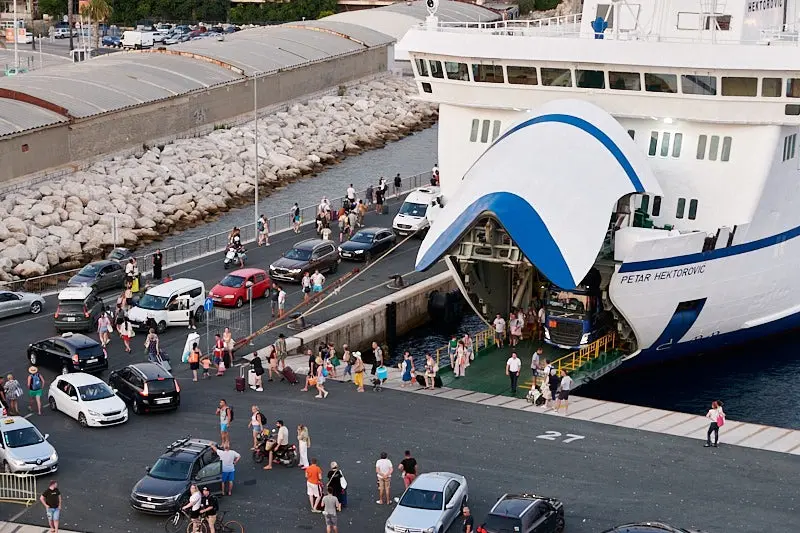
While total passenger volume reached 9.3 million—representing a marginal decline compared to the previous year’s record highs—vehicle crossings held steady at 2.8 million over the eight-month period. Notably, during the peak summer months, vehicle transport volumes surpassed the previous year’s figures.
Industry analysts attribute this trend to shifting tourist demographics, characterized by an increase in drive-in visitors from Central and Eastern Europe traveling in private automobiles and campervans, alongside a slight reduction in high-density passenger group tours using public transit routes.
Late Q3 2026: Execution of the IFC Partnership and Yard Negotiations
Following the peak summer season, Jadrolinija shifted its operational focus toward long-term fleet modernizations. Leveraging a framework agreement negotiated with the International Finance Corporation (IFC), the operator launched formal negotiations with qualifying shipyards for the construction of NOVA POSTIRA. This marks the transition from conceptual planning to active procurement for the carrier’s newbuild campaign.
Supporting Context & Metric Analysis
  +-----------------------------------------------------------------------+
  |                   OPERATIONAL & FINANCIAL SUMMARY                     |
  +-----------------------------------------------------------------------+
  |  Timeframe: First Eight Months of 2026 (Traffic) / H1 2026 (Financials)|
  +-----------------------------------------------------------------------+
  |  Metric                           Value          YoY Variance         |
  +-----------------------------------------------------------------------+
  |  Passengers Carried               9.3 Million    Slight Reduction     |
  |  Vehicles Transported             2.8 Million    Summer Surge / Stable|
  |  H1 Gross Revenue Growth          +3.0%          Positive             |
  |  H1 Operating Expense Growth      +5.0%          Negative Spread      |
  +-----------------------------------------------------------------------+
  |  Key Cost Drivers:                                                    |
  |  • Shipyard maintenance & spare parts inflation                       |
  |  • Volatile marine fuel and energy pricing                            |
  |  • Geopolitically driven supply chain disruptions                     |
  +-----------------------------------------------------------------------+
Deconstructing the Financial Divide: Revenue vs. Expenditure
The 2026 H1 financial metrics highlight the challenges facing regional ferry operators in Southern Europe. A 3% top-line revenue expansion demonstrates consistent demand for Adriatic passenger and cargo transport. Modern tourism patterns in Croatia, combined with continuous year-round island supply needs, provide a dependable revenue floor.
However, the 5% rise in operating expenditures underscores systemic cost pressure. Bunkering costs remain unpredictable due to broader geopolitical disruptions in global hydrocarbon trade flows. Marine diesel and alternative low-sulfur fuels commonly required in European Environmental Control Areas (ECAs) have traded at persistent premiums.
Concurrently, fleet maintenance expenses have surged. Jadrolinija operates a diverse fleet of over 50 vessels, ranging from modern high-speed catamarans to aging Ro-Ro passenger ferries. Maintaining older hulls to stringent European Maritime Safety Agency (EMSA) standards requires substantial capital outlay, compounding the financial impact of inflated labor and material costs.
       COST INFLATION DRIVERS IN 2026 OPERATIONAL EXPENDITURE

  +-----------------------+     +-----------------------+     +-----------------------+
  |   ENERGY & FUEL       |     |  FLEET MAINTENANCE    |     | GEOPOLITICAL LOGISTICS|
  | High low-sulfur fuel  | --> | Aging vessel surveys, | --> | Supply chain lags for |
  | premiums in Europe    |     | drydocking inflation  |     | spare parts & steel   |
  +-----------------------+     +-----------------------+     +-----------------------+
Operational Dynamics: Passenger vs. Vehicle Volumes
The eight-month transport figures—9.3 million passengers and 2.8 million vehicles—reflect broader travel trends across the Mediterranean basin. The slight drop in overall passenger numbers alongside a record summer for vehicle transfers suggests several underlying structural changes:
- Rise of Drive-In Tourism: Croatia remains a primary destination for vehicle-based travel from neighboring EU markets (Germany, Austria, Slovenia, the Czech Republic, and Poland). Visitors increasingly favor personal vehicles over commercial air travel or group coach charters, resulting in higher vehicle-to-passenger ratios per vessel call.
- Length of Stay Adjustments: Changes in regional travel habits show holidaymakers taking fewer, but longer, trips. While this leads to slightly fewer individual foot-passenger journeys across secondary routes, it sustains high demand for primary vehicle-capable car ferries.
- Islander Mobility Needs: Year-round essential island transport has remained steady. Vehicle transport serves as a critical lifeline for goods, agricultural output, construction materials, and municipal services across Croatia’s inhabited islands.
Strategic Implications & Market Context
+-------------------------------------------------------------------------+
|                    REGIONAL FOCUS: DUBROVNIK & ELAPHITI                 |
+-------------------------------------------------------------------------+
|  Primary Operational Base:   Dubrovnik Maritime District                |
|  Targeted Island Network:    Koločep, Lopud, Šipan (Elaphiti Group)     |
|  Strategic Objective:        Replace aging tonnage with purpose-built,  |
|                              low-emission passenger vessel              |
|  Funding Partner:            International Finance Corporation (IFC)    |
+-------------------------------------------------------------------------+
Strategic Geography: The Elaphiti Archipelago
The decision to focus the initial wave of fleet renewal on the Dubrovnik maritime district highlights the economic and historical importance of the southern Adriatic corridor. The Elaphiti Archipelago—primarily comprising the inhabited islands of Koločep, Lopud, and Šipan—relies entirely on daily maritime connections centered in Dubrovnik’s Port of Gruž.
These islands feature micro-economies heavily reliant on eco-tourism, local agriculture, and hospitality. Existing tonnage serving these routes, including older classic vessels that have operated for decades, faces growing operational and environmental challenges.
By prioritizing the Dubrovnik–Elaphiti route for its newbuild program, Jadrolinija aims to upgrade service reliability for local residents while providing modern infrastructure for international visitors.
                      Dubrovnik (Port of Gruž)
                                 |
         +-----------------------+-----------------------+
         |                       |                       |
   Koločep Island          Lopud Island            Šipan Island
 (Daily Lifeline)        (Daily Lifeline)        (Daily Lifeline)
Regulatory and Environmental Framework
Jadrolinija’s structural overhaul takes place against the backdrop of increasingly stringent European regulatory mandates. The European Union’s Fit for 55 policy framework and the inclusion of maritime transport in the EU Emissions Trading System (ETS) place direct financial penalties on carbon-intensive fleets.
Operating legacy vessels without energy-efficient hulls or alternative propulsion systems poses a long-term threat to financial sustainability. The collaboration with the IFC provides both capital and technical guidance, ensuring new builds comply with modern environmental standards.
Corporate Perspectives & Analysis
Management’s strategy balances Jadrolinija’s dual mandate as a public-service provider and a commercially viable enterprise. Company leaders have emphasized that while seasonal surges generate vital revenue, the carrier’s core obligation remains maintaining year-round transport services across non-profitable lifeline routes.
Reflecting on the financial results, company representatives noted that rising operational expenditures mirror systemic cost pressures felt across the maritime sector. Managing these cost surges—particularly in energy procurement and technical maintenance—requires a shift toward modern, highly efficient tonnage. Corporate leadership highlighted that the financial pressure seen in H1 underscores why fleet modernization is an operational necessity rather than a secondary objective.
   DUAL MANDATE BALANCING ACT

   COMMERCIAL ENTERPRISE                 PUBLIC SERVICE OBLIGATION
   +------------------------------+     +------------------------------+
   | Peak Summer Revenue Generation|     | Year-Round Lifeline Routes   |
   | International Crossings      | <-> | Unprofitable Island Links    |
   | Vehicle Tariff Maximization  |     | Subsidized Passenger Travel  |
   +------------------------------+     +------------------------------+
Industry analysts observe that Jadrolinija’s engagement with the IFC represents a significant institutional shift. Multilateral development finance institutions enforce rigorous standards for environmental sustainability, procurement transparency, and project execution.
Securing IFC backing signals international confidence in Jadrolinija’s business model while providing a structured framework to execute capital-intensive fleet renewals without overextending the public balance sheet.
Future Outlook: Fleet Modernization & Strategic Horizons
                 JADROLINIJA MODERNIZATION ROADMAP

 2026 Q3              2026 Q4 / 2027 Q1          2027+
+-------------------+ +-----------------------+ +-------------------------+
| Yard Negotiations | | Contract Award &      | | Fleet Deployment        |
| for NOVA POSTIRA  | | Keel Laying           | | Advanced Decarbonization|
| with IFC Support  | | for NOVA POSTIRA      | | Expansion of Green Fleet|
+-------------------+ +-----------------------+ +-------------------------+
The Path Forward for NOVA POSTIRA
The immediate priority for Jadrolinija is finalizing negotiations with shortlisted shipyards for the construction of NOVA POSTIRA. The vessel design focuses on passenger comfort, operational reliability in challenging sea conditions, reduced hydrodynamic drag, and modern fuel-efficiency standards.
Once contract negotiations conclude and construction timelines are finalized, NOVA POSTIRA will serve as a template for subsequent passenger vessel acquisitions. The vessel will replace aging tonnage on the Dubrovnik–Elaphiti route, delivering reduced voyage times, lower fuel consumption per passenger-kilometer, and enhanced accessibility features for passengers with reduced mobility.
The Broader Fleet Renewal Program
Beyond NOVA POSTIRA, Jadrolinija’s long-term strategy, supported by the IFC, encompasses a multi-year fleet investment program. Key objectives include:
- Decarbonization and Alternative Propulsion: Evaluating hybrid-electric, battery-ready, and alternative-fuel propulsion systems for short-sea routes to lower emissions in coastal archipelagos.
- Standardization of the Ro-Ro Fleet: Moving toward standardized vessel designs for medium- and long-haul coastal lines to streamline maintenance routines, reduce spare parts inventories, and lower overall drydocking expenses.
- Digitalization of Port Operations: Modernizing booking systems, vehicle staging, and automated boarding control to streamline operations at major hubs like Split, Zadar, and Rijeka, helping shorten turnaround times and lower fuel burn during dockage.
Long-Term Strategic Outlook
As Jadrolinija closes out the remainder of 2026, its financial performance will depend heavily on autumn travel volumes and stabilizing global fuel prices. While cost inflation in maintenance and energy will continue to pressure short-term operating margins, the carrier’s long-term outlook is increasingly tied to its capital renewal program.
By combining strong seasonal vehicle revenue with IFC-backed modernization projects, Jadrolinija is taking steps to secure its position as the Adriatic’s primary ferry operator. Building an efficient, low-emission fleet will help the company control operating costs, meet stringent European environmental regulations, and maintain vital connectivity for Croatia’s island communities for decades to come.