







Executive Overview
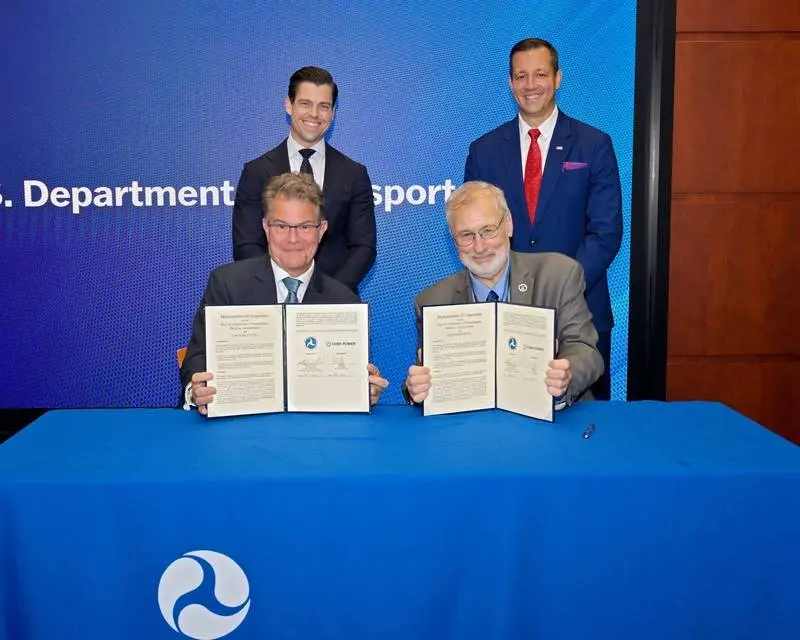
In a move signaling a profound paradigm shift for global logistics, trade security, and energy geopolitics, the United States Department of Transportation’s Maritime Administration (MARAD) has entered into a landmark Memorandum of Cooperation (MoC) with CORE POWER (US) Inc. The partnership is designed to establish, accelerate, and codify the regulatory, commercial, and operational pathways required to deploy U.S.-flagged, nuclear-powered commercial vessels.
Fueled by next-generation Small Modular Reactor (SMR) technology, this initiative represents a strategic effort to leapfrog traditional decarbonization pathways—such as green ammonia, hydrogen, and methanol—in favor of high-density, zero-emission marine nuclear propulsion. This collaboration aims to align with national security directives to secure energy dominance and revitalize the struggling U.S. merchant marine sector.
By targeting the regulatory, financial, and logistical bottlenecks that have historically barred nuclear energy from commercial shipping, MARAD and CORE POWER are laying the groundwork for a new class of high-speed, infinite-range container ships and bulk carriers. However, this partnership is more than a technological upgrade; it is a direct geopolitical response to rapid Chinese advancements in marine nuclear engineering, positioning the United States at the vanguard of a new maritime era.
Detailed Chronology of the Agreement
The formalization of the MoC between MARAD and CORE POWER marks the culmination of several years of behind-the-scenes advocacy, technical assessments, and escalating concerns over the carbon footprint and strategic vulnerabilities of global supply chains.
+-----------------------------------------------------------------------------------+
|                              CHRONOLOGY OF MILESTONES                             |
+-----------------------------------------------------------------------------------+
|  Late 2020:   CORE POWER initiates feasibility studies on Molten Salt Reactors     |
|               (MSRs) for commercial maritime applications.                        |
|                                                                                   |
|  2022–2023:   The IMO establishes aggressive net-zero targets for shipping        |
|               by ~2050, accelerating the search for viable alternative fuels.     |
|                                                                                   |
|  Mid-2024:    U.S. defense and maritime strategists sound alarms over China's     |
|               unveiling of mega-scale nuclear container ship designs.             |
|                                                                                   |
|  Late 2024:   MARAD and CORE POWER finalize the Memorandum of Cooperation (MoC)  |
|               framework in Washington, D.C.                                       |
|                                                                                   |
|  Upcoming:    Official presentation of the framework at the IAEA ATLAS launch    |
|               forum on nuclear applications at sea.                               |
+-----------------------------------------------------------------------------------+
The MoC establishes a structured, multi-disciplinary task force tasked with addressing the systemic challenges of commercial marine nuclear power. Rather than focusing solely on reactor design, the framework outlines six critical pillars of cooperation:
- Regulatory Acceptance & Licensing: Designing a joint framework with the U.S. Nuclear Regulatory Commission (NRC) and the U.S. Coast Guard to license commercial SMRs for civilian maritime use.
- Port Operations & Sovereign Access: Establishing safety protocols and bi-lateral agreements to allow nuclear-powered merchant vessels to enter domestic and international ports.
- Workforce Credentialing: Developing specialized training, certification, and licensing curricula for U.S. merchant mariners to operate civil nuclear propulsion systems.
- Fuel and Lifecycle Services: Securing a reliable supply chain for High-Assay Low-Enriched Uranium (HALEU) and establishing "cradle-to-grave" waste management and spent-fuel recycling protocols.
- Indemnity and Insurance: Crafting novel maritime insurance models capable of underwriting civil nuclear liabilities, building on or modifying frameworks like the Price-Anderson Act.
- Commercial Finance: Structuring private-public partnerships (PPPs) and green investment vehicles to fund the capital-intensive construction of SMR-propelled fleets.
Supporting Context & Metrics
To understand the urgency behind this agreement, one must examine the limits of current maritime decarbonization strategies, the historical legacy of nuclear shipping, and the competitive pressures exerted by foreign adversaries.
The Decarbonization Dilemma: Why Nuclear Wins on Metrics
The global shipping industry carries over 80% of world trade by volume and is responsible for approximately 3% of global greenhouse gas emissions. Under pressure from the International Maritime Organization (IMO) to reach net-zero emissions by or around 2050, shipowners have explored various alternative fuels. However, when analyzed by energy density and volumetric requirements, conventional "green" fuels present significant operational challenges:
| Fuel Type | Energy Density (MJ/kg) | Volumetric Density (MJ/L) | Storage Requirements / Operational Impact |
|---|---|---|---|
| Heavy Fuel Oil (HFO) | ~40 | ~36 | Standard bunkering; high carbon and sulfur emissions. |
| Liquid Hydrogen | ~120 | ~8.5 | Requires cryogenic storage (-253°C); takes up 4–5x more cargo space than HFO. |
| Green Ammonia | ~18.6 | ~11.5 | Highly toxic; requires specialized containment; low energy density. |
| Methanol (Green) | ~19.9 | ~15.8 | Requires double the storage volume of HFO; high production costs. |
| SMR Nuclear (HALEU) | ~3,900,000 | ~30,000,000 | Virtually zero refueling for 20-25 years; zero emissions; preserves 100% of cargo space. |
Data Source: World Nuclear Association & IMO Fuel Assessment Studies
From a purely logistical standpoint, alternative chemical fuels require massive fuel tanks that directly reduce a vessel’s cargo-carrying capacity. SMR nuclear propulsion, by contrast, eliminates the need for bunkering entirely over a ship’s 25-year operational lifespan. This maximizes cargo volume, guarantees predictable operating expenses (OPEX) insulated from volatile fossil fuel markets, and enables sustained high-speed operations (25+ knots) that can radically compress transoceanic transit times.
The Ghost of NS Savannah and the SMR Shift
This is not the first time the United States has explored civilian nuclear shipping. In 1959, under President Dwight D. Eisenhower’s "Atoms for Peace" initiative, the U.S. launched the NS Savannah.
   NS SAVANNAH (1959)                     MODERN SMR MERCHANT VESSEL (2020s)
+---------------------------+          +-----------------------------------------+
| - Pressurized Water (PWR) |          | - Small Modular / Molten Salt (SMR/MSR) |
| - High operational costs  |    VS    | - Passive safety (no melt-down risk)    |
| - Massive crew required   |          | - Highly automated, minimal crew impact |
| - Complex port clearance  |          | - Standardized, modular manufacturing   |
+---------------------------+          +-----------------------------------------+
While the Savannah proved the technical feasibility of nuclear merchant shipping, it was commercially non-viable. It utilized a bulky, early-generation Pressurized Water Reactor (PWR) that required a large crew of highly specialized nuclear engineers, suffered from high operating costs, and faced severe port-entry restrictions fueled by Cold War-era public anxiety.
Modern SMRs—particularly Molten Salt Reactors (MSRs) and High-Temperature Gas-Cooled Reactors (HTGRs)—represent a complete departure from the Savannah model. These modern systems are designed with passive safety features: they operate at or near atmospheric pressure, utilize self-regulating fuel-coolant mixtures that cannot melt down even in the event of a total power failure, and are factory-fabricated to lower capital expenditure (CAPEX).
The China Factor: The Race for Maritime Dominance
A primary driver for Washington’s sudden pivot toward marine SMRs is China’s aggressive development in this sector.
In late 2023, China’s State Shipbuilding Corporation (CSSC) unveiled a design for a 24,000 TEU (Twenty-foot Equivalent Unit) ultra-large container ship powered by a thorium-based molten salt reactor. Furthermore, Beijing has been actively building nuclear-powered icebreakers and floating offshore nuclear power platforms in the South China Sea.
For U.S. defense and economic strategists, the implications are clear: if China successfully commercializes nuclear shipping first, it will dictate the regulatory frameworks, safety standards, and logistical corridors of the 21st century. The MARAD-CORE POWER agreement is a direct effort to counter this threat and maintain U.S. influence over international maritime law.
Analysis of Official Statements
The rhetoric surrounding the signing of the MoC highlights a blend of national security, economic pragmatism, and technological ambition.
Stephen M. Carmel, Maritime Administrator:
"President Trump has made it clear that American energy dominance and maritime strength go hand in hand. This framework ensures that the United States leads the world with a secure U.S.-flagged fleet. Nuclear propulsion is a serious commercial opportunity, but it must be approached as a complete system – safe, secure, licensable, and investable."
Analysis: Carmel’s statement underscores a major shift in how Washington views nuclear shipping. By framing it as a "complete system," Carmel acknowledges that the primary obstacles to marine nuclear power are no longer technical, but systemic.
Historically, nuclear power has been treated as a defense-only asset (confined to Navy submarines and aircraft carriers) or a highly regulated stationary utility. By emphasizing the terms "licensable" and "investable," MARAD is signaling to Wall Street and private shipowners that the federal government intends to de-risk the asset class, creating a predictable regulatory pathway that can attract private equity.
Mikal Bøe, Founder and CEO of CORE POWER:
"China is already moving toward nuclear-powered commercial shipping. That should focus minds in Washington. America does not regain maritime strength by building a slightly better version of yesterday’s ship. This is a new dawn for American shipping: not catching up using an old model, but making American shipping relevant again by leading the next one."
Analysis: Bøe’s remarks appeal directly to Washington’s bipartisan focus on strategic competition with China. His critique of "building a slightly better version of yesterday’s ship" is a challenge to traditional shipbuilders and policymakers who have focused on incremental efficiency gains or transitional fossil-fuel blends.
Bøe argues that the U.S. cannot compete with East Asian shipbuilding capacity on labor costs or sheer volume; instead, it must compete on high-value, deep-tech innovation. By leapfrogging directly to nuclear, the U.S. aims to bypass the traditional shipping paradigm entirely.
Future Outlook: Navigating the Nuclear Horizon
The signing of the MoC is the first step in a complex, multi-decade transition. The immediate next milestone is the International Atomic Energy Agency’s (IAEA) ATLAS launch forum on nuclear applications at sea, where MARAD and CORE POWER are expected to present their initial collaborative framework to international regulators.
       PHASE 1: REGULATORY                 PHASE 2: PROTOYPING                 PHASE 3: SCALE-UP
+-------------------------------+   +-------------------------------+   +-------------------------------+
|  - Establish NRC/USCG rules   |   |  - Build land-based prototype |   |  - Launch first U.S.-flagged  |
|  - Draft port safety codes    |-->|  - Construct first hull       |-->|    SMR container fleet        |
|  - Design HALEU fuel cycle    |   |  - Secure port permissions    |   |  - Establish global corridors |
+-------------------------------+   +-------------------------------+   +-------------------------------+
Addressing the Key Challenges
Despite the optimism, the path to a commercial U.S.-flagged nuclear fleet faces several critical hurdles:
- The HALEU Supply Bottleneck: SMRs typically require High-Assay Low-Enriched Uranium (HALEU), which is enriched between 5% and 20% Uranium-235. Currently, global commercial supply chains for HALEU are highly constrained. The U.S. must rapidly scale up domestic enrichment capabilities to support both land-based and marine SMRs.
- The "Port State Control" Hurdle: Even if a U.S.-flagged nuclear ship is licensed by MARAD and the NRC, it must be granted permission to enter foreign ports like Rotterdam, Singapore, or Tokyo. This will require rewriting international maritime conventions, specifically SOLAS (Safety of Life at Sea) Chapter VIII, which governs nuclear ships.
- Public Perception & Liability: Underwriters must be willing to insure these vessels at commercially viable rates. Developing a framework that addresses the perceived risks of nuclear accidents in densely populated port cities is a high priority for the MARAD-CORE POWER working group.
Conclusion: A Strategic Pivot
The MARAD-CORE POWER Memorandum of Cooperation represents a calculated strategic move. In an era defined by supply chain vulnerabilities, geopolitical competition, and the urgent need to transition away from fossil fuels, the United States is betting on the ultimate energy source.
By initiating the process to build, license, and operate SMR-powered commercial vessels, the U.S. is not merely trying to reduce emissions; it is seeking to redefine the rules of global trade, secure its energy supply chains, and reclaim its status as a dominant maritime power for the century to come.