






Executive Overview
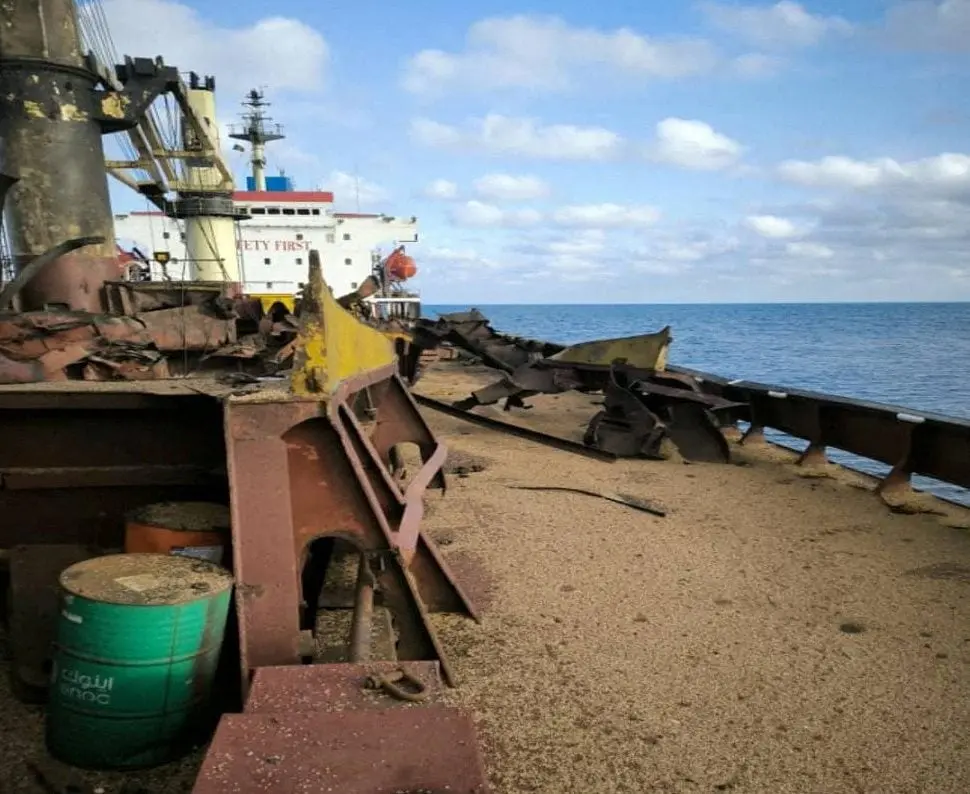
In a stark reminder of the escalating perils facing commercial maritime transport in Eastern Europe, a merchant vessel caught fire and subsequently sank in the western Black Sea on the evening of Thursday, August 28, 2026. The incident occurred within Romania’s Exclusive Economic Zone (EEZ), a critical maritime corridor that has become increasingly volatile as geopolitical tensions in the region reach new heights.
Preliminary reports and official statements indicate that the vessel was likely subjected to a kinetic strike before the onboard blaze erupted. While the exact origin of the attack remains under investigation, the sinking represents a significant escalation in the targeting of civilian maritime infrastructure. It highlights the compounding threats of sea mines, uncrewed surface vessels (USVs), and targeted missile strikes that have plagued the Black Sea since the outbreak of the full-scale conflict in Ukraine in 2022.
Despite the rapid spread of the fire and the ultimate loss of the vessel, a coordinated search and rescue (SAR) operation succeeded in saving all 12 crew members. Ten seafarers were pulled from the water by the Romanian Border Police—one of whom sustained injuries requiring medical attention—while the remaining two were rescued by a nearby commercial vessel.
As international shipping bodies and regional governments scramble to assess the fallout, this latest sinking threatens to further destabilize global grain corridors, drive maritime insurance premiums to prohibitive levels, and force a reassessment of security protocols for merchant shipping navigating the waters of NATO’s eastern flank.
Detailed Chronology of the Incident
The Distress Call and Emergency Mobilization
The crisis began unfolding late on Thursday evening when maritime safety authorities received an emergency distress signal from an unidentified merchant ship transiting the western sector of the Black Sea. The vessel’s position was plotted within Romania’s Exclusive Economic Zone (EEZ), approximately several dozen nautical miles off the coast, placing it outside Romanian sovereign territorial waters but well within its area of maritime search and rescue responsibility.
Initial radio transmissions from the stricken vessel reported a sudden, violent explosion, followed immediately by a rapidly spreading fire in the superstructure and cargo holds. The intensity of the blast and the subsequent inferno quickly compromised the vessel’s structural integrity and disabled its primary firefighting systems, forcing the master to issue an abandon-ship order.
The Search and Rescue Operation
Upon receiving the distress call, the Romanian Border Police dispatched patrol vessels to the coordinate coordinates. Time was of the essence; the high-stress environment of the Black Sea night, compounded by the threat of secondary explosions and the potential presence of naval mines, made the rescue operation highly hazardous.
+------------------------------------------------------------+
|                  RESCUE OPERATION SUMMARY                  |
+----------------------------+-------------------------------+
| Total Crew On Board        | 12 Seafarers                  |
+----------------------------+-------------------------------+
| Rescued by Border Police   | 10 (1 injured, hospitalized)  |
+----------------------------+-------------------------------+
| Rescued by Merchant Vessel | 2 (uninjured)                 |
+----------------------------+-------------------------------+
| Vessel Status              | Total Loss (Sunk)             |
+----------------------------+-------------------------------+
The rescue was a joint effort:
- Romanian Border Police: Utilizing specialized patrol craft, border guards braved smoke and debris to pull 10 crew members directly from the sea and life rafts. One of these survivors had sustained physical injuries and was immediately stabilized before being transported to a regional medical facility on the Romanian mainland.
- Nearby Commercial Vessels: In accordance with long-standing international maritime law (SOLAS conventions), nearby merchant vessels diverted to assist. One such vessel successfully retrieved the remaining two crew members from the water, ensuring a 100% survival rate for the crew.
The Sinking
While the crew was being successfully evacuated, the merchant ship continued to burn uncontrollably. The combination of structural damage from the initial impact and the thermal stress of the intense fire proved catastrophic. Eyewitness accounts and aerial reconnaissance confirmed that the vessel began taking on water rapidly, developing a severe list before slipping beneath the surface late Thursday night.
The sinking has prompted immediate environmental and navigational concerns, as authorities monitor the site for potential fuel leaks or hazardous cargo dispersion that could impact the delicate marine ecosystem of the Danube Delta and the Romanian coastline.
Supporting Context & Metrics
The Black Sea as a Contested Maritime Zone
The sinking of this merchant ship is not an isolated mishap but the latest casualty in a protracted campaign against civilian shipping. Since the onset of the Russian invasion of Ukraine in 2022, the Black Sea has transitioned from a vital commercial highway into a highly contested naval battlespace.
While the initial years of the conflict saw shipping restricted by blockades and negotiated corridors, 2026 has witnessed a dramatic escalation in both the frequency and lethality of attacks targeting civilian maritime assets.
According to Ukrainian maritime authorities and international shipping monitors, the pace of attacks has accelerated exponentially. A recent report revealed a devastating metric: over a single six-week period in mid-2026, at least 52 civilian vessels were hit or damaged by various weapon systems in the Black Sea.
Black Sea Maritime Incidents - 2026 Escalation Index
====================================================================
[Jan - Mar]   ████░░░░░░ (Moderate risk, scattered mine incidents)
[Apr - Jun]   ████████░░ (Increased drone activity, port strikes)
[Jul - Aug]   ██████████ (Peak escalation: 52+ civilian ships hit)
====================================================================
These incidents involve a wide array of threats:
- Sea Mines: Hundreds of anchor-detached and floating sea mines drift throughout the western Black Sea, posing a continuous, indiscriminate hazard to navigation.
- Uncrewed Surface Vessels (USVs): Both offensive and defensive maritime drones are deployed in high numbers, occasionally resulting in collateral damage or misidentification of commercial hulls.
- Missile and Drone Strikes: Precision-guided munitions aimed at port infrastructure in Odesa, Chornomorsk, and Izmail frequently spill over into adjacent shipping lanes, occasionally tracking civilian vessels directly.
The Proximity to NATO Territory
The location of Thursday’s sinking is highly significant. By occurring within Romania’s EEZ, the incident directly touches upon the economic and security interests of a prominent NATO member state.
Under the United Nations Convention on the Law of the Sea (UNCLOS), an EEZ extends up to 200 nautical miles from a country’s coast. While a coastal state does not exercise full sovereignty over its EEZ in the way it does over its 12-nautical-mile territorial sea, it does possess exclusive sovereign rights for exploring, exploiting, conserving, and managing natural resources.
The presence of burning, sinking, and potentially targeted commercial ships in these waters brings the realities of the war directly to NATO’s doorstep. This is further illustrated by Romania’s recent deployment of naval assets to destroy drifting maritime drones and mines that have periodically breached its coastal waters, raising the persistent risk of an unintended military escalation involving NATO forces.
Official Statements
The gravity of the incident was reflected in the cautious yet urgent tone of regional leaders and security agencies.
Romanian National Leadership
Speaking at a press conference in Chisinau, Moldova, Romanian President Nicusor Dan addressed the media on Thursday evening, offering the first high-level political confirmation of the incident.
"The ship was hit… it seems to have sunk," President Dan stated, addressing journalists. "At present, no concrete information is available as to who might have been involved in a possible strike. There will be an investigation, it will be established, but it is not good for us to start speculating."
The President emphasized the geographical context of the event, confirming that while the ship sank within Romania’s EEZ, the event had taken place outside Romania’s sovereign territorial waters, thereby managing immediate diplomatic sensitivities regarding NATO collective defense triggers.
Romanian Border Police
The Romanian Border Police issued a formal statement on Friday morning, confirming the rescue operations and the condition of the crew while maintaining a strict stance on the ongoing technical investigation:
"The Romanian Border Police confirms the fire on board a commercial ship sailing through Romania’s exclusive economic zone. Of the 12 crew members, 10 people were rescued by our border guards, one of whom was injured and has received medical attention. Two others were rescued by the crew of a nearby merchant ship. We are working alongside maritime authorities to determine the environmental impact and the sequence of events leading to the fire."
Future Outlook
The sinking of this merchant ship marks a critical turning point for Black Sea commerce, with far-reaching implications for global supply chains, international law, and regional security.
+----------------------------------------------------------------------+
|                     IMPACT PATHWAY ANALYSIS                          |
+----------------------------------------------------------------------+
|  Kinetic Strike on Merchant Ship                                     |
|         │                                                            |
|         ├──> Surge in War Risk Insurance Premiums                    |
|         │       └──> Shipping lines bypass Western Black Sea         |
|         │                                                            |
|         ├──> Increased NATO/MCM Black Sea Patrols                    |
|         │       └──> Heightened risk of direct naval friction        |
|         │                                                            |
|         └──> Crew Retention Crisis                                   |
|                 └──> Seafarer unions demand "No-Go" designations     |
+----------------------------------------------------------------------+
Escalating Insurance and Logistics Costs
The immediate economic fallout of the sinking will be felt in London and other global marine insurance hubs. Prior to this incident, war risk premiums for vessels transiting the Black Sea were already exceptionally high. This confirmed sinking of a merchant vessel in an EEZ belonging to a NATO member state is expected to trigger a fresh surge in insurance rates.
Some maritime underwriters may choose to withdraw coverage entirely for certain sectors of the Black Sea, effectively halting commercial traffic to southern Ukrainian and even some Romanian ports, such as Constanta, which has acted as a vital alternative transit hub for grain exports.
The Threat to Global Food Security
The Black Sea remains the primary artery for agricultural exports from two of the world’s largest grain producers, Ukraine and Russia. If merchant vessels can no longer safely navigate these waters without facing the threat of being sunk, the fragile alternative overland and Danube River routes will be pushed beyond their capacities. The resulting bottleneck could spark a renewed spike in global food prices, disproportionately affecting vulnerable nations in North Africa and the Middle East.
Shifting Security Postures and Naval Escorts
In response to the deteriorating security environment, there are growing calls from the international shipping community for more robust protective measures.
- The MCM Black Sea Task Force: The trilateral Mine Countermeasures Black Sea task force, formed by Turkey, Romania, and Bulgaria, may be forced to expand its mandate. Initially designed to clear drifting mines, the task force may face pressure to provide active monitoring or coordinated security corridors for merchant fleets.
- International Escorts: Industry bodies are increasingly urging multinational coalitions to consider civilian vessel escorts, akin to historical operations in the Gulf of Aden or the Persian Gulf. However, such a move in the Black Sea is highly sensitive, given the Montreux Convention’s restrictions on non-Black Sea warships entering the Bosporus and Dardanelles straits.
Conclusion
As investigators analyze satellite telemetry, survivor testimonies, and physical debris to determine the exact weapon system that sank the vessel, the maritime industry faces a grim reality. The Black Sea has become a theater where civilian seafarers routinely risk their lives to keep global supply chains functioning. Without a coordinated international response to guarantee the safety of innocent merchant shipping, the waters off the Romanian coast may see more civilian vessels lost to the crossfire of a volatile and unpredictable regional war.