








The global transition toward zero-emission public transit is frequently framed as a straightforward binary choice: diesel versus electric. However, within the green transit sector, a deeper architectural divide persists between battery-electric vehicles (BEVs) and hydrogen fuel-cell electric vehicles (FCEVs). While hydrogen has long been touted for its rapid refueling times and long-range capabilities, recent developments in Southern California expose the precarious, capital-intensive vulnerabilities of hydrogen transit ecosystems.
The Orange County Transportation Authority (OCTA) is currently pouring an additional $27.6 million into hydrogen infrastructure to scale its modest fuel-cell fleet from 10 buses toward a projected 50. At a glance, this appears to be standard operational scaling. Yet, a rigorous examination reveals a troubled history of commercial disputes, plunging operational metrics, and sunk-cost fallacies. When OCTA’s primary hydrogen fueling station in Santa Ana became entirely unusable due to a contractual breakdown with supplier Air Products, ten state-of-the-art buses—designed for a 12- to 15-year service life—were stranded with years of operational potential remaining.
This crisis underscores a foundational truth of hydrogen transit: a fuel-cell bus is only as viable as the fragile, highly specialized, and deeply integrated supply chain that feeds it. Unlike battery-electric fleets, which leverage existing or incrementally upgraded electrical grids, hydrogen transit forces agencies to construct and maintain an entirely separate, high-pressure energy-delivery and storage infrastructure. As OCTA’s internal comparison demonstrates, its battery-electric fleet scaled reliably and cost-effectively without catastrophic fueling failures, casting doubt on the strategic wisdom of doubling down on a fractured hydrogen pathway.
Detailed Chronology of the OCTA Hydrogen Crisis
To understand the magnitude of OCTA’s current $27.6 million infrastructure pivot in Garden Grove, one must trace the timeline of infrastructural decay and operational paralysis that preceded it.
2020: The Grand Opening in Santa Ana
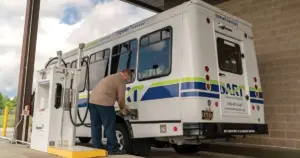
OCTA inaugurated a substantial, high-capacity hydrogen fueling station at its Santa Ana base. Engineered to service roughly 40 to 50 hydrogen fuel-cell buses per day, the facility was intended to serve as the cornerstone of the agency’s long-term zero-emission roadmap. Backed by state grants and regional air-quality initiatives, the station was heralded as a leap forward for regional clean transportation.
January 2026: The Collapse of the Fueling Ecosystem
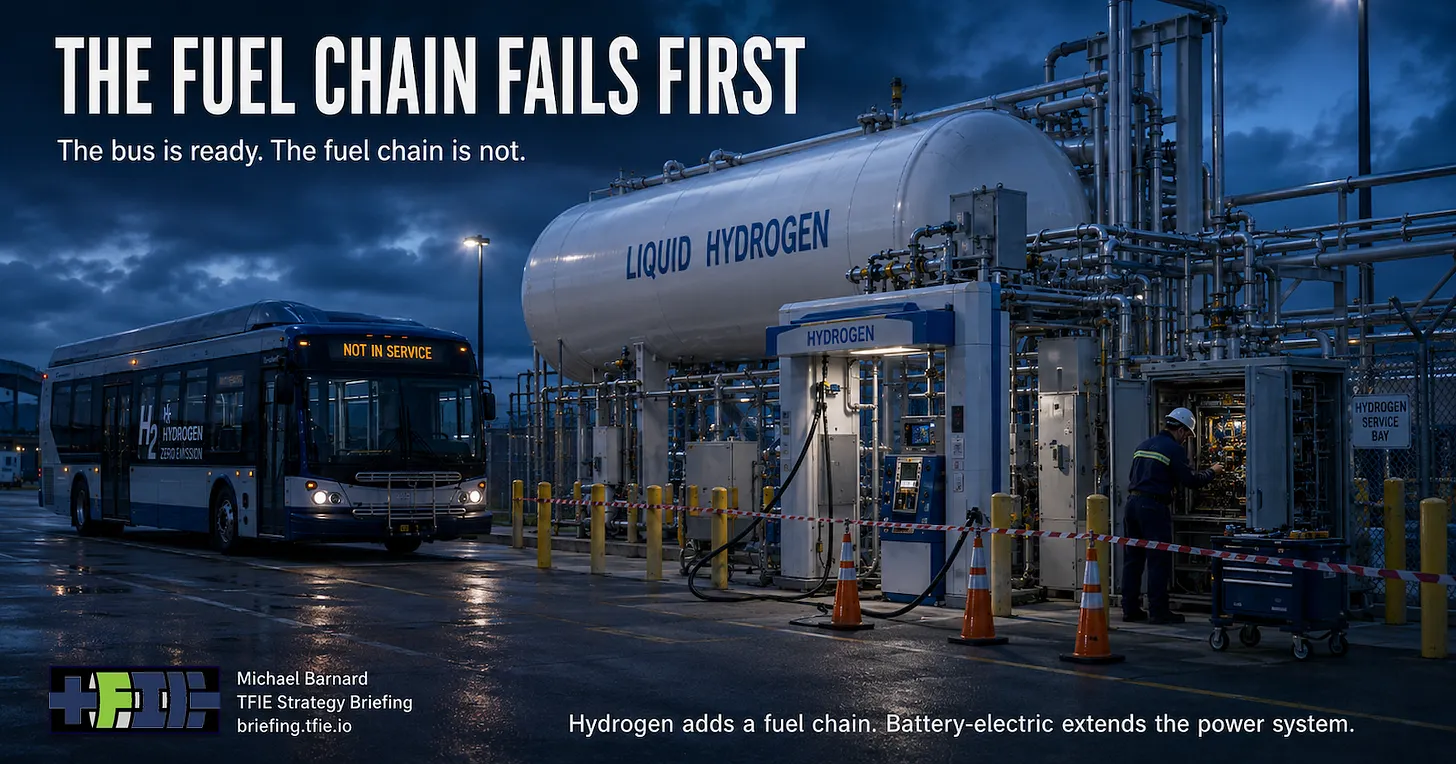
The foundational stability of OCTA’s hydrogen program shattered when the agency and its primary gas supplier, Air Products, failed to negotiate a renewed commercial agreement. The dispute centered on leased liquid-hydrogen storage and vaporization equipment. Rather than reaching a compromise, Air Products exercised its right to remove its physical assets—including the primary storage tank and vaporizers—from the Santa Ana depot in January 2026.
This removal instantly rendered the multimillion-dollar depot fueling system completely unusable. OCTA was left with a fleet of fuel-cell buses that possessed years of remaining mechanical utility but lacked any on-site capability to refuel.

2024–2025: The Operational Freefall
The downstream effects of the Santa Ana station’s decommissioning were immediate and catastrophic for fleet utilization. According to internal transit metrics:
- In 2024, OCTA’s ten fuel-cell buses accumulated a combined total of 270,462 operational miles.
- In 2025, as reliance on the failing infrastructure and temporary stopgap measures took effect, total mileage plummeted to just 14,232 miles—a staggering 95% collapse in service delivery.
To keep the remaining buses on the road, OCTA was forced into expensive, inefficient workarounds, relying on off-site commercial hydrogen stations and temporary mobile fueling units. These stopgaps introduced logistical friction, heightened labor overhead, and exposed the extreme fragility of depending on a single, non-redundant supply chain.
The Present: The $27.6 Million Garden Grove Pivot
Rather than re-evaluating the systemic risks of hydrogen following the Santa Ana failure—an approach taken by other global transit networks facing similar hurdles, such as Aberdeen in the United Kingdom—OCTA doubled down. The agency approved a $27.6 million contract for a new hydrogen station in Garden Grove. This project aims to provide the capacity and redundancy required to support its planned expansion toward 50 hydrogen buses, driving the agency’s total refueling expenditure well past the $100 million mark.
Supporting Context & Metrics: Hydrogen vs. Battery-Electric Realities
OCTA’s unique position of operating both battery-electric buses and hydrogen fuel-cell buses simultaneously offers transit researchers a rare, controlled operational comparison. Rather than relying on theoretical modeling, analysts can observe how both propulsion technologies perform under the exact same geographic, climatic, and administrative conditions.
The Capital and Operational Divide
The financial disparity between scaling the two technologies within OCTA’s network is stark:
- Battery-Electric Infrastructure: OCTA successfully deployed its battery-electric bus charging infrastructure for approximately $6 million. Crucially, the agency reported zero lost bus deployments due to unavailable charging infrastructure.
- Hydrogen Infrastructure: In contrast, hydrogen has demanded continuous, compounding capital infusions. Beyond the initial Santa Ana build, the $27.6 million Garden Grove award encompasses design, construction, facility modifications, continuous hydrogen supply contracts, specialized operations, long-term maintenance, and workforce training. Total refueling expenditures have now ballooned past $100 million.
The Vulnerability of the Fuel Pathway
A fundamental misconception in public transit procurement is that purchasing a bus equates to acquiring a self-contained transportation unit. For battery-electric buses, the vehicle draws power from an electrical grid that already underpins modern industrial and municipal civilization. Upgrading a depot requires heavy-duty utility coordination and transformer investments, but the underlying energy carrier—electricity—is ubiquitous and decentralized.
Hydrogen, however, demands an end-to-end industrial supply chain. A fuel-cell bus can be mechanically flawless while its operational viability is entirely undermined by failures upstream. The hydrogen pathway requires:
- Production: Sourcing green, blue, or grey hydrogen that meets strict purity standards.
- Compression or Liquefaction: Energy-intensive processing to prepare the gas or liquid for transport.
- Transport: Specialized cryogenic tanker trucks moving hazardous materials across highway networks.
- Storage and Dispensing: High-pressure or cryogenic depot infrastructure requiring certified maintenance technicians and specialized safety systems.
When any single link in this chain snaps—such as a commercial dispute over leased vaporization equipment—the entire fleet is immobilized.
Official Statements and Industry Perspectives
The structural challenges facing OCTA have ignited broader debates among transit economists, procurement specialists, and clean-energy analysts regarding the wisdom of municipal hydrogen investments.
Industry analysts point out that transit agencies heavily subsidized by federal and state decarbonization grants often fall victim to the "sunk-cost trap." When initial capital expenditures are heavily underwritten by external grants, agencies are incentivized to pursue capital-heavy, technologically complex projects. However, when those projects encounter systemic operational failure, local taxpayers are left holding the bag for ongoing maintenance and emergency overhauls.
Critics of OCTA’s trajectory argue that the agency’s handling of its fleet violates basic operational common sense. In a scathing assessment of the agency’s strategy, transit analysts noted:

"The rational decision for OCTA would have been to write off its existing 10 hydrogen buses as Aberdeen did in a similar situation, cancel the order for 40 more and lean into battery electric, which was proving in their own system to be more reliable and much cheaper. But OCTA is one of a handful of California transit agencies which still has hydrogen fever, so rational thinking and competence with spreadsheets are in short supply."
Proponents of hydrogen, conversely, maintain that early-adopter growing pains are inevitable in any major technological shift. They argue that as regional hydrogen hubs scale under federal clean-energy legislation, supply chain reliability will stabilize, and fuel costs at the nozzle will drop. From this perspective, investments like the Garden Grove station are necessary pioneer costs to establish a multi-pronged zero-emission transit grid that does not overly rely on the electrical grid during peak-load or emergency scenarios.
Future Outlook: Lessons for Global Transit Procurement
The OCTA case study serves as a cautionary tale for municipal transit authorities worldwide. As cities face legally binding decarbonization mandates, procurement committees must look beyond the gleaming shell of the transit vehicle and rigorously interrogate the ecosystem required to sustain it.
1. Total Cost of Ownership (TCO) Realities
Agencies must calculate the lifecycle costs of fuel delivery, specialized facility maintenance, and supply contract volatility before committing to a propulsion technology. A bus with a 15-year lifespan requires a guaranteed 15-year fuel pathway. If that pathway relies on proprietary equipment leases or concentrated regional suppliers, the agency introduces unacceptable operational risk.
2. The Redundancy Imperative
If agencies choose to pursue hydrogen, they must build structural redundancy into their fueling networks from day one. Single-depot dependencies, as seen in Santa Ana, leave transit networks vulnerable to overnight operational shutdowns. Multiple supply routes, on-site backup storage, and diversified vendor contracts must become mandatory procurement baselines.
3. Pragmatism Over Ideology
Ultimately, the transition to sustainable public transport must be guided by operational reliability and fiscal responsibility rather than ideological attachment to specific fuel types. OCTA’s internal data demonstrates that battery-electric infrastructure delivered high reliability at a fraction of the cost, while hydrogen introduced severe logistical friction and ballooning expenses.
As public transit agencies navigate the remainder of the decade, the lessons of Santa Ana and Garden Grove will loom large: in the race to zero emissions, the infrastructure behind the bus matters far more than the bus itself.