







Executive Overview
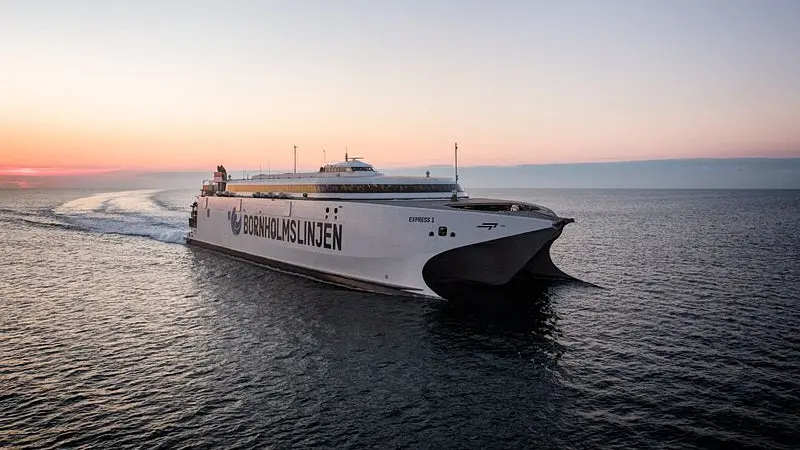
The peak summer travel season for Bornholm concluded with a striking operational dichotomy. Bornholmslinjen, the ferry service operated by Danish maritime company Molslinjen, recorded its second-highest passenger traffic volume for the month of July in its operational history. Driven by robust domestic vacation demand and an influx of international travelers, the operator carried 373,043 passengers to and from the Baltic island—a 4.4% increase compared to the same period in the previous year. Vehicle transport experienced a parallel surge, with car volumes rising 5.7% year-over-year to reach 99,811 units.
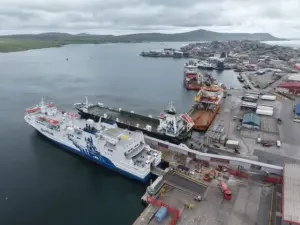
However, these impressive commercial metrics were heavily overshadowed by severe operational disruptions. Throughout July, Bornholmslinjen suffered chronic delays across its primary sea corridors, primarily affecting the high-frequency line between Rønne and Ystad, Sweden. The inability to maintain statutory schedule compliance triggered severe financial sanctions under the terms of Molslinjen’s public service contract with the Danish Ministry of Transport (Trafikstyrelsen).
As a result of these widespread schedule breaches, Molslinjen was penalized over DKK 1.3 million (approximately €174,000) in regulatory performance fines. Commercial Director Lucas Kragh pointed to a complex confluence of external operational constraints, citing extensive marine reconstruction works at the Port of Rønne alongside strict speed limitations enforced in Swedish waters near Ystad. While the operator has committed to an exhaustive post-season audit to rectify schedule vulnerabilities, the crisis has reopened broader debates regarding route buffers, port infrastructure capacity, and the operational resilience of Bornholm’s essential maritime lifeline.
+-----------------------------------------------------------------------------------+
|                        BORNHOLMSLINJEN JULY PERFORMANCE SUMMARY                   |
+--------------------------+-----------------------+--------------------------------+
| Metric                   | July Volume           | Year-over-Year Change          |
+--------------------------+-----------------------+--------------------------------+
| Passenger Volume         | 373,043 passengers    | +4.4%                          |
| Vehicle Volume           | 99,811 vehicles       | +5.7%                          |
| Contractual Penalty      | > DKK 1.3 Million     | N/A (Performance breach)       |
| Primary Disruption Zone  | Rønne–Ystad Corridor  | External bottlenecks cited     |
+--------------------------+-----------------------+--------------------------------+
Detailed Chronology of the Summer Operational Crunch
The Early July Surge and Port Constraints
The operational strain began in late June and escalated rapidly during the first week of July, corresponding with the main wave of Danish and Scandinavian summer school holidays. Passenger throughput on the Rønne–Ystad service—the main route connecting Bornholm to mainland Europe via southern Sweden—reached near-capacity levels.
Simultaneously, major civil engineering projects at the Port of Rønne imposed strict spatial and maneuvering limitations on ferry operations. The port, undergoing a multi-phase master expansion designed to accommodate offshore wind installation vessels and larger commercial ships, restricted the operational footprint around the primary passenger ferry berths. High-speed catamarans, including the flagship Express 1 and Express 5, were forced to navigate narrow harbor basins under lowered speed limits, extending harbor ingress and egress times by several minutes per passage.
Mid-July Cascading Delays and Swedish Speed Restrictions
By mid-July, as daily vehicle loads approached 3,500 units, the initial localized port delays began cascading through the daily sailing schedule. The operational vulnerability was exacerbated by environmental and safety speed restrictions enforced by Swedish maritime authorities in the approaches to Ystad Harbor. Designed to mitigate coastal erosion and safeguard local marine traffic, these speed limits prevented fast-ferry captains from making up lost time while crossing the Bornholmsgat channel.
A typical high-speed turnaround scheduled for 15 to 20 minutes in port routinely stretched past 30 minutes due to crowded passenger ramps and congested vehicle staging lanes. Because the vessels operate on tight, high-frequency rotations—often completing up to eight round trips per day—a single 10-minute delay in the morning compounded into 45-to-60-minute delays by late afternoon and evening.
[Morning Departure: 10-Min Delay]
               │
               ▼
   [Port Rønne Infrastructure Bottleneck]
               │
               ▼
   [Ystad Channel Speed Restriction]
               │
               ▼
[Turnaround Delay Compounding: +15 Mins/Rotation]
               │
               ▼
[Evening Cumulative Delay: 45–60 Mins] ──► [Trigger: Contractual Penalty]
Late July Tally and Regulatory Intervention
By the final week of July, cumulative delay logs submitted to the Danish Transport Agency confirmed that Bornholmslinjen had failed to meet contractual punctuality thresholds across a significant percentage of its scheduled sailings. Under the Public Service Obligation (PSO) tender contract governing the route, punctuality is calculated based on strict arrival windows. Delays exceeding defined allowances automatically generate financial deductions. By the close of the month, accrued penalties officially surpassed DKK 1.3 million.
Supporting Context and Quantitative Data Analysis
Traffic Metrics and Historical Context
The July performance figures demonstrate the underlying strength of Bornholm as a premier tourist destination. Carrying 373,043 passengers in a single month represents the second-highest total ever recorded for Bornholmslinjen, trailing only the record-breaking post-pandemic domestic tourism surge of July 2021.
The 5.7% increase in vehicle transport to 99,811 cars underscores a growing trend toward drive-cation tourism, where visitors bring personal vehicles, campervans, and heavy leisure trailers. This structural shift in passenger logistics significantly increases load times at both Rønne and Ystad, putting additional pressure on port operations.
    JULY PASSENGER VOLUMES (HISTORICAL COMPARISON)

    2021 (Peak)    |===================================| ~385,000
    2024 (Current) |=================================| 373,043 (+4.4%)
    2023           |==============================| 357,320
The Physics and Economics of Fast-Ferry Operations
Molslinjen operates some of the world’s largest high-speed aluminum catamarans on the Bornholm routes. These vessels are engineered for high-speed cruising, but their operational efficiency depends entirely on seamless port turnarounds and unhindered open-water transit.
- Turnaround Sensitivity: Fast ferries rely on precise loading procedures. Dual-vehicle deck loading systems require clear staging areas on shore. When port reconstruction constricts vehicle queuing lanes, loading times increase exponentially.
- Speed Restrictions: High-speed catamarans operate inefficiently at reduced intermediate speeds. Forced low-speed operation in approach channels increases voyage duration without offering meaningful opportunities to burn less fuel or optimize engine thermal cycles.
- Schedule Density: During peak summer operations, schedule buffers are reduced to maximize total daily passenger capacity. When unpredictable delays occur, the lack of schedule buffers leads to immediate disruption across the rest of the day’s departures.
The Contractual Fine System
The Danish Ministry of Transport imposes strict performance parameters on concession operators. The financial framework includes:
- Punctuality Thresholds: Sailings arriving more than 10 minutes past the published schedule are classified as delayed, unless caused by verified force majeure conditions (e.g., severe storm systems exceeding operational sea-state limits).
- Financial Deductions: Fines accrue on a sliding scale per delayed minute per passenger capacity unit.
- Cancellation Penalties: Unannounced cancellations carry higher fine brackets, forcing operators to execute delayed sailings rather than canceling trips to reset the schedule.
Official Statements and Stakeholder Reactions
Corporate Response from Molslinjen
Addressing the dual reality of record passenger numbers and severe operational penalties, Commercial Director Lucas Kragh acknowledged the frustration experienced by travelers while defending the efforts of shipboard and ground crews.
"We have seen extraordinary demand this July, demonstrating the enduring appeal of Bornholm. However, we cannot be satisfied with the level of punctuality we were able to deliver to our passengers," stated Lucas Kragh, Commercial Director at Molslinjen.
"Our crews operated under exceptionally difficult conditions this summer. Construction and harbor expansion works at the Port of Rønne severely restricted our operational maneuverability, while mandatory speed restrictions in the approach waters around Ystad removed our ability to recover lost time while at sea. Once the high season concludes, we will conduct a comprehensive operational audit to analyze every delay factor and implement corrective measures."
Community and Business Sector Concerns
The recurring delays sparked widespread discussion across Bornholm’s business community and local government (Bornholms Regionskommune). Local leaders expressed concern that persistent transport disruptions risk damaging the island’s reputation among international and domestic tourists.
- Tourism Industry: Hospitality stakeholders noted that while high passenger numbers supported local businesses, late-night arrivals caused secondary disruptions for hotel check-ins, restaurant bookings, and local transit connections.
- Freight and Logistics: Freight operators transporting perishable goods and fresh agricultural produce emphasized that ferry delays create backlogs across supply chains, threatening tight delivery windows to mainland distribution hubs.
Future Outlook and Strategic Remediation
To restore schedule reliability and protect its operational margin ahead of future travel seasons, Molslinjen and regional maritime authorities must address several key operational challenges.
+-----------------------------------------------------------------------------------+
|                        STRATEGIC REMEDIATION ROADMAP                              |
+--------------------------+--------------------------------------------------------+
| Focus Area               | Planned Initiatives                                    |
+--------------------------+--------------------------------------------------------+
| Port Infrastructure      | Complete Rønne port expansion; optimize berth layout.  |
| Timetable Buffers        | Re-evaluate summer schedules; expand turnaround times. |
| Regulatory Alignment     | Bilateral talks on Ystad approach speed protocols.     |
| Fleet Deployment         | Review capacity matching and load-management tech.     |
+--------------------------+--------------------------------------------------------+
Port Infrastructure Completion
The ongoing expansion projects at the Port of Rønne are slated to reach key milestones in the coming year. Once completed, the new quay infrastructure and widened harbor basins will provide dedicated berth space for fast ferries, isolating commercial passenger operations from industrial and offshore construction traffic.
Schedule Optimization and Buffer Adjustments
Molslinjen’s upcoming post-season review will likely recommend adjustments to peak-season timetables. Potential modifications include:
- Adding 5 to 10 minutes of buffer time to standard transit schedules between Rønne and Ystad.
- Restructuring shore-side vehicle check-in procedures to speed up boarding.
- Deploying advanced automated vehicle-loading software to optimize deck placement and accelerate disembarkation.
Cross-Border Regulatory Dialogue
Danish transport officials and Molslinjen executives are expected to engage in discussions with Swedish maritime authorities regarding navigation protocols in the Ystad channel. Establishing clear speed standards that balance environmental protection with maritime reliability will be critical to preventing recurring delays during peak summer seasons.
Conclusion
Bornholmslinjen’s performance in July highlights the balance required between high passenger volume and operational efficiency. While high traffic underlines the vital role of the ferry link to Bornholm’s economy, severe delays and resulting financial penalties show the risks of operating at high capacity with tight schedules. Resolving these operational bottlenecks will be essential for Molslinjen to maintain long-term reliability and secure the financial stability of Bornholm’s primary maritime connection.