











Executive Overview
What was initially championed as a groundbreaking leap into the future of American public transportation has instead devolved into a cautionary tale of fiscal mismanagement, misplaced priorities, and technological overreach. In Jacksonville, Florida, the much-touted Neighborhood Autonomous Vehicle Innovation (NAVI) system—billed as the nation’s first municipal "autonomous" transit network—has been abruptly shelved. This suspension coincides with a severe $39 million budget shortfall at the Jacksonville Transportation Authority (JTA), a financial crisis that has also temporarily shuttered the city’s historic eight-stop Skyway monorail and resulted in nearly 200 layoffs.
The fallout has triggered swift regulatory and legal scrutiny. Last week, Florida Attorney General James Uthmeier issued a subpoena to the JTA, demanding a comprehensive accounting of internal financial records, ridership metrics that directly impact state funding allocations, and unconventional agency expenditures, including disputed line items for staff massages.
Urban planning experts and local transit advocates argue that NAVI’s collapse is merely a symptom of a deeper, systemic issue within an agency infatuated with shiny, high-tech novelty while everyday residents—particularly those without personal vehicles—struggle with basic mobility in a sprawling metropolis. By prioritizing unproven, capital-intensive futuristic experiments over tried-and-true transit solutions, the JTA has left taxpayers holding the bag, illustrating the perils of chasing "national firsts" at the expense of community-centric infrastructure.
Detailed Chronology of a Crisis
The unraveling of the JTA’s high-tech transit vision did not happen overnight. It represents a compounding sequence of questionable administrative decisions, public skepticism, and escalating financial pressures.
June 2025: The Launch of NAVI
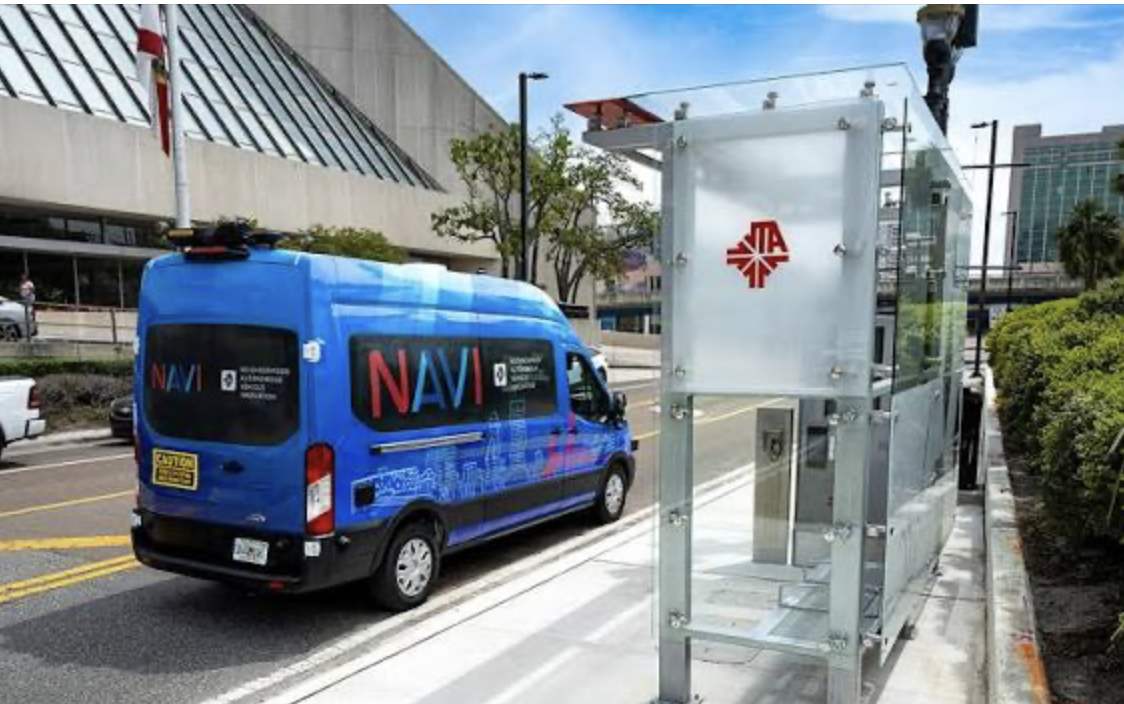
When NAVI officially launched in June 2025, it was met with a mix of fanfare and immediate skepticism. Sporting a hefty $65 million price tag—with $39.5 million drawn directly from local funds—the driverless shuttle system promised to revolutionize downtown mobility. However, the system’s operational footprint was remarkably modest: a 3.5-mile downtown route running primarily along a single corridor, serviced by a fleet of just 14 Ford shuttle vans, each capped at a maximum capacity of nine passengers.
November 2025: Ridership Integrity Questions
Cracks in the program’s narrative began to show less than six months into its operation. In November 2025, local investigative journalists published reports alleging that JTA employees were being compensated to ride the NAVI shuttles for hours at a time. Critics argued this practice artificially inflated ridership numbers, creating an illusion of public demand to secure ongoing viability. While the JTA strongly denied the allegations, maintaining that employees were simply serving as "ambassadors" to help riders acclimate to the new technology, public trust had already begun to erode.
July 2026: Executive Departure and Impending Cuts
By mid-summer 2026, rumors of an impending shutdown began to circulate as the agency’s structural deficits worsened. In July 2026, JTA Chief Executive Officer Nat Ford announced his departure from the agency to assume leadership at the Dallas Area Rapid Transit (DART) system, leaving Jacksonville officials to grapple with the fallout of the mounting fiscal crisis.
September 2026: Budget Deficit and Legal Subpoenas
The crisis reached a boiling point in September 2026, when the JTA formally announced a $39 million budget reduction for the upcoming fiscal year. The cuts forced the indefinite suspension of NAVI service, the temporary mothballing of the aging Skyway monorail, and nearly 200 layoffs. Shortly thereafter, Florida Attorney General James Uthmeier stepped in, issuing subpoenas for financial documents to verify whether inflated ridership figures had improperly influenced state funding formulas.
Supporting Context & Metrics: Sprawl, Spending, and Scalability
To understand why NAVI’s failure has hit Jacksonville so hard, one must examine the city’s unique geographic and structural challenges. Jacksonville spans a staggering 747.3 square miles, making it the largest major city by land mass in the contiguous United States. Recent urban planning studies rank it among the top ten most sprawling metropolitan areas in the nation. Furthermore, safety analyses place the metro area in the top twenty most dangerous U.S. cities for pedestrians.
Against this backdrop of vast suburban sprawl and inadequate pedestrian infrastructure, critics argue that a 3.5-mile downtown shuttle loop was fundamentally incapable of serving the broader community’s needs. The local capital investment of $39.5 million for NAVI outpaced the entire annual operating budget of established transit agencies in other markets—such as the Capital Area Transportation Authority (CATA) in Lansing, Michigan.
Furthermore, a glaring contradiction plagued the NAVI project from its inception: the system was never truly autonomous. Due to a combination of federal regulations and technological limitations, every vehicle required a human safety attendant seated behind the wheel at all times.
"The technology is still risky," notes Ennis Davis, a local transportation planner and co-founder of Jacksonville Magazine. "There are things beyond the city of Jacksonville’s control, beyond JTA’s control; there are federal regulations that have got to be dealt with. But still, a lot of the promises that JTA has made are not coming to fruition."
Official Statements and Local Advocacy
As the JTA navigates its institutional reckoning, public officials have largely remained tight-lipped. The agency did not respond to multiple requests for comment regarding the Attorney General’s subpoena, the sudden CEO departure, or the structural integrity of its long-term financial planning.
In the absence of transparent communication from transit leadership, local advocates have stepped forward to voice community outrage.

"It all spiraled out of control," said Marcus Nelson, a Jacksonville native and public transportation activist. "NAVI was originally supposed to be affordable—and then it became this expensive monstrosity, which I guess that might not happen at all now."
Nelson did not mince words regarding the timing of former CEO Nat Ford’s exit. "Obviously, it’s a pretty bad look to have a large public agency very loudly and proudly chasing this dream to then have their financial position erode in front of them—and then the CEO in charge runs off to another state," Nelson remarked. "Taxpayers feel like they’re being handed a bag… In a state where it’s challenging to bring in new local funding for transit, you’re going to be stuck with this zombie agency walking around with all this infrastructure that they can’t really afford to take advantage of."
Davis echoes these sentiments, emphasizing that NAVI’s greatest harm was the way it diverted political capital and financial resources away from modernizing core transit networks.
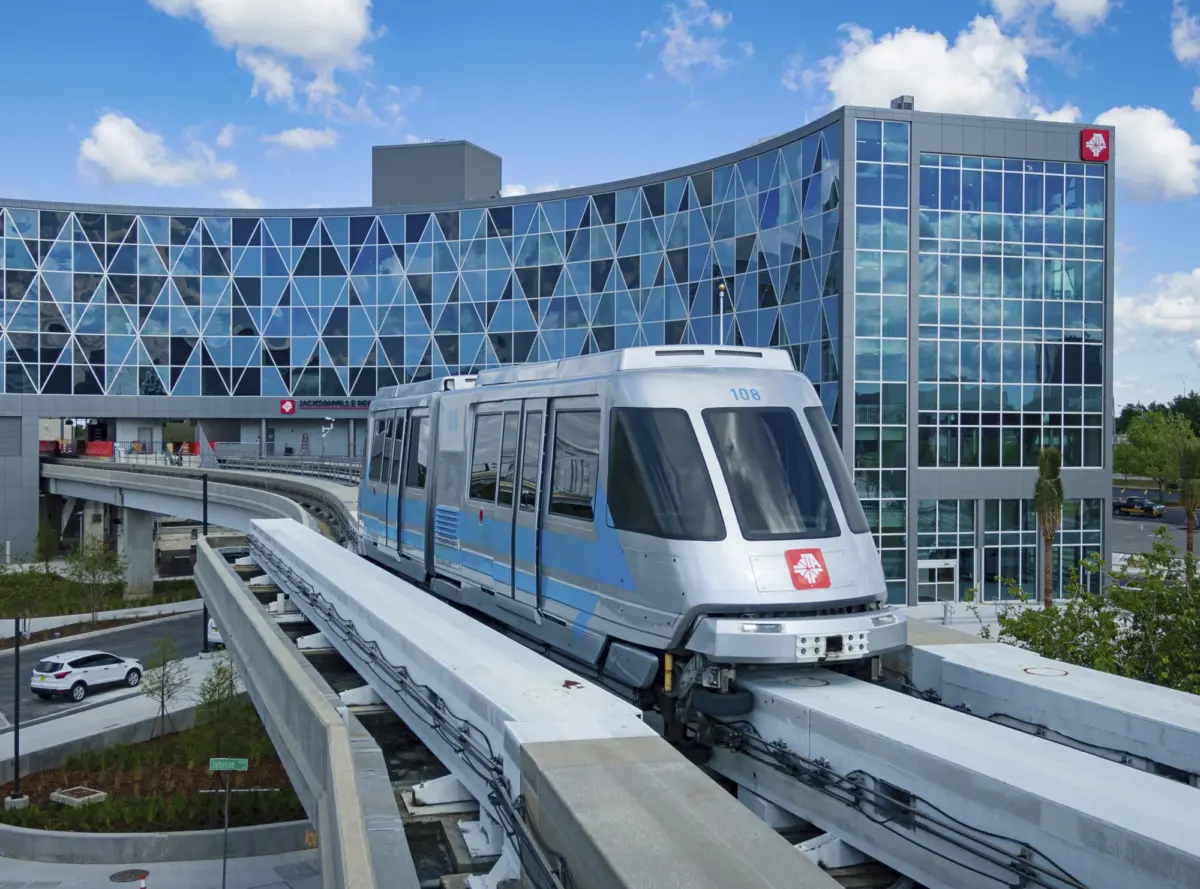
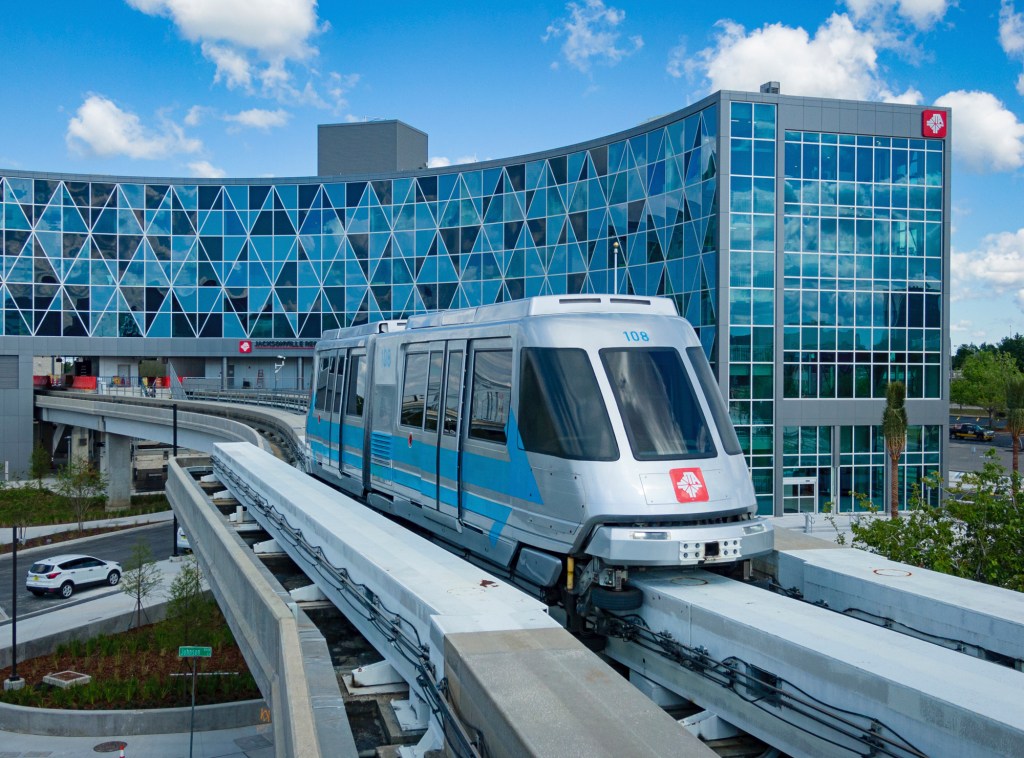
The historical roots of Jacksonville’s rail ambitions trace back to the 1970s, when the city secured federal backing through the Downtown People Mover program to construct the Skyway monorail. Unlike NAVI, the Skyway is genuinely driverless. However, decades of auto-centric policies and suburban sprawl choked its potential. By 2015, the system peaked at a meager 5,000 daily riders in a city surpassing one million residents.
Because the aging infrastructure neared the end of its functional lifespan, the term "Skyway" became, in Davis’s words, "political poison." Rather than address the public’s clear desire for a modernized, expanded rail grid, the JTA rebranded the initiative under the "Ultimate Urban Connector" (U2C) program, pivoting aggressively toward autonomous vehicle experimentation. Today, the agency’s official website defines U2C primarily as a vehicle for integrating AVs into the urban landscape, sidelining community feedback that called for traditional rail expansion.
Future Outlook: A Path Forward or More of the Same?
Even as the JTA asks residents to weigh in on six alternative futures for the Skyway—alternatives that critics fear are purposefully inflated in cost to steer the public toward converting the monorail tracks into elevated roads exclusively for autonomous shuttles—transportation reformers believe a structural reset is possible.
Advocates point to downstate Miami as a blueprint for redemption. Miami’s Metromover, which also originated from the Downtown People Mover grants of the 1970s, faced similar ridership declines in its early decades. However, city leaders integrated the circulator with supportive land-use policies, transit-oriented development around stations, and a robust regional network. The strategy paid off: last month, the Metromover reported a 54.5% year-over-year surge in ridership, buoyed by major international events like the World Cup.
For Jacksonville, recovery requires abandoning the pursuit of vanity metrics and "national firsts."
"We really need to have an honest conversation about transit in general in Jacksonville, and understand that there is no such thing as a one-size-fits-all solution," Davis concludes. "We’ve always tried to come up with the thing that no one else has ever done, and we’ve always said, ‘We’re going to be the first and greatest and best at this.’ But you can wait to see other cities touch the hot stove and burn themselves; you don’t need to touch the hot stove, too."
While automation technology may still have a role to play in modern mobility ecosystems, future deployments must be driven by data and community need rather than institutional prestige. As Jacksonville’s transit agency works through its painful financial contraction, local leaders hope the crisis serves as a permanent reminder that the foundation of public transit must always be built on community trust, fiscal responsibility, and proven utility.
"I think it’s more of a cautionary tale of not bringing the community to the decision-making table of its future," Davis added. "The pain we’re going through now is the first step. Some of these things that we’ve been trying to force people into just need to die."


