


Executive Overview
The modern luxury travel landscape is undergoing a profound paradigm shift. For decades, the upper echelons of maritime tourism were defined by monumental scale—ever-larger cruise liners, hyper-polished megayachts, and floating palaces that sought to replicate the marble-clad, rigidly scheduled environments of land-based grand hotels upon the open ocean. Today, however, legacy hospitality giants like Aman, Four Seasons, and Orient Express are doubling down on this conventional playbook, translating traditional urban luxury codes—strict itineraries, formal dress codes, white-glove service tethered to protocol, and opulent spatial design—onto the water.
Yet, a counter-movement is quietly gathering momentum. At the vanguard of this rebellion is Rascal Voyages, a boutique expedition operator co-founded by industry visionary Steve Ebsworth. Eschewing the opulent formality, rigid timetables, and predictable comfort zones favored by major hospitality conglomerates, Rascal is pioneering a philosophy rooted in what Ebsworth terms a "marine safari."
This article investigates the burgeoning clash of philosophies within high-end maritime tourism. By examining the operational ethos of Rascal Voyages—characterized by radical flexibility, intimate access to remote geographies, and crews trained in intuitive improvisation—we explore why the next frontier of luxury is not about possessing more space or prestige, but about reclaiming personal autonomy, genuine wilderness, and unscripted human experiences.
Detailed Chronology: The Evolution of Modern Maritime Luxury
To understand the disruptive nature of Rascal Voyages, one must first trace the evolutionary trajectory of luxury cruising over the past half-century.
Phase One: The Floating Grand Hotel (1970s – 2000s)
For generations, luxury at sea meant scale and spectacle. Ocean liners and early luxury cruise ships functioned as floating replicas of five-star land-based institutions. The emphasis was placed heavily on interior architecture—grand staircases, casinos, formal dining rooms, and sprawling spas. Passengers traded the unpredictability of the natural world for the controlled, hermetically sealed opulence of a luxury resort. Itineraries were fixed down to the minute, and the primary objective was the cultivation of a polished, uniform social scene.
Phase Two: The Megayacht Boom and Branded Expansion (2010s – Present)
As consumer desires shifted toward privacy and exclusivity, the ultra-luxury sector witnessed the entry of famed hospitality brands. Iconic names synonymous with terrestrial elegance—such as Aman, Four Seasons, and the Accor-backed Orient Express—announced multi-million-dollar investments into custom-built maritime vessels. These projects sought to bring the unmistakable design vocabulary and service standards of their urban properties to the seas. While these ships offered vastly superior aesthetic refinement and lower passenger counts than mass-market liners, their operational philosophy remained fundamentally rooted in predictability, meticulous planning, and traditional luxury tropes.
Phase Three: The Unscripted Turn and the "Marine Safari" (The Present Era)
Running parallel to the branded megayacht boom is a nascent counter-culture of travelers who view scheduled luxury as a form of constraint. This brings us to the operational philosophy experienced firsthand by industry observers in remote archipelagos like Indonesia: the pivot toward radical flexibility.

In this contemporary model, luxury is no longer defined by how many amenities are packed into a stateroom, but by how seamlessly an operation can dissolve in the face of human reality. When a traveler feels under the weather during a planned excursion in a remote Indonesian cove, the traditional luxury response involves cajoling, scheduling compromises, or logistical friction. The emergent alternative—exemplified by Rascal’s agile tender operations—demonstrates a new standard: the schedule bends softly around the guest. Within five minutes of signaling a desire to return, a tender arrives. There is no guilt, no pressure to rally, and no disruption to the organic flow of the voyage. This micro-moment of liberation encapsulates a macro-shift in how high-net-worth individuals wish to experience the world.
Supporting Context & Metrics: The Economics of Intimacy vs. Scale
To fully appreciate the commercial and philosophical stakes of this industry division, it is necessary to examine the market dynamics, operational metrics, and traveler psychology driving both approaches.
The Macroeconomics of Branded Megayachts
The entry of hospitality giants into the maritime sector represents a massive capital expenditure. Constructing a custom luxury yacht to the exacting standards of a Four Seasons or an Aman requires investments running into the hundreds of millions of dollars. To amortize these costs, these vessels must optimize occupancy, maintain predictable maintenance schedules, and operate within established, high-traffic cruising lanes where port infrastructure can support their vast logistics chains.
- Average Passenger Capacity: Typically ranges from 100 to 300 guests on branded yachts.
- Logistical Footprint: Requires deep-water ports, pre-cleared customs hubs, and extensive shoreside coordination.
- Service Model: Hierarchical, standardized, and protocol-driven, ensuring brand consistency whether a vessel is sailing through the Mediterranean or the Caribbean.
The Economics of the "Marine Safari"
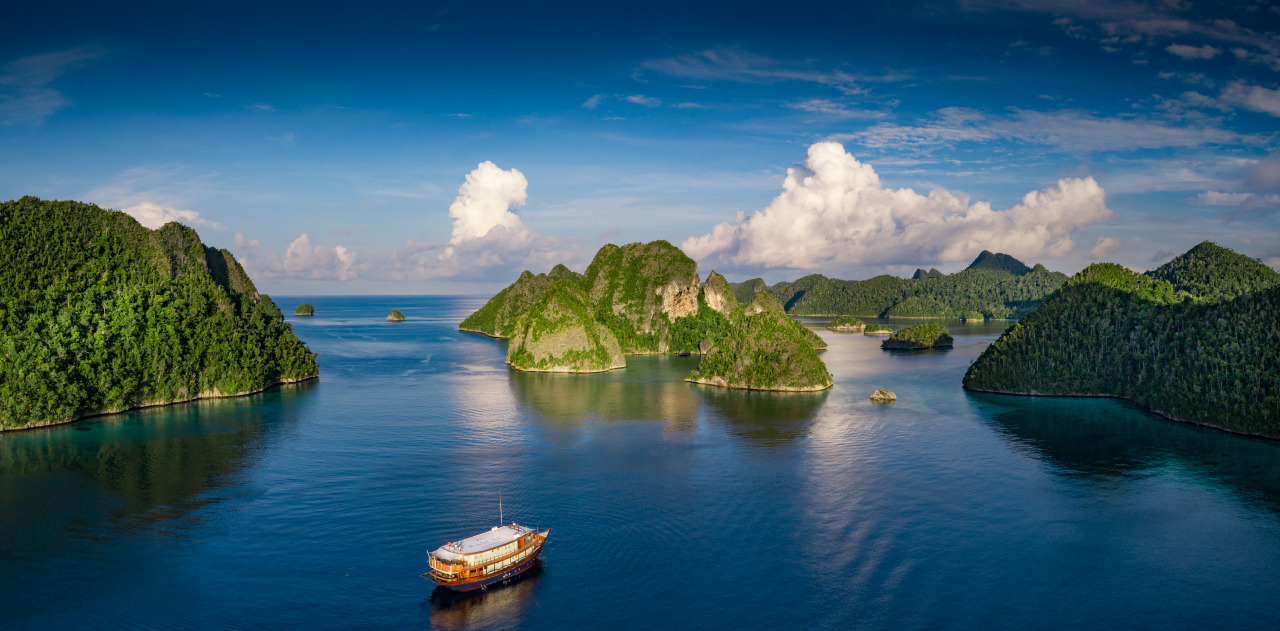
Conversely, the boutique expedition model—championed by Rascal Voyages—operates on an entirely different financial and operational blueprint. By utilizing intimate, custom-built traditional Indonesian phinitos or specialized small craft, operators drastically reduce their physical footprint while exponentially increasing their access capabilities.
- Average Passenger Capacity: Frequently restricted to private charters or micro-groups of 8 to 12 guests.
- Logistical Footprint: Shallow drafts allow access to uncharted coves, hidden lagoons, and remote island communities inaccessible to larger vessels.
- Service Model: Fluid, intuitive, and decentralized. Crews are not reading from a corporate service manual; they are empowered to improvise based on real-time environmental and emotional variables.
| Metric / Dimension | Traditional Branded Megayachts | Boutique Marine Safaris (Rascal Model) |
|---|---|---|
| Vessel Scale | Large (100+ passengers) | Intimate (Under 15 passengers / Full Buyout) |
| Itinerary Flexibility | Rigidly pre-planned; port slots booked months in advance | Dynamic; capable of altering course instantly |
| Service Philosophy | Formal, protocol-driven, high-gloss | Intuitive, informal, highly responsive improvisation |
| Primary Geographic Focus | Established cruising corridors (Mediterranean, Caribbean) | Remote, off-the-grid archipelagos (Indonesia, Melanesia) |
| Definition of Luxury | Replicating land-based palace standards at sea | Access to raw wilderness paired with absolute personal freedom |
Official Statements & Industry Perspectives
The philosophical chasm between these two worlds is best articulated by the leaders shaping them. While major hospitality groups market their maritime ventures as floating extensions of their urban sanctuaries, innovators like Steve Ebsworth are rewriting the vocabulary of adventure.
Industry analysts note that high-net-worth travelers are experiencing "luxury fatigue." The traditional markers of status—manifested in gold-plated fixtures, Michelin-starred dining rooms at sea, and hyper-curated itineraries—are increasingly viewed as confining rather than liberating.
As Steve Ebsworth observes, the future of high-end travel does not lie in building bigger floating hotels that insulate guests from their environments. Instead, it lies in designing intelligent, responsive platforms that grant authentic access to remote places while delivering "useful freedom."
In an internal briefing regarding the ethos of Rascal Voyages, leadership emphasized that true hospitality in the wilderness requires letting go of institutional control. When a crew is trained to improvise rather than execute a script, the power dynamic shifts from the corporation to the traveler. The guest is no longer an audience member watching a luxury performance; they are an active participant in an unscripted journey.
Future Outlook: Where is High-End Maritime Travel Heading?
As we look toward the horizon of the luxury travel sector, two distinct trajectories are solidifying:
- The Consolidation of Floating Real Estate: Major hotel brands will likely continue to capture a segment of the market composed of traditional cruisers who desire familiar luxury standards. For these travelers, the safety of a brand name and the presence of hyper-polished, predictable amenities remain paramount.
- The Rise of Radical Autonomy: Simultaneously, the demand for transformative, off-grid experiences will accelerate among discerning travelers who equate luxury with time, space, and freedom from constraint. Operators who master the art of the "marine safari"—those who can safely navigate the remote corners of the globe while offering absolute emotional and operational flexibility—will capture the imagination of the modern explorer.
Ultimately, the future belongs to those who recognize that the ocean cannot, and should not, be tamed into a floating hotel lobby. The true luxury of the twenty-first century is not found in marble bathrooms on steel hulls, but in the profound, quiet luxury of a schedule that bends when you need it to, a tender that arrives in five minutes, and a world left wild, open, and entirely your own.