








Executive Overview
In the wind-swept, grey waters of the Baltic Sea, a high-stakes maritime interdiction unfolded on Thursday, signaling a dramatic shift in Northern Europe’s defense posture. Masked operators from Finland’s elite tactical units descended from helicopters onto the deck of a target vessel, executing a rapid-containment drill designed to counter a threat that has increasingly plagued the region: undersea sabotage.
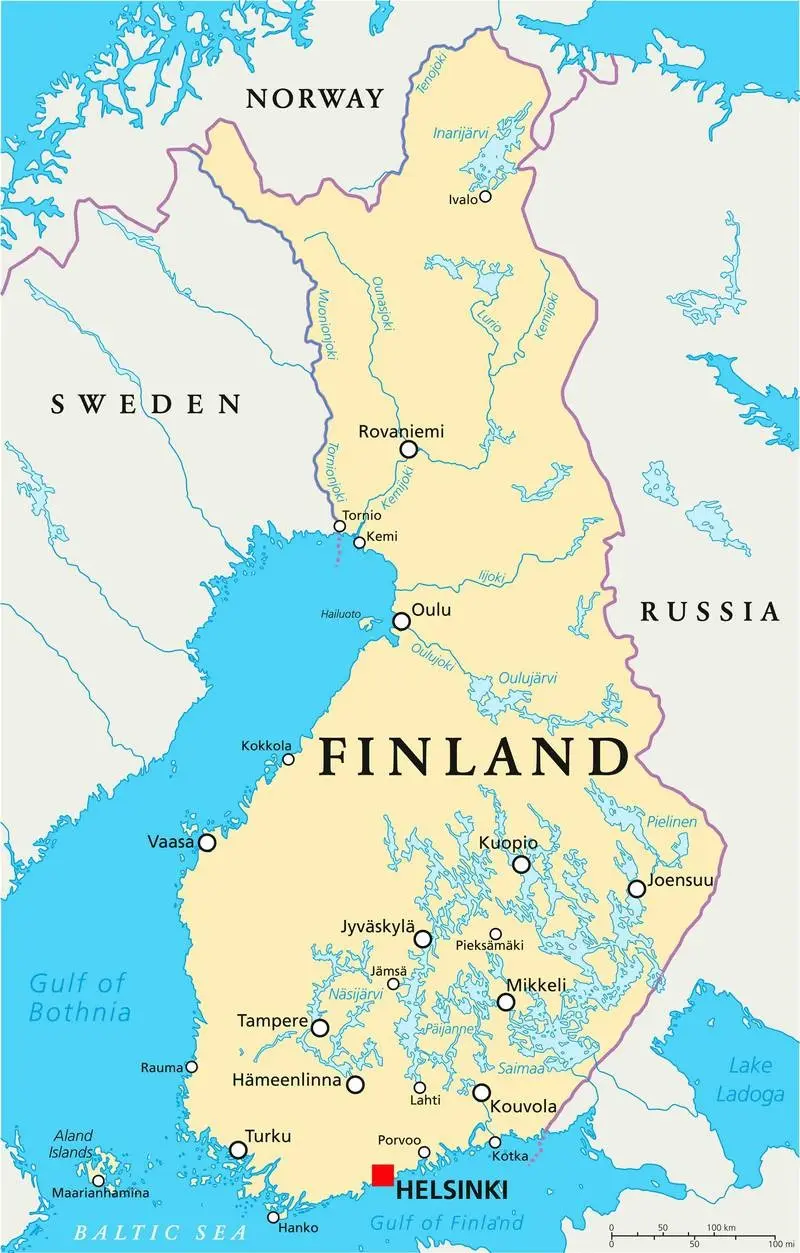
Since Russia’s full-scale invasion of Ukraine in 2022, the Baltic Sea has transformed from a peaceful commercial highway into a primary theater for "grey-zone" hybrid warfare. A succession of unexplained ruptures to critical subsea power cables, telecommunications lines, and natural gas pipelines has exposed a glaring vulnerability in Western infrastructure. For Finland—NATO’s newest frontline member sharing a 1,340-kilometer border with Russia—protecting these vulnerable undersea lifelines is no longer a theoretical exercise. It is an operational emergency.
Thursday’s live-fire boarding drill was not merely routine training; it was a calibrated display of national resolve and tactical capability. By simulating the interception and seizure of a non-compliant vessel suspected of damaging maritime infrastructure, Finnish authorities sent a clear message to adversaries: any attempt to disrupt the region’s energy or data networks will be met with immediate, decisive, and armed intervention.
Detailed Chronology: The Baltic’s Vulnerability Timeline
To understand the urgency behind Finland’s military readiness, one must examine the rapid escalation of maritime incidents in the Baltic Sea over the past two years. Once considered a secure maritime domain, the Baltic has become a high-risk corridor where commercial vessels are increasingly suspected of acting as proxies for state-sponsored sabotage.
[Sept 2022: Nord Stream Explosions]
       │
       ▼
[Oct 2023: Balticconnector & Telecom Cable Severed] (Suspect: Newnew Polar Bear)
       │
       ▼
[Late 2024: Multi-point Telecom Cable Cuts] (Suspect: Yi Peng 3)
       │
       ▼
[Present: Finland Implements Rapid Interdiction Protocols]
September 2022: The Nord Stream Watershed
The modern era of Baltic infrastructure vulnerability began with the catastrophic sabotage of the Nord Stream 1 and 2 natural gas pipelines in Swedish and Danish waters. The massive underwater explosions, which released hundreds of thousands of tons of methane into the atmosphere, proved that modern subsea energy corridors were highly vulnerable to targeted attacks. While investigations into the perpetrators continue, the incident shattered the illusion of safety for European underwater infrastructure.
October 2023: The Balticconnector Rupture
Just over a year later, in October 2023, the Balticconnector gas pipeline—linking Finland and Estonia—suffered a sudden pressure drop. Investigators quickly determined that the steel-clad pipeline, alongside an adjacent telecommunications cable, had been dragged and severed by a heavy object.
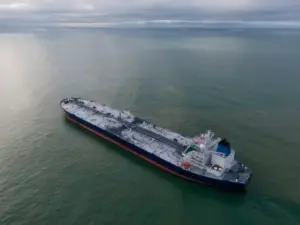
Suspicion quickly fell upon the Newnew Polar Bear, a Hong Kong-flagged container ship. Satellite tracking and maritime data revealed the vessel had dragged its massive anchor across the seabed for miles, directly over the pipeline corridor, before continuing its journey. By the time Finnish and Estonian authorities fully pieced together the maritime telemetry, the vessel had already exited their immediate operational reach, highlighting a critical gap in rapid-response capabilities.
Late 2024: The Multi-Point Cable Cuts
The pattern of disruption repeated itself with alarming precision in late 2024, when two vital fiber-optic telecommunications cables—one linking Finland to Germany (C-Lion1) and another connecting Sweden to Lithuania—were severed within a 24-hour window. A Chinese-flagged bulk carrier, the Yi Peng 3, became the focus of international attention after its movements closely mirrored the locations of the damaged cables. Unlike the 2023 incident, regional navies and coast guards responded with heightened urgency, monitoring the vessel closely as it transited international waters.
The Evolution of Finland’s Tactical Response
Helsinki’s strategic doctrine has sharpened rapidly with each successive incident. During the 2023 Balticconnector crisis, bureaucratic delays and a lack of real-time interdiction protocols allowed the suspect ship to sail on unimpeded. Today, the response mechanism has been radically streamlined. Under new operational guidelines, Finnish security forces can now place a suspect vessel under physical control within hours of detecting suspicious maritime activity, bridging the gap between detection and physical intervention.
Tactical Execution: Inside the Live Drill
Thursday’s live-action drill served as a showcase for Finland’s unified, inter-agency response model. The exercise simulated a scenario in which a commercial cargo vessel was suspected of actively dragging an anchor or deploying covert assets to damage undersea infrastructure.
Air-to-Sea Insertion
The operation commenced with the arrival of a Super Puma helicopter hovering over the target vessel’s stern. Battling high winds and choppy Baltic swells, masked operators from the Finnish Border Guard’s special actions unit, the national police’s elite Karhu (Bear) special intervention unit, and the Finnish Defence Forces initiated a rapid tactical insertion.
Operators fast-roped onto the wind-swept deck of the vessel in rapid succession, their weapons drawn and eyes scanning the superstructure. Within seconds of landing, the assault team established a security perimeter on the deck, neutralizing simulated resistance and securing the ship’s crew.
Room-by-Room Clearance
Once the deck was secured, tactical teams split into specialized elements to clear the ship’s interior. Moving through narrow companionways, steep ladders, and the engine room, the operators executed a methodical, room-by-room sweep. The primary objective was twofold: secure the ship’s bridge to command the vessel’s propulsion and navigation, and search the cargo holds and deck spaces for equipment that could be used in underwater sabotage, such as winch systems, heavy-duty cutting gear, or remote-controlled submersibles.
Identifying the Signs of Subsea Sabotage
A key component of the drill was training personnel to recognize the telltale operational indicators of underwater interference. According to Coast Guard officials, these signs are often subtle but highly distinct on maritime tracking networks:
- Abrupt Course Deviations: Sudden, unexplained changes in a vessel’s heading while passing directly over charted undersea lines.
- Unusual Speed Fluctuations: A dramatic drop in transit speed—often down to 1–3 knots—indicative of a ship dragging a heavy object or anchor along the seabed.
- Suspicious Loitering: Prolonged stationary positioning or circular patterns directly over critical pipeline or cable junctions.
- Atypical AIS Disruptions: The deliberate disabling or intermittent transmission of the Automated Identification System (AIS) transponder in high-density infrastructure zones.
Supporting Context & Metrics: The Vulnerable Baltic Chokepoints
The Baltic Sea is uniquely vulnerable to both accidental damage and deliberate hybrid warfare. It is one of the busiest maritime trade routes in the world, characterized by shallow depths, dense commercial traffic, and a labyrinth of critical utility corridors.
Key Metrics of Baltic Sea Infrastructure
| Infrastructure Type | Estimated Length / Volume | Key Strategic Function | Primary Vulnerability |
|---|---|---|---|
| C-Lion1 Fiber-Optic Cable | ~1,200 km | Direct high-speed data link between Finland and Central Europe | Shallow depth, susceptible to dragging anchors |
| Balticconnector Pipeline | 77 km (marine section) | Bidirectional natural gas flow between Finland and Estonia | High visibility on maritime charts, critical for regional energy security |
| Estlink 1 & 2 Cables | ~150 km combined | High-voltage direct current (HVDC) power transfer | Essential for stabilizing Baltic states’ electricity grids |
| Nord Stream 1 & 2 | ~1,220 km per line | Dormant/damaged natural gas transit | Exposed in international waters outside territorial jurisdictions |
The Shallow-Water Threat Matrix
The average depth of the Baltic Sea is just 55 meters (180 feet), with many critical infrastructure corridors sitting in waters shallower than 40 meters. This shallow profile makes the seabed highly accessible. While deep-ocean cables require specialized deep-sea submersibles to access, Baltic infrastructure can be reached using relatively low-tech civilian equipment.
Furthermore, the seabed is crowded. At any given moment, there are roughly 2,000 large commercial vessels transiting the Baltic Sea. Distinguishing between a legitimate commercial vessel experiencing a genuine anchor emergency and a hostile actor executing a deniable sabotage operation is one of the greatest challenges facing maritime security planners today.
                       [SURFACE VESSEL]
                             │
       ┌─────────────────────┴─────────────────────┐
       ▼                                           ▼
[CONVENTIONAL THREATS]                    [ASYMMETRIC THREATS]
 ├── Dragged Anchors                       ├── Combat Divers
 ├── Heavy Trawl Gear                      ├── Mini-Submarines
 └── Accidental Grounding                  └── Explosive-Laden UUVs
Official Statements & Strategic Perspectives
The live-fire exercise drew sharp commentary from the operational commanders tasked with defending Finland’s maritime borders. Their statements reflected a sober acceptance of a permanently altered security landscape.
The "New Normal"
Coast Guard Commander Ilja Iljin, who directed the boarding exercise, emphasized that the drill was a direct response to a fundamental shift in regional stability.
"In the past two or three years we’ve had several incidents in the Baltic related to the damaging of critical underwater infrastructure," Iljin stated, standing on the deck of a patrol vessel. "So we have to be ready for when the next event happens. This is the new normal for us."
Iljin pointed out that the speed of intervention is now the most critical variable in deterring future attacks. By demonstrating the ability to board and seize a vessel in international or territorial waters within hours of a detected anomaly, Finland aims to eliminate the "escape window" that previous suspect vessels exploited.
Rapid Mobilization Capabilities
The logistical reality of launching these high-risk boardings requires unprecedented coordination between civilian police and military units. Chief Inspector Juha Hietala, representing the Finnish Police’s special intervention unit, detailed the rigorous standby protocols now in place.
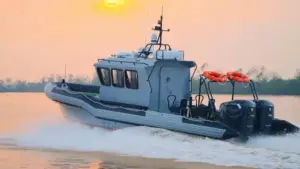
"In a real call-out, our specialized officers on standby can be at their operational base within an hour," Hietala explained. "From there, we can deploy immediately by helicopter or high-speed tactical interceptor boats to any point within our maritime zone of responsibility."
Hietala emphasized that this inter-agency synergy—combining the law enforcement authority of the police with the maritime capabilities of the Coast Guard and the firepower of the armed forces—is central to Finland’s "Comprehensive Security" model.
Future Outlook & Legislative Reforms
As tactical units refine their physical boarding maneuvers, a parallel battle is being waged in the halls of parliament in Helsinki. The evolving nature of grey-zone warfare has exposed significant gaps in international maritime law, prompting the Finnish government to pursue sweeping legislative reforms.
Closing Legal Loopholes in the EEZ
Under the United Nations Convention on the Law of the Sea (UNCLOS), coastal states enjoy limited jurisdiction within their Exclusive Economic Zones (EEZs)—the areas where most Baltic infrastructure damage has occurred. In the EEZ, foreign vessels enjoy freedom of navigation, making it legally challenging for a coastal state to board and inspect a foreign-flagged ship unless there is clear evidence of a major environmental disaster or piracy.
To counter this, the Finnish government is actively seeking new legislative powers to expand the authority of the Border Guard. The proposed reforms would allow authorities to:
- Interdict Suspect Vessels: Stop, board, and inspect ships suspected of flying false flags, operating without nationality ("stateless" vessels), or engaging in suspicious activities directly over critical infrastructure corridors.
- Neutralize Unmanned Threats: Authorize immediate kinetic and electronic intervention against unmanned underwater vehicles (UUVs), autonomous underwater vehicles (AUVs), and aerial drones operating in the vicinity of pipelines and cables.
- Establish Exclusion Zones: Declare temporary maritime exclusion zones around critical infrastructure during periods of heightened geopolitical tension or maintenance operations.
Preparing for the Next Generation of Sabotage
While current incidents have primarily involved commercial vessels dragging anchors, security analysts warn that future tactics will be far more sophisticated. Finnish defense planners are actively preparing for high-tech, deniable operations that leave no surface footprint. These threats include:
- Specialized Combat Divers: State-sponsored divers deployed from civilian-looking vessels to place localized explosive charges.
- Midget Submarines: Small, quiet submarines capable of navigating shallow Baltic waters undetected by traditional sonar arrays.
- Explosive-Laden UUVs: Low-cost, autonomous underwater drones programmed to target specific infrastructure coordinates, neutralizing the need for a surface ship to loiter over the target.
Regional Integration and Collective Defense
Finland’s proactive stance is setting a precedent for the wider Baltic region. As Estonia, Latvia, Lithuania, Poland, Sweden, and Germany grapple with similar vulnerabilities, Helsinki’s rapid-interdiction model is being studied as a blueprint for collective maritime security.
With the Baltic Sea now almost entirely surrounded by NATO member states, the alliance is working to integrate maritime surveillance data, satellite imagery, and underwater acoustic arrays into a unified picture. Finland’s live-fire drills demonstrate that when the next sensor trips on the Baltic seabed, the response will not be a diplomatic protest—it will be an elite tactical team descending from the skies.