









Executive Overview
In the sprawling, car-centric landscape of Southern California, urban transit has long battled a persistent, frustrating enemy: the illegally parked or passing vehicle. For decades, dedicated bus lanes and transit stops—lifelines for daily commuters and vulnerable populations alike—have been treated by motorists as convenient temporary parking spots, delivery zones, or bypasses for heavy traffic. The consequences are well-documented: delayed buses, unreliable schedules, increased carbon emissions, and severe accessibility barriers for disabled passengers trying to board.
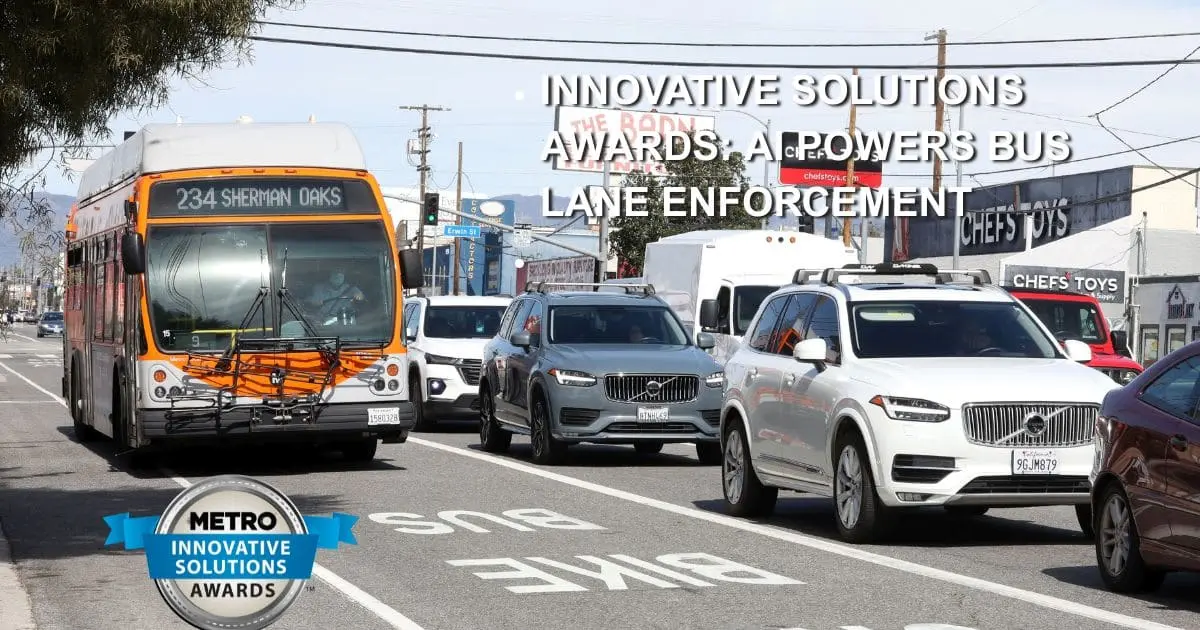
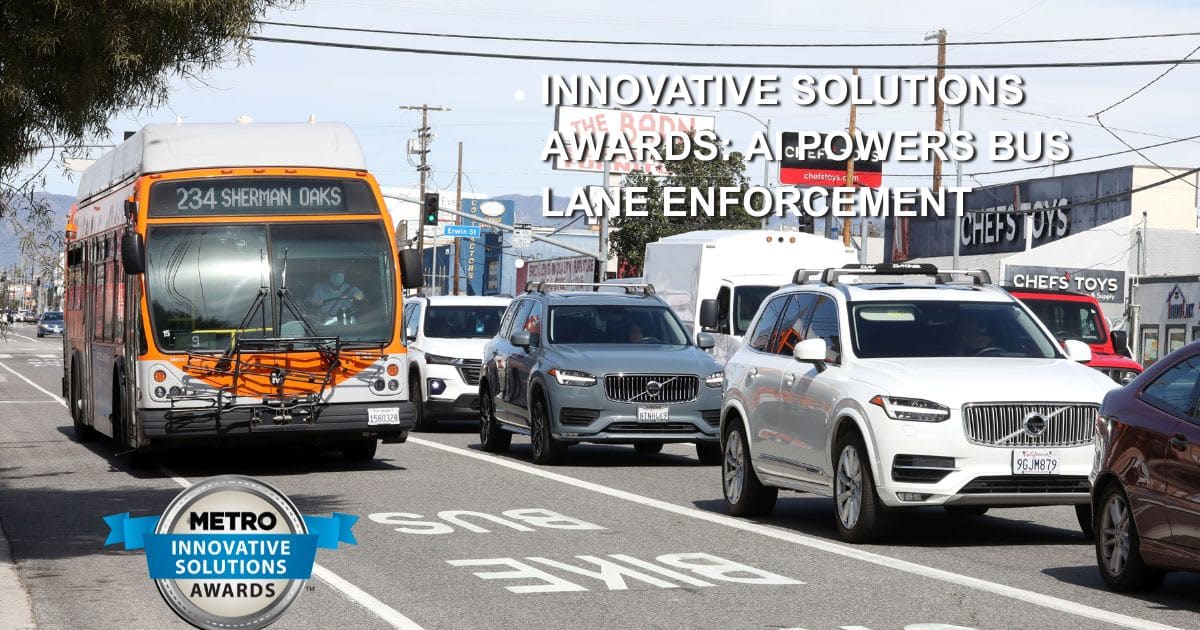
Enter a pioneering, award-winning initiative that is rapidly changing the urban mobility paradigm. The City of West Hollywood, in close strategic partnership with the Los Angeles County Metropolitan Transportation Authority (LA Metro), Hayden AI, T2 Systems, and LAZ Parking, has successfully implemented an advanced, AI-powered bus lane and bus stop enforcement program. This groundbreaking collaboration has earned prestigious recognition, securing METRO Magazine’s Innovative Solutions Award for its ingenious fusion of cutting-edge technology, automated digital workflows, and unwavering human oversight.
At its core, the program transforms everyday public transit vehicles into active municipal monitors. By outfitting select LA Metro buses with computer vision technology, the city can now monitor entire routes continuously, capturing violations that traditional, stationary parking enforcement officers could never efficiently police. Yet, unlike fully automated systems that risk alienating the public, this program anchors its foundation in strict human oversight. Every potential infraction flagged by artificial intelligence is rigorously reviewed by trained municipal personnel before a citation is ever generated.
By combining proactive enforcement with stringent privacy safeguards, automated back-office processing, and cross-jurisdictional cooperation, this collaborative framework provides a scalable, future-proof blueprint for cities nationwide looking to restore order to their congested roadways and breathe new life into public transportation.
Detailed Chronology and Technological Architecture
The Genesis of a Collaborative Vision
The journey toward automated, intelligent bus lane enforcement in West Hollywood was born out of sheer operational necessity. Traditional parking enforcement models rely heavily on traffic officers patrolling active transit corridors in marked vehicles or on foot. In a densely populated, highly dynamic urban environment like West Hollywood—where curb space is fiercely contested and traffic congestion is a daily reality—this legacy approach proved fundamentally unsustainable. Officers could not be everywhere at once, and manual enforcement often resulted in reactionary, piecemeal responses to a systemic problem.
Recognizing that modern challenges require modern solutions, the City of West Hollywood joined forces with LA Metro to rethink the enforcement lifecycle. They needed a system capable of operating at scale across active transit routes without placing an impossible burden on municipal human resources. This realization sparked a multi-agency partnership uniting municipal government, a major transit operating agency, and specialized technology providers: Hayden AI for computer vision, T2 Systems for parking management and citation processing, and LAZ Parking for operational ground support.
The Technological Pipeline: From Roadway to Resolution
The operational engine of the program is built on an end-to-end digital workflow designed to maximize efficiency while eliminating redundant administrative labor. The technological deployment unfolds in several distinct phases:
- Edge Detection via Mobile Computer Vision: Specially equipped LA Metro buses traversing routes through West Hollywood are fitted with Hayden AI’s advanced, vision-based camera systems. As the bus travels its normal route, the onboard AI continuously scans the roadway, dedicated bus lanes, and transit stops.
- Intelligent Filtering and Data Capture: The system’s edge-processing capabilities are calibrated to identify specific infractions, such as vehicles illegally stopped, parked, or driving in restricted transit zones. When a potential violation is detected, the system instantly captures a short video clip, a high-resolution image of the vehicle’s license plate, and precise geospatial and temporal metadata. To respect privacy and optimize data transfer, the system only transmits snippets involving potential infractions.
- Human-in-the-Loop Review: Eschewing purely automated punitive measures, the transmission routes directly to trained City of West Hollywood parking enforcement personnel. These professionals examine the video and photographic evidence to verify the validity of the infraction. If the evidence is deemed insufficient, the case is discarded. If approved, the case enters the citation phase.
- Automated Back-Office Processing: Once approved by municipal staff, the data seamlessly integrates into T2 Systems’ T2 Flex platform. This cloud-based parking management suite automates the heavy lifting of the administrative workflow: conducting Department of Motor Vehicles (DMV) registered owner lookups, generating official citations, dispatching notices, handling payment processing, managing appeals, and tracking collections.
Transforming Administrative Efficiencies
Prior to the implementation of this integrated workflow, municipal staff faced a sluggish, highly manual administrative process. Processing a single traditional parking or transit lane violation often required 10 to 15 minutes of tedious data entry, cross-referencing, and physical document management.
Today, the automated architecture of the T2 Flex platform reduces that administrative burden to mere seconds per approved case. This dramatic reduction in friction has liberated city personnel from repetitive, low-value clerical tasks, allowing them to redirect their expertise toward higher-priority community safety and parking management initiatives.
Supporting Context, Metrics, and the Rider Experience
Extending Coverage Across Entire Transit Corridors
The transformative power of bus-mounted enforcement lies in its inherent mobility. Traditional enforcement is constrained by geography and officer availability; a parked patrol car is visible from blocks away, allowing opportunistic drivers to temporarily dodge compliance or move their vehicles just in time.
In contrast, a bus-mounted camera travels wherever the transit route goes. It sweeps through the entire corridor dozens of times a day, capturing transient violations—such as delivery trucks pausing briefly in a bus lane or motorists idling in a designated bus stop—that would otherwise go completely unnoticed by static enforcement assets.
This pervasive, route-wide consistency fundamentally alters driver psychology. As motorists realize that transit corridors are continuously and reliably monitored, long-term behavioral patterns shift. The ultimate goal of the program is not merely generating revenue through citations, but achieving widespread compliance that keeps transit paths unobstructed.
Reclaiming Reliability and Accessibility
For the everyday transit rider, the impacts of this program are profound and immediate. When dedicated bus lanes are kept clear of unauthorized vehicular traffic, buses can maintain their schedules without getting bogged down in general congestion. This directly translates to improved on-time performance, reduced travel times, and greater schedule reliability—attributes that are essential for commuters depending on tight transfer windows.
Equally critical is the restoration of accessibility at bus stops. Unobstructed zones are not just a matter of convenience; they are a legal and ethical imperative. When vehicles park illegally in bus stops, transit operators are often forced to halt buses several feet away from the curb. This creates dangerous conditions for all boarding passengers, but it presents an insurmountable barrier for individuals with disabilities.
With bus stops consistently cleared by proactive enforcement, bus operators can safely and smoothly deploy wheelchair ramps and lifts, ensuring that public transportation remains truly inclusive and accessible to all members of the community.
Safeguarding Public Trust: Privacy and Transparency
Deploying artificial intelligence and camera-based monitoring systems in public spaces inevitably raises valid questions regarding privacy, surveillance, and data security. Recognizing these concerns, the project partners embedded privacy, transparency, and fairness into the DNA of the program from its inception.
The Hayden AI technology deployed in West Hollywood is strictly specialized:
- No Facial Recognition: The cameras are engineered solely to detect roadway infrastructure, lane demarcations, and vehicles. They do not utilize facial recognition software and do not track or identify pedestrians.
- No Interior Monitoring: The systems do not monitor passenger activity, audio, or video inside the cabin of the bus.
- Targeted Capture: The system only records and transmits data when a specific, potential transit lane violation is identified.
Furthermore, data retention practices strictly adhere to California’s stringent legal mandates, specifically AB 917. Any captured footage that does not contain verifiable evidence of an infraction is automatically purged within 15 days. Footage used to support an officially issued citation is retained only for the legally prescribed duration before being permanently deleted. These robust protections ensure that the program achieves its operational objectives without compromising civil liberties or eroding public trust.
Official Statements and Industry Recognition
Celebrating Innovation with METRO Magazine
The collaborative success of the West Hollywood and LA Metro partnership did not go unnoticed by industry leaders. Awarded METRO Magazine’s prestigious Innovative Solutions Award, the initiative was celebrated as a benchmark for modern urban governance. Project leaders emphasized that the accolade validates not just the underlying technology, but the tangible, real-world improvements delivered to the community.
"Winning a METRO Magazine Innovative Solutions Award is a tremendous honor, and it’s especially meaningful because it recognizes a program built to solve a very practical, persistent problem: keeping bus lanes and bus stops clear so transit can move safely and reliably," project officials stated.
The Indispensable Role of Human Judgment
Throughout the rollout of the initiative, municipal leaders and technology partners have consistently reiterated that artificial intelligence is a tool to empower human decision-making, not replace it. The commitment to maintaining a strict "human-in-the-loop" protocol remains a cornerstone of the program’s legitimacy and community acceptance.
"The greatest value comes when the technology supports, rather than replaces, human judgment," project officials noted. "Trained parking enforcement staff still review and approve every potential violation before a citation is ever issued."
This human oversight ensures that contextual nuances—such as an emergency vehicle temporarily obstructing a lane or unforeseen roadway hazards—are appropriately factored into enforcement decisions, preserving fairness and due process for motorists.
A Unified Ecosystem of Partners
The success of this complex deployment underscores the power of cross-sector collaboration. Each participating organization contributed specialized core competencies to build a seamless, friction-free ecosystem:
- Hayden AI: Provided the advanced onboard vision-based AI platform responsible for detecting infractions with high precision.
- T2 Systems: Delivered the T2 Flex parking management platform, automating the complex back-office workflow from citation creation and registered owner lookups to payment processing and appeals management.
- LAZ Parking: Supported day-to-day enforcement operations and administrative coordination on the ground.
- City of West Hollywood & LA Metro: Provided the jurisdictional authority, transit infrastructure, and rigorous human review protocols necessary to operationalize the vision across municipal boundaries.
Future Outlook: A Scalable Blueprint for Metropolitan Regions
As urban areas across the globe grapple with escalating population densities, worsening traffic congestion, and ambitious climate action goals, the future of public transportation depends heavily on modernization and cross-jurisdictional cooperation. The West Hollywood and LA Metro AI-powered bus lane enforcement program offers a vital proof-of-concept for the future of smart cities.
Breaking Down Jurisdictional Silos
One of the most significant achievements of this initiative is its demonstration that municipal governments and regional transit agencies can successfully bridge administrative boundaries. Transit routes routinely cross multiple city limits, creating fragmented enforcement landscapes where bus lanes are protected in one municipality but left vulnerable in the next.
By leveraging LA Metro buses—which operate across regional networks—to enforce municipal bus lanes in West Hollywood, the program establishes a replicable model for regional integration. Other metropolitan regions can adopt this exact framework to ensure seamless, uninterrupted transit enforcement regardless of how many municipal borders a bus route crosses.
The Road Ahead: Expanding Smart Transit Networks
Buoyed by the success of the initial rollout and the validation of industry accolades, the partner organizations are looking toward the future. The scalable architecture of the program means that expanding coverage to additional routes, denser corridors, or complementary municipal services can be achieved efficiently without exponentially scaling administrative overhead.
As artificial intelligence and automated data processing continue to evolve, initiatives like West Hollywood’s bus lane enforcement program point the way toward a smarter, more responsive urban future. By proving that technology can be deployed responsibly—with rigorous privacy protections, robust human oversight, and a clear focus on community equity—the partnership has set a new gold standard for urban mobility.
Ultimately, the program proves that when innovation is harnessed to serve the practical needs of everyday commuters, cities can build public transportation systems that are not only faster and cleaner, but profoundly more reliable, accessible, and fair for everyone.