










Executive Overview
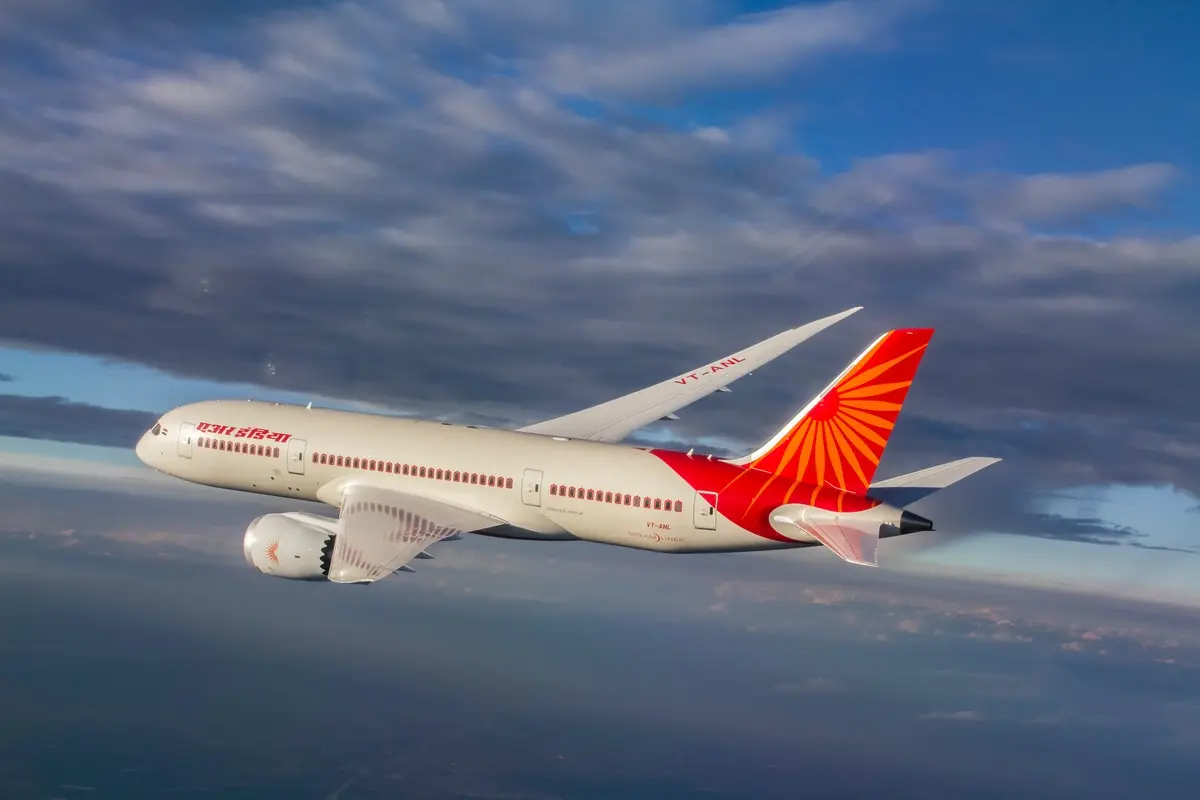
Air India, the flagship carrier of the Indian subcontinent, is on the precipice of securing a monumental financial injection. According to exclusive reports from financial markets and insiders familiar with the ongoing boardroom discussions, parent conglomerate Tata Sons and minority joint-venture partner Singapore Airlines (SIA) are nearing an agreement to pump INR 100 billion ($1.1 billion) into the airline’s struggling ecosystem.
However, this upcoming capital infusion diverges significantly from previous bailout and funding rounds. Rather than a blank-check stabilization fund designed merely to keep operations aloft, this fresh equity injection is expected to be strictly conditional. Funding will reportedly be tied to rigorous, measurable performance milestones and disbursed systematically in tranches. This structural shift signals a clear evolution in the ownership’s strategy: while Tata and SIA remain firmly committed to the arduous, multi-year revival of the historic carrier, their patience for unchecked cash burn has worn thin. Accountability, operational efficiency, and tangible financial turnarounds are now non-negotiable prerequisites for capital access.
The planned distribution of this $1.1 billion war chest reflects the existing ownership structure of the airline. Tata Sons, which reclaimed ownership of the carrier from the Indian government in a landmark privatization deal, holds a controlling 74.9% stake. Meanwhile, Singapore Airlines, a venerated global aviation benchmark, holds the remaining 25.1% equity. Consequently, the capital contributions will mirror these exact ownership percentages, reinforcing both conglomerates’ long-term stakes in the airline’s ultimate destiny.
This proposed financial rescue arrives at a precarious crossroads for the Air India Group. The announcement follows a deeply turbulent fiscal period that has severely undermined the airline’s post-privatization recovery trajectory. For fiscal year 2026, the Air India Group—encompassing both its full-service and low-cost subsidiaries—reported a staggering combined net loss of approximately INR 222 billion ($2.3 billion). This figure represents more than double the INR 108 billion ($1.1 billion) loss registered during the previous fiscal year. Compounding this financial hemorrhaging, group revenues slipped nearly 9% to INR 718 billion ($7.5 billion).
The stark contrast between the ambitious modernization blueprint envisioned by Tata Group Chairman N. Chandrasekaran and the harsh operational realities of the balance sheet underscores the gravity of this impending capital injection. As Air India attempts to re-establish itself as a world-class global network carrier capable of competing with the Middle Eastern "Big Three" and European legacy giants, the stakes have never been higher.
Detailed Chronology: From Privatization to the Milestone-Based Bailout
To fully comprehend the weight of the current financial discussions, one must trace the timeline of Air India’s modern iteration—a journey marked by immense ambition, regulatory hurdles, and compounding operational headwinds.
Phase 1: The Homecoming and Initial Optimism (2021–2022)
- October 2021: Following decades of crippling state ownership, massive debt accumulations, and political debates, the Government of India officially accepted a winning bid of INR 180 billion from Talace Private Limited, a wholly-owned subsidiary of Tata Sons, to acquire Air India.
- January 2022: The official handover ceremony took place in New Delhi. The Tata Group regained control of the airline it had founded in 1932 as Tata Airlines before it was nationalized in 1953. Initial sentiment was euphoric; industry analysts predicted a rapid modernization of the fleet and service standards under private stewardship.
- Late 2022: The Tata leadership initiated its consolidation strategy. Plans were laid to merge low-cost carrier AirAsia India (subsequently rebranded as AIX Connect) with Air Express, and to merge Vistara—a premium joint venture between Tata and Singapore Airlines—fully into Air India.
Phase 2: Fleet Expansion and Structural Consolidation (2023–2024)
- February 2023: In one of the most staggering commercial aviation orders in history, Air India announced a dual-engine procurement agreement for 470 aircraft split between Airbus (A350s, A320neo family) and Boeing (777Xs, 787 Dreamliners, 737 MAXs). This move signaled to the global aviation community that the airline intended to reclaim its dominant share of international long-haul traffic originating from India.
- November 2023: Competition Commission of India (CCI) and international regulatory bodies cleared the merger roadmap. Singapore Airlines solidified its commitment by agreeing to invest an additional INR 50.2 billion into Air India upon the completion of the Vistara merger, securing its 25.1% post-merger stake.
- November 2024: The formal integration of Vistara into Air India was completed, creating a consolidated full-service airline giant. Simultaneously, the low-cost operations were streamlined under Air India Express. However, behind the scenes, integrating disparate IT systems, labor unions, corporate cultures, and maintenance standards began to strain organizational resources.
Phase 3: The Financial Crunch and the Milestone Pivot (2025–2026)
- Mid-2025: Operational disruptions, supply chain bottlenecks impacting aircraft spare parts, and delays in cabin interior retrofits began to weigh heavily on passenger yields and schedule integrity. Global macroeconomic pressures and fierce domestic competition from IndiGo further compressed margins.
- Early 2026: Financial audits revealed the severity of the group’s fiscal distress. The combined net loss for fiscal year 2026 touched an alarming INR 222 billion ($2.3 billion), while revenues contracted by 9% to INR 718 billion ($7.5 billion).
- Present Day: Recognizing that unchecked capital injections were failing to yield immediate profitability, Tata Sons and Singapore Airlines initiated negotiations for the new INR 100 billion ($1.1 billion) rescue package. Unlike past funding rounds, this agreement establishes a milestone-based governance framework, ensuring funds are released incrementally only as the airline hits specific operational and financial KPIs.
Supporting Context & Metrics: Analyzing the Financial Freefall
The rationale behind tying the new $1.1 billion funding to performance milestones becomes acutely apparent when dissecting the underlying financial metrics of the Air India Group. The carrier’s path to turnaround has proven far more complex, capital-intensive, and protracted than initially modeled during the 2021 acquisition.

The Fiscal 2026 Balance Sheet Breakdown
| Financial Metric | Fiscal Year 2025 | Fiscal Year 2026 (Provisional/Reported) | Percentage Change / Trend |
|---|---|---|---|
| Combined Net Loss | INR 108 Billion ($1.1 Billion) | INR 222 Billion ($2.3 Billion) | $uparrow$ 105.5% (Losses more than doubled) |
| Group Revenue | ~INR 789 Billion ($8.2 Billion) | INR 718 Billion ($7.5 Billion) | $downarrow$ 9.0% (Contraction) |
| Proposed Fresh Capital | N/A | INR 100 Billion ($1.1 Billion) | Jointly funded by Tata (74.9%) & SIA (25.1%) |
| Fleet Size (Active & Ordered) | ~130 legacy aircraft | 470+ new orders + legacy fleet integration | Aggressive capital expenditure cycle |
Drivers of the Revenue Contraction and Margin Compression
Several structural and cyclical factors converged during fiscal 2026 to push the Air India Group into deeper financial red ink:
- Post-Merger Integration Friction: The assimilation of Vistara brought elite service standards into the Air India fold, but it also exposed deep cultural and operational friction. Harmonizing disparate pilot contracts, cabin crew seniority lists, and maintenance protocols resulted in intermittent scheduling disruptions, pilot fatigue disputes, and customer dissatisfaction—all of which directly impacted high-yielding premium bookings.
- Product Consistency and Retrofit Delays: While the airline placed massive aircraft orders, the global aerospace supply chain crisis severely delayed the retrofitting of legacy Boeing 777 and 787 aircraft. Passengers accustomed to modern, world-class cabins on competing Gulf and European carriers frequently encountered outdated interiors on key long-haul routes to London, New York, and Frankfurt, forcing Air India to discount fares and surrender pricing power.
- Soaring Operating Costs and Yield Pressures: Jet fuel price volatility, combined with the expensive wet-leasing of aircraft to cover grounded capacity, inflated operating expenses. Simultaneously, intense domestic pricing wars initiated by market leader IndiGo and regional competitors squeezed domestic yields, making it exceedingly difficult to offset rising fixed costs.
- Capital Intensity of Transformation: Rebuilding an airline of Air India’s scale requires simultaneous investments in digital infrastructure, engineering capabilities, crew training academies, and airport lounges. These heavy capital expenditure (CapEx) outlays occurred concurrently with declining revenues, creating a temporary cash-flow squeeze that necessitated the upcoming $1.1 billion rescue package.
Official Statements and Industry Reactions
As news of the milestone-tied funding package leaked through financial reporting channels, reactions from aviation analysts, market observers, and institutional stakeholders underscored a mixture of cautious optimism and intense scrutiny.
Neither Tata Sons nor Singapore Airlines issued formal public disclosures immediately following the initial Bloomberg reports, adhering to their respective corporate policies regarding confidential M&A and capital-allocation discussions. Furthermore, Air India did not respond to direct requests for comment from international aviation media outlets regarding the specific terms of the milestone agreements.
However, independent aviation economists and senior financial analysts have been vocal about the strategic implications of this move.
"The decision by Tata and Singapore Airlines to disburse this $1.1 billion in tranches tied to performance milestones is a watershed moment for Air India’s privatization experiment," noted an independent aviation consultant based in Singapore. "It proves that deep pockets alone will not solve structural execution issues. The owners are effectively saying: ‘We have provided the runway, the aircraft orders, and the capital structure; now management must deliver operational excellence, cost discipline, and revenue recovery.’"
Financial market analysts have also highlighted the balancing act facing Air India CEO Campbell Wilson and his executive team. Transforming an airline historically burdened by bureaucratic inertia into an agile, profit-generating global powerhouse requires simultaneous cultural overhaul and aggressive digital transformation. By linking funding to performance metrics—such as on-time performance (OTP), cabin availability indices, cost-per-available-seat-kilometer (CASK) reductions, and ancillary revenue growth—the parent companies are installing a rigorous corporate governance guardrail.
Future Outlook: Can Air India Turn the Corner?
Looking ahead, the success of the INR 100 billion ($1.1 billion) financial package will hinge entirely on execution. The roadmap for Air India’s survival and eventual market dominance rests on several critical execution pillars over the next 24 to 36 months:
1. Acceleration of Fleet Modernization and Cabin Retrofits
The arrival of newly manufactured Airbus A350s and Boeing aircraft must be seamlessly integrated into the network. More importantly, the long-overdue cabin retrofits for legacy widebody aircraft must be fast-tracked. To compete effectively against premium international carriers, Air India must offer a unified, state-of-the-art passenger experience across all long-haul and ultra-long-haul routes.
2. Streamlining Operational Efficiencies and Cost Discipline
With losses doubling in fiscal 2026, management faces immense pressure to optimize network profitability. Underperforming routes must be rationalized, fuel burn efficiencies maximized, and corporate overhead streamlined. The phased release of the $1.1 billion funding will depend heavily on management’s ability to demonstrate tangible improvements in CASK metrics and productivity ratios.
3. Capitalizing on India’s Aviation Boom
Despite near-term financial turbulence, India remains the world’s fastest-growing major aviation market. The secular demand for international travel originating from India’s burgeoning middle class is immense. If Air India can capture a larger share of direct long-haul traffic—bypassing traditional hubs in the Middle East and Southeast Asia—the top-line revenue recovery will naturally follow.
Conclusion
The impending injection of INR 100 billion ($1.1 billion) by Tata Sons and Singapore Airlines is both a lifeline and a ultimatum. It demonstrates an unwavering long-term vision to restore Air India to its historic glory as a premier global carrier. Yet, by tethering this capital to strict performance milestones, the owners have made it unmistakably clear: the era of unchecked remediation is over. For Air India, the journey ahead demands not just financial resources, but disciplined execution, operational resilience, and an unyielding commitment to excellence.