









Executive Overview
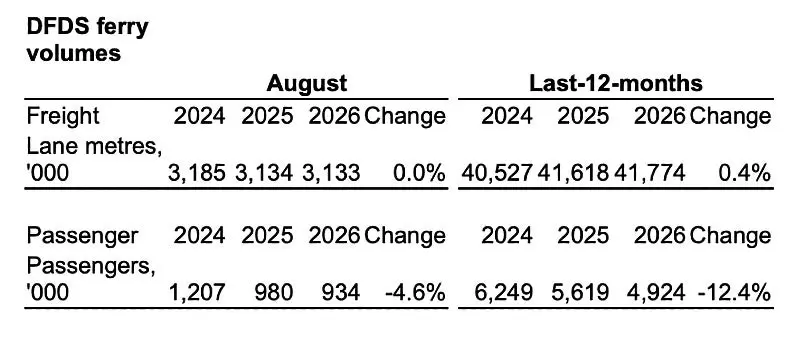
Danish international shipping and logistics leader DFDS reported its operational metrics for August 2026, revealing a complex, multi-speed European transport landscape. Consolidated freight volumes held steady at 3.1 million lane metres, matching figures recorded in August 2025. However, passenger volume registered a 4.6% year-on-year decline, dropping to 934,000 passenger journeys.
The monthly operational performance underscores a bifurcated market environment: industrial cross-border freight demand remains resilient across selected Northern and Southern European routes, while consumer-driven passenger travel experiences downward pressure—particularly along the key English Channel corridor.
+-----------------------------------------------------------------------+
|                       DFDS AUGUST 2026 SNAPSHOT                       |
+------------------------------------+----------------------------------+
| Freight Volumes (Lane Metres)      | 3.1 Million (0.0% YoY)           |
| Passenger Numbers                  | 934,000 (-4.6% YoY)              |
| 12-Month Trailing Freight          | 41.8 Million (+0.4% / -0.5% Adj.)|
| 12-Month Trailing Passengers       | 4.9 Million (-12.4% / -5.3% Adj.)|
+------------------------------------+----------------------------------+
Over the trailing twelve-month period (TTM), cumulative freight volumes rose by 0.4% to 41.8 million lane metres on a reported basis, though they experienced a modest 0.5% contraction when adjusted for network realignments and route modifications.
Concurrently, passenger volumes over the TTM window decreased 12.4% to 4.9 million, or 5.3% on an adjusted basis.
These figures offer critical insights into European supply chain dynamics, consumer travel appetite, and broader macroeconomic conditions impacting roll-on/roll-off (Ro-Ro) ferry operations.
Detailed Chronology & Geographical Corridor Analysis
The performance of DFDS’s route network in August 2026 varied significantly across regional operational zones. A detailed breakdown reveals how localized industrial trends, trade shifts, and market dynamics influenced volumes across each corridor.
       +-------------------------------------------------------+
       |           REGIONAL FREIGHT PERFORMANCE SUMMARY        |
       +-------------------------+-----------------------------+
       | North Sea               |  Increased (Most Routes)    |
       | Strait of Gibraltar     |  Strong YoY Growth          |
       | Mediterranean           |  Slight Decline (1 Route)   |
       | Channel                 |  Declined (Market-wide)     |
       | Baltic Sea              |  Declined                   |
       +-------------------------+-----------------------------+
The North Sea Network: Industrial Resilience
Freight volumes across the North Sea network expanded across most primary routes compared to August 2025.
- Key Trade Corridors: Routes linking the United Kingdom with Scandinavia, Germany, and the Netherlands.
- Growth Drivers: Sustained industrial manufacturing output, steady intermodal cargo movement, and stable demand for fast-moving consumer goods (FMCG).
- Operational Stability: North Sea Ro-Ro routes served as a stabilizing force for DFDS, balancing freight soft spots elsewhere in the network.
Strait of Gibraltar: Nearshoring and North African Expansion
The Strait of Gibraltar corridor posted the strongest growth within the DFDS network during August 2026, with volumes substantially higher than in August 2025.
  [ Europe Supply Chain ] <====> [ Strait of Gibraltar ] <====> [ North Africa Production ]
                                 (Volume Growth Driven by
Nearshoring & Logistics Integration)- Strategic Integration: Enhanced operational integration between Europe and North Africa continues to pay dividends.
- Supply Chain Trends: European manufacturers are increasingly nearshoring production to Morocco and Northern Africa, fueling demand for Ro-Ro freight transport.
- Corridor Performance: High-frequency freight shuttles across the Strait captured expanding trade flows, making this segment a key growth driver for DFDS’s organic freight operations.
Mediterranean Operations: Isolated Subdue
Freight volumes across DFDS’s Mediterranean operations contracted slightly compared to August 2025.
- Primary Cause: The overall slight decrease was primarily driven by a single underperforming route rather than systemic weakness across the region.
- Core Corridors: Key routes connecting Turkey to Southern Europe maintained stable underlying demand, supported by international manufacturing hubs and automotive exports.
- Route Adjustment: The single-route drag highlights how localized operational adjustments can influence broader regional performance metrics.
The English Channel & Dover Strait: Passenger and Freight Headwinds
The Channel network encountered operational headwinds in both freight and passenger sectors.
       +-------------------------------------------------------+
       |             ENGLISH CHANNEL CORRIDOR IMPACT           |
       +-------------------------------------------------------+
       |  Passenger Numbers: 934,000 Total (-4.6% YoY)          |
       |  Primary Driver: Dover Strait Market Contraction      |
       |  Freight Volumes: Down in Line with Wider Market       |
+-------------------------------------------------------+- Passenger Contraction: Overall passenger traffic fell 4.6% to 934,000, with reduced Dover Strait volume serving as the primary factor.
- Market Dynamics: The passenger drop reflected a broader slowdown in cross-Channel sea travel during peak summer holiday months, driven by shifting leisure preferences, alternative cross-border travel choices, and household budget pressures.
- Freight Activity: Channel freight volumes declined in step with wider ferry market trends, impacted by macroeconomic headwinds in cross-border UK-EU trade and intense competitive capacity on short-sea routes.
The Baltic Sea Corridor: Macroeconomic Realignment
Freight traffic across the Baltic Sea network registered a year-on-year decline in August 2026.
- Macroeconomic Drag: Sluggish economic activity in Northern and Eastern Europe slowed regional industrial manufacturing and construction logistics.
- Trade Pattern Adjustments: Shifted supply chain routes in the Baltic basin continued to suppress baseline Ro-Ro volumes compared to historical norms.
Supporting Context & Quantitative Metrics
A closer analysis of trailing twelve-month (TTM) metrics offers clear visibility into DFDS’s structural performance, separating organic operating volume from asset realignments and route modifications.
+---------------------------------------------------------------------------------+
|               SUMMARY OF OPERATIONAL METRICS (AUGUST 2026 vs 2025)              |
+--------------------------+-------------------+------------------+---------------+
| Category                 | August 2026       | August 2025      | YoY Change    |
+--------------------------+-------------------+------------------+---------------+
| Freight (Lane Metres)    | 3.1 Million       | 3.1 Million      |  0.0%         |
| Passengers               | 934,000           | 979,000 (est.)   | -4.6%         |
+--------------------------+-------------------+------------------+---------------+
| TTM Freight (Reported)   | 41.8 Million      | --               | +0.4%         |
| TTM Freight (Adjusted)   | 41.8 Million      | --               | -0.5%         |
| TTM Passengers (Reported)| 4.9 Million       | --               | -12.4%        |
| TTM Passengers (Adjusted)| 4.9 Million       | --               | -5.3%         |
+--------------------------+-------------------+------------------+---------------+
Understanding Freight Lane Metre Dynamics
"Lane metres" represent the total operational linear space available for vehicles on board Ro-Ro vessels. Maintaining 3.1 million lane metres in August 2026 highlights DFDS’s capacity management against fluctuating European demand.
        41.8M Lane Metres (TTM)
       /
  +0.4% Reported              -0.5% Adjusted
(Includes network additions) (Like-for-like core organic performance)- Unadjusted Growth (+0.4%): Incorporates newly acquired routes, expanded services, and tactical charter additions across regional networks.
- Adjusted Contraction (-0.5%): Strips out structural portfolio shifts to reveal a minor underlying softening in core European industrial transport volumes over the past year.
Analyzing Passenger Volume Shift
The drop in passenger numbers—both monthly (-4.6%) and over the TTM period (-12.4% reported / -5.3% adjusted)—points to structural shifts in European travel habits.
- Dover Strait Impact: The Dover Strait remains the highest-volume passenger ferry route in Western Europe. Fluctuations on this route directly influence DFDS’s overall passenger metrics.
- Post-Pandemic Normalization: High growth rates from the immediate post-pandemic travel rebound have leveled off into a baseline reflecting current economic conditions.
- Network Restructuring: Fleet reallocations and route adjustments contributed to the wider gap between reported (-12.4%) and adjusted (-5.3%) annual passenger figures.
Strategic Context and Market Dynamics
The August 2026 performance figures highlight several macro trends shaping European maritime logistics and transport.
+-----------------------------------------------------------------------+
|                    MACROECONOMIC DRIVERS & CHALLENGES                 |
+-----------------------------------------------------------------------+
|  Industrial Supply Chains | Nearshoring & Mediterranean Shift        |
|  - Stable North Sea Ro-Ro | - Strong growth in Strait of Gibraltar    |
|  - Sluggish Baltic trade  | - Redirection of North Africa trade flows |
+---------------------------+-------------------------------------------+
|  Passenger Travel Demand  | Decarbonization & Border Policy           |
|  - Channel market soft    | - EU ETS carbon compliance costs          |
|  - Consumer budget strain | - Upcoming EES border checks impact       |
+-----------------------------------------------------------------------+
1. Nearshoring and Mediterranean Trade Re-Routing
Industrial nearshoring has accelerated momentum across Southern European logistics corridors. European companies are increasingly sourcing automotive parts, textiles, and industrial components from North Africa.
DFDS’s operational expansion across the Strait of Gibraltar positions the company to capture these emerging trade flows. Robust volume growth on these routes helped offset regional sluggishness in Northern Europe.
2. European Industrial Output and Inventory Management
Industrial activity across the Eurozone and the UK remained mixed through late summer 2026:
- Northern Europe: Automotive, chemical, and retail supply chains supported consistent North Sea Ro-Ro capacity utilization.
- Eastern Europe & Baltic: Elevated borrowing costs, persistent energy transition expenses, and reduced industrial activity slowed raw material transport across the Baltic basin.
3. Channel Competition and Regulatory Landscapes
Cross-Channel ferry operators faced structural challenges throughout 2026:
- Travel Preferences: Inflationary pressures led European consumers to alter summer vacation travel, impacting short-sea ferry passenger traffic.
- Regulatory Compliance: Operational prep for the European Union’s Entry/Exit System (EES) and ongoing EU Emissions Trading System (EU ETS) compliance costs added administrative and financial layers to cross-border logistics.
Future Outlook & Structural Trends
Looking ahead into late 2026 and early 2027, DFDS’s operational strategy will likely focus on three primary pillars: optimizing regional freight networks, managing capacity on passenger routes, and progressing environmental sustainability goals.
           +---------------------------------------------------+
           |            DFDS STRATEGIC FOCUS AREAS             |
           +---------------------------------------------------+
           |  1. Capacity Optimization & Yield Management      |
           |  2. Nearshoring Expansion (Gibraltar & Med)       |
           |  3. Fleet Decarbonization & EES Readiness         |
           +---------------------------------------------------+
Freight Network Optimization
DFDS is expected to dynamic reallocate fleet capacity across its business units to align with shifting trade patterns:
- High-growth corridors—such as the Strait of Gibraltar and selected North Sea routes—will likely receive targeted vessel investments and schedule optimizations.
- Underperforming corridors will be evaluated to align capacity with baseline market demand, supporting freight yields despite flat total volumes.
Rebalancing Passenger Operations
To counter softening cross-Channel passenger volumes, DFDS is leveraging dynamic pricing models, targeted marketing campaigns, and enhanced onboard customer experiences.
[ Enhanced Onboard Service ] + [ Dynamic Pricing ] ===> [ Stabilized Yields & Volume ]As Dover Strait market dynamics settle into post-pandemic norms, preserving passenger yields will remain critical for protecting overall division profitability.
Decarbonization and Regulatory Alignment
DFDS continues to execute its long-term strategy to decarbonize its maritime and logistics network:
- Fleet Modernization: Deployment of methanol-enabled and battery-electric Ro-Ro vessels will help reduce lifecycle emissions across short-sea corridors.
- Regulatory Readiness: Upgrading digital border infrastructure along cross-Channel routes will minimize operational disruptions as expanded European border management protocols take full effect.
Market Outlook Summary
DFDS’s August 2026 operational figures highlight an agile network capable of managing regional economic variations. Steady freight performance at 3.1 million lane metres demonstrates stable baseline cargo demand across Europe.
By leveraging growth in nearshoring corridors like the Strait of Gibraltar while optimizing capacity along mature channels, DFDS remains well-positioned to navigate changing trade and travel patterns across its European network.