




Executive Overview
In a significant judicial setback for natural gas infrastructure expansion in the northeastern United States, the U.S. Third Circuit Court of Appeals has vacated a critical water quality permit for the long-delayed Northeast Supply Enhancement (NESE) pipeline project. The decision, handed down on Tuesday, represents a major victory for a coalition of environmental advocacy groups that have spent years fighting the $1 billion project. By granting the petitioners’ review, the federal appeals court invalidated the Water Quality Certification previously issued by the New Jersey Department of Environmental Protection (NJDEP) and remanded the case back to the state agency for further proceedings.
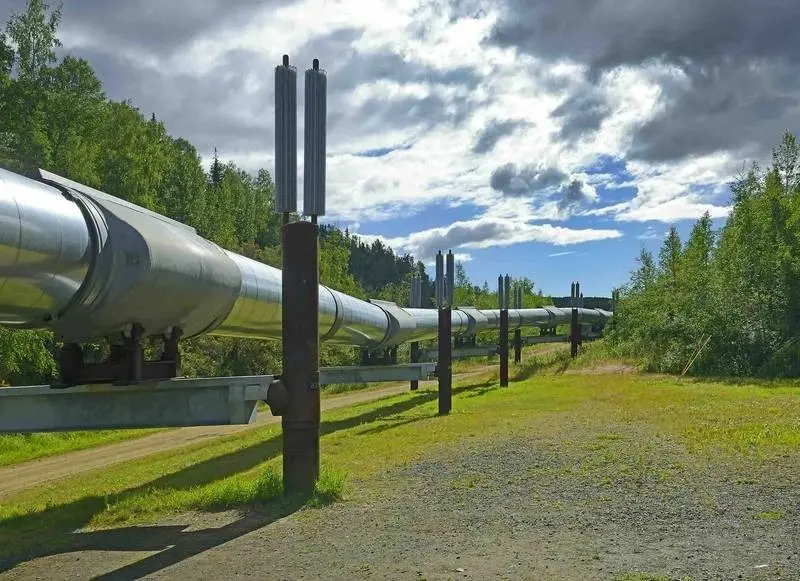
The NESE project, spearheaded by Tulsa, Oklahoma-based energy giant Williams Companies through its Transcontinental Gas Pipe Line Co. (Transco) subsidiary, is designed to expand the existing Transco pipeline network. The expansion aims to transport natural gas from the Marcellus Shale producing regions of Pennsylvania, through New Jersey, and across the Raritan Bay into New York City. Despite the court’s ruling, Williams Companies has maintained an optimistic public posture, asserting that the decision will not disrupt its current construction activities or alter its targeted timeline for bringing the pipeline into service.
This judicial intervention highlights the ongoing, highly polarized battle over fossil fuel infrastructure in the Mid-Atlantic region. It underscores the delicate balance between federal energy mandates, state-level environmental stewardship, and the legal limits of regulatory agencies tasked with protecting public waters.
Detailed Chronology
The regulatory and legal battle surrounding the Northeast Supply Enhancement project is a multi-year saga characterized by political shifts, regulatory reversals, and persistent grassroots opposition.
[2019] NJDEP & NYDEC Deny Initial Water Permits
  │
[2020-2024] Project Shelved / Williams Cancels NESE & Constitution Pipelines
  │
[2025] Trump Returns to Office; Federal Push to Revive Shelved Energy Projects
  │
[Late 2025] NJDEP Approves Re-applied Water Quality Certification
  │
[Nov 2025] Environmental Coalition Files Lawsuit Against NJDEP Approval
  │
[Apr 2026] Williams Officially Breaks Ground on NESE in Brooklyn, NY
  │
[Present] U.S. Third Circuit Vacates NJDEP Permit, Remanding Case
The Initial Denials and Project Suspension (2019–2020)
The NESE project was first proposed to address projected winter heating demand increases in Brooklyn, Queens, and Long Island. However, the project ran into immediate regulatory roadblocks. In 2019, environmental regulators in both New Jersey and New York denied the necessary water quality certifications. The NJDEP ruled at the time that Williams had failed to demonstrate that the construction—particularly the underwater dredging in the Raritan Bay—would comply with state water quality standards.
Following these dual state-level rejections, and facing a wall of local political opposition, Williams Companies effectively shelved the project, alongside another controversial regional project, the Constitution Pipeline.
The Political Resurrection (2025)
The moribund pipeline projects received a new lease on life following the return of Donald Trump to the U.S. presidency in January 2025. Championing a policy of domestic energy dominance and the rapid expansion of fossil fuel infrastructure, the administration sought to revive stalled pipeline projects across the country. Under federal pressure and revised application submissions, state regulatory landscapes began to shift.
In late 2025, the NJDEP reversed its historical stance and approved the Water Quality Certification for NESE, clearing the path for federal approvals and physical construction.
The Legal Challenge and Groundbreaking (2025–2026)
The state’s sudden about-face triggered immediate pushback from environmental organizations. In November 2025, a coalition of advocacy groups, including Food & Water Watch, filed a federal lawsuit against the NJDEP. The lawsuit argued that the department’s approval of the Water Quality Certification was arbitrary, capricious, and lacked scientific justification, especially given the agency’s own detailed environmental objections raised in 2019.
Unperturbed by the pending litigation, Williams Companies pressed forward. In April 2026, the company officially broke ground on the NESE project in Brooklyn, New York, signaling its commitment to meet its targeted operational deadlines despite the looming cloud of judicial review.
The Third Circuit’s Ruling (Present)
On Tuesday, the U.S. Third Circuit Court of Appeals delivered its ruling on the environmental coalition’s petition. The three-judge panel agreed with the petitioners, finding that the NJDEP’s approval of the water permit did not adequately address the environmental and ecological risks posed by the project. By vacating the permit and remanding the case, the court has effectively stripped the project of a foundational legal authorization, forcing state regulators to re-evaluate the environmental impacts of the pipeline’s construction.
Supporting Context & Technical Metrics
To understand the scale and impact of the Third Circuit’s decision, it is essential to examine the technical specifications of the NESE project, its sister development, and the specific ecological concerns that drove the litigation.
Project Specifications and Regional Capacity
The Northeast Supply Enhancement project is not an isolated development but a critical link in a broader regional energy corridor designed to transport natural gas from the supply-rich Appalachian Basin to high-demand metropolitan markets.
| Metric | Northeast Supply Enhancement (NESE) | Constitution Pipeline |
|---|---|---|
| Developer | Williams Cos. (Transco) | Williams Cos. |
| Estimated Cost | ~$1 Billion | Undisclosed (Historical: ~$875M) |
| Route | Pennsylvania $rightarrow$ New Jersey $rightarrow$ New York | Pennsylvania $rightarrow$ New York |
| Design Capacity | 0.40 Billion Cubic Feet per Day (bcfd) | 0.65 Billion Cubic Feet per Day (bcfd) |
| Targeted In-Service | Q4 2027 | Q4 2028 |
| Current Status | Under Construction (Permit Vacated) | Pre-construction / Planning |
Combined, NESE and the Constitution Pipeline represent an additional 1.05 billion cubic feet per day (bcfd) of natural gas capacity entering the northeastern market. To put this metric in perspective, 1.0 billion cubic feet of gas is sufficient to heat and power approximately 5 million average American homes for an entire day.
The Raritan Bay Ecological Controversy
The most contentious element of the NESE project is the proposed construction of an offshore pipeline segment through the Raritan Bay, a shallow estuary shared by New York and New Jersey.
Environmental scientists and advocates have warned that laying pipeline across the bay floor requires extensive trenching and dredging. This process would inevitably disturb benthic sediments that have accumulated industrial contaminants over more than a century of manufacturing activity in the region.
[Dredging of Raritan Bay Floor]
               │
               ▼
[Resuspension of Heavy Sediments]
               │
               ▼
[Release of Legacy Toxins: Mercury & PCBs]
               │
               ▼
┌──────────────────────┴──────────────────────┐
▼                                             ▼
[Bioaccumulation in Marine Food Chain] [Degradation of Water Quality]- Mercury and PCBs (Polychlorinated Biphenyls): These highly toxic substances are bound within the bay’s bottom sediment. Resuspending them threatens marine life, commercial and recreational fisheries, and public health via bioaccumulation in the local food web.
- Benthic Habitat Destruction: The physical disruption of the bay floor threatens critical spawning grounds for various fish species, shellfish beds, and the migratory pathways of marine mammals.
Official Statements and Stakeholder Reactions
The Third Circuit’s ruling has elicited starkly contrasting reactions from the corporate developer and the environmental coalition, highlighting the deep ideological divide over the project.
Williams Companies’ Response
Despite the legal setback, Williams Companies downplayed the immediate impact of the court’s decision on their operations. Cherice Corley, a corporate spokesperson for Williams, emphasized the company’s intent to resolve the administrative deficiencies quickly:
"Following the Third Circuit’s decision, we are working promptly with state regulatory officials to address the court’s findings and remain committed to advancing the Northeast Supply Enhancement (NESE) project. At this time, we do not expect the decision to adversely affect project construction or the anticipated in-service timeline."
The company’s target for NESE remains the fourth quarter of 2027, with the Constitution Pipeline projected for completion in the fourth quarter of 2028.
Environmental Coalition’s Reaction
For the environmental groups that initiated the lawsuit, the ruling is viewed as a long-overdue correction of a flawed political process. Charlie Kratovil, Central Jersey Organizer at Food & Water Watch, expressed both relief and frustration at the regulatory history of the pipeline:
"When the water quality certificate was denied in 2019, that should have been the end of it. The state’s subsequent reversal was a betrayal of public trust and environmental science. We are pleased that the court has held the NJDEP accountable, but this pipeline remains a direct threat to our waters, our climate, and our communities."
Future Outlook and Broader Implications
The vacatur of the Water Quality Certification places the future of the NESE project back into the hands of the NJDEP, creating a period of regulatory uncertainty that could ripple across the regional energy sector.
The Administrative Path Forward
The NJDEP must now conduct a thorough re-evaluation of the project’s water quality impacts in accordance with the Third Circuit’s guidance. This review could yield several outcomes:
- Conditional Re-approval: The NJDEP could demand additional environmental safeguards, monitoring protocols, or modifications to the dredging methodology before reissuing the permit. This pathway would likely satisfy Williams’ assertion that the timeline will not be severely impacted, though it could introduce unexpected compliance costs.
- Permit Denial: If the NJDEP determines that the ecological risks of dredging the Raritan Bay cannot be mitigated to meet state water quality standards, it could deny the certification once again. Such a denial would likely halt construction of the offshore portion of the pipeline and trigger another round of federal-state litigation.
Federal Supremacy vs. State Sovereignty
The conflict over NESE and the Constitution Pipeline reflects a broader, systemic struggle within American energy policy. Under Section 401 of the federal Clean Water Act, states possess the authority to review and certify that federally licensed infrastructure projects will not violate state water quality standards. This provision has historically served as one of the most powerful tools for states seeking to block or modify interstate fossil fuel projects approved by the Federal Energy Regulatory Commission (FERC).
The Trump administration’s efforts to streamline energy infrastructure approvals have frequently clashed with this state-level authority. By upholding the environmental coalition’s petition, the Third Circuit has reinforced the principle that federal energy goals cannot bypass rigorous state-level environmental reviews, nor can state agencies approve such projects without a robust, scientifically defensible administrative record.
As Williams Companies attempts to navigate this latest regulatory hurdle, the outcome of the NJDEP’s remanded review will serve as a bellwether for the feasibility of major fossil fuel projects in the Northeast. With the climate crisis driving state policies toward renewable energy, the legal battles over projects like NESE and the Constitution Pipeline are likely to intensify, challenging the viability of long-term natural gas infrastructure investments in a rapidly changing regulatory environment.