









Executive Overview
The global public transit sector finds itself at a historic and demanding crossroads. Transit agencies across North America and around the world are navigating the complex intersection of aggressive municipal, state, and federal sustainability mandates and the rigorous, unyielding operational realities of day-to-day mass transit.
While the ultimate destination—a fully decarbonized, zero-emission public transportation network—is broadly accepted, the roadmap to get there is fraught with technical, financial, and logistical challenges. Fleet operators are continuously forced to balance the capital-intensive demands of charging infrastructure buildouts, the rapid pace of technological innovation, grid capacity limitations, and the paramount necessity of long-term operational reliability.
Because transit agencies are advancing along this transition curve at vastly different paces—some operating pioneer zero-emission fleets while others are just beginning their pilot phases—there is no universal, one-size-fits-all solution. In this environment of customized transitions, adaptability has emerged as the single most critical currency for success.
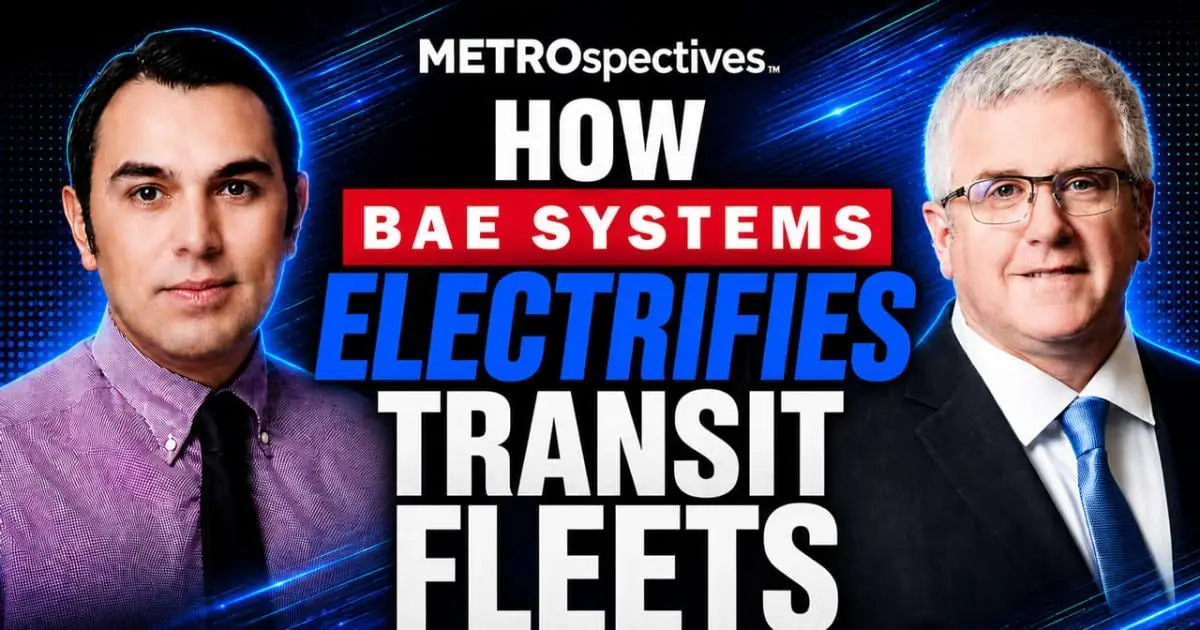
In this comprehensive installment of METROspectives, METRO Magazine sits down with John Hroncich, Director of North American Transit Sales for BAE Systems. Hroncich offers a deep-dive analysis into how BAE Systems is addressing the multifaceted challenges of modern transit electrification. Drawing from decades of real-world operational experience, Hroncich breaks down the company’s modular, scalable technology approach, explains how past field lessons are shaping the next generation of propulsion systems, and outlines a practical framework for transit agencies striving to identify and deploy the electrification strategies that best fit their unique fleet profiles and service areas.
Detailed Chronology: The Evolution of Transit Decarbonization
To fully understand where transit electrification is heading today, it is essential to examine the historical trajectory that brought the industry to its current state. The journey from traditional diesel-powered internal combustion engines to sophisticated, software-driven zero-emission platforms has been marked by incremental technological leaps, shifting regulatory landscapes, and profound lessons learned in the field.
Phase I: The Foundation of Hybrid Propulsion (Late 1990s – 2010s)
Long before "zero-emission mandates" became common policy instruments, forward-thinking transit agencies and propulsion developers recognized the need to curb urban emissions and improve fuel economy. This realization catalyzed the development of heavy-duty hybrid-electric propulsion systems. During this era, companies like BAE Systems pioneered series and parallel hybrid architectures that paired conventional engines with electric drive systems and early-generation energy storage.
These early deployments served as the crucial proving ground for heavy-duty electrification. They demonstrated that electric drive components—such as traction motors, inverters, and power management electronics—could withstand the grueling duty cycles, stop-and-go urban traffic, and extreme weather conditions inherent to public transit. Agencies learned valuable lessons regarding regenerative braking, thermal management, and the integration of complex electrical architectures into standard transit bus bodies. Most importantly, these hybrid systems proved that significant emissions reductions and fuel savings were achievable without compromising vehicle range or operational flexibility.
Phase II: The Regulatory Push and the Pure Electric Pivot (2010s – 2020)
As scientific consensus regarding climate change crystallized and urban air quality standards tightened, government entities began establishing firm timelines for fleet conversion. Milestones such as the California Air Resources Board’s (CARB) Innovative Clean Transit (ICT) regulation set a legal precedent, requiring all public transit agencies in the state to transition to 100% zero-emission bus fleets by 2040.
This regulatory pressure triggered a rapid pivot toward battery-electric buses (BEBs) and hydrogen fuel cell electric buses (FCEBs). However, this period was also characterized by growing pains. Early adopters often faced steep learning curves concerning charging infrastructure reliability, route range limitations in cold weather, and unexpected battery degradation. The industry quickly realized that replacing a diesel bus with a battery-electric equivalent was not a simple one-to-one swap; it required a complete reimagining of depot power capacity, scheduling algorithms, and maintenance protocols.
Phase III: The Modular, Scalable Era of Today (2020 – Present)
Today, the transit industry has entered a phase of pragmatic maturation. Agencies, chastened by the capital and operational hurdles of early wholesale transitions, are taking a more nuanced, portfolio-based approach to fleet decarbonization.
This is where contemporary leaders like John Hroncich and BAE Systems step in. Recognizing that agencies require flexibility rather than rigid ultimatums, propulsion manufacturers have shifted toward modular and scalable architectures. Modern systems allow transit properties to utilize common core electrical components across multiple platforms—whether clean diesel, advanced hybrids, long-range battery-electric, or hydrogen fuel cells. This modularity reduces training costs, simplifies parts inventory, and provides agencies with the agility to adapt their fleet mix as technology evolves and funding opportunities fluctuate.
Supporting Context & Metrics: The Anatomy of Modern Fleet Transition
The transition to sustainable mass transit is not merely an engineering challenge; it is an economic and operational puzzle defined by distinct metrics and systemic dependencies. To appreciate the depth of John Hroncich’s insights, one must examine the broader data points shaping the North American transit landscape.
1. The Capital Expenditure (CapEx) vs. Operational Expenditure (OpEx) Equation
Procuring zero-emission buses requires a profound shift in financial planning. While a standard diesel bus historically carried a lower upfront acquisition cost, electric and fuel cell buses require a significantly higher initial investment. However, lifecycle analyses consistently demonstrate that lower maintenance costs—stemming from fewer moving parts in electric motors compared to internal combustion engines—and reduced fuel expenses (electricity versus diesel) help offset these initial outlays over a 12-to-15-year vehicle lifespan.
Nevertheless, the hidden cost often lies off the vehicle: in the depot. Upgrading electrical grid connections, installing heavy-duty chargers, and implementing intelligent load-management software can rival the cost of the buses themselves. Hroncich emphasizes that agencies must evaluate electrification through a holistic financial lens, factoring in infrastructure investments from day one.
2. The Resiliency and Reliability Imperative
Unlike private passenger electric vehicles, which can sit idle while charging or detour around congested routes, public transit buses operate on strict, high-stakes timetables. A single vehicle failure can disrupt service for thousands of commuters.
Real-world operating data accumulated over millions of service miles indicates that reliability is directly tied to thermal management and power electronics robustness. Systems that can efficiently manage heat generated during continuous operation—especially in extreme summer heatwaves or freezing winter conditions where cabin heating severely drains battery range—are the ones that achieve high mean distance between failures (MDBF).
3. Fleet Diversity as a Risk-Mitigation Strategy
Data from major metropolitan transit authorities reveals that a mixed-fleet strategy is often the most effective risk-mitigation tool during a prolonged energy transition. Agencies that deploy a combination of battery-electric buses for shorter, predictable urban circulator routes and advanced hybrid or hydrogen fuel cell buses for longer, demanding suburban trunk lines are better insulated against technology obsolescence and grid disruptions.
Official Statements and Insights: In Conversation with John Hroncich
(The following section synthesizes the core themes, professional philosophies, and strategic insights shared by John Hroncich, Director of North American Transit Sales for BAE Systems, during his exclusive interview on METROspectives.)
On the Philosophy of Adaptability and Modular Design
Opening the discussion, John Hroncich addresses the wide disparity in readiness among transit agencies across North America.
"You cannot walk into a room of transit leaders today and offer a single, rigid template for electrification," Hroncich explains. "Every agency operates under a unique set of constraints—ranging from local utility rate structures and geographical topography to state-mandated carbon reduction timelines and existing maintenance facility layouts."
To address this variance, BAE Systems has championed a modular and scalable product philosophy. By utilizing core, proven electrical components—such as advanced permanent magnet motors and intelligent power control systems—across various propulsion platforms, the company allows agencies to scale their technology adoption safely.
"Modularity means future-proofing," says Hroncich. "Whether an agency is deploying a transitional clean-hybrid today to bridge an infrastructure gap or committing fully to a zero-emission fuel cell platform, having a common underlying electrical architecture ensures that maintenance teams are working with familiar technology, and fleet managers retain the flexibility to pivot as their operational needs mature."
Translating Decades of Field Data into Next-Generation Innovation
One of the distinct advantages BAE Systems brings to the modern transit market is its deep operational history. Having powered thousands of heavy-duty transit buses over decades of grueling street service, the company has accumulated an invaluable repository of real-world performance data.
Hroncich notes that laboratory testing, while essential, can never fully replicate the punishing realities of urban transit.
"When a bus is navigating the potholes of a major metropolitan area, battling sub-zero winter mornings in the Midwest, or running continuous high-capacity loops in sweltering southern humidity, the stress on power electronics is immense," Hroncich states. "Every mile logged in the real world provides diagnostic feedback that directly informs our next-generation design iterations. Our current software algorithms and thermal management systems are direct beneficiaries of millions of miles of operational feedback."
This data-driven evolution has allowed BAE Systems to enhance energy efficiency, reduce component weight, and maximize the lifespan of energy storage systems, directly addressing the core concerns of pragmatic transit directors.
Guiding Agencies Through Fleet-Specific Strategies
When asked how transit agencies can effectively cut through the marketing noise and identify electrification strategies that genuinely fit their specific operational footprints, Hroncich advises a methodical, data-driven assessment process.
"The first step for any agency is an honest, comprehensive route-by-route audit," Hroncich advises. "Don’t look at your fleet as a monolith. Analyze individual block schedules, deadhead mileage, topographical challenges, and climate control loads. A heavy-duty arterial route with 18-hour daily duty cycles requires a vastly different technical solution than a downtown circulator."
Furthermore, Hroncich stresses the importance of early and collaborative engagement with local electric utilities. Understanding grid capacity, demand charges, and infrastructure lead times long before buses arrive at the depot is critical to preventing costly operational bottlenecks.
Future Outlook: The Road Ahead for Public Transit Electrification
As the public transportation industry looks toward the horizon, the trajectory of fleet electrification is poised for rapid, yet pragmatic, transformation. The coming decade will likely be defined not by sweeping ideological pronouncements, but by engineering refinement, infrastructure maturation, and strategic financial engineering.
Technological Horizons
Looking forward, advancements in battery chemistry—such as solid-state developments and cobalt-free formulations—promise to deliver higher energy densities, faster charging capabilities, and improved safety profiles, directly mitigating range anxiety. Concurrently, the maturation of hydrogen fueling infrastructure and fuel cell technology will unlock viable zero-emission pathways for heavy-duty, long-distance commuter routes where battery-electric solutions face weight and recharging hurdles.
Furthermore, artificial intelligence and machine learning will play an increasingly prominent role in fleet management. Predictive maintenance algorithms, dynamic depot charging optimization, and real-time energy management systems will empower transit agencies to maximize operational efficiency while minimizing utility demand peaks.
Policy and Funding Alignment
Federal and state funding mechanisms will continue to serve as the catalyst for capital-intensive deployments. However, the true test of market sustainability will be the gradual reduction of technology costs through economies of scale and domestic manufacturing maturation. As supply chains stabilize and component standardization increases, the total cost of ownership for zero-emission fleets will reach parity—and eventually surpass—legacy fossil-fuel platforms.
Conclusion
Ultimately, the transition of North America’s transit fleets is an irreversible movement. As industry veterans like John Hroncich and organizations like BAE Systems demonstrate, the path forward relies on a balanced synthesis of technological innovation, deep operational experience, and a flexible, agency-centric approach. By embracing modular architectures, learning rigorously from field data, and tailoring electrification strategies to specific route profiles, the public transit sector is well-equipped to build a cleaner, more resilient, and sustainable mobility future.
Make sure you are signed up for the METRO Express newsletter so you don’t miss another installment of METROspectives. Stay connected with METRO Magazine on LinkedIn and Facebook, and subscribe to the METROspectives podcast on Apple Podcasts, Spotify, Amazon Music, Audible, and iHeartRadio for ongoing conversations with industry leaders shaping the future of mass transit.