









Executive Overview
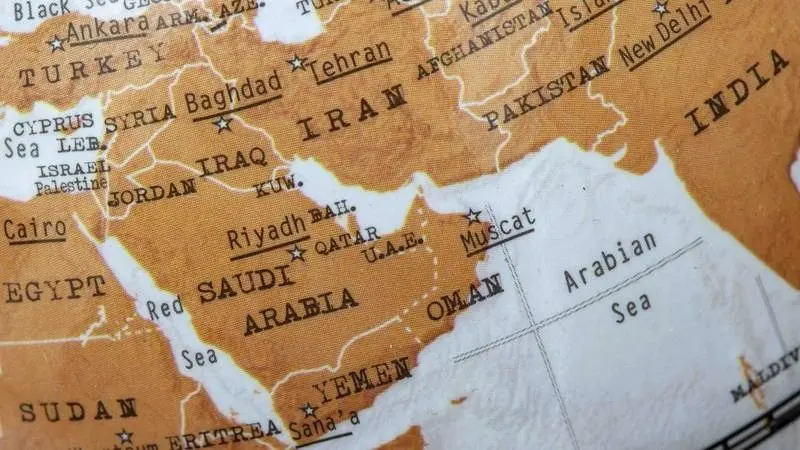
The Middle East is teetering on the edge of a wider regional conflict following a coordinated series of military escalations that have disrupted global energy infrastructure, frozen diplomatic channels, and sent shockwaves through international financial markets. On Monday, Yemen’s Iran-aligned Houthi movement launched a highly destructive drone and missile strike against a critical military airbase in southern Saudi Arabia. This offensive coincided with a dramatic expansion of Houthi territorial control along the Red Sea coast, including the capture of strategic maritime chokepoints.
Simultaneously, the fragile diplomatic architecture aimed at de-escalating regional tensions suffered a severe setback. A highly anticipated diplomatic summit in Oman between Iran and the Gulf Arab states was abruptly postponed at the request of Saudi Arabia. The cancellation underscores deep-seated anxieties among Gulf monarchies regarding Iran’s regional proxy network, particularly after a separate drone attack—attributed to Tehran-backed militias in Iraq—severed Saudi Arabia’s vital East-West oil pipeline.
Despite the rapidly deteriorating security environment, U.S. President Donald Trump signaled a potential diplomatic opening, asserting via social media that a cash-strapped and economically isolated Tehran is eager to negotiate a comprehensive bilateral agreement with Washington. The convergence of these events has triggered severe volatility in energy markets, with Brent crude spiking over 4% before paring gains, while U.S. retail diesel prices surged to historic highs. As the conflict in Yemen reignites with unprecedented ferocity, the White House faces a profound strategic dilemma: how to reassure long-standing Gulf allies and secure critical global shipping lanes without dragging the United States into a direct, multi-front war with Iran.
Detailed Chronology of the Escalation
[Friday] ──────────────────► [Weekend] ───────────────────► [Monday Morning] ─────────────► [Monday Afternoon]
• Houthis capture            • East-West pipeline hit     • Houthi missile/drone strike   • Trump Truth Social post
  Perim Island.                by Iraqi proxies.            on Khamis Mushait airbase.      signals opening for deal.
• Strategic Red Sea          • Riyadh blames Iran-backed  • Saudi Arabia issues emergency • Brent crude spikes 4%,
  chokepoint seized.           militants; pipeline shut.    alerts in four cities.          settles up 1.6% at $106.
The Assault on Khamis Mushait
Early Monday morning, Houthi forces launched a swarm of precision-guided ballistic missiles and explosive-laden unmanned aerial vehicles (UAVs) targeting the King Khalid Air Base in Khamis Mushait. Located in Saudi Arabia’s southwestern Asir province, the facility serves as the primary staging ground for Saudi-led coalition air operations over Yemen.
According to military statements released by Houthi spokesperson Yahya Saree, the operation targeted:
- Military aircraft hangars housing advanced fighter jets.
- Tactical radar installations and air defense monitoring systems.
- Active runways to prevent combat sorties.
- Ammunition and fuel depots, triggering secondary explosions.
Saudi civil defense authorities immediately issued emergency alerts across Khamis Mushait and three adjacent southern municipalities, urging residents to seek shelter. While Riyadh has historically claimed high interception rates using its American-supplied Patriot missile batteries, the sheer volume of the Houthi swarm appeared designed to saturate local air defenses.
The Fall of Perim Island and Mocha
The strike on Khamis Mushait was not an isolated incident but the culmination of a rapid, highly coordinated territorial offensive. On Friday, Houthi fighters executed a amphibious assault to capture Perim Island (also known as Mayun), a volcanic island situated in the Bab al-Mandab Strait.
                       [Red Sea]
                          │
                          ▼
                  [Perim Island]  ◄─── Captured by Houthis (Friday)
             (Bab al-Mandab Chokepoint)
                          │
                          ▼
                    [Gulf of Aden]
By controlling Perim Island, the Houthis have established direct artillery and anti-ship missile positioning over one of the world’s busiest maritime transit corridors. Following this success, Houthi ground forces swept northward along the Tihama coastal plain, capturing the historic Red Sea port city of Mocha. This rapid advance has effectively collapsed the frontline positions held by forces aligned with Yemen’s internationally recognized government.
Sabotage of the East-West Pipeline
Compounding the maritime crisis, a highly sophisticated drone strike targeted Saudi Arabia’s East-West pipeline over the weekend. The 745-mile pipeline, which connects the oil-rich Eastern Province to the Red Sea port of Yanbu, is Riyadh’s primary contingency route to bypass the volatile Strait of Hormuz.
[Eastern Province Oil Fields] ───(East-West Pipeline)───► [Yanbu Port (Red Sea)]
                                        │
                                 [Attack Point]
                         (Blamed on Iraqi-based proxies)
While Riyadh officially blamed Iran-backed paramilitary groups operating from southern Iraq for the strike, the strategic implication was clear: Saudi Arabia’s alternative export routes are just as vulnerable as its primary maritime lanes. Satellite imagery confirmed significant thermal damage to pumping stations along the pipeline, prompting an indefinite suspension of throughput.
Supporting Context & Metrics
Global Energy Market Volatility
The dual vulnerabilities of the Strait of Hormuz and the East-West pipeline have injected a premium of geopolitical risk back into global energy markets.
- Crude Oil Prices: Upon the reopening of electronic trading on Monday, Brent crude futures surged by more than 4%, climbing toward $108 per barrel. Following President Trump’s mid-day comments suggesting a diplomatic resolution remained possible, the benchmark pared its initial gains, closing up approximately 1.6% at $106 per barrel.
- U.S. Diesel Crisis: Domestically, the geopolitical premium hit American consumers directly. The average retail price of diesel in the United States reached an all-time high of $6.23 per gallon, threatening to exacerbate inflationary pressures across logistics and agricultural supply chains.
- Supply Disruption Risks: Energy analysts warn that a prolonged shutdown of the East-West pipeline, combined with the ongoing blockade of the Strait of Hormuz, could offline up to 4% of the global oil supply.
| Energy Metric | Baseline Level | Peak Level | Net Change / Impact |
|---|---|---|---|
| Brent Crude Oil | $104.30 / bbl | $108.50 / bbl | +1.6% close ($106.00) |
| U.S. Retail Diesel | $5.95 / gal | $6.23 / gal | New historic high |
| Global Supply At Risk | — | 4.0% of daily output | Contingent on pipeline repair timeline |
The Shipping Crisis and the Shadow Fleet
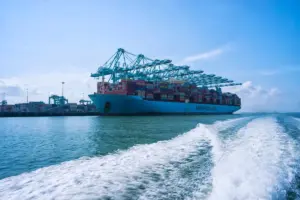
The Strait of Hormuz has been largely closed to conventional commercial transit since late February, following a series of kinetic strikes launched by U.S. and Israeli forces against military targets inside Iran. In response, Tehran has aggressively asserted sovereignty over the waterway.
On Monday, the Iranian Maritime Organization published a blacklist of 77 merchant vessels accused of violating "operational protocols" within Iranian territorial waters. Tehran warned that any future transits by these vessels would result in immediate boarding, detention, or cargo confiscation.
In response to the blockade, U.S. Energy Secretary Chris Wright confirmed that the number of commercial vessels attempting "covert transits"—navigating with transponders deactivated under the escort of U.S. and allied naval assets—has risen significantly. However, independent maritime tracking firms report that overall crude flows through the Persian Gulf have dropped by nearly 30% since the beginning of September.
                  [Strait of Hormuz] (Blocked since Feb)
                          │
         ┌────────────────┴────────────────┐
         ▼                                 ▼
[Iran: 77-Ship Blacklist]       [U.S. Navy: Covert Escorts]
• Threat of detention           • Transponders turned off
• Regulatory pretexts           • High-risk night transits
The Humanitarian Toll in Yemen
While the geopolitical focus remains on oil and shipping, the humanitarian situation on the ground in Yemen has deteriorated to levels not seen since the height of the civil war in 2018. The International Organization for Migration (IOM) reported that more than 82,000 civilians have been displaced since the beginning of this month’s Houthi offensive.
The fast-moving frontlines have trapped thousands of families inside active combat zones. In the outskirts of Taiz, displaced civilians describe a desperate struggle for basic necessities. "My children are trapped inside our home in Mocha," said Aisha Muhammad, an elderly displaced woman currently sheltering in a makeshift camp. "They cannot go to the market for food or clean water because of the shelling and sniper fire. We cannot reach them, and they cannot escape to us. We are entirely at the mercy of God."
Official Statements and Diplomatic Maneuvers
President Trump’s Truth Social Post
Taking to his social media platform, Truth Social, President Donald Trump offered an unconventional assessment of the crisis, suggesting that Washington’s campaign of maximum economic pressure was forcing Tehran to seek a diplomatic exit ramp.
"The failing Nation of Iran wants to make a deal, quickly and badly. I will determine whether or not the U.S.A. will choose to engage – The concept of which we are open to."
— President Donald Trump, Truth Social
The statement was interpreted by some analysts as an attempt to calm nervous energy markets, while others viewed it as a sign of division within the administration regarding how to handle the escalating proxy war.
┌─────────────────────────────────────────────────────────────────────────┐
│ @realDonaldTrump                                                        │
│                                                                         │
│ The failing Nation of Iran wants to make a deal, quickly and badly. I   │
│ will determine whether or not the U.S.A. will choose to engage - The    │
│ concept of which we are open to.                                        │
└─────────────────────────────────────────────────────────────────────────┘
The Postponed Muscat Summit
The prospects for a regional diplomatic solution faded late Sunday evening when Oman’s Foreign Minister, Sayyid Badr Albusaidi, announced the indefinite postponement of multilateral talks scheduled to take place in Muscat. The summit, which aimed to establish a demilitarized transit lane through the Strait of Hormuz, was canceled at the eleventh hour.
According to Iranian diplomatic sources, the postponement was requested directly by Saudi Arabia. Riyadh reportedly refused to sit down with Iranian representatives while Houthi forces—armed and trained by Tehran—were actively advancing on Saudi borders and targeting domestic infrastructure.
Strategic Consultations in Jeddah
As the military situation escalated, high-level security consultations took place in Saudi Arabia. State media reported that Crown Prince Mohammed bin Salman met with Admiral Brad Cooper, the commander of U.S. naval forces in the region, in the port city of Jeddah.
[Crown Prince Mohammed bin Salman] <───(Jeddah Bilateral)───> [Adm. Brad Cooper (U.S. Navy)]
                 │                                                      │
                 ▼                                                      ▼
     * Requests direct U.S. air strikes                     * Offers intelligence & logistics
     * Demands naval escort expansion                      * Resists direct kinetic involvement
According to intelligence sources familiar with the discussions:
- Saudi Demands: Riyadh pressed for direct U.S. military intervention, including targeted airstrikes against Houthi missile launch sites and command centers in western Yemen.
- U.S. Hesitancy: Washington resisted these requests, limiting its current support to real-time intelligence sharing, logistical assistance, and defensive naval posturing.
- Backchannel Warnings: Over the weekend, Trump confirmed he had spoken with the Crown Prince, but noted that Houthi representatives had also reached out to U.S. intermediaries, warning of severe retaliatory strikes against American regional bases if the U.S. military re-entered the Yemeni theater.
Future Outlook
The current crisis presents the United States and its regional allies with several divergent paths forward, each carrying profound risks for global stability.
                                  ┌──► Scenario A: Regional Escalation
                                  │    • U.S. enters Yemen war; direct strikes on Houthis.
                                  │    • Crude oil spikes past $120/bbl.
                                  │
[Current Geopolitical Impasse] ───┼──► Scenario B: Diplomatic Grand Bargain
                                  │    • Direct U.S.-Iran negotiations post-midterms.
                                  │    • Sanctions relief in exchange for maritime security.
                                  │
                                  └──► Scenario C: War of Attrition
                                       • Continued proxy strikes and high energy prices.
                                       • Persistent inflation; localized humanitarian collapse.
Scenario A: Direct U.S. Kinetic Re-engagement
Should the Houthis successfully disrupt commercial shipping through the Bab al-Mandab Strait or cause significant casualties within Saudi borders, the Trump administration may find its policy of military restraint untenable. A resumption of the 2025 bombing campaign against Houthi military infrastructure would aim to degrade their launch capabilities.
However, this path risks drawing the U.S. into a protracted war of attrition in Yemen, further straining military resources and potentially prompting Iran to increase its support to regional proxies in Iraq, Syria, and Lebanon. In this scenario, global energy markets would likely see Brent crude spike well past $120 per barrel.
Scenario B: The Diplomatic Grand Bargain
Despite his hawkish rhetoric, President Trump has repeatedly expressed a preference for bilateral deal-making over protracted foreign interventions. If Tehran’s economic situation continues to deteriorate under the weight of international sanctions, the Iranian leadership may accept a highly structured negotiation process.
Such a deal would likely require Iran to curb its proxy activities in Yemen and Iraq and guarantee free navigation in the Persian Gulf in exchange for partial sanctions relief. Trump’s assertion that the regional crisis could resolve shortly after the November midterm elections suggests that the White House may be positioning itself for a major diplomatic push once domestic political pressures subside.
Scenario C: Prolonged Attrition and Economic Instability
The most probable near-term outcome is a continuation of the current low-intensity conflict. Under this scenario, Saudi Arabia will rely on its defensive capabilities to absorb Houthi strikes while seeking to stabilize its domestic energy network.
Concurrently, the global economy will have to adjust to structurally higher transportation and energy costs as shipping companies permanently reroute vessels around the Cape of Good Hope, bypassing the Red Sea altogether. This prolonged instability would keep oil prices elevated, maintaining inflationary pressures on central banks worldwide and leaving the civilian population of Yemen trapped in a state of perpetual humanitarian crisis.