










Executive Overview
For millions of outdoor enthusiasts, the transition from rugged, off-grid isolation to comfortable car camping hinges on one critical piece of hardware: the portable generator. Yet, shopping for a reliable power source has historically felt like navigating a logistical minefield. Buyers are routinely forced to compromise between affordability and acoustic comfort, trapped in a frustrating paradox where budget-friendly models roar like jet engines, while whisper-quiet inverter generators command exorbitant luxury prices. The online marketplace only exacerbates the problem, muddying consumer research with conflicting spec sheets, opaque manufacturer claims, and unvetted reviews.
Enter Consumer Reports—the gold standard of independent, nonprofit consumer advocacy. By purchasing products anonymously at retail and subjecting them to rigorous, standardized laboratory evaluations, the organization strips away marketing fluff to reveal true performance metrics. In its latest comprehensive assessment of the 1,500-to-2,500-watt generator class, Consumer Reports identified a rare market anomaly: a machine that defies the industry’s pricing conventions without sacrificing quality or tranquility.
The Champion 100571, a gasoline-powered inverter generator delivering 2,300 running watts, secured the top-rated position in its category while retailing for under $800 at major home improvement outlets like Lowe’s. Hailed for its exceptional power delivery, stellar reliability, and remarkably low noise output, the Champion 100571 bridges the historical gap between budget constraints and campsite etiquette. However, its viral popularity has introduced a new hurdle: high demand and fluctuating retail inventory. This report explores the rigorous testing protocols behind its top ranking, practical considerations for campers and RVers, the realities of gasoline-powered infrastructure, and alternative workarounds for outdoor adventurers seeking reliable off-grid power.
Detailed Chronology of the Testing and Evaluation Process
To understand how the Champion 100571 rose to prominence, it is necessary to examine the meticulous, multi-week evaluation process executed within Consumer Reports’ specialized testing facilities. Unlike sponsored blog posts or promotional review channels, the nonprofit’s methodology is designed to replicate real-world stress conditions while maintaining strict laboratory control.
Phase 1: Procurement and Initial Inspection
Months prior to publication, Consumer Reports procurement specialists anonymously purchased the Champion 100571 off retail shelves, ensuring the unit tested was identical to what an everyday consumer would take home. Upon arrival at the testing laboratory, engineers conducted a comprehensive unboxing and structural inspection. They evaluated build quality, accessibility of maintenance ports, control panel layout, safety labeling, and overall material durability—factors that dictate how well a generator survives being tossed into the back of a pickup truck or exposed to sudden weather shifts at a mountain campsite.
Phase 2: Acoustic Profiling and Noise Measurement
Because noise pollution is the number one friction point among neighboring campers, acoustic testing forms the cornerstone of Consumer Reports’ generator evaluations. Engineers placed the Champion 100571 within a specialized, acoustically dampened testing chamber to measure sound pressure levels from standardized distances.
According to manufacturer specifications, the Champion 100571 produces a mere 58 decibels (dBA) when measured from a distance of 23 feet—roughly the acoustic equivalent of a normal, conversational human voice or background music in a restaurant. Consumer Reports’ independent laboratory tests corroborated these figures, noting that the unit’s advanced inverter technology modulated engine speed dynamically based on electrical load, preventing the jarring, high-revving noise spikes characteristic of traditional open-frame contractor generators. This low acoustic footprint earned the unit top marks in noise suppression, cementing its status as a campsite-friendly machine.

Phase 3: Electrical Output Stability and Load Stress Testing
A quiet generator is of little use if it fluctuates in voltage and fries sensitive electronics. To test power quality, engineers connected the Champion 100571 to an array of heavy-duty resistive and inductive loads, pushing the inverter to its limits.
The machine is rated for 3,500 starting (surge) watts—the temporary electrical burst required to kick-start electric motors and compressors found in refrigerators or power tools—and 2,300 running watts, the continuous electrical output it can sustain indefinitely. During continuous load trials, the inverter maintained exceptionally clean, stable sine waves with minimal Total Harmonic Distortion (THD). This ensures that sensitive modern devices, such as smartphones, laptops, CPAP machines, and drone batteries, can be charged directly from the unit’s receptacles without fear of power surges or circuit degradation.
Phase 4: Fuel Efficiency and Endurance Trials
The final phase of testing evaluated fuel consumption and operational endurance. Engineers filled the generator’s 1.2-gallon gasoline tank to capacity and subjected the unit to a simulated mixed campsite load—cycling refrigeration units on and off while continuously drawing power for lighting and device charging.
The Champion 100571 achieved an impressive runtime of approximately 10 hours on a single tank under a modest load. Testers also evaluated low-light refueling ergonomics, praising the integration of a helpful LED panel light designed to illuminate the fuel cap and control dashboard during nocturnal power management.
Supporting Context & Metrics: Understanding the 1,500–2,500 Watt Class
To contextualize why the Champion 100571 excels, one must analyze the specific engineering parameters of the generator class it dominates. In the broader ecosystem of portable power, generators are broadly segmented by wattage, fuel type, and frame design.
Weight-to-Power Ratio
Generators falling within the 1,500-to-2,500-watt bracket typically weigh between 50 and 60 pounds. This weight threshold is a critical ergonomic sweet spot for car camping and tailgating. Heavier models (such as 3,500 to 7,500-watt units designed for home backup) frequently exceed 100 pounds, requiring specialized wheel kits and multiple people to load safely. Conversely, ultralight solar power stations are lighter but often lack the continuous thermal capacity to run high-draw appliances for extended periods without expensive supplemental solar arrays.
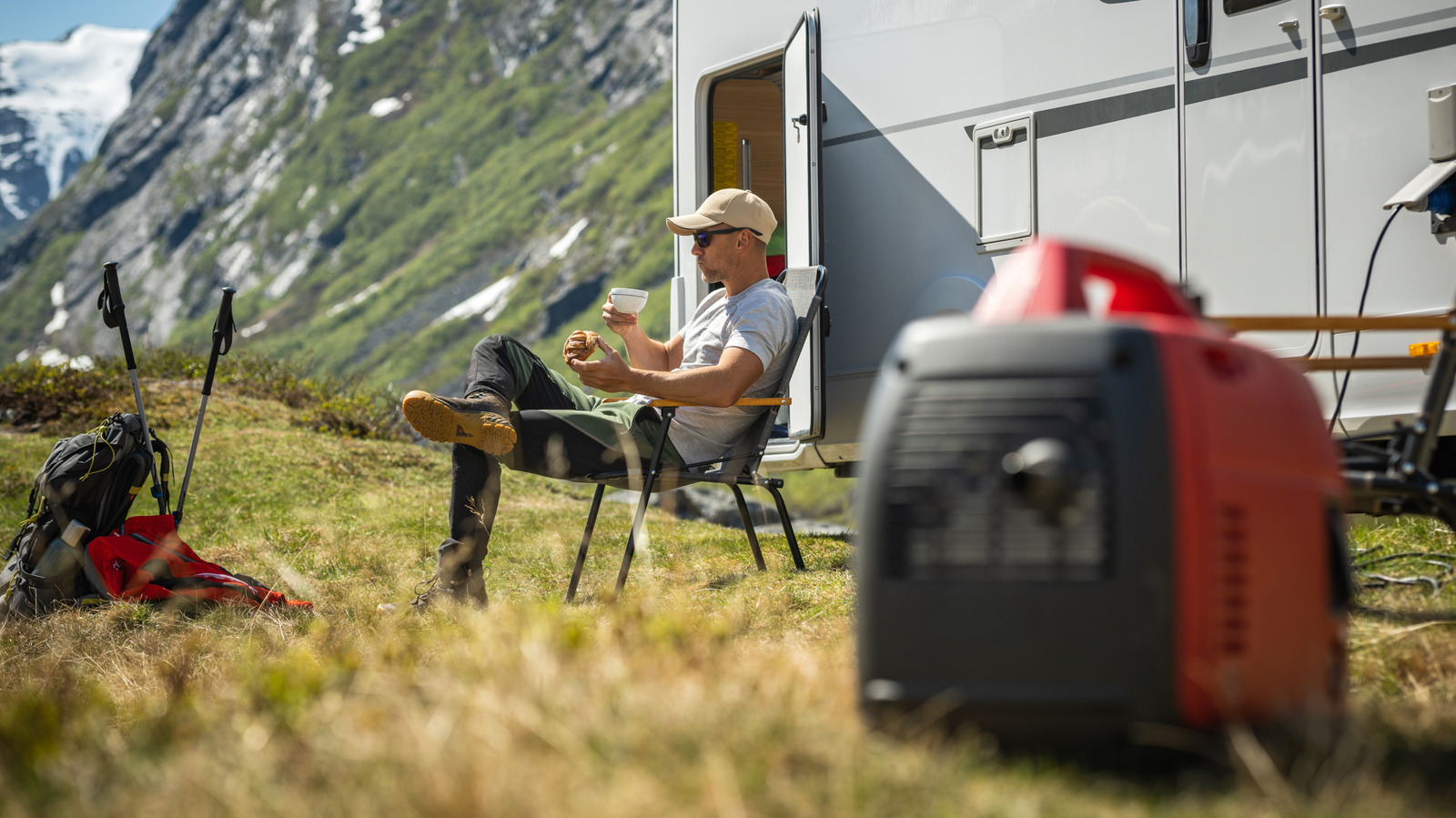
At roughly 50-plus pounds, the Champion 100571 is compact enough for a single person to lift into a trunk, yet robust enough to host a heavy-duty internal alternator and sound-dampening enclosure.
Voltage Specifications Breakdown
- Starting Watts (3,500W): This metric represents the instantaneous electrical surge required to overcome the initial inertia of an electric motor. When a campsite refrigerator compressor clicks on, it demands a temporary spike in electrical current. The Champion 100571 handles these surges smoothly without tripping its internal circuit breakers.
- Running Watts (2,300W): Once the motor is spinning, the power requirement drops to the running wattage. A 2,300-watt continuous output provides ample headroom to simultaneously power a portable electric cooler, LED string lights, medical devices, and multiple USB charging blocks.
The Inverter Advantage
Unlike traditional frame generators that run at a constant 3,600 RPM to maintain standard AC frequency, inverter generators like the Champion 100571 utilize a computerized digital module to generate raw electrical current, which is then inverted into clean AC power. This allows the internal engine to throttle up or down depending on the electrical demand. The result is superior fuel efficiency, reduced mechanical wear, and significantly lower decibel output.
Practical Application: Camping, RVing, and Limitations
While the Champion 100571 earned stellar marks from Consumer Reports, utilizing any piece of hardware effectively requires a clear understanding of its practical applications and operational boundaries.
The Car Camper’s Dream Setup
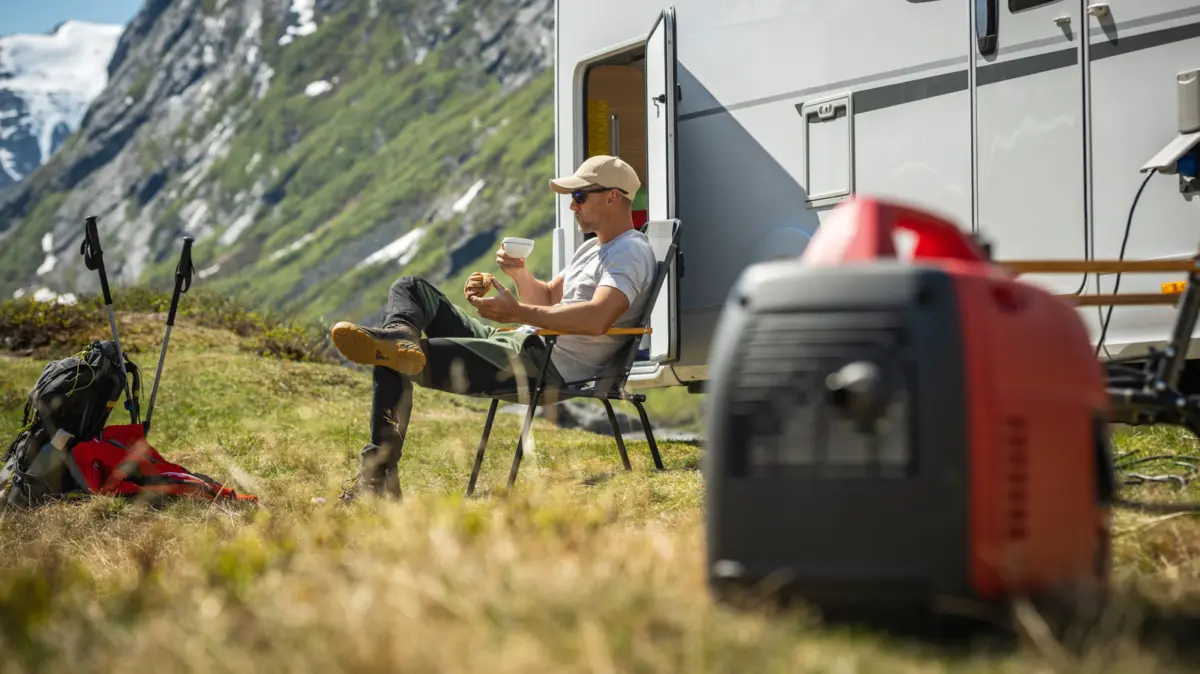
For traditional car campers and overlanding enthusiasts, the Champion 100571 functions as a central command hub. Equipped with three distinct outlet types—including standard household AC plugs and DC USB ports—users can charge phones, tablets, camera batteries, and power banks simultaneously without sacrificing primary appliance lines.
When paired with modern camp essentials—such as high-efficiency 12-volt compressor refrigerators, LED ambient lighting systems, and portable coffee makers—a campsite powered by the Champion 100571 achieves a level of comfort that rivals a modern cabin. However, campers must exercise discipline in cold-weather environments; relying on a small generator to actively generate space-heating resistance is inefficient. Instead, experts recommend pairing the generator with cold-weather sleeping systems, insulated RV skirting, and propane-based heating alternatives.
A Reality Check for RV Owners
Recreational vehicle (RV) owners must approach the Champion 100571 with realistic expectations. While the unit provides excellent auxiliary power for charging house batteries, running interior lights, operating televisions, and powering small kitchen microwaves, it operates near its absolute threshold when tasked with heavy motor loads.
An RV air conditioning unit, for instance, requires a massive surge to start—often pushing past 3,000 watts. While a specialized soft-start kit installed on an RV air conditioner might allow the Champion 100571 to fire it up under ideal conditions, manufacturer guidance and experienced RVers emphasize that this generator is best suited for "powering items around the RV" rather than attempting to run a central roof-mounted AC unit continuously.
The Gasoline Dilemma: Pros and Cons
Relying on gasoline as a fuel source presents distinct trade-offs for outdoor enthusiasts:
- Advantages: Gasoline is universally available at every suburban gas station and rural outpost. In emergency scenarios—such as severe weather events or grid failures where the generator must pull double duty at home—fuel acquisition is straightforward and immediate. Furthermore, the Champion’s 1.2-gallon tank delivers a reliable 10-hour runtime at low loads.
- Disadvantages: Gasoline degrades over time, leaving gummy varnish deposits in carburetors if left sitting in the tank during off-seasons. Consequently, users must diligently drain the system or add fuel stabilizers before long-term storage. Additionally, managing fuel cans at a pristine campsite requires careful safety protocols, and a long weekend of continuous use will necessitate routine refueling trips every 10 hours.
Future Outlook & Alternative Solutions
As consumer demand for clean, quiet off-grid power continues to surge, the landscape of portable energy is evolving rapidly. Hybrid generators, dual-fuel models (capable of running on both gasoline and propane), and massive lithium-ion power stations are reshaping consumer expectations. Yet, for pure reliability, ease of refueling, and affordability under the $800 threshold, high-performance gasoline inverters like the Champion 100571 maintain a distinct competitive edge.
Navigating Inventory Constraints and Workarounds
Due to the widespread media attention generated by Consumer Reports’ endorsement, retail availability for the Champion 100571 fluctuates rapidly. When major distributors like Lowe’s experience nationwide stockouts, consumers are left searching for viable alternatives.
For those unable to secure the exact 100571 model, outdoor and generator communities—including active enthusiast forums on Reddit—frequently point to parallel-ready alternatives. Models such as the Champion 2,500-watt Ultralight Inverter serve as exceptional substitute options. Many Champion inverter models feature parallel capability, allowing users to connect two smaller, lightweight generators using an affordable parallel kit. This setup yields double the electrical output (roughly 4,600 running watts) when heavy loads are required, while retaining the modular flexibility to pack only a single, quiet 50-pound unit for weekend trips where power demands are modest.
Conclusion
The recognition of the Champion 100571 by Consumer Reports validates what budget-conscious campers have sought for years: high-end acoustic performance and electrical stability without an exorbitant price tag. By striking the optimal balance between weight, noise reduction, and output capacity, it redefines the value proposition of portable power. For outdoor adventurers willing to manage the realities of gasoline maintenance and inventory availability, it remains one of the most intelligent investments for off-grid comfort under $800.