









Executive Overview
Passengers currently setting sail aboard the Norwegian Cruise Line (NCL) vessel Norwegian Prima have received official notifications warning of a potential connection to Legionnaires’ disease. While cruise line representatives and public health authorities emphasize that there is currently no definitive link proving contamination originated on board, the situation has triggered an active investigation in coordination with the United States Centers for Disease Control and Prevention (CDC).
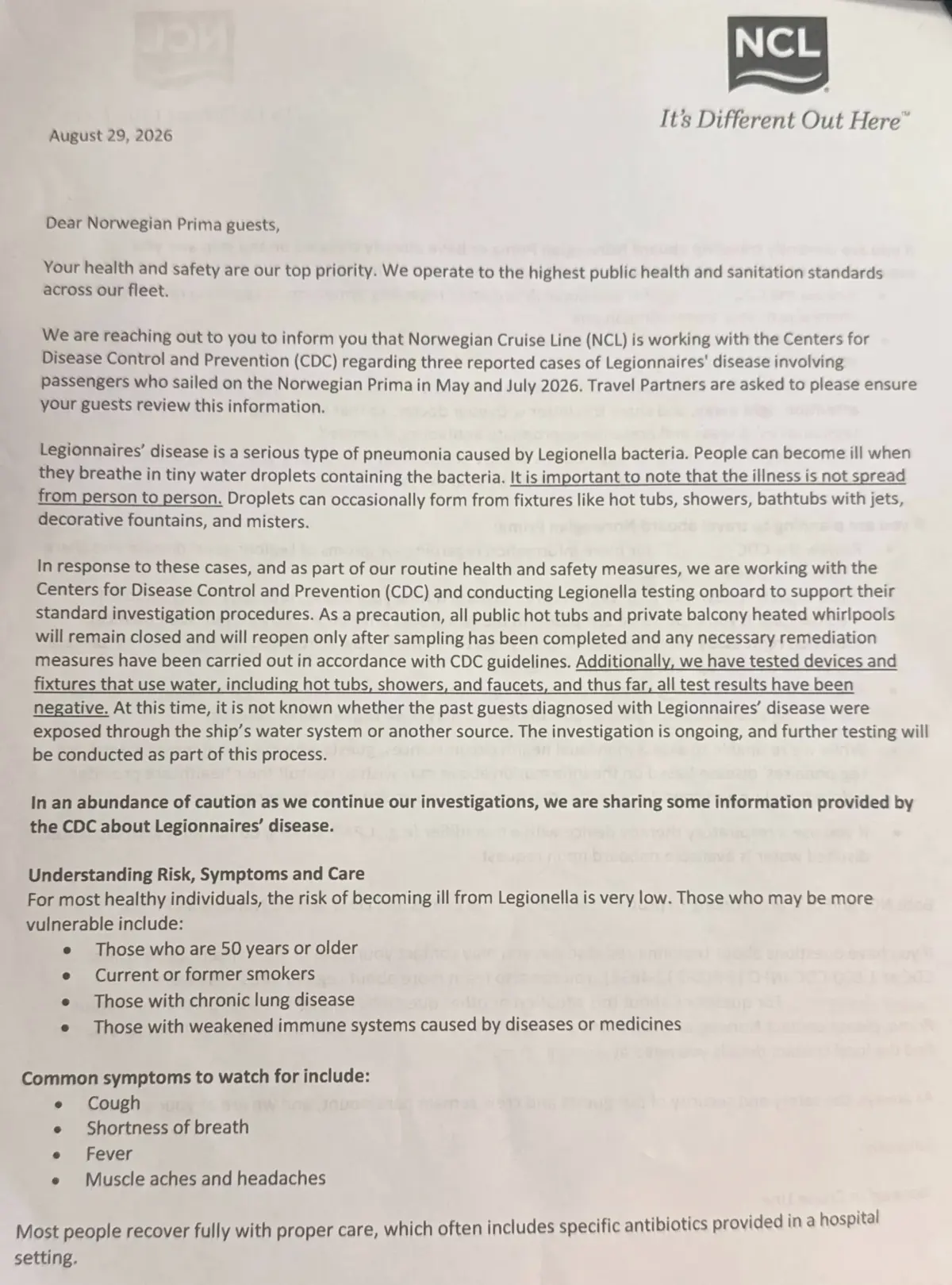
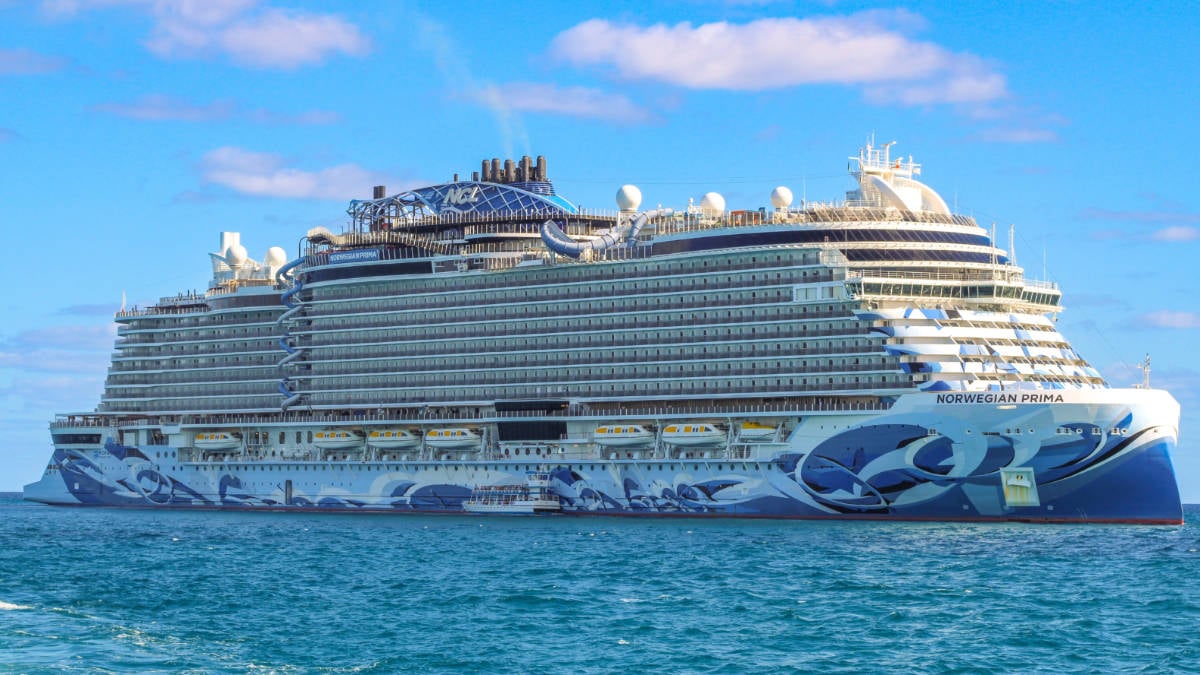
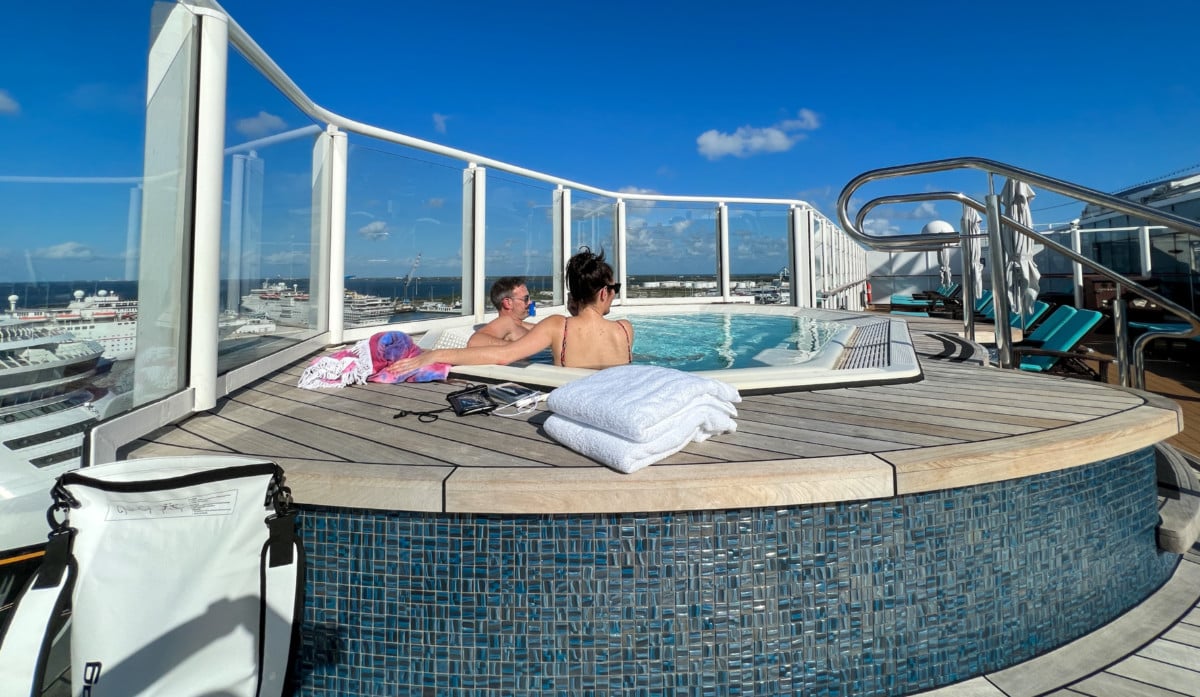
The health alert stems from three reported cases of Legionnaires’ disease involving individuals who completed voyages on the Norwegian Prima across May and July 2026. In response to the findings, NCL has enacted a series of aggressive, precautionary measures across the 3,099-guest vessel—most notably the immediate shutdown of all public hot tubs and private balcony-heated whirlpools.
Although initial onboard water-quality testing of fixtures, showers, and faucets has yielded negative results for Legionella bacteria, the cruise line is maintaining strict sanitation and remediation protocols in alignment with CDC directives. This incident underscores a broader, ongoing challenge within the maritime leisure industry regarding the management of complex onboard water systems, and highlights the delicate balance cruise operators must strike between transparent public health communication and passenger reassurance.
Detailed Chronology: The Investigation and Response
The unfolding health review began quietly as health authorities tracked sporadic diagnoses that eventually intersected with passenger manifests from the Norwegian Prima.
The Notification and Discovery
The public became aware of the situation when notification letters sent to travelers surfaced across online communities, notably on Reddit and specialized cruise enthusiast Facebook groups. The documentation revealed that Norwegian Cruise Line was actively collaborating with the CDC regarding three confirmed diagnoses of Legionnaires’ disease among past guests.
While the exact sailings associated with the infected individuals have not been publicly isolated to specific dates beyond the broad months of May and July 2026, the timeline prompted immediate operational adjustments. The Norwegian Prima, a modern vessel homeported in Port Canaveral, Florida, routinely operates seven-night Caribbean voyages encompassing both eastern and western itineraries.
Precautionary Onboard Measures
Upon learning of the reports, NCL initiated a swift precautionary containment strategy. Recognizing that mist from water systems is a primary transmission vector for the bacteria, the cruise line took the following steps:

- Facility Closures: All public hot tubs and private balcony-heated whirlpools were immediately shuttered. NCL confirmed these amenities will remain closed until comprehensive water sampling is completed and all required remediation measures are fully verified under CDC guidelines.
- Rigorous Testing: Technical teams deployed onboard testing protocols targeting complex water conduits, faucets, showers, and associated fixtures. To date, preliminary test results taken directly from the ship have returned negative.
- Health Communications: Informational letters were distributed to current and upcoming guests to ensure transparency, outlining the nature of the illness, high-risk profiles, and symptoms to watch for during and after their voyage.
Despite these operational adjustments to the ship’s recreational water features, the Norwegian Prima remains fully functional, with no other broad-scale cancellations or itinerary disruptions reported.
Understanding Legionnaires’ Disease: Risks and Medical Context
To properly contextualize the notification letters received by travelers, it is vital to examine what Legionnaires’ disease is, how it spreads, and who faces the highest vulnerability.
What is Legionnaires’ Disease?
Legionnaires’ disease is a severe, potentially life-threatening form of atypical pneumonia caused by Legionella bacteria. The bacteria thrive naturally in warm freshwater environments, but they can multiply rapidly within man-made, complex water systems such as hot tubs, cooling towers, plumbing networks, decorative fountains, and large commercial shower systems.
Crucially, Legionnaires’ disease is not spread through direct person-to-person contact. An individual cannot catch the illness from an infected fellow passenger. Instead, transmission occurs exclusively when a person breathes in microscopic water droplets (aerosols or mist) containing the bacteria.
Vulnerable Populations
While healthy individuals exposed to Legionella often experience mild or no illness, certain demographic groups face a significantly elevated risk of developing severe complications:
- Adults aged 50 years and older.
- Current or former cigarette smokers.
- Individuals with chronic lung diseases (such as chronic obstructive pulmonary disease or emphysema).
- Immunocompromised individuals, including those undergoing cancer treatment or organ transplant recipients, as well as people managing underlying conditions like diabetes, kidney failure, or liver disease.
Incubation and Symptom Tracking
One of the most complex aspects of tracking and diagnosing Legionnaires’ disease is its lengthy incubation window. According to the CDC, symptoms typically manifest two to 14 days after initial exposure, though in some cases, the incubation period can extend even longer.
Because of this extended timeline, a passenger who tests positive following a cruise may have been exposed on board the ship, or alternatively, they may have encountered the bacteria at a hotel, airport, home, or other public facility long before boarding the vessel.
Common symptoms closely mirror those of severe respiratory infections and include:
- High fever and chills
- Cough (which can sometimes produce mucus or blood)
- Shortness of breath or difficulty breathing
- Muscle aches, fatigue, and generalized weakness
- Headaches, confusion, or gastrointestinal issues (such as diarrhea or nausea)
Medical professionals emphasize that treatment typically requires targeted antibiotic therapy, and severe cases frequently necessitate hospitalization. Anyone exhibiting these symptoms following travel should seek prompt medical evaluation to secure an accurate diagnosis and appropriate care.
Supporting Context & Industry Metrics: A Recurring Maritime Challenge
The current scrutiny surrounding the Norwegian Prima is not an isolated incident within the modern cruise industry. Managing waterborne pathogens across massive, hyper-complex floating cities presents an ongoing engineering and sanitary hurdle for all major cruise lines.
Recent Precedents Across the Fleet
Norwegian Cruise Line has previously navigated similar public health communications:
- February 2026: Guests booked on the Norwegian Encore received safety advisories following two reported cases of Legionnaires’ disease linked to sailings from December 2025.
- November 2025: Travelers aboard the Norwegian Epic were issued precautionary notices regarding potential bacterial exposure during previous itineraries.
Industry-Wide Observations
Other major global cruise corporations have faced identical investigations, reflecting the proactive regulatory environment enforced by public health agencies like the CDC:
- Royal Caribbean International: In January 2025, the cruise line issued cautionary letters to guests regarding potential Legionella exposure tied to sailings on Symphony of the Seas that took place in October and December 2024.
- Celebrity Cruises: In January 2024, Celebrity issued similar transparency notices after two confirmed cases of the illness were traced back to voyages on the luxury vessel Celebrity Ascent.
Industry analysts note that these notifications are distributed out of an abundance of caution rather than as an admission of onboard failure. Public health protocols dictate that whenever multiple cases intersect with a specific travel vector, operators must notify past and future passengers. This empowers travelers to monitor their health, consult physicians early if symptoms arise, and make informed choices regarding the use of onboard amenities like whirlpools.
Official Statements and Regulatory Collaboration
The cooperative relationship between cruise operators and federal health agencies forms the backbone of modern maritime safety. When suspected cases emerge, protocols require immediate transparency and joint oversight.
In its communications with the public and passengers, Norwegian Cruise Line stressed its unwavering commitment to health and safety standards:
"We are reaching out to you to inform you that Norwegian Cruise Line (NCL) is working with the Centers for Disease Control and Prevention (CDC) regarding three reported cases of Legionnaires’ disease involving passengers who sailed on the Norwegian Prima in May and July 2026," the notification letter stated.
Furthermore, the cruise line clarified the rationale behind closing recreational water features:
"As a precaution, all public hot tubs and private balcony heated whirlpools will remain closed and will reopen only after sampling has been completed and any necessary remediation measures have been carried out in accordance with CDC guidelines."
Public health officials praise this proactive posture. By closing high-risk aerosol-producing amenities before definitive proof of onboard contamination is established, operators significantly mitigate potential exposure risks while remediation teams perform deep-cleaning, hyper-chlorination, and thermal eradication procedures where necessary.
Future Outlook: What Travelers Need to Know
As the investigation into the Norwegian Prima continues, the vessel remains in service, maintaining its regular schedule of seven-night Caribbean departures from Port Canaveral.
For current and future passengers, the situation serves as an important reminder of the intersection between travel and health monitoring. Experts advise travelers to take the following practical steps:
- Stay Informed: Pay close attention to pre-cruise communications and onboard announcements regarding the operational status of pools, hot tubs, and spa facilities.
- Assess Personal Risk: High-risk individuals—such as older adults, smokers, and immunocompromised guests—may wish to voluntarily avoid high-aerosol water features like public whirlpools as an extra layer of personal protection, regardless of the vessel.
- Monitor Health Post-Cruise: Because the incubation period for Legionella can stretch up to two weeks or longer, travelers should remain vigilant for respiratory symptoms long after disembarking. If a fever, persistent cough, or shortness of breath develops within 14 days of returning home, patients should inform their healthcare provider of their recent cruise history.
Ultimately, while the notification regarding the Norwegian Prima has understandably drawn attention, the rigorous cooperation between NCL and the CDC highlights an industry culture centered on rapid containment, transparent communication, and rigorous public health oversight.