










Executive Overview
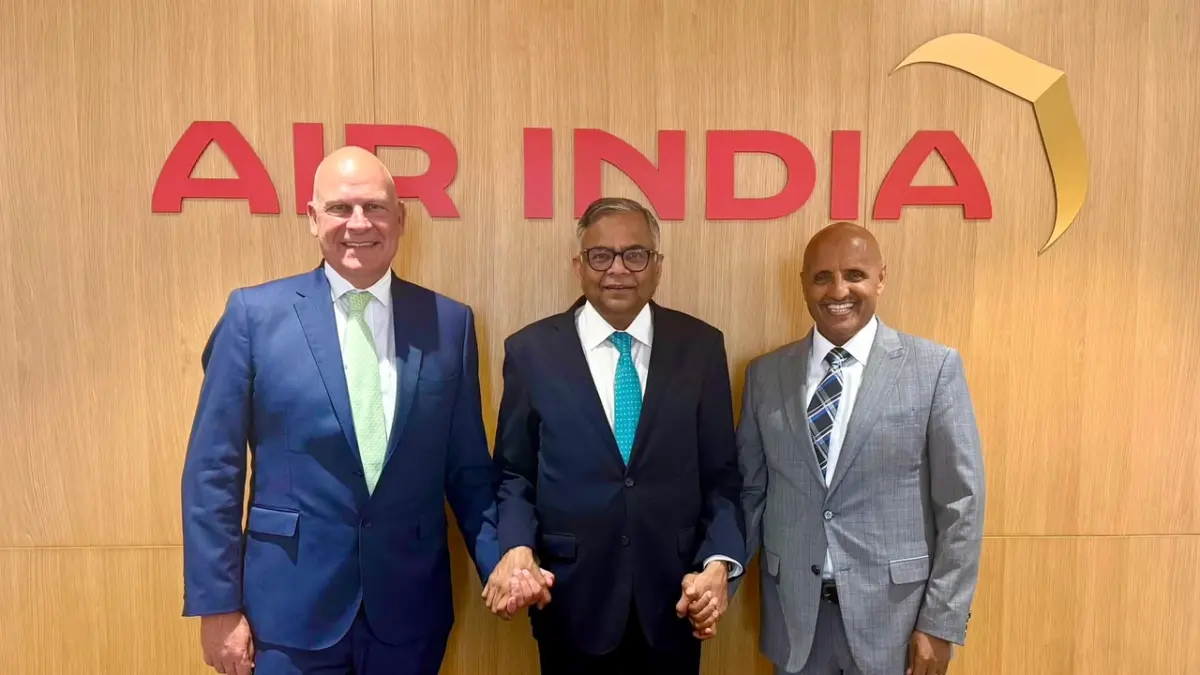
Air India stands at a critical juncture in its storied history. As the Tata Group continues its ambitious multi-year campaign to restore the Indian flag carrier to its former global glory, the airline has officially entered a new leadership era. During a high-stakes employee town hall meeting on Monday, outgoing Chief Executive Officer Campbell Wilson formally handed the reins to his successor, seasoned aviation veteran Tewolde Gebremariam.
The transition marks the conclusion of a turbulent, transformative, and foundational chapter under Wilson, who steered the airline through the immediate aftermath of its privatization in 2022. Wilson inherited a legacy carrier burdened by deep financial losses, antiquated technology, battered morale, and a heavily bureaucratic operational structure. Over the past four years, Wilson’s administration laid the structural groundwork for a modern global network—negotiating massive widebody and narrowbody fleet acquisitions, rolling out comprehensive cabin retrofits, integrating digital platforms, and executing complex corporate mergers, most notably the consolidation of Vistara and the integration of other Tata-owned airline assets.
However, the airline that Tewolde Gebremariam now takes over is fundamentally different from the one Wilson inherited. It is an enterprise operating with a vastly expanded fleet, significantly greater financial and logistical resources, and exponentially higher expectations from both the Tata Group board and the global aviation marketplace.
During Monday’s joint address, Air India Chairman N. Chandrasekaran mapped out the precise metrics that will define this next phase of the airline’s evolution. According to Chandrasekaran, the success of Air India’s ongoing turnaround will no longer be judged merely by its survival, corporate restructuring milestones, or fleet expansion numbers. Instead, the carrier’s performance will be scrutinized through four uncompromising pillars: safety, customer trust, reliable operations, and rigorous control of operational costs.
This comprehensive report examines the shifting landscape at Air India, detailing the monumental transition of power, the achievements and shortcomings of the Wilson era, the strategic mandate handed to Gebremariam, and the formidable challenges that lie ahead as the airline attempts to cement its place among the world’s elite carriers.
Detailed Chronology: The Evolution of Air India Under Tata
To understand the weight of the mandate facing Tewolde Gebremariam, one must examine the rapid, high-pressure timeline of Air India’s privatization and restructuring since the Tata Group reclaimed ownership.
Phase One: The Takeover and Stabilization (2022)
In January 2022, the Tata Group officially regained control of Air India nearly seven decades after the airline was nationalized. The initial months were consumed by crisis management. The airline was hemorrhaging cash, dealing with low employee morale, and managing a fragmented fleet that suffered from severe maintenance and reliability issues. Campbell Wilson, an industry veteran with a proven track record at Scoot and Singapore Airlines, was brought in to steady the ship. His early mandate was straightforward: stop the bleeding, assess the state of the assets, and keep the planes flying safely while formulating a long-term strategy.

Phase Two: The Aggressive Growth and Fleet Overhaul (2023–2024)
With the foundational stabilization complete, Air India shocked the global aviation industry in early 2023 with a historic, record-shattering twin-order for nearly 500 aircraft from Airbus and Boeing. This move signaled to competitors that Tata had no intention of running a regional player; Air India was being re-engineered to compete directly with the dominant Gulf and European mega-carriers for lucrative long-haul and ultra-long-haul traffic.
Parallel to the fleet announcements, the airline initiated a multi-million-dollar interior refurbishment program. Outdated cabins were slated for total replacement to bring passenger experience standards in line with modern international benchmarks. Simultaneously, IT infrastructure was overhauled to replace legacy booking and operational systems that had hobbled the airline for decades.
Phase Three: Consolidation and Corporate Restructuring (Late 2024–2025)
The middle years of the transformation strategy focused heavily on corporate consolidation. The Tata Group sought to simplify its aviation portfolio by merging low-cost carrier Air India Express with AIX Connect (formerly AirAsia India), and merging full-service carrier Vistara into Air India.
The Vistara merger, in particular, was a massive logistical, regulatory, and cultural undertaking. Vistara—a joint venture between Tata and Singapore Airlines—had cultivated a reputation for superior service and operational reliability, contrasting sharply with the historical perception of Air India. Fusing the two corporate cultures, harmonizing fleets, retaining premium corporate clients, and retraining thousands of personnel created unprecedented operational strain.
Phase Four: The Changing of the Guard (Monday’s Town Hall)
Monday’s employee town hall meeting served as the ceremonial and operational bookend to this foundational phase. Addressing a packed auditorium and a global virtual audience of employees, Chairman N. Chandrasekaran acknowledged that Air India had just navigated "one of the most difficult stretches in its history."
With the heavy lifting of corporate mergers largely complete and new aircraft steadily entering the active fleet, Wilson stepped down, passing the operational baton to Gebremariam. The transition marks a strategic pivot: moving away from structural consolidation and moving aggressively toward operational excellence and commercial optimization.
Supporting Context & Metrics: A Radically Altered Operational Landscape
The Air India that Tewolde Gebremariam inherits bears little resemblance to the skeletal, debt-ridden entity taken over from the Indian government four years ago. The metrics of change tell a story of immense capital injection and rapid scaling.
Fleet Expansion and Modernization
- The Order Book: The combined Airbus and Boeing order book remains one of the largest in commercial aviation history, ensuring a steady stream of state-of-the-art narrowbody and widebody aircraft deliveries over the next decade.
- Cabin Refurbishments: Legacy Boeing 777s and Boeing 787 Dreamliners are progressively entering maintenance hangars for comprehensive interior overhauls, introducing modern business class suites, premium economy cabins, and upgraded inflight entertainment (IFE) systems.
- Network Reach: Non-stop routes connecting Indian metros to key global financial and cultural hubs in North America, Europe, the UK, and Southeast Asia have been expanded, bolstered by the absorption of Vistara’s prime slot portfolio.
The Financial and Resource Reality
While capital availability is vastly superior to the pre-privatization era, the financial stakes are equally astronomical. Billions of dollars in capital expenditure require a clear path to profitability. The airline is no longer operating under the safety net of government bailouts; it is backed by the Tata Group’s balance sheet, which demands fiscal discipline, strategic asset utilization, and competitive return on investment.
Furthermore, human resources have scaled dramatically. The integration of Vistara and various low-cost units has created a massive workforce comprising tens of thousands of pilots, cabin crew, engineers, and administrative personnel. Managing this multicultural, multi-union labor force while instilling a unified corporate culture remains one of the most complex challenges facing the new leadership.
Official Statements and Strategic Mandates
The joint address delivered during Monday’s town hall by N. Chandrasekaran, Campbell Wilson, and Tewolde Gebremariam set a sober yet ambitious tone for the airline’s future.
Chairman N. Chandrasekaran’s Four-Pillar Framework
In his address, Chandrasekaran made it clear that while fleet growth and corporate restructuring were necessary first steps, the true measure of Air India’s success will now be determined by qualitative execution. He outlined four core areas of evaluation:
- Safety: Reinforcing an uncompromising safety culture across all flight operations, engineering, and maintenance departments. In the wake of rapid expansion, ensuring that safety protocols outpace operational growth is paramount.
- Customer Trust: Rebuilding the brand equity of the national carrier. This involves addressing legacy complaints regarding customer service, baggage handling, call center responsiveness, and delay management.
- Reliable Operations: Eliminating schedule unreliability. Punctuality and asset utilization must match global industry standards to retain corporate and premium leisure travelers.
- Tighter Control of Costs: Balancing aggressive growth with strict financial discipline. Streamlining supply chains, optimizing fuel burn, and maximizing crew and aircraft utilization will be critical as the airline scales.
Campbell Wilson’s Farewell Reflection
Reflecting on his tenure, outgoing CEO Campbell Wilson expressed pride in the foundational work accomplished over the past four years. Wilson noted that dismantling bureaucratic inertia, executing complex mergers, and securing the future fleet required difficult decisions and relentless execution. He leaves behind an organization that has transitioned from defense to offense, though he readily acknowledged that the hardest part—delivering consistent daily execution at scale—now begins.
Tewolde Gebremariam’s Vision
Stepping into the role, Tewolde Gebremariam acknowledged the immense scale of the enterprise. Known globally for his transformative leadership in scaling African aviation, Gebremariam emphasized that Air India’s destiny is to reclaim its status as a premier global airline. He underscored that scale without quality is a liability, echoing the Chairman’s sentiment that the focus must shift inward to optimize the vast resources assembled over the past four years.
Future Outlook: The Road Ahead for Gebremariam’s Air India
As Tewolde Gebremariam settles into his office as CEO, a daunting matrix of strategic challenges and opportunities awaits him. The honeymoon phase of the Tata takeover is officially over; stakeholders, passengers, and regulators will expect immediate, tangible improvements in day-to-day operations.
1. Mastering Operational Reliability and Punctuality
The primary battleground for Air India will be punctuality and schedule integrity. As the airline introduces new aircraft and integrates complex domestic and international feeds, operational bottlenecks—ranging from airport congestion in Mumbai and Delhi to engineering turnarounds—must be aggressively managed. Passengers paying premium fares expect European and Gulf-level consistency.
2. Cultural Integration and Employee Engagement
With the Vistara merger and subsidiary restructuring largely finalized, the human element remains fragile. Melding divergent corporate cultures, pay structures, and operational philosophies into a unified, high-performing team is a delicate task. Gebremariam must foster high employee morale while demanding the strict adherence to efficiency and safety protocols outlined by the Chairman.
3. Competing on the Global Stage
Air India is positioning itself as the definitive bridge between the West and the Indian diaspora, as well as a formidable competitor for traffic moving between Europe, North America, and Asia. To succeed, the airline must compete directly against heavily subsidized Gulf carriers (Emirates, Qatar Airways) and established European heavyweights (Lufthansa Group, Air France-KLM). This requires not only superior hardware (new planes and cabins) but flawless software (intuitive digital apps, world-class catering, and seamless transfer experiences).
4. Financial Discipline Amid Capital Intensity
The sheer scale of Air India’s transformation requires continuous capital expenditure. However, global macroeconomic headwinds, fluctuating fuel prices, and supply chain bottlenecks affecting aircraft and spare part deliveries present persistent threats. Gebremariam’s ability to enforce tighter cost controls while driving revenue growth will determine whether the airline can achieve long-term financial self-sufficiency.
Conclusion
The transition of leadership from Campbell Wilson to Tewolde Gebremariam marks the end of Air India’s turbulent reconstruction era and the beginning of its proving ground. Wilson successfully rescued the airline from the brink of stagnation, secured its future fleet, and untangled decades of institutional paralysis.
Now, Gebremariam inherits an airline armed with immense resources, unprecedented scale, and towering expectations. Guided by Chairman N. Chandrasekaran’s four unwavering pillars—safety, customer trust, operational reliability, and cost control—Air India’s journey toward global aviation prominence enters its most defining and rigorous chapter yet. The world is watching to see if India’s flagship carrier can finally deliver on the immense promise of its new era.