










Executive Overview
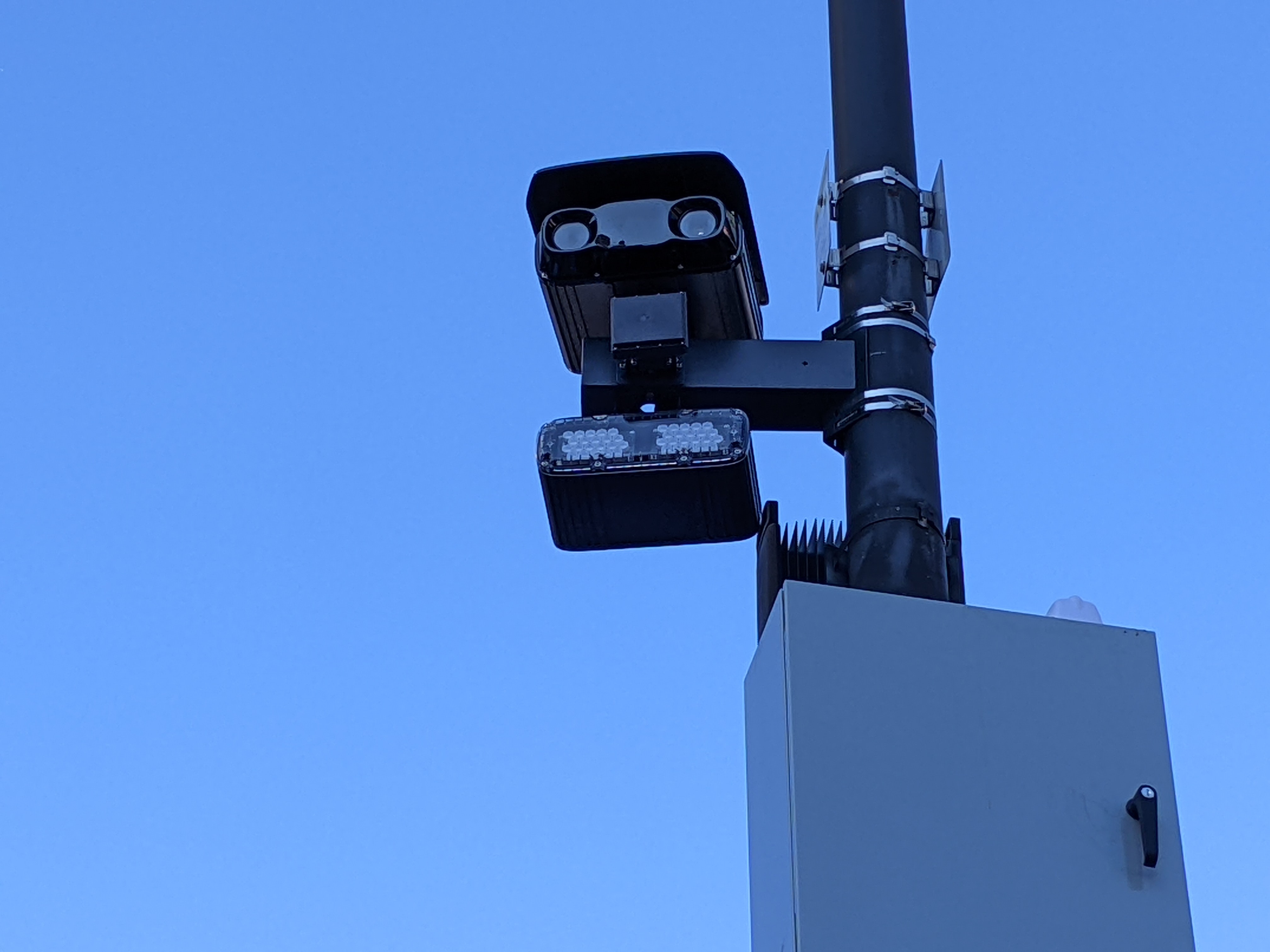
A landmark report released by the City of Oakland reveals that automated speed safety cameras are achieving unprecedented success in curbing dangerous driving, dramatically reducing speeding by 70 percent across pilot installation sites. The findings, published by the Oakland Department of Transportation (OakDOT), provide empirical validation for automated enforcement strategies that have long been championed by urban planners and safety advocates. Mirroring similar milestones achieved in neighboring San Francisco and municipal jurisdictions nationwide, Oakland’s initiative underscores the profound impact that targeted, technology-driven oversight can have on municipal traffic safety.
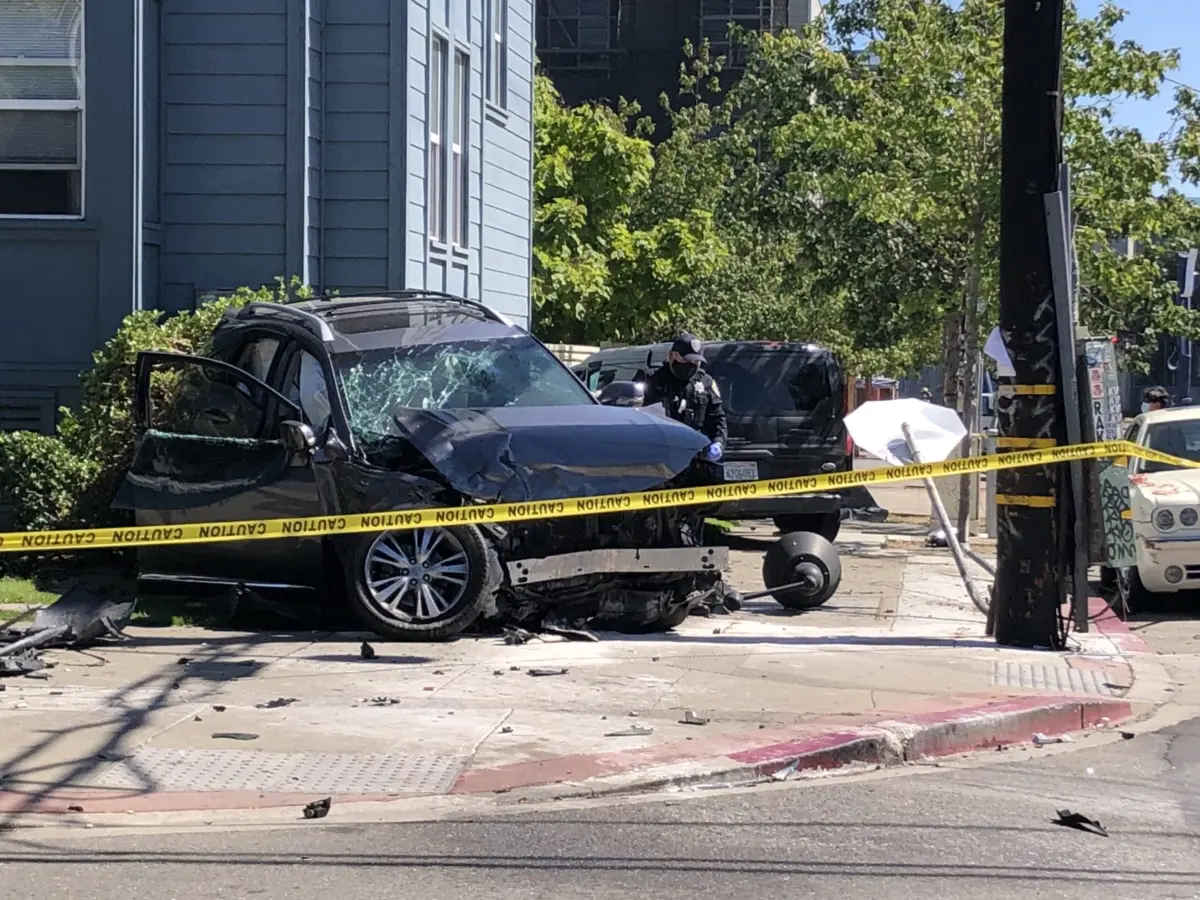
However, beneath the celebratory metrics lies a sobering reality. Despite the immediate and localized efficacy of the 35 pilot cameras—which collectively processed over half a million violations in their initial six months of operation—the broader Bay Area continues to grapple with a persistent traffic violence crisis. In Oakland alone, 23 lives were cut short by motorists last year, with an additional 10 fatalities recorded in the opening months of this year.
This juxtaposition of technological triumph and systemic peril has ignited a sophisticated regional debate. While city officials contemplate expanding automated enforcement—including a potential revival of red light cameras phased out a decade ago—advocacy groups are urging caution. Stakeholders emphasize that cameras, while vital, must serve as a complement to, rather than a replacement for, permanent physical infrastructure investments. As Oakland navigates the complexities of funding, equity, and public safety, the city’s speed camera pilot offers a critical blueprint—and a cautionary tale—for urban centers striving to eliminate traffic fatalities entirely.
Detailed Chronology and Program Mechanics
The path toward Oakland’s current automated enforcement success has been methodical, rooted in rigorous data collection, and shaped by years of escalating roadway fatalities. To accurately measure the efficacy of the speed safety cameras, OakDOT structured a comprehensive before-and-after evaluation framework across the summers of 2024, 2025, and 2026.
To ensure absolute scientific integrity, vehicle speeds were quantified using pneumatic tube counts—a gold-standard industry tool consisting of rubber hoses stretched across roadways that measure axle weight and speed differentials with high precision. These counts were deployed at designated camera locations prior to activation and subsequently during operational phases to establish comparative baselines.
The operational reality of the pilot quickly revealed the sheer scale of non-compliance on local corridors. According to the six-month evaluation report, the modest deployment of just 35 cameras resulted in a staggering 526,000 total recorded violations. Rather than immediately penalizing every infraction, the city implemented a transitional grace period, issuing 332,000 formal warnings alongside 194,000 financial citations.
This massive volume of infractions highlights a broader cultural and systemic issue regarding motorist behavior. As transit advocates have repeatedly pointed out, the volume of automated tickets dwarfs alternative narratives surrounding road users, effectively dismantling persistent tropes regarding non-motorized travelers. With hundreds of thousands of motorists caught speeding by a mere 35 devices in a matter of months, the data confirms that dangerous driving—carried out in multi-ton vehicles with lethal kinetic energy—remains the primary driver of roadway mortality.
Supporting Context and Metrics: A Regional and National Perspective
Oakland’s 70 percent reduction in speeding does not exist in a vacuum; it aligns seamlessly with international best practices and domestic findings across various urban centers. Cities that have embraced automated speed enforcement consistently report sharp drops in the velocity of vehicular traffic, which directly correlates with a reduction in pedestrian and cyclist fatalities. Physics dictates that pedestrian survival rates drop precipitously when impact speeds cross the threshold from 20 miles per hour to 30 miles per hour and beyond. By stripping away excess velocity, Oakland’s cameras are directly altering the physics of potential crashes.
Yet, regional progress remains fragile. The success of Oakland’s speed cameras arrives concurrently with alarming updates from across the bay. Earlier reporting from San Francisco revealed that the number of severe and fatal crashes in that city continues to climb, remaining higher than when San Francisco initially signed its visionary "Vision Zero" pledge in 2014—a commitment designed to eradicate traffic deaths entirely within a decade.
These contrasting trends—localized technological victories against a macro-level rise in urban traffic violence—demonstrate that automated enforcement is a powerful triage tool, but not a standalone cure.
Furthermore, financial and structural sustainability has emerged as a central concern for community stakeholders. Justin Hu-Nguyen of Bike East Bay articulated a nuanced perspective shared by many active transportation advocates: while the speed reductions are undeniably positive, the long-term architecture of the program requires rigorous oversight.
"We hope to see revenue and budget info included in future versions of Oakland’s speed camera program reports," Hu-Nguyen stated. "For the program to be sustainable, it must be self-funded, and not detract from opportunities for proven infrastructure investments… if the program generates a lot of revenue, this means it is writing many tickets, and therefore is not achieving its goals of adequately reducing speeding."
This paradox underscores the ultimate objective of automated enforcement: a successful speed camera program should, theoretically, engineer its own financial obsolescence as motorist behavior permanently adapts and compliance nears 100 percent.
Official Statements and Stakeholder Perspectives
The debate surrounding the future of Oakland’s streets involves a delicate coalition of municipal leaders, transit advocates, and community organizers, all grappling with how to translate data points into saved lives.
Bryan Culbertson, representing the advocacy collective Traffic Violence Rapid Response, emphasized the moral imperative driving these policy shifts.
"It is important to remember why Oakland is installing cameras, lowering speed limits, and adding speed bumps," Culbertson noted. "23 people were killed by drivers in Oakland last year, and 10 people have been killed so far this year."
Culbertson’s organization strongly advocates for treating traffic violence through a public health lens, asserting that while cameras capture infractions after the fact, physical infrastructure prevents tragedy by design. He pointed to tangible municipal victories where engineering changes transformed once-deadly corridors:
"Physical changes to streets like concrete corners on Telegraph, traffic circles on 8th, and plastic posts on International have saved lives by reducing deaths from multiple times a year down to nearly zero," Culbertson explained. He stressed that similar heavy engineering interventions must be aggressively expanded to notoriously dangerous corridors such as San Leandro Street, 73rd Avenue, and San Pablo Avenue.
This sentiment is echoed by Hu-Nguyen, who reiterated that automated tools must be paired with proactive environmental design.
"As always, speeding cars are deadly, and we need to be treating traffic violence as the public health crisis it is," Hu-Nguyen said. "The most effective and proven way to make our streets safer is through traffic calming, which physically prevents speeding from happening in the first place."
Future Outlook: The Next Frontier in Municipal Traffic Safety
Buoyed by the empirical success of the speed camera pilot, municipal leadership is already looking toward the horizon to determine how automated systems can further insulate Oakland’s residents from roadway trauma.
Following the release of the OakDOT report, the East Bay Times reported that Oakland DOT Director Josh Rowan is actively exploring the potential reintroduction of red light cameras—a technology that was phased out across the city in 2014 due to administrative, contractual, and public perception hurdles. The success of the current speed safety camera pilot has generated newfound political and administrative capital, making the public and policymakers more receptive to automated enforcement mechanisms that target intersection safety and aggressive running of red lights.
However, the road ahead requires careful navigation. City planners must balance technological expansion with equitable deployment, ensuring that automated enforcement systems do not disproportionately burden economically disadvantaged communities through punitive fines, while simultaneously ensuring that camera-generated revenue is transparently funneled back into safety infrastructure.
Ultimately, the consensus among urban planners, transportation equity advocates, and city engineers points toward a holistic, multi-layered approach. Speed cameras and potential red light enforcement systems serve as the immediate, scalable shield capable of dropping velocities by 70 percent across dozens of corridors overnight. Yet, true, permanent safety will only be achieved when those digital interventions are permanently married to concrete safety islands, protected bike lanes, raised crosswalks, and narrowed vehicular lanes.
As Oakland transitions from its initial pilot phase to long-term program institutionalization, the city stands at a pivotal crossroads. By combining data-driven automated enforcement with aggressive physical street redesigns, Oakland possesses a viable roadmap to transform its roadways from zones of high-speed hazard into safe, shared public spaces where traffic fatalities become a relic of the past.