






Executive Overview
In a decisive move that highlights the mounting friction between the booming global cruise industry and the preservation of fragile polar ecosystems, the government of Greenland has officially urged cruise lines to scale back their operations within the country’s pristine fjords. Released via an official statement on August 11, 2026, the guidance marks a critical turning point in how the world’s largest island manages the delicate equilibrium between economic development and environmental stewardship.
While Greenland’s Ministry of Trade and Mineral Resources has explicitly welcomed the surging global interest in Arctic travel—recognizing cruise tourism as a vital catalyst for the nation’s burgeoning visitor economy—the realities on the ground are shifting rapidly. Local communities, hunters, fishers, and conservationists have raised urgent concerns regarding the relentless influx of massive vessels. Noise pollution, disruption of vulnerable marine wildlife, and the degradation of pristine recreational and cultural spaces have pushed the government to act.
Presently, the government’s directive stands as a strong formal recommendation rather than a binding legal prohibition. However, this advisory serves as a clear precursor to more stringent regulatory frameworks. Behind the scenes, officials are actively drafting formal zoning restrictions under the country’s upcoming Tourism Act. These forthcoming mandates will delineate exact geographic boundaries where cruise ships will face strict limitations or outright bans.
As Greenland navigates a 74% surge in overall tourism visitors since 2022, the international cruise community faces a profound reckoning. Major operators, including Norwegian Cruise Line and Carnival Corporation, must adapt to a landscape where access to some of the world’s most breathtaking, untouched frontiers can no longer be taken for granted. This article explores the background, motivations, statistical realities, and future outlook of Greenland’s evolving tourism policy.
Detailed Chronology: The Escalation of Greenland’s Cruise Concerns
To fully understand the gravity of the August 2026 government directive, it is essential to trace the timeline of events that transformed Greenland from an undiscovered frontier into a frontline battleground for sustainable polar tourism.
The Pre-Pandemic Quiet and the Post-Lockdown Surge
For decades, Greenland remained on the extreme periphery of commercial mass tourism. The island’s unforgiving geography, unpredictable sea ice conditions, and limited port infrastructure naturally restricted visitor numbers to a handful of hardened expedition vessels. However, as traditional Mediterranean and Caribbean routes faced severe over-tourism and escalating heatwaves, travelers and cruise lines alike began looking toward the high latitudes.
By 2022, global travel restrictions had eased, unleashing pent-up demand for remote, bucket-list destinations. According to data tracked by Visit Greenland, the years immediately following the pandemic witnessed an unprecedented boom. Tourists flocked to the Arctic circle, seeking glaciers, fjords, and authentic Inuit culture. Yet, this rapid scaling of tourism caught local municipal infrastructure flat-footed.

Navigational Hazards and Environmental Realities
The physical challenges of sailing in Greenlandic waters have always acted as a harsh filter for cruise operations. However, climate change and shifting weather patterns have made navigating the region increasingly complex.
A prime example of these persistent hazards occurred ahead of the 2025 season, when Cruise Hive reported that guests booked on a 14-night Greenland voyage aboard Carnival Corporation’s Carnival Pride were issued stern warnings regarding heavy sea ice. The warnings highlighted a stark reality: despite technological advancements, the Arctic remains an untamed and unpredictable environment where human schedules must yield to nature.
Simultaneously, the environmental toll of larger vessels penetrating deep into narrow fjord systems began to draw sharp criticism from residents. Unlike open-ocean cruising, navigating restricted waterways concentrates the environmental footprint of massive ships into confined aquatic and acoustic corridors.
The August 2026 Turning Point
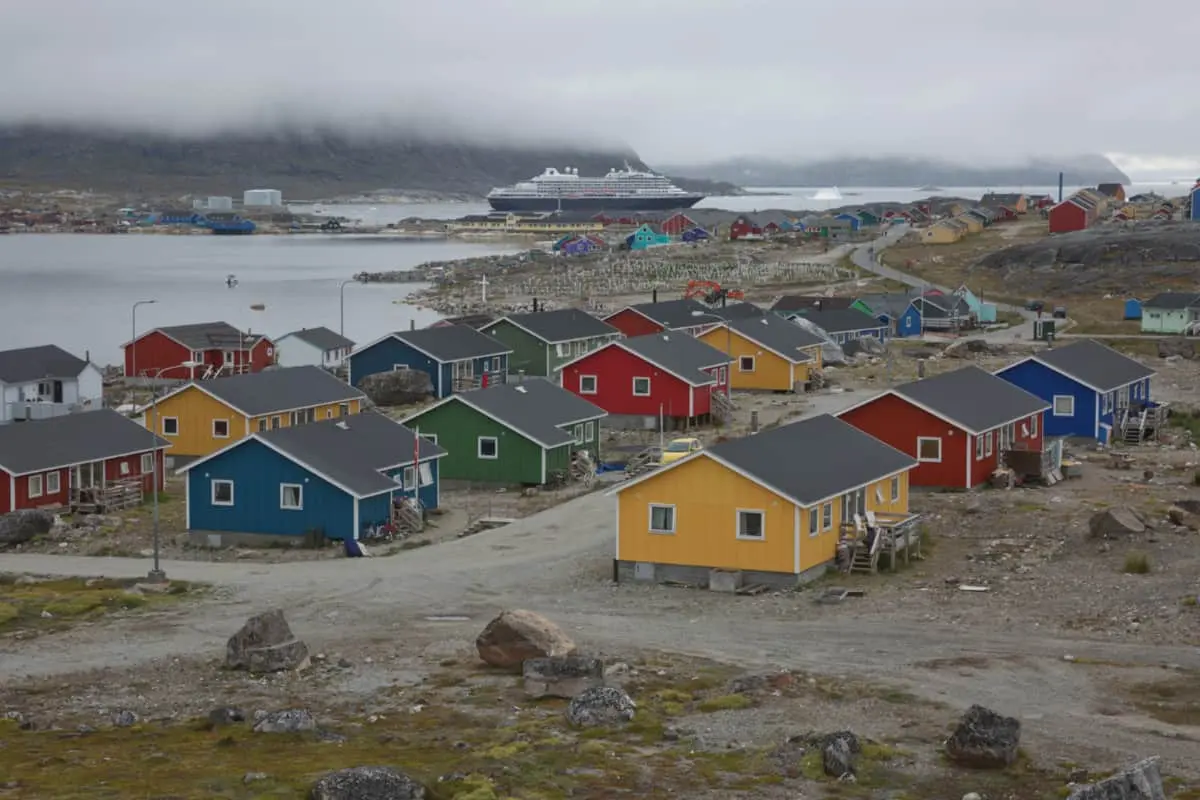
The simmering tensions culminated on August 11, 2026, when the Greenlandic government issued its landmark policy statement. Direct feedback from coastal settlements made it clear that local residents felt overwhelmed. The constant drone of ship engines, the localized air pollution, and the disruption of marine mammals—which form the backbone of traditional subsistence hunting and fishing—reached a tipping point.
Rather than waiting for an ecological or social crisis, the Ministry of Trade and Mineral Resources took pre-emptive action. They formally requested that cruise lines voluntarily alter their itineraries, avoiding or heavily limiting navigation within sensitive fjord regions wherever possible. This strategic pause is designed to buy time while the government formulates comprehensive, legally binding zoning laws.
Supporting Context & Metrics: Analyzing the Tourism Boom
To comprehend why Greenland’s government is walking a tightrope between economic reliance and environmental preservation, one must examine the hard data governing the island’s tourism sector.
A 74% Leap in Overall Visitors
Data compiled by Visit Greenland in their comprehensive 2025 Tourism Statistics report reveals a staggering trajectory. Between 2022 and 2025, the total volume of annual tourist visitors to Greenland skyrocketed by approximately 74%. This massive influx has been driven by improvements to air connectivity, increased international marketing, and a cultural shift toward experiential, adventure-based travel.
[2022 Baseline Visitors] ──(+74% Jump)──> [2025 Tourism Peak]
         │                                       │
         └─────────► [Cruise Sector Shift] ──────┘
                     (Brief 1.3% dip from 2024 to 2025)
Interestingly, while overall tourism soared, the cruise sector experienced a minor plateau. Between the 2024 and 2025 seasons, cruise passenger numbers dipped by roughly 1.3%. Industry analysts attribute this slight contraction not to a lack of demand, but to tighter capacity controls voluntarily adopted by some expedition lines, as well as increasingly rigorous local pushback and logistical bottlenecks at ports of call.
The Role of Megaships vs. Expedition Vessels
A central debate within Greenlandic policy circles involves the scale of the ships visiting the island. Historically, Arctic cruising was the domain of small, reinforced expedition vessels carrying fewer than 200 passengers. These ships have minimal footprints and can Zodiac-cruise passengers into remote areas with relative ease.
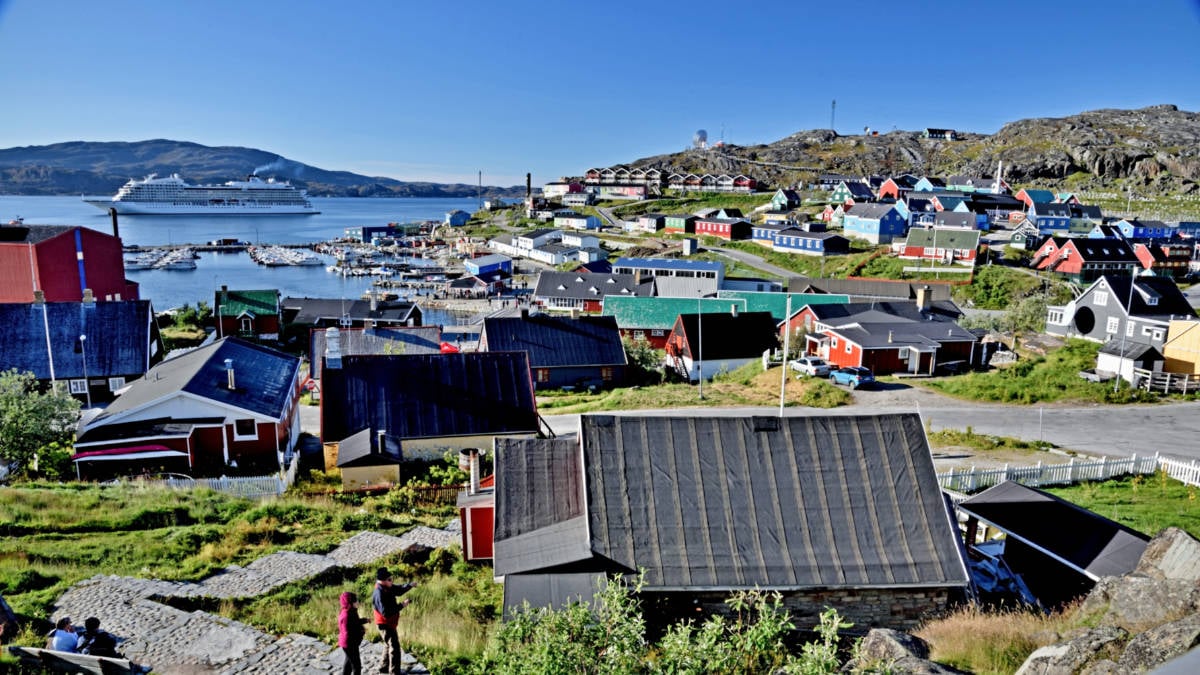
In stark contrast, modern cruise deployment has seen increasingly large vessels—such as the 91,740 gross-ton Norwegian Star—incorporating Greenland ports into their expansive North Atlantic and Arctic itineraries. When weather permits, these mega-ships deposit thousands of passengers into small coastal communities simultaneously.
The logistical strain is immense. When a ship carrying 2,500 passengers anchors off a settlement with a population of only 500, the local infrastructure, water supply, waste management systems, and tranquility are instantly overwhelmed. While ships like the Norwegian Star occasionally have to skip ports entirely due to volatile Arctic weather—as frequently documented by maritime tracking reports—the days when they do successfully dock or tender ashore leave an outsized imprint on the local fabric.
Official Statements and Policy Frameworks
The philosophical core of Greenland’s new directive is rooted in the principle of balance. The government is acutely aware that the tourism industry provides critical capital for economic diversification, infrastructure development, and local employment. Therefore, a blanket ban on cruise ships was never on the table.
The Ministry’s Perspective
In its translated statement, the Ministry of Trade and Mineral Resources articulated this nuanced stance clearly:
"The Greenland Government views positively the growing interest in Greenland as a travel destination and recognizes that cruise tourism contributes significantly to the development of the tourism industry."
However, the Ministry immediately pivoted to the core motivations driving the new fjord recommendations, emphasizing the preservation of local livelihoods:
"The purpose of the recommendation is to limit the impact on vulnerable natural areas and wildlife, and to meet the wishes of the local population to preserve the areas’ recreational values and opportunities for hunting and fishing."
Moving Toward the Tourism Act and Zoning Regulations
Crucially, the August 2026 advisory is a transitional tool. The government is not relying solely on the goodwill of cruise corporations. Behind the scenes, exhaustive legislative work is underway to integrate formal zoning restrictions into Greenland’s overarching Tourism Act.
Unlike voluntary guidelines, these upcoming zoning regulations will carry the full weight of the law. The framework will categorize Greenland’s coastal waters and fjords into distinct zones:
- Open Zones: Areas deemed capable of handling higher volumes of maritime traffic with robust port infrastructure.
- Restricted Zones: Sensitive ecological areas or regions vital to local subsistence fishing and hunting where cruise traffic will be strictly capped, seasonally prohibited, or banned entirely.
Crucially, the drafting of these regulations is not happening in an administrative vacuum. The government has instituted a broad stakeholder consultation process. Local residents, municipal councils, indigenous hunters’ associations, environmental NGOs, and commercial tourism operators are all sitting at the table to help shape the final maps. This democratic, participatory approach ensures that the resulting laws reflect the genuine needs of those who call the Arctic home.
Future Outlook: What Lies Ahead for Arctic Cruising?
As the global cruise industry looks toward the remainder of the decade, the landscape of high-latitude exploration is undergoing a structural evolution. Greenland’s proactive policy shift serves as a case study for other sensitive polar and sub-polar destinations, including Iceland, Svalbard, and parts of northern Norway, all of which are grappling with similar pressures.
Implications for Cruise Line Itinerary Planning
For cruise lines operating in the North Atlantic, the writing is on the wall. Itinerary planners can no longer treat Greenlandic fjords as limitless corridors for scenic cruising. Moving forward, cruise corporations will need to:
- Diversify Port Stops: Pivot away from overcrowded, hyper-sensitive fjord systems toward larger settlements equipped with proper port facilities designed to absorb higher passenger volumes.
- Invest in Sustainable Practices: Accelerate the adoption of hybrid or low-emission propulsion systems, silent-running technology to protect marine life, and strict waste-to-energy compliance.
- Enhance Educational Programming: Shift marketing narratives away from unchecked mass tourism toward responsible, low-impact expedition cruising that respects indigenous sovereignty and environmental boundaries.
The Balancing Act of Arctic Modernity
Greenland stands at a fascinating historical crossroads. As the territory marches steadily toward greater economic self-reliance—and potentially full political independence—developing a sustainable, high-value tourism economy is paramount. The influx of tourist capital funds schools, healthcare, and infrastructure, reducing historical economic dependencies.
Yet, as the government’s August 2026 statement powerfully demonstrates, modernization cannot come at the expense of cultural erasure or ecological devastation. By demanding that cruise ships step back from vulnerable fjords today, Greenland is actively safeguarding its natural heritage for tomorrow.
Ultimately, the success of these measures will depend on mutual cooperation between international cruise conglomerates and local authorities. If major cruise lines heed the voluntary recommendations and actively collaborate during the upcoming Tourism Act zoning consultations, Greenland may well forge a golden standard for sustainable polar tourism—proving that majestic fjords, thriving wildlife, and vibrant indigenous communities can coexist harmoniously with the modern traveler.