







Executive Overview
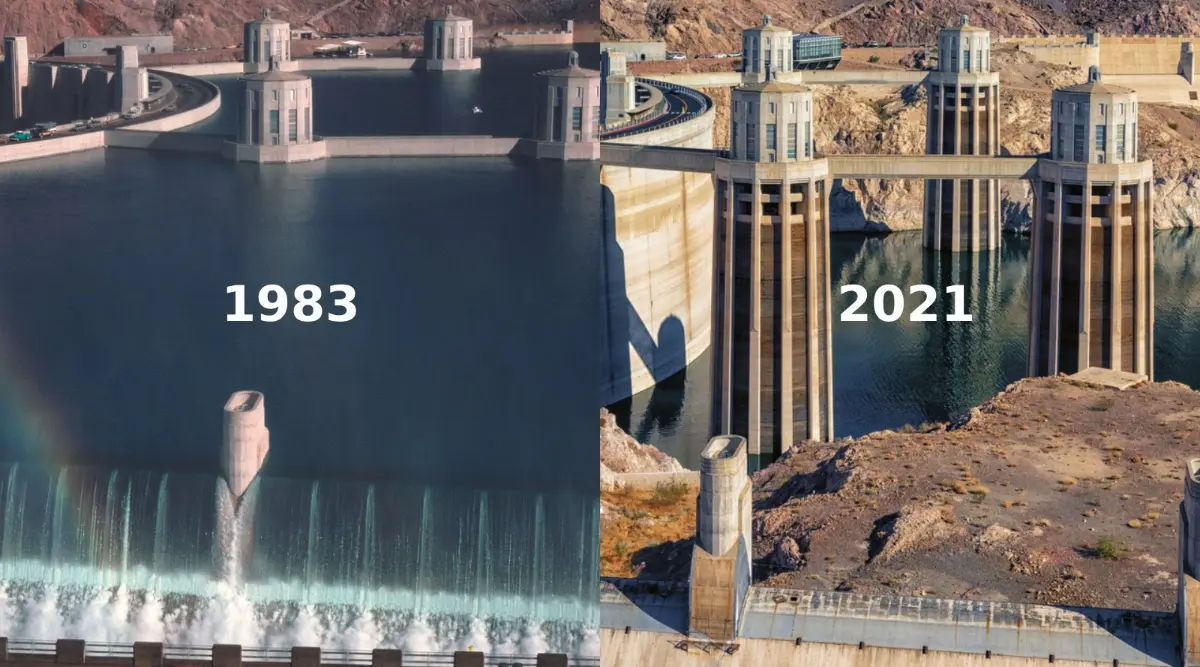
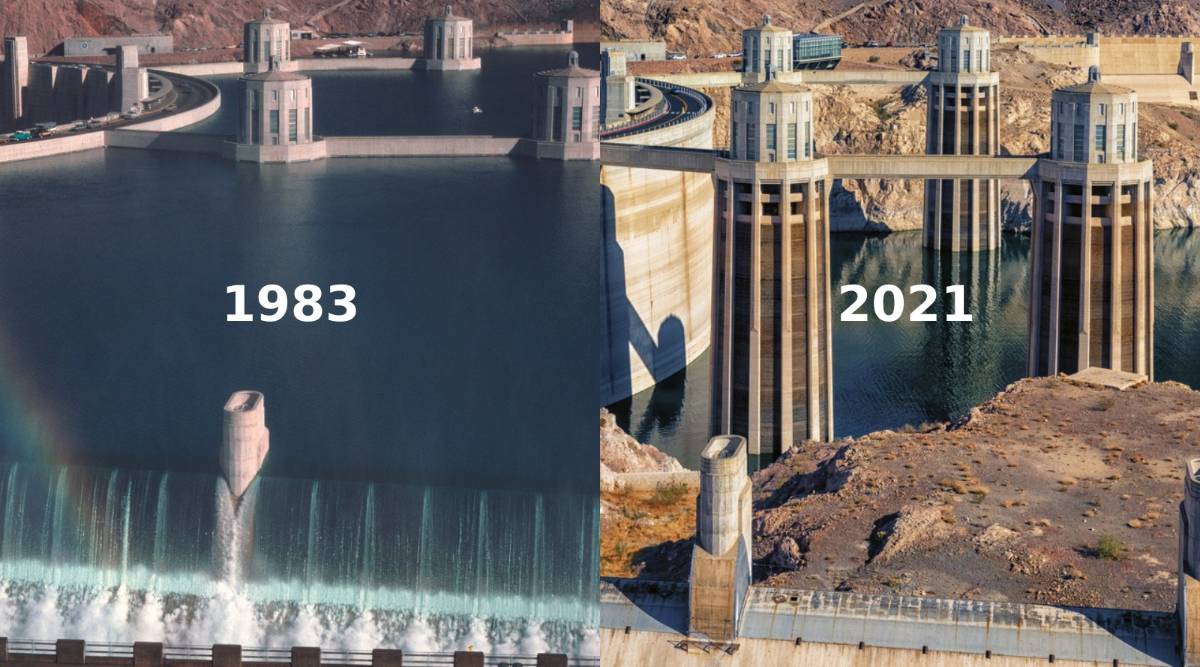
For over a century, the American Southwest has defied its arid geography. Through an intricate network of dams, canals, and reservoirs, what was once an unforgiving desert transformed into a sprawling economic powerhouse supporting 40 million people, vast agricultural empires, and booming metropolitan hubs like Los Angeles, Phoenix, and Las Vegas. Yet, this modern miracle was built upon a foundational miscalculation: a 1922 political compact that allocated more water than the Colorado River could sustainably provide.
Today, the bill for that historical over-allocation has finally come due. Squeezed by a multi-decade megadrought intensified by global climate change, the Colorado River now supplies roughly 12 million acre-feet of water annually—falling drastically short of the 15 million acre-feet originally promised to the seven states that rely on its flow. After more than ten years of acrimonious, deadlocked negotiations between the Upper Basin states (Colorado, New Mexico, Utah, and Wyoming) and the Lower Basin states (Arizona, Nevada, and California), local consensus has utterly failed.
With the current legal framework expiring this October, the federal government has stepped into the breach, preparing to enforce a mandatory allocation scheme. Under the proposed ten-year federal blueprint, Lower Basin states could face reductions of up to 3 million acre-feet per year—a staggering 40 percent cut. As the region stands on the precipice of a profound socioeconomic reckoning, policymakers, municipal leaders, and scientists are left grappling with a sobering reality: the unsustainable extraction of the past has collided with the ecological limits of the future.

Detailed Chronology: From the 1922 Compact to the Federal Ultimatum
The modern water crisis of the American Southwest has roots that stretch back nearly a century, tracing a trajectory from boundless optimism to severe ecological exhaustion.
- 1922 — The Original Sin of Allocation: The Upper and Lower Basin states entered into the historic Colorado River Compact. Guided by flawed hydrological data gathered during an unusually wet period, negotiators divided 15 million acre-feet of water evenly between the two groups (7.5 million each). At the time, the region’s population was sparse—Nevada was a dusty outpost of barely 2,000 residents, Los Angeles hovered around half a million, and Phoenix was home to a modest 30,000 people. The prospect of scarcity was entirely discounted.
- 1968 — Engineering the Desert: To address the rapid depletion of underground aquifers, Congress authorized the Central Arizona Project (CAP). This massive 366-mile canal system began diverting water southeast from Lake Havasu to Phoenix and Tucson, enabling exponential population growth in central Arizona. However, to secure congressional approval, Arizona made a critical concession: in times of shortage, California would retain superior, senior rights to Colorado River water.
- The 2010s — The Stalemate Begins: As climate change accelerated, lowering snowpacks in the Rocky Mountains and increasing evaporation rates, the volume of the Colorado River steadily declined. Representatives from the seven basin states recognized the widening supply-demand gap, initiating more than a decade of formal and informal talks to forge a sustainable shortage-sharing agreement. Despite escalating urgency, state-level self-interest repeatedly blocked consensus.
- Late 2025 — Federal Intervention Threatened: As states continued to miss internal deadlines, federal authorities issued repeated warnings, using both diplomacy and pressure to demand a self-determined solution. When those efforts stalled completely, federal agencies signaled that Washington would draft and impose its own operational guidelines to protect critical reservoir levels at Lake Powell and Lake Mead.
- August 2026 — The 40 Percent Blueprint Unveiled: Details emerged regarding the federal government’s forthcoming ten-year operational blueprint. Designed to take effect this October, the framework mandates immediate cuts of 1.25 million acre-feet for the Lower Basin states in 2027 and 2028, paving the way for potential reductions scaling up to 40 percent (3 million acre-feet annually) to restore equilibrium to the shrinking river basin.
Supporting Context & Metrics: The Anatomy of Scarcity
To understand the gravity of the federal intervention, one must examine the metrics defining the crisis. An acre-foot of water—the standard unit of measurement in Western water management—is the volume required to cover a football field to a depth of one foot, equivalent to roughly 326,000 gallons (1.2 million liters).
When the 1922 Compact was drafted, 15 million acre-feet was viewed as a conservative baseline. Today, however, the river’s natural flow rarely reaches that mark, leaving a deficit of 3 million acre-feet or more in average years. This shortfall threatens the structural integrity of the entire system, risking "dead pool" conditions at major reservoirs where water levels drop too low to pass through dam turbines or outlet works.
+-------------------------------------------------------------------------+
|                  THE COLORADO RIVER WATER IMBALANCE                     |
+-------------------------------------------------------------------------+
|  1922 Allotted Quota:    15,000,000 Acre-Feet                           |
|  Current Actual Flow:    ~12,000,000 Acre-Feet                          |
|  ---------------------------------------------------------------------  |
|  Annual Deficit:         ~3,000,000 Acre-Feet (~25% of annual flow)     |
|  Proposed Federal Cuts:  Up to 40% reduction for Lower Basin states     |
+-------------------------------------------------------------------------+
Compounding the hydrological deficit are profound economic and structural disparities in how water is consumed. Historically, cheap water encouraged agricultural producers in the desert to cultivate water-intensive crops such as alfalfa, hay, and lettuce (which is roughly 95 percent water). While residential users are heavily metered and face strict conservation messaging, agricultural and industrial users often pay heavily subsidized rates for water drawn from infrastructure like the Central Arizona Project.

Furthermore, historical inequities persist. Indigenous tribal communities hold senior rights within the distribution frameworks of systems like the CAP, yet they have frequently been sidelined or ignored in modern interstate negotiations—stoking deep-seated distrust between tribal nations and municipal newcomers.
Official Statements and Stakeholder Perspectives
The imposition of federal authority has triggered sharp reactions across the political spectrum, highlighting the fierce competition between federal mandates, state ambitions, and municipal survival.
Federal and academic observers argue that swift, aggressive intervention is non-negotiable, even if it creates short-term political friction. Noah Garrison, a water researcher at the UCLA Institute of the Environment and Sustainability, acknowledged the severity of the challenge when the outline of the plan first leaked:
"This just kicks the can down the road… There is a potential for extremely serious consequences if we don’t address this. We’re putting the water supply for 40 million people at risk."
Echoing these concerns, Dr. John Berggren, regional policy manager at Western Resource Advocates, emphasized that half-measures will no longer suffice:
"In order to best protect the system, there needs to be pretty significant shortages… We’re going to have to do more."
In Arizona, where the sprawling suburban growth of Phoenix and Tucson relies directly on the Central Arizona Project, leaders are sounding the alarm over the existential threat of a 40 percent reduction. Brenda Burman, general manager of the CAP, offered a stark assessment to the New York Times:

"They are threatening to shut down the Southwest… It’s not possible to picture it." Without the CAP, Arizona cities would be forced to fall back on severely depleted groundwater aquifers, threatening a total socioeconomic collapse.
Phoenix Mayor Kate Gallego argued that the federal government must invest heavily in infrastructural solutions, such as multi-billion-dollar advanced purification plants capable of converting wastewater into potable drinking water:
"Given the magnitudes of these cuts, we would like them to step up in a really big and meaningful way." Gallego compared the necessary financial assistance to federal disaster relief for hurricane-battered coastal regions, noting that a systemic water crisis is simply a different variety of natural disaster. However, analysts note that shifting political landscapes—marked by federal austerity measures and the effective dismantling of agencies like FEMA—render such funding requests deeply uncertain.
Future Outlook: Navigating the Climate Cliff
As the October expiration of the current water pact approaches, the American Southwest faces a defining moment. The federal government’s ten-year stopgap plan aims to force the states’ hands, utilizing mandatory reductions to jolt regional leaders out of decades of complacency. Yet, water policy experts warn that simply rationing a dying river will not solve the underlying ecological crisis.
The root cause of the Colorado River’s decline remains inextricably linked to global climate change: persistent greenhouse gas emissions are driving higher ambient temperatures across the Rocky Mountains, causing winter snowpacks to melt earlier, evaporate faster, and diminish in total volume year after year. Despite these unmistakable warnings, political systems in the West often continue to operate under the comforting illusion of temporary anomalies, frequently influenced by well-funded political lobbies resisting structural reforms.
Ultimately, the crisis on the Colorado River serves as a high-stakes stress test for modern civilization’s ability to respond to slow-moving ecological catastrophes. Whether the region can successfully transition to a circular, highly conserved water economy—or whether it will stumble blindly over the climate cliff—depends entirely on abandoning historical hubris and embracing difficult, science-based adaptations before the wells run dry.