





Executive Overview
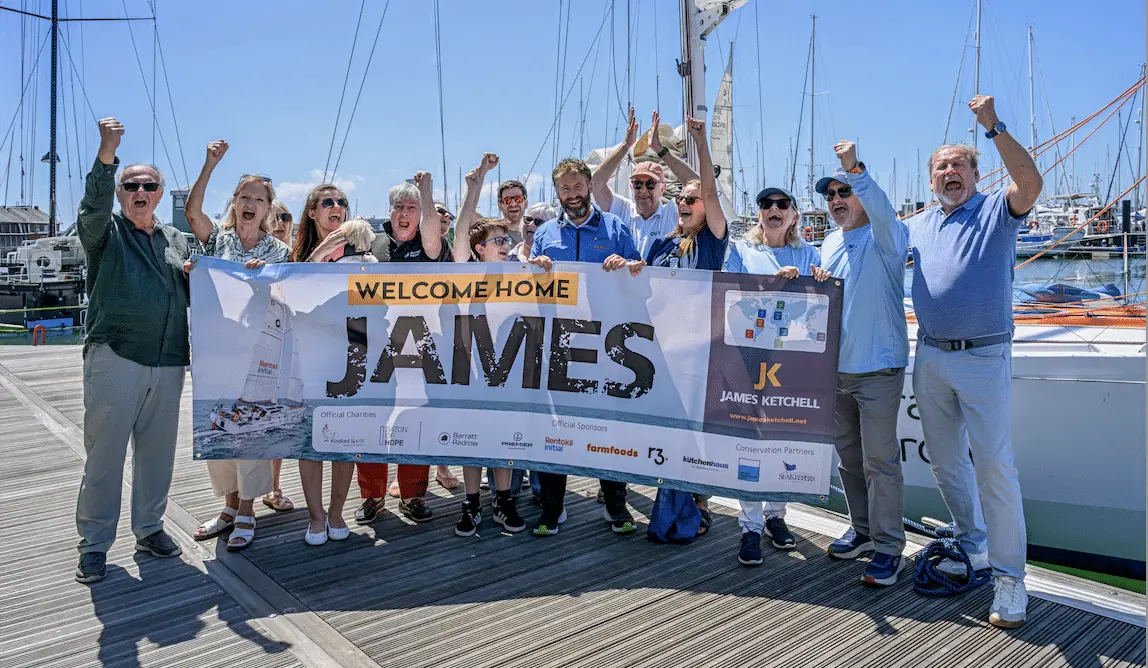
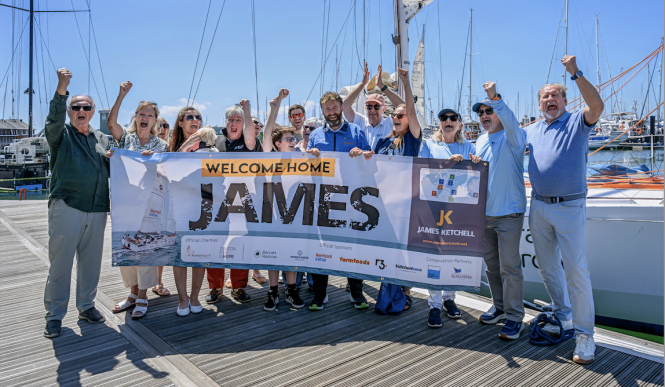
On June 13, 2026, British adventurer James Ketchell guided his sailing vessel, Mindset, back into the waters of Gosport, United Kingdom, bringing a definitive close to a multi-year odyssey of epic proportions. With that final anchor drop, Ketchell secured a historic global first: he officially became the first human being to circumnavigate the globe by land, air, and sea.
Yet, this achievement represents far more than a physical endurance record or a line in the history books. Over the course of a punishing 30,000-nautical-mile maritime final leg, Ketchell transformed his vessel into a floating marine laboratory. Operating in partnership with The International SeaKeepers Society’s DISCOVERY Programme and acting as an Ambassador for the UK’s National Oceanography Centre (NOC), he bridged the often-distant worlds of extreme adventure and rigorous scientific inquiry.
By deploying crucial oceanic monitoring technology, harvesting microplastic samples from remote waters, and mapping the deep ocean floor, Ketchell demonstrated that modern exploration must serve a higher purpose. His journey combined unprecedented physical feats with vital contributions to global climate research, marine pollution analysis, and seabed mapping, all while championing vital mental health and anti-trafficking causes and inspiring a new generation of students worldwide.
Detailed Chronology: The Making of a Global Record
To fully grasp the magnitude of Ketchell’s triumph in June 2026, one must look back at the painstaking incremental steps that built this ultimate circumnavigation over more than a decade. Ketchell is no stranger to the harshest limits of human endurance, having previously conquered mountaineering and ocean rowing milestones before turning his focus toward comprehensive global loops.
The Land and Air Foundations
- 2013 (The Land Phase): Ketchell laid the groundwork for his global trifecta by successfully cycling around the world. Pedaling tens of thousands of kilometers through varying terrain, extreme weather, and cultural landscapes, he proved his psychological resilience and physical stamina on a continental scale.
- 2019 (The Air Phase): Raising the stakes vertically, Ketchell took to the skies in 2019 to pilot a gyrocopter around the globe. Navigating unpredictable atmospheric conditions, bureaucratic airspace hurdles, and mechanical vulnerabilities, he successfully completed the grueling aerial circumnavigation, leaving only the world’s vast oceans to conquer to complete his land, air, and sea trifecta.
The Maritime Finale: July 2025 – June 2026
The final capstone of Ketchell’s grand ambition commenced in July 2025, when he cast off aboard his sailing vessel, Mindset. What followed was an unforgiving 30,000-nautical-mile oceanic odyssey that tested the limits of seamanship and psychological endurance.
- The Departure and Atlantic Crossing: Setting sail from Europe, Ketchell’s route immediately threw him into the dynamic weather systems of the Atlantic. His early stops included Lanzarote and Cape Verde, where he fine-tuned his vessel and established data-collection protocols before tackling the trans-Atlantic crossing to Brazil.
- The Southern Latitudes and Cape Horn: From South America, the voyage demanded absolute precision and resilience as Mindset pressed southward toward the roaring forties and the notoriously treacherous waters surrounding Cape Town, Hobart, and the legendary Cape Horn. Battling towering swells, freezing temperatures, and relentless winds, Ketchell navigated some of the most hostile marine environments on the planet.
- The Homecoming: Following months of isolation, physical exhaustion, and relentless navigation through the world’s most demanding sea lanes, Ketchell steered Mindset back toward British waters, making triumphant landfall in Gosport on June 13, 2026.
Supporting Context & Metrics: Science on the High Seas
While the raw statistics of Ketchell’s global travels are staggering—spanning cycling routes, gyrocopter flight paths, and a 30,000-nautical-mile sea voyage—the scientific metrics yielded by his final maritime leg offer profound, lasting value to the global research community.
Advancing Oceanography via the SeaKeepers DISCOVERY Programme
Ketchell’s partnership with The International SeaKeepers Society and the National Oceanography Centre (NOC) converted Mindset into an active research platform. His expedition directly contributed to three critical international marine initiatives:
- Argo Float Deployment: While traversing the Indian Ocean, Ketchell successfully deployed an autonomous Argo float. This device joined an elite global array of more than 4,000 robotic profiling floats drifting across the world’s oceans. These instruments dive to depths of up to 2,000 meters, measuring temperature and salinity before surfacing to transmit real-time data via satellite to researchers modeling ocean circulation and climate change.
- Microplastic Sampling: In collaboration with the NOC and SeaKeepers, Ketchell systematically harvested microplastic samples from remote marine areas. These biological and chemical samples provide scientists with essential data points to track the distribution, density, and concentration of microplastic pollution in unmonitored pelagic zones.
- Seabed Mapping (Seabed 2030): Operating under the umbrella of the Nippon Foundation-GEBCO Seabed 2030 Project—an ambitious international effort to map 100% of the ocean floor by the end of the decade—Ketchell contributed valuable bathymetric data collected along his remote sailing routes. Understanding ocean topography is vital for predicting tsunami paths, managing fisheries, understanding ocean circulation, and protecting vulnerable marine habitats.
Educational Outreach and Philanthropic Impact
Beyond hard data and geographical milestones, Ketchell used his platform to foster social good and education:
- Global Classroom Links: Throughout the voyage, Ketchell engaged thousands of students via live virtual link-ups, interactive worksheets, and port-side classroom sessions, demystifying geography, oceanography, and exploration for the next generation.
- Charitable Fundraising: The expedition raised awareness and critical funds for Baton of Hope, a prominent UK initiative focused on suicide awareness and prevention, as well as Kindled Spirit, a charity dedicated to rescuing and rehabilitating victims of human trafficking.
Official Statements and Industry Perspectives
The convergence of elite endurance sports and serious marine science elicited high praise from organizational leaders across the maritime and conservation sectors.
Gill Rodrigues, Director of International Relations at The International SeaKeepers Society, underscored the symbiotic relationship between modern adventurers and the scientific community:
"James has shown how adventure and science can sail side by side. We couldn’t be prouder to welcome him home."
Reflecting upon the completion of his monumental journey—which builds upon a lifetime of extreme feats, including rowing across oceans and summiting Mount Everest—James Ketchell shared a tone of profound gratitude and reflective disbelief:
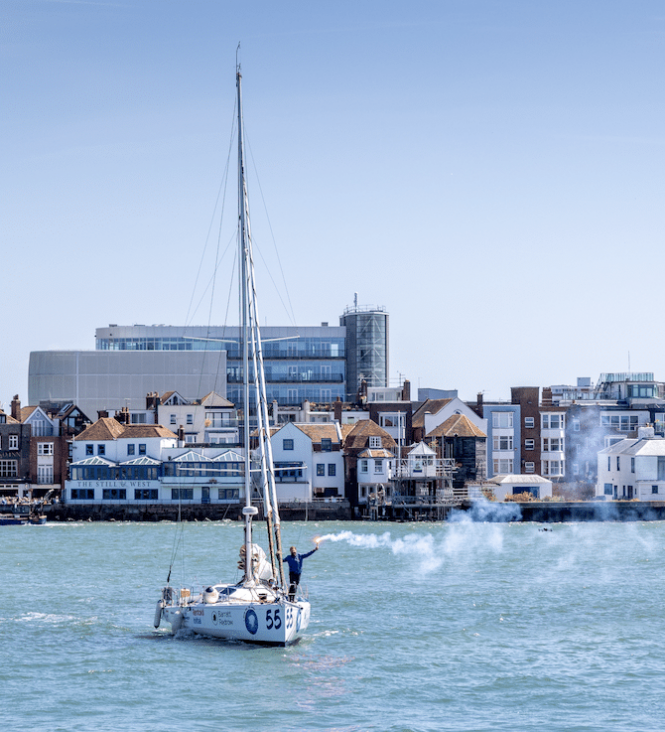
"I am extremely grateful to all my partners that have supported me over so many years and continue to do so for this challenge. After rowing oceans, climbing Everest, cycling, flying and sailing around the world, I’m not sure what challenge is left on this planet."
From the perspective of maritime entities like CharterWorld—a proud partner of The International SeaKeepers Society—Ketchell’s journey serves as a powerful reminder of the untapped potential harbored within the global yachting and sailing community. Vessels traversing remote waters possess a unique capability to act as instruments of environmental stewardship, transforming private maritime transit into public scientific utility.
Future Outlook: The Role of Adventurers in Marine Conservation
James Ketchell’s historic circumnavigation marks a watershed moment for citizen science and exploratory partnerships. As anthropogenic pressures on the world’s oceans mount—ranging from rising thermal baselines and acidification to pervasive plastic pollution and unmapped bathymetry—traditional research vessels alone cannot cover the vast expanse of the global marine environment.
The success of the SeaKeepers DISCOVERY Programme during Ketchell’s voyage highlights a scalable blueprint for the future. By equipping private vessels, long-distance sailors, and extreme adventurers with standardized, easy-to-deploy scientific instruments, the global conservation community can exponentially increase its data-gathering footprint.
As SeaKeepers continues to expand its international network of vessel owners, captains, scientists, and environmental advocates, initiatives like Ketchell’s circumnavigation prove that the golden age of exploration is far from over. Instead, it has evolved. The modern explorer is no longer merely a conqueror of maps and horizons, but an active guardian of the planet’s most vital and fragile ecosystem: the global ocean.