










The North American public transportation, mass transit, and commercial mobility sectors are undergoing a profound structural evolution. Driven by the rapid acceleration of zero-emission fleets, evolving post-pandemic commuter patterns, heightened demands for public accountability, and historic capital infrastructure investments, agencies and industry suppliers alike are retooling their executive ranks.
METRO’s People Movement dossier for this edition captures a critical snapshot of this shifting landscape. Featuring high-profile appointments at prominent organizations such as ABC Companies, Dallas Area Rapid Transit (DART), the Denver Regional Transportation District (RTD), and infrastructure advisory powerhouse STV, this cohort of leaders represents the multifaceted skill sets required to steer modern transit into the future.
From driving commercial expansion in sustainable bus manufacturing and spearheading rigorous corporate governance and transparency in municipal transit, to orchestrating complex crisis communications and advising on multi-billion-dollar capital projects, these executive changes underscore an industry-wide pivot toward strategic resilience, operational excellence, and customer-centric modernization.
Detailed Chronology: Key Executive Appointments Shaping the Industry
The transit landscape is continuously reshaped by the vision, expertise, and operational mandates of incoming executives. The following chronology outlines the major leadership transitions currently driving strategic momentum across the sector.
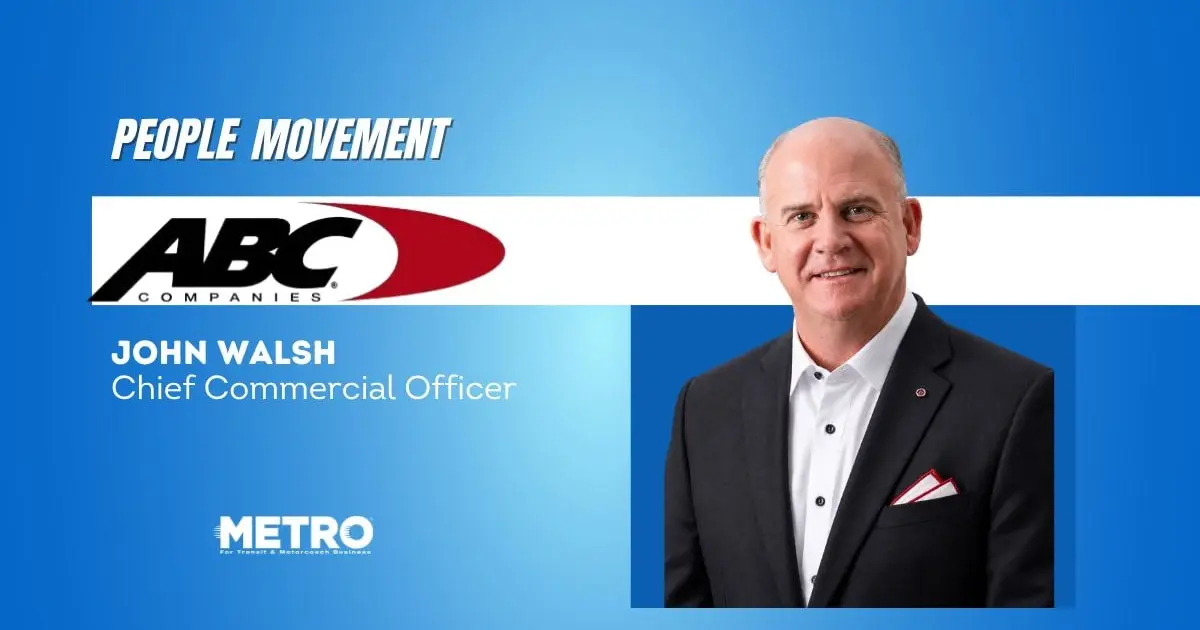
1. ABC Companies Strengthens Executive Leadership with the Appointment of John Walsh as Chief Commercial Officer
- Strategic Context: ABC Companies—a leading provider of motorcoach, transit, and specialized passenger vehicle solutions—announced the appointment of veteran executive John Walsh as its new Chief Commercial Officer (CCO).
- The Mandate: In his new capacity, Walsh will spearhead ABC’s overarching commercial strategy, taking direct oversight of vehicle sales, aggressive business development initiatives, comprehensive customer engagement, and high-impact strategic partnerships. His arrival is designed to fortify ABC’s executive leadership team as the organization deepens its footprint in sustainable commercial transportation and accelerates its long-term growth trajectory.
- Professional Background: Walsh brings more than 30 years of C-suite and senior leadership experience spanning the commercial vehicle, transit, and bus sectors. Most notably, he served as Chief Commercial Officer at Proterra, where he played a pivotal role in scaling electric transit solutions during a period of explosive market demand. His extensive resume also includes presidential tenures at EO Charging Americas and REV Bus Group—where he managed diverse portfolios covering transit, school bus, and specialized mobility markets—alongside foundational leadership roles at Davey Coach Sales and National Bus Sales & Leasing.
2. Dallas Area Rapid Transit (DART) Names Mamatha Sparks Chief Audit Officer
- Strategic Context: Demonstrating a steadfast commitment to internal transparency, institutional modernization, and fiscal stewardship, Dallas Area Rapid Transit (DART) appointed Mamatha Sparks as its new Chief Audit Officer. Sparks reports directly to the DART Board of Directors.
- The Mandate: Sparks is tasked with leading DART’s internal audit modernization initiatives, ensuring rigorous fiscal transparency, and designing robust departmental strategies to optimize agency operations. Her work will provide the board and the public with independent, objective evaluations of DART’s internal controls and risk management frameworks.
- Professional Background: Bringing over two decades of public accounting, government auditing, and risk management experience, Sparks transitions to DART from the City of Dallas Office of the City Auditor. During her tenure there, she advanced through progressively responsible leadership roles, overseeing highly complex performance audits in critical domains, including information technology infrastructure, procurement and contract administration, public safety operations, and municipal revenue streams. She succeeds Chris Koloc, who retired earlier this year after nearly two decades of distinguished service to DART.
3. Denver RTD Taps Candace Smith as Chief Communications and Engagement Officer
- Strategic Context: The Regional Transportation District (RTD) in Denver welcomed award-winning communications executive Candace Smith as its new Chief Communications and Engagement Officer (CCEO).
- The Mandate: Effective September 8, Smith assumed command of RTD’s entire Communications and Engagement Department. Her portfolio encompasses public and media relations, proactive community engagement campaigns, strategic marketing initiatives, and customer care functions. Her leadership is expected to enhance public trust, streamline rider communications, and modernize community outreach.
- Professional Background: Smith boasts over 25 years of distinguished experience spanning higher education administration, major public transportation agencies, and professional journalism. Most recently, she served as senior associate vice chancellor for public affairs and strategic communications at the University of Colorado Boulder, where she steered media relations, crisis management, and executive communications. Her extensive background includes high-profile communications leadership roles at George Washington University and the Washington Metropolitan Area Transit Authority (WMATA), as well as a robust journalism career in Washington, D.C., and New York.
4. STV Appoints Infrastructure Veteran Khaled Naja to Advisory Board
- Strategic Context: Engineering and architectural services leader STV bolstered its strategic advisory capabilities by appointing Khaled Naja, PE, to its corporate advisory board.
- The Mandate: Naja will advise STV’s executive leadership team on major strategic decisions, complex infrastructure investments, and long-term organizational performance strategies. His expertise will support the firm as it navigates the planning and delivery of multi-billion-dollar transit and capital development projects across North America.
- Professional Background: Naja currently serves as CEO of Core Group Partners, advising global stakeholders on infrastructure and capital development strategies. His illustrious career includes executive roles such as CEO of Cruise Terminals International, Chief Operating Officer of the Chicago Department of Aviation, and Executive Vice President at Dallas Fort-Worth International Airport. Furthermore, he is a past national board chair of the Construction Management Association of America (CMAA) and a proud inductee of the National Academy of Construction, renowned for bridging high-level capital strategy with flawless field execution.
Supporting Context & Metrics: The Forces Driving Transit Transformation
To fully understand the significance of these personnel movements, one must examine the macroeconomic and regulatory pressures currently transforming the transit and mobility landscape.
The Electric Vehicle Transition and the Commercial Supply Chain
The appointment of leaders like John Walsh at ABC Companies highlights an ongoing, fundamental shift in the manufacturing and supply chain sectors. The transition to zero-emission fleets—spurred by federal funding, state mandates (such as the California Air Resources Board’s Innovative Clean Transit rule), and corporate sustainability goals—requires commercial leadership with deep technical fluency in electrification infrastructure.
- Market Dynamics: Fleet operators are no longer simply purchasing internal combustion buses; they are procuring entire zero-emission ecosystems that include charging infrastructure, grid management software, and specialized maintenance training.
- Executive Impact: Leaders with specialized backgrounds in battery-electric bus manufacturing and charging solutions, such as Walsh’s tenure at Proterra and EO Charging, are vital for guiding legacy equipment manufacturers through this capital-intensive technological paradigm shift.
Institutional Governance, Accountability, and Risk Management
As public agencies like DART manage increasingly complex federal grants, public-private partnerships (PPPs), and capital improvement programs, the role of internal auditing has evolved from a compliance checkbox into a cornerstone of strategic governance.
- The Risk Landscape: Modern transit agencies oversee massive procurement budgets, IT infrastructure upgrades, and cybersecurity defenses against digital threats.
- Executive Impact: Veteran auditors like Mamatha Sparks bring specialized competencies in information technology and contract administration audits. By proactively identifying operational bottlenecks and vulnerabilities, modern internal audit offices protect taxpayer dollars and maintain public trust—a commodity just as valuable as farebox revenue.
Crisis Communications and Stakeholder Engagement in the Digital Age
Public transit agencies operate in the public eye 24 hours a day, 7 days a week. From managing service disruptions and infrastructure delays to rolling out fare collection technologies (such as DART’s GoPass), communication executives face unprecedented scrutiny.
- The Modern Challenge: With the proliferation of social media and real-time news cycles, public perception can shift rapidly. Agencies require sophisticated, proactive communication strategies that transcend simple press releases.
- Executive Impact: Leaders like Candace Smith bring deep experience in crisis management and integrated marketing from both transit heavyweights like WMATA and higher education institutions. Their ability to align stakeholder engagement with operational realities ensures that riders remain informed, valued, and confident in public transit systems.
Mega-Projects and the Critical Need for Strategic Advisory
North America’s infrastructure is experiencing a generational reinvestment phase, bolstered by federal legislation such as the Infrastructure Investment and Jobs Act (IIJA). However, delivering mega-projects on time and within budget remains one of the greatest challenges facing public agencies.
- The Execution Gap: Mega-projects frequently suffer from scope creep, supply chain volatility, and stakeholder friction.
- Executive Impact: Advisory boards populated by seasoned executives like Khaled Naja provide independent, objective oversight. By translating long-term capital strategies into actionable execution frameworks, these advisors help agencies mitigate financial risk and streamline project delivery.
Official Statements and Industry Insights
The appointments detailed in this dossier reflect a shared commitment to operational excellence among executive boards and organizational leaders.
Regarding John Walsh’s appointment, representatives from ABC Companies noted that the strategic addition underscores the organization’s unwavering commitment to sustainable commercial growth. They emphasized that Walsh’s decades-long track record of driving commercial transformations will ensure the company maintains the high standards of customer support and operational excellence that have defined its market presence for more than five decades.
At Dallas Area Rapid Transit, leadership and board members highlighted Mamatha Sparks’ extensive auditing background as a vital asset for the agency’s next chapter. Through her leadership, DART aims to streamline internal processes, enhance departmental accountability, and foster a culture of continuous improvement that directly benefits the North Texas community.
Discussing Candace Smith’s arrival, Denver RTD officials expressed confidence that her award-winning communications expertise will elevate the agency’s engagement efforts. By bringing together community relations, marketing, and customer care under unified leadership, RTD aims to build a more transparent, responsive, and customer-focused transit network.
Finally, leadership at STV praised Khaled Naja’s inclusion on their advisory board, emphasizing his rare ability to connect high-level financial strategy with on-the-ground execution. Naja’s insights will be instrumental as STV continues to guide clients through complex, transformational infrastructure programs across the globe.
Future Outlook: What These Leadership Changes Signal for the Next Decade
As the transportation sector looks toward the horizon of 2030 and beyond, the appointment of these seasoned professionals signals several key trends that will define the industry:
- Agility and Cross-Sector Mobility: Executive talent is increasingly fluid, moving seamlessly between public agencies, private suppliers, higher education, and infrastructure advisory firms. This cross-pollination of ideas brings fresh perspectives to age-old transit challenges.
- Uncompromising Focus on Sustainability: Sustainability is no longer a peripheral corporate social responsibility initiative; it is the core business model. Leaders with deep expertise in electrification, energy management, and sustainable capital deployment will continue to command a premium across the executive job market.
- Proactive Stakeholder Transparency: As agencies grapple with ridership recovery and changing urban mobility trends, internal transparency and external communication are paramount. Executives who can effectively bridge the gap between technical operations and public trust will determine which transit systems thrive in the coming decades.
- Resilient Capital Delivery: With billions of dollars in federal and local funding flowing into infrastructure projects, the demand for strategic advisors, risk managers, and performance auditors will only intensify. Organizations that successfully integrate high-level advisory boards and rigorous internal controls will lead the pack in delivering on-time, on-budget mega-projects.
Ultimately, the individuals highlighted in METRO’s People Movement dossier are doing far more than filling vacant titles—they are architecting the policies, technologies, and operational frameworks that will move North America’s millions of daily transit riders safely, efficiently, and sustainably into the future.