




Executive Overview
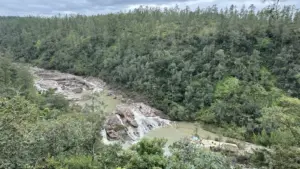
In the rugged northeastern corner of Tennessee, where the ancient and imposing peaks of the Appalachian Mountains give way to steep, shadowed valleys, some of the most dynamic river ecosystems in North America carve their paths. Here, pristine wilderness meets chaotic, high-energy hydraulics, creating legendary whitewater corridors such as the Nolichucky and Pigeon rivers. While the topography itself is breathtaking—featuring sheer canyon walls, dense temperate rainforest foliage, and tumbling rapids that draw outdoor enthusiasts from across the globe—the true heartbeat of this thriving adventure tourism sector lies not in the geography, but in the people.
Whitewater river guides are a distinct cultural archetype. They are part athlete, part psychologist, part wilderness paramedic, and part stand-up comedian. Operating at the intersection of extreme risk management and high-touch hospitality, these professionals shoulder the immense responsibility of shepherding nervous novices and seasoned thrill-seekers alike through churning Class III, IV, and V rapids.
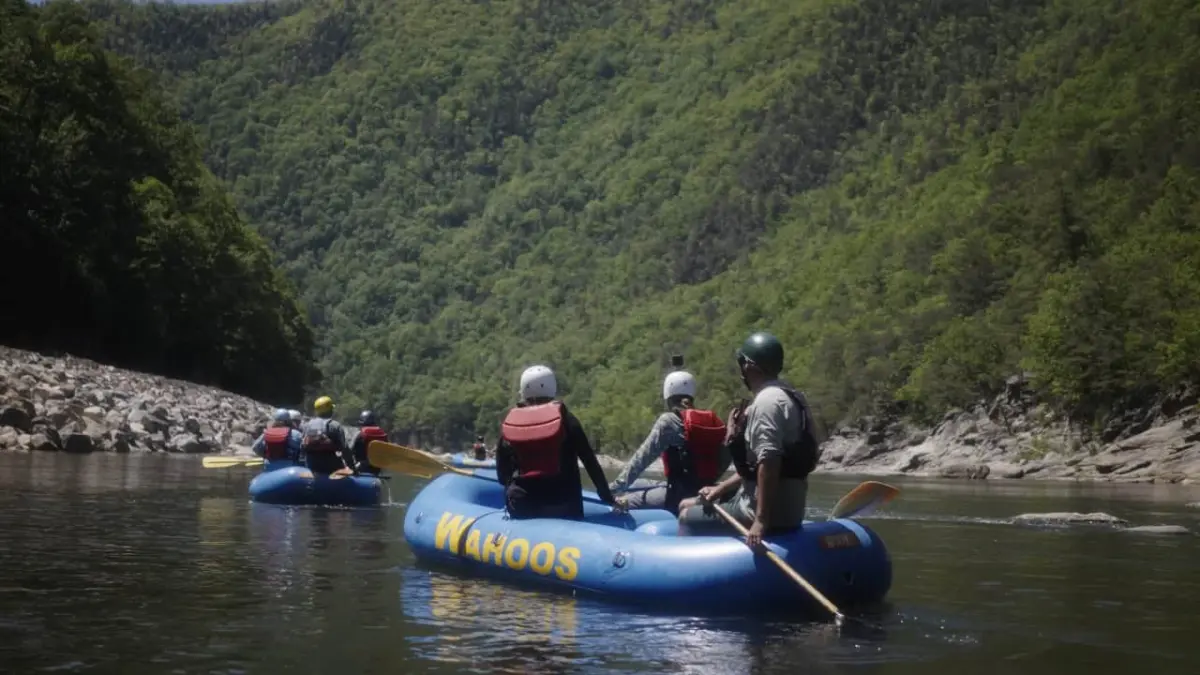
This in-depth feature explores the multifaceted world of Tennessee whitewater rafting. We examine the psychological anatomy of the modern river guide, the operational realities of premier outfitters like Wahoos Adventures and USA Raft, the profound economic and cultural impact of adventure tourism in the Appalachian region, and the timeless, universal traditions—including an infamous lexicon of groan-worthy dad jokes—that bind this eccentric global community together. By looking closely at the human element behind the paddle, we uncover how a simple descent down a mountain river transforms into a life-affirming journey of shared vulnerability and triumph.
Detailed Chronology: The Evolution of Tennessee Whitewater
To understand the thriving commercial rafting industry operating today along the Nolichucky, Pigeon, and Ocoee rivers, one must understand the historical trajectory of how these remote waterways transitioned from industrial hazards and remote wilderness barriers into celebrated recreational havens.
Pre-Commercial Era: The Untamed Waters
For centuries, the rivers of northeast Tennessee were viewed through a lens of utility and survival rather than leisure. The Cherokee and other Indigenous peoples navigated the calmer stretches for fishing and transit, while steering clear of the impassable, roaring gorges. By the 19th and early 20th centuries, European settlers utilized the river corridors for the timber industry, floating logs downstream to local mills—a perilous endeavor that frequently claimed the lives of loggers caught in hydraulic traps.
The Birth of Commercial Rafting (1970s–1980s)
The modern era of whitewater recreation began to take shape in the mid-to-late 20th century. As inflatable raft technology improved—transitioning from surplus military pontoon rafts to rugged, maneuverable self-bailing crafts—adventurous locals began exploring the deep gorges.
The Pigeon River, flowing out of North Carolina into Cocke County, Tennessee, saw a major shift following the construction of hydroelectric projects upstream. Soon, entrepreneurs realized that scheduled dam releases could provide predictable, reliable flows of high-adrenaline whitewater. Similarly, the Nolichucky River—one of the last truly wild, undammed rivers of its size in the American Southeast—attracted bold pioneers willing to navigate its remote, boulder-strewn labyrinth without the safety net of upstream flow control.

The Ocoee Catalyst (1996 Olympic Impact)
While the Nolichucky and Pigeon built steady reputations regionally, the 1996 Atlanta Olympic Games firmly placed Tennessee on the international whitewater map. The Olympic slalom events were hosted on the Ocoee River in southeastern Tennessee. This global spotlight supercharged the state’s adventure tourism infrastructure. Millions of viewers witnessed the technical precision required to conquer Appalachian whitewater, leading to an exponential surge in outfitter investments, safety standardizations, and mainstream interest in guided river trips.
Modern Professionalization (2000s–Present)
Over the last two decades, whitewater outfitting in Tennessee has evolved from a loosely regulated, counter-culture seasonal hustle into a highly professionalized, safety-obsessed sector of the tourism economy. Outfitters such as Wahoos Adventures, established in Erwin, Tennessee, and USA Raft have invested heavily in guide training, swiftwater rescue certifications, fleet modernizations, and customer experience frameworks. Today, navigating a Tennessee gorge is a finely tuned orchestration of meteorological monitoring, hydrological assessment, and interpersonal leadership.
Supporting Context & Metrics: The Anatomy of a Tennessee River Guide
Operating a commercial raft requires a rare convergence of physical endurance, split-second decision-making, and emotional intelligence. To appreciate the daily reality of a Tennessee river guide, one must examine the metrics, training regimens, and psychological profiles that define the profession.
The Rigors of Guide Training
Becoming a commercial guide on technical eastern rivers like the Nolichucky—where water volumes can fluctuate wildly and blind drops require absolute precision—is no casual summer job. Prospective guides typically undergo weeks of rigorous training that includes:
- Swiftwater Rescue Certification (SRT): Learning how to extricate trapped swimmers, throw rescue bags with pinpoint accuracy, manage foot entrapments, and operate rescue watercraft in violent hydraulics.
- Hydrological Reading: Memorizing river features, eddy lines, hydraulics, undercuts, and sieve formations at varying cubic feet per second (CFS) flow rates.
- Customer Psychology: Developing the verbal and non-verbal communication skills necessary to calm panic-stricken guests, motivate tired paddlers, and maintain absolute authority in high-stress environments.
The Economic Engine of Appalachian Tourism
Adventure tourism is a critical economic driver for rural eastern Tennessee. According to data from the Tennessee Department of Tourist Development, outdoor recreation generates billions of dollars in state economic impact and supports tens of thousands of jobs.
| River Corridor | Primary Character | Typical Season | Skill Level |
|---|---|---|---|
| Nolichucky River | Remote, wild, boulder-choked canyon | Spring – Fall | Intermediate to Advanced |
| Pigeon River | High-volume, continuous action, accessible | Memorial Day – Labor Park | Beginner to Intermediate |
| Ocoee River | Continuous Class III-IV rapids, dam-controlled | April – October | Beginner to Advanced |
Outfitting businesses inject vital capital into small mountain towns like Erwin, Newport, and Hartford, supporting local hospitality, dining, and retail ecosystems. Yet, as outfitters frequently note, the true return on investment cannot be measured solely in dollars; it is found in the intangible mental health and community benefits experienced by visitors who disconnect from the digital world and plug into the raw energy of the wilderness.
Official Statements and Perspectives from the Front Lines
The culture of Tennessee river guiding is best understood through the voices of those who live it day in and day out. Their perspectives reveal a deep philosophical commitment to human connection, shared adversity, and the lighter side of outdoor leadership.
Slayton Johnson: Conquering Fears and Bad Jokes
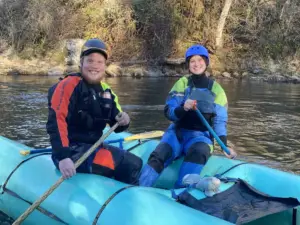
Slayton Johnson, owner of Wahoos Adventures in Erwin, Tennessee, has spent decades watching guests step out of their comfort zones and into the swirling current of the Nolichucky River. For Johnson, rafting is fundamentally a transformative social experiment.
"It’s a bonding experience," Johnson reflects, capturing the essence of commercial rafting. "You’re going to conquer some things. You’re going to conquer some fears… some rapids… and a few bad jokes."
Johnson emphasizes that the modern raft guide’s job extends far beyond steering a boat through a wave train. A great guide acts as a social catalyst. By the time a raft hits the takeout ramp, a group of strangers—often representing diverse socioeconomic backgrounds, ages, and life experiences—have become a synchronized team, bound by the shared adrenaline of plunging through holes like "Jaws" or "Quartermile."
Matt Moses: The Universal Brotherhood of River People
Matt Moses of USA Raft highlights another unifying pillar of the whitewater community: its delightfully absurd sense of humor.
"We’re a special breed, us river people, with our stupid raft guide jokes," Moses shares with a knowing smile. "We tell the same ones on every river worldwide."
This global subculture of river guides operates almost like an international fraternity. Whether on the Zambezi in Africa, the Pacuare in Costa Rica, or the Nolichucky in Tennessee, guides share a common vernacular of groan-worthy puns, rapid-side folklore, and lighthearted hazing of rookie paddlers. According to Moses, the humor is not merely a distraction; it is a vital psychological tool. When a novice rafter’s eyes widen in terror at the roar of an upcoming Class IV drop, a well-timed, terrible dad joke from the stern breaks the tension, lowers cortisol levels, and refocuses nervous energy into productive teamwork.
Future Outlook: Sustainability, Innovation, and the Next Wave of Paddlers
As we look toward the future of whitewater tourism in Tennessee, the industry faces both exciting opportunities and complex challenges. Balancing increased visitor demand with environmental stewardship will define the next chapter of Appalachian river culture.
Environmental Conservation and Watershed Protection
The health of rivers like the Nolichucky is inextricably linked to the health of the surrounding Cherokee National Forest and the broader southern Appalachian ecosystem. Outfitters, conservation non-profits, and state agencies are increasingly collaborating to protect water quality, manage trail erosion, and advocate for sustainable land-use practices. Protecting these corridors ensures that future generations will experience the same pristine, untouched wilderness that draws modern adventurers to eastern Tennessee.
Adapting to Changing Climatic Patterns
Climate variability presents ongoing operational considerations for outfitters relying on natural-flow rivers. While dam-controlled rivers like the Pigeon maintain predictable schedules, wild rivers like the Nolichucky depend on seasonal rainfall patterns and snowmelt. Outfitters are becoming increasingly sophisticated in utilizing real-time USGS hydrological telemetry, advanced meteorological modeling, and flexible booking frameworks to manage trips safely across fluctuating water levels.
Deepening the Human Connection
In an era dominated by screens, algorithmic feeds, and digital fatigue, the analog, high-stakes environment of a whitewater rafting trip offers a powerful antidote. The future of the industry lies in doubling down on authentic human experiences. As long as mountain rivers rush through steep gorges, there will be a need for skilled, empathetic, and hilariously witty guides to welcome people to the water.
For those planning to experience this world firsthand, comprehensive travel resources and outfitting details can be found at tnvacation.com, while deeper explorations of river culture are available through specialized platforms like Paddling Magazine. Ultimately, whether you are tackling the wild, untamed drops of the Nolichucky or the continuous roller-coaster waves of the Pigeon, you are guaranteed two things: an unforgettable journey through some of America’s most spectacular scenery, and at least one terrible joke that you will find yourself repeating long after you’ve dried off.