







Executive Overview
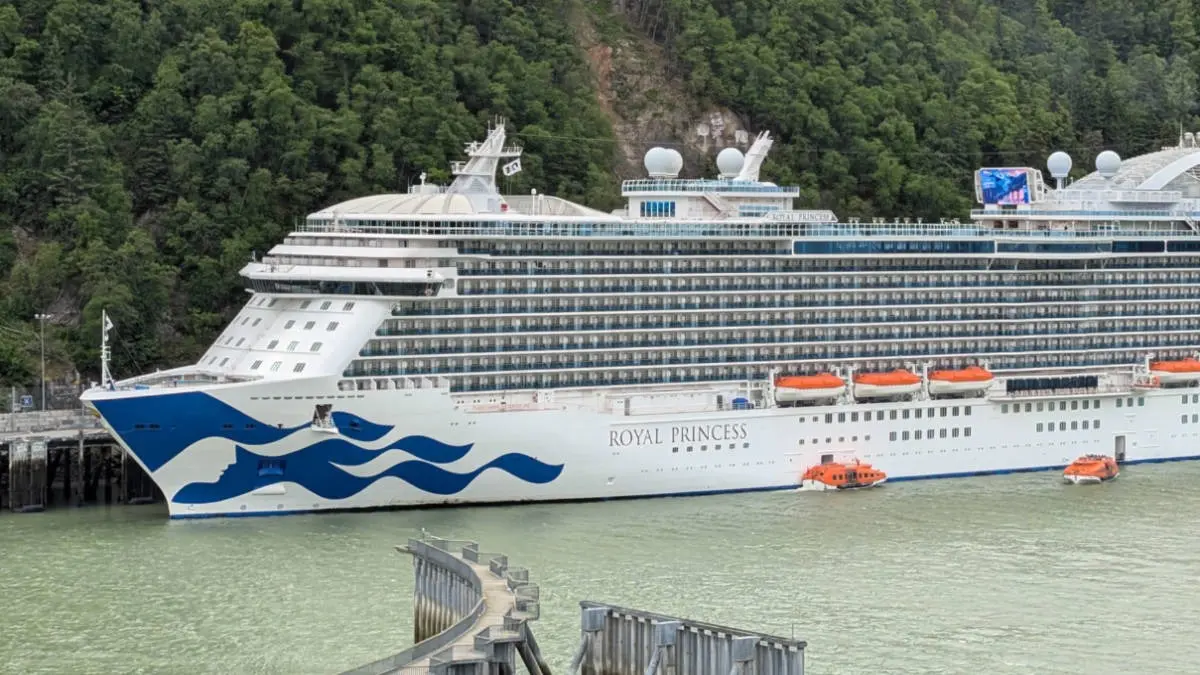
For the 3,560 guests aboard the September 12, 2026, departure of the Royal Princess, what was expected to be an idyllic week of glacier viewing and coastal exploration in Southeast Alaska has turned into an exercise in maritime resilience. Shortly after departing Seattle, Washington, the majestic cruise liner encountered unforeseen mechanical complications.
Specifically, the ship developed a technical issue with its engines, restricting its maximum operational speed. While the ship’s engineering officers and Princess Cruises executives have maintained that the issue poses no threat to the safety of the vessel, its crew, or its passengers, the speed restriction has severely compromised the published 7-night itinerary.
To accommodate the vessel’s reduced velocity, cruise operators were forced to bypass two of the voyage’s most anticipated ports of call: Juneau and Ketchikan, Alaska. Consequently, the revised itinerary leaves Skagway and Victoria, British Columbia, as the sole remaining destinations on the voyage map.
Recognizing the profound disappointment such alterations cause—particularly for travelers who have planned dream vacations months or even years in advance—Princess Cruises has implemented an extensive compensatory package. Passengers will receive an automatic 50% refund of their cruise fare, alongside a seamless, automated cancellation and crediting process for any cruise-line-sponsored shore excursions booked in the canceled ports.
Despite the operational headwinds, the ship is currently expected to return to its homeport of Seattle on schedule, and downstream voyages—including an upcoming 14-night transpacific journey to Tokyo, Japan—remain unaffected. This incident underscores the ongoing mechanical vulnerabilities facing aging or heavily utilized cruise tonnage operating in demanding remote environments like the Last Frontier.
Detailed Chronology of Events
The disruption unfolded methodically over the opening 48 hours of the scheduled voyage, transforming a routine departure into a logistical scramble for both passengers and shipboard management.
Saturday, September 12: The Departure from Seattle
The Royal Princess detached from its moorings at the Port of Seattle on schedule, slipping away into the waters of Puget Sound as thousands of vacationers celebrated the commencement of their late-summer Alaskan getaway. Spirits were high, and the weather forecasts for the initial stretch northward through the Inside Passage appeared favorable. Guests settled into their staterooms, attended the mandatory safety briefings, and anticipated the dramatic coastal scenery that defines the region.
Sunday, September 13: The Disclosive Letter
The illusion of a standard voyage was broken less than 24 hours later. On Sunday, September 13, passengers received an official notification from shipboard leadership—subsequently shared widely across the sailing’s dedicated social media communities—outlining the reality of a sudden technical anomaly.
The letter delivered the sobering news:
“We are currently experiencing a technical issue with our engines that does not affect the safety of our guests or crew but does restrict our ability to proceed at the required speed to maintain our itinerary as planned.”
The cascading effects on the schedule were immediate. The letter detailed that the ship would forgo its scheduled Monday call in Juneau, opting instead for a full day at sea to catch up on distance before heading directly to Skagway. Furthermore, the operational bottleneck meant that the planned Thursday visit to Ketchikan would also be abandoned.
Monday, September 14 to Friday, September 18: The Revised Route
With Juneau and Ketchikan erased from the navigational charts, the Royal Princess adjusted its course profile.
- September 14: Spent entirely at sea, allowing engineers uninterrupted time to evaluate and tinker with the propulsion systems while navigating toward the northern reaches of the Panhandle.
- September 15: The vessel successfully made its arrival in Skagway at 6:00 AM, remaining docked until 8:15 PM, granting guests ample time to explore the historic gold-rush town.
- September 16: The status of the highly anticipated scenic cruising day through Glacier Bay National Park hung in the balance for days, with cruise executives withholding definitive operational clearance until mid-week assessments could confirm whether slow-speed navigation through the icy fjords remained viable.
- September 18: Following northbound maneuvers, the ship is projected to chart a southern course toward British Columbia, aiming for a late-night call in Victoria from 9:00 PM to midnight before the final sprint back to Washington State.
Supporting Context & Metrics
To fully understand the gravity of these disruptions, one must examine the operational scale of the Royal Princess and the precise financial and logistical measures enacted by Princess Cruises to mitigate passenger dissatisfaction.
Vessel Statistics and Itinerary Constraints
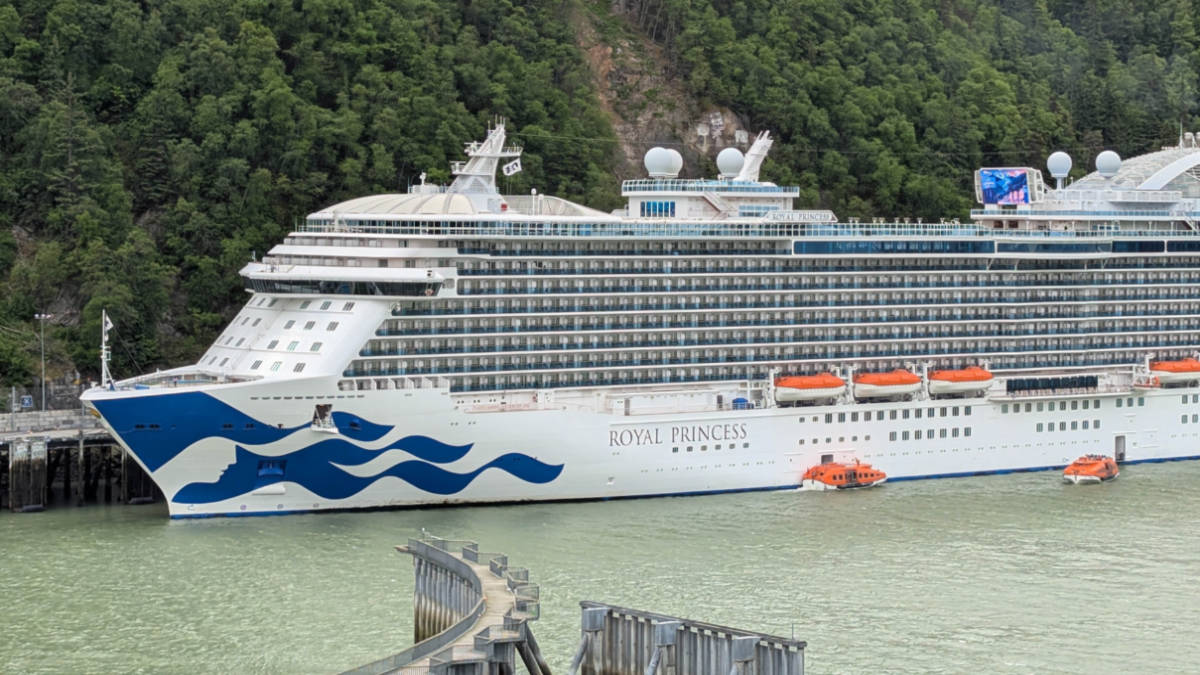
Commissioned in 2013 as the lead ship of her class, the Royal Princess is a massive floating resort spanning 142,714 gross tons, measuring 1,083 feet in length, and capable of accommodating up to 3,560 guests across 1,780 passenger staterooms, serviced by over 1,300 international crew members. Propelling a vessel of this magnitude requires immense power, typically generated by massive diesel-electric configurations driving large azimuthing podded propulsion units or conventional shaft lines.
When a propulsion or power-generation subsystem suffers a failure, the ship loses its design redundancy. Modern cruise itineraries are engineered with razor-thin time buffers; every nautical mile between ports is calculated based on optimal cruising speeds (often between 18 and 22 knots). If an engine failure forces a speed restriction down to 12 or 14 knots, maintaining a multi-port coastal schedule becomes mathematically impossible. Skipping intermediate stops is the only viable recourse to ensure the ship can safely reach embarkation and debarkation hubs on time.
Financial Remediation and Shore Excursion Policies
Cruise lines operate under strict consumer protection guidelines, but offering a 50% cash-equivalent refund on a cruise fare is a remarkably proactive step that exceeds baseline industry compensation standards for missed ports of call. According to internal notices distributed to guests:
- Cruise Fare Refunds: All passengers aboard the September 12 sailing will receive an automatic 50% refund of their base cruise fare. This reimbursement will be funneled directly back to the original form of payment used at booking. Princess Cruises has estimated a processing window of 10 to 15 business days for funds to clear back to individual accounts.
- Shore Excursion Handling: For excursions booked independently, guests must deal directly with local tour operators. However, for any shore excursions booked directly through the cruise line for Juneau or Ketchikan, a streamlined internal protocol was activated. These tours were automatically canceled by corporate systems, and the full monetary value has been credited directly to the guests’ onboard expense accounts. Crucially, passengers were explicitly advised that they did not need to wait in line at either the Shore Excursions or Guest Services desks—situated forward on Deck 5 (Plaza Deck) near the iconic Piazza—saving guests from hours of frustrating queues.
Official Statements and Industry Precedents
Princess Cruises has maintained an open, albeit guarded, communication posture regarding the exact nature of the mechanical failures.
Corporate Communications
In their official statements to guests and media, corporate representatives emphasized transparency regarding safety while remaining tight-lipped about engineering specifics:
“Our technical teams are working to resolve the issue as quickly as possible,” the cruise line noted in subsequent updates. “We deeply regret the disruption this technical difficulty causes to our guests’ vacation plans, and we are grateful for their patience and understanding as we navigate these unforeseen operational constraints.”
Engineers and technical superintendents met the ship at early waypoints to diagnose the anomaly. Despite their round-the-clock efforts, cruise management confirmed that there was no guarantee the problem could be fully rectified before the conclusion of the sailing on Saturday, September 19.
Fortunately, the timeline for the vessel’s return to Seattle remains uncompromised. Port operations in Washington are expected to proceed without delay, meaning the subsequent departure—a sprawling, highly coveted 14-night one-way voyage combining Alaskan highlights with a transpacific crossing to Tokyo, Japan—will not face cancellation or delayed turnaround.
A Growing Trend of Propulsion Woes in Alaska
The mechanical mishap aboard the Royal Princess is far from an isolated incident within the contemporary cruise sector, highlighting the immense mechanical stress placed on ships operating complex itineraries in rugged environments.
Just weeks prior, Royal Caribbean International’s Serenade of the Seas made headlines when the cruise line was forced to outright cancel an entire Alaska voyage scheduled to depart Vancouver on August 30. That vessel required urgent, extensive dockside repairs following catastrophic propulsion difficulties. While marine engineers rarely publish the granular forensic details of such failures, industry analysts note that podded propulsors, high-stress gearboxes, and massive marine diesel crankshafts are increasingly susceptible to fatigue cracking and electrical failures under the relentless demands of modern cruise timetables.
Princess Cruises itself is no stranger to these operational trials in the Last Frontier. In July 2025, sister ship Ruby Princess suffered severe propulsion issues that similarly devastated its itinerary, forcing sudden port re-arrangements, speed restrictions, and the wholesale abandonment of cherished scenic cruising moments.
These recurring events highlight a broader structural challenge for cruise operators: balancing high passenger expectations and tight seasonal deployment windows against aging mechanical systems and the scarcity of specialized dry-dock facilities in the Pacific Northwest capable of servicing mega-class tonnage on short notice.
Future Outlook
As the Royal Princess completes the remainder of its altered journey—relying on single-engine efficiency or throttled power distribution to make Skagway and Victoria—passengers are forced to reimagine their vacations. While lounging on deck during unexpected sea days or exploring the rich gold-rush history of Skagway offers its own distinct charm, the absence of Juneau’s majestic Mendenhall Glacier and Ketchikan’s vibrant totem pole displays leaves an undeniable void.
Looking ahead, marine inspectors and classification societies will undoubtedly subject the Royal Princess to rigorous diagnostics upon its return to Seattle. Whether the root cause lies in fuel injection anomalies, electrical stator failures, or bearing degradations within the propulsion train, the vessel faces a critical maintenance window.
For the wider cruise community, the incident serves as a stark reminder of the unpredictable nature of ocean travel. As ships grow larger and itineraries become more ambitious, the margin for mechanical error shrinks ever smaller—making robust customer service recovery frameworks, like the one deployed by Princess Cruises on this sailing, an indispensable facet of modern cruise operations.