When travelers turn their attention toward the historic county of Yorkshire in Northern England, their itineraries typically gravitate toward well-worn paths. Heritage-laden York, with its medieval walls and dramatic Minster, or the maritime-rich coastal city of Hull, usually dominate guidebooks. Yet, tucked away at the dramatic foothills of the Pennine Moors in West Yorkshire lies a destination that effortlessly bridges raw industrial heritage with serene natural beauty: Huddersfield.
Positioned almost equidistant between the economic and cultural heavyweights of Manchester and Leeds, Huddersfield is far more than a convenient transit stop. It is a striking Victorian market town boasting over 3,000 protected buildings, nearly 20 miles of tranquil canal-side pathways, and a textile manufacturing pedigree that helped fuel the Industrial Revolution.
For the discerning traveler seeking a blend of striking neoclassical architecture, deep-rooted British history, and immediate proximity to wild, heather-draped countryside—including the adjacent Peak District National Park—Huddersfield stands out as an exceptionally rewarding, under-the-radar escape. This comprehensive guide explores the town’s rich history, architectural triumphs, and natural landscapes, offering a definitive blueprint for an immersive Northern English journey.
Detailed Chronology: From Ancient Settlement to Industrial Powerhouse
To fully appreciate the character of modern Huddersfield, one must trace its evolution across millennia. The story of this West Yorkshire hub is one of continuous adaptation, shifting from ancient defensive settlements to a global powerhouse of the textile trade, and finally into a vibrant 21st-century market town.
The Ancient Foundations: Prehistoric Roots and Castle Hill
Long before the red-brick mills and grand Victorian railway stations defined the landscape, Huddersfield’s strategic geography attracted human settlement. The most striking testament to this ancient past is Castle Hill, a prominent geological and historical landmark rising dramatically above the surrounding valleys.
Archaeological evidence indicates that Castle Hill has been inhabited for roughly 4,000 years, with origins tracing back to the Late Bronze Age and Early Iron Age. Ancient Britons recognized the plateau as an ideal defensive stronghold, establishing a hill fort that commanded sweeping views of the River Colne and River Holme valleys. Over the centuries, the site transitioned through various eras, eventually hosting a medieval fortification before falling into ruin. Today, the summit is crowned by the iconic 106-foot-tall Victoria Tower, erected in 1899 to commemorate Queen Victoria’s Diamond Jubilee—a seamless physical layering of distinct epochs in British history.
The River Colne and the Birth of the Textile Trade
For centuries, Huddersfield remained a modest agrarian settlement. However, the town’s trajectory changed forever with the advent of the Industrial Revolution. Nestled strategically along the River Colne, Huddersfield possessed an invaluable asset: swift-flowing water capable of powering heavy machinery.
Local entrepreneurs quickly capitalized on this hydrological advantage, transforming the town into a thriving textile hub. Initially focusing on wool production, Huddersfield soon specialized in the manufacture of worsted cloth—a finer, smoother yarn produced through a specialized combing process. As global demand for British textiles skyrocketed, Huddersfield’s mills churned out fabrics sold across the entirety of the United Kingdom and exported internationally.
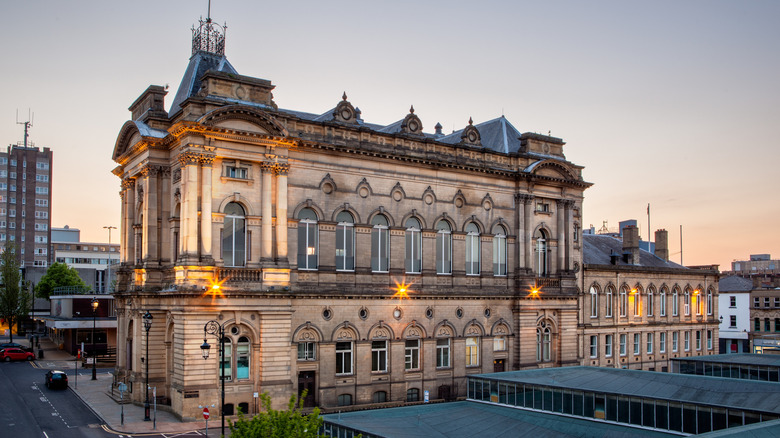
The wealth generated during this period reshaped the town’s physical fabric. Civic leaders, wealthy mill owners, and merchants poured fortunes into grand architecture, constructing the imposing municipal buildings, arcades, and Victorian terraces that still define the townscape today.
The Golden Age of Victorian Expansion
The mid-to-late 19th century represented Huddersfield’s golden age. The opening of the Huddersfield Railway Station in 1847—and its subsequent architectural grand expansion in the 1850s—cemented the town’s status as a vital commercial artery connecting Manchester, Leeds, and the broader industrial network of Northern England.
As the textile trade boomed, commercial districts expanded outward from St. George’s Square. Warehouses, banks, and covered markets sprang up, showcasing a distinct architectural confidence characterized by Palladian columns, Tuscan porticos, and elaborate ironwork. While the global shift in manufacturing eventually quieted the deafening roar of the town’s looms, the structural legacy of this industrial zenith remains remarkably well-preserved.
Architectural Marvels and Urban Exploration
Huddersfield’s architectural identity is largely protected by conservation initiatives, with over 3,000 buildings granted official listed status for their historic significance. Navigating the town center offers a masterclass in 19th-century civic design, easily accessible via a walkable, pedestrian-friendly itinerary.
St. George’s Square and the Railway Gateway
Any exploration of Huddersfield should begin at St. George’s Square, widely considered the architectural crown jewel of the town. Dominating the square is the Huddersfield Railway Station, a structure that famously earned high praise from political diarist John Betjeman, who once remarked that it was "the kind of railway station that makes you want to pack your bags."
Built in the mid-19th century, the station boasts a magnificent neoclassical facade featuring a grand portico supported by Corinthian columns. Flanking the square are complementary historic structures, including the grand George Hotel—historically constructed to accommodate wealthy travelers overnighting during the railway boom—and the adjacent Britannia Buildings, which formerly served as a massive depot for textile wares.
Civic Splendor: Town Hall, Open Market, and Byram Arcade
Venturing a mere 10-minute walk from the station into the commercial heart of the town reveals further architectural triumphs:
The Huddersfield Town Hall: Completed in 1878, this civic anchor is celebrated for its elegant Tuscan portico and imposing clock tower, continuing to serve as a premier regional venue for concerts and public events.
The Open Market: A bustling social hub distinguished by its colorful red, pink, and cream-colored cast-iron structural framework, representing the ingenuity of Victorian engineering applied to everyday commerce.
The Byram Arcade: A stunning three-tiered Victorian shopping gallery under a glass-paneled roof. Today, the arcade has been lovingly revitalized as an independent hub housing artisan boutiques, vintage bookshops, and specialized cafes where visitors can pause for a traditional British brew.
Supporting Context & Metrics: Navigating the Landscape
To assist travelers and researchers in contextualizing Huddersfield’s geographic and logistical standing within West Yorkshire, the following metrics outline key travel data, historical scope, and environmental statistics:
Metric Category
Data Point / Description
Geographic Location
West Yorkshire, Northern England (Foothills of the Pennine Moors)
Distance to Major Hubs
~30 miles southwest of Leeds; ~25 miles northeast of Manchester
Protected Architecture
Over 3,000 officially listed/protected historic buildings
Canal Network Length
Nearly 20 miles of walkable, contiguous canal-side trails (Huddersfield Narrow Canal)
Castle Hill Antiquity
Human settlement dating back approximately 4,000 years (Late Bronze/Early Iron Age)
Victoria Tower Height
106 feet (constructed in 1899 for Queen Victoria’s Diamond Jubilee)
Peak District Proximity
12 miles south of Huddersfield town center
Canals, Countryside, and Natural Escapes
While Huddersfield’s urban core offers a rich tapestry of Victorian brick and mortar, its surrounding natural geography provides an equally compelling counterweight. Water and elevated moorland have shaped not only the town’s economy, but also its modern recreational appeal.
The Huddersfield Narrow Canal and Industrial Waterways
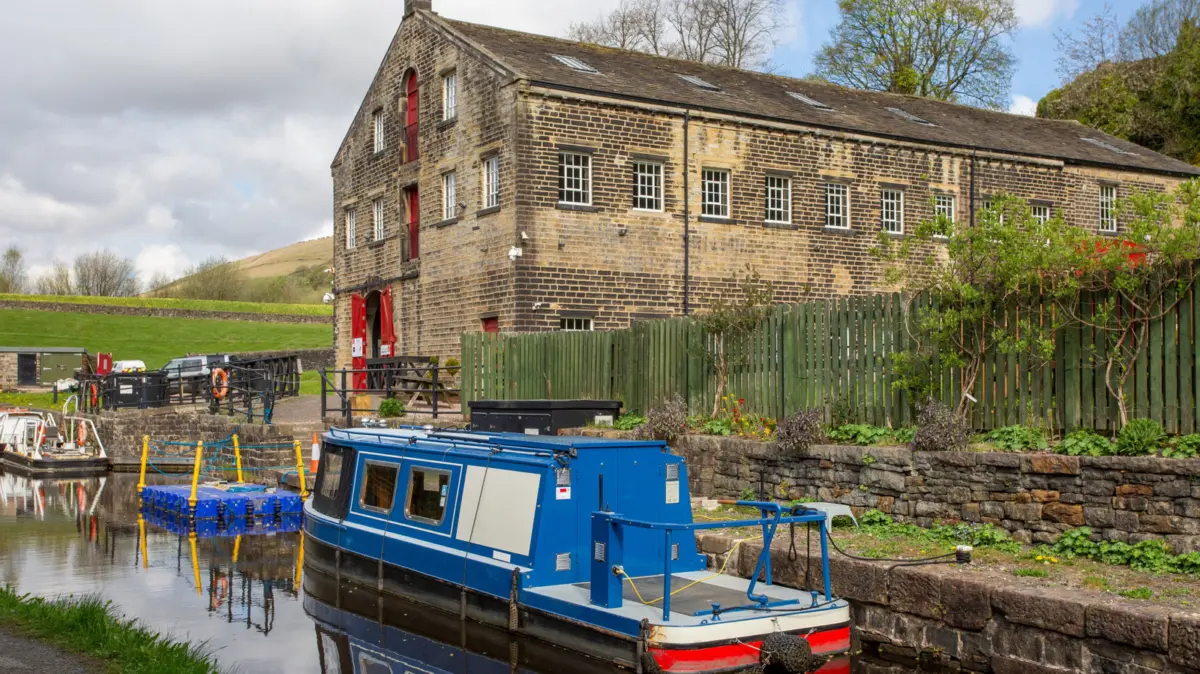
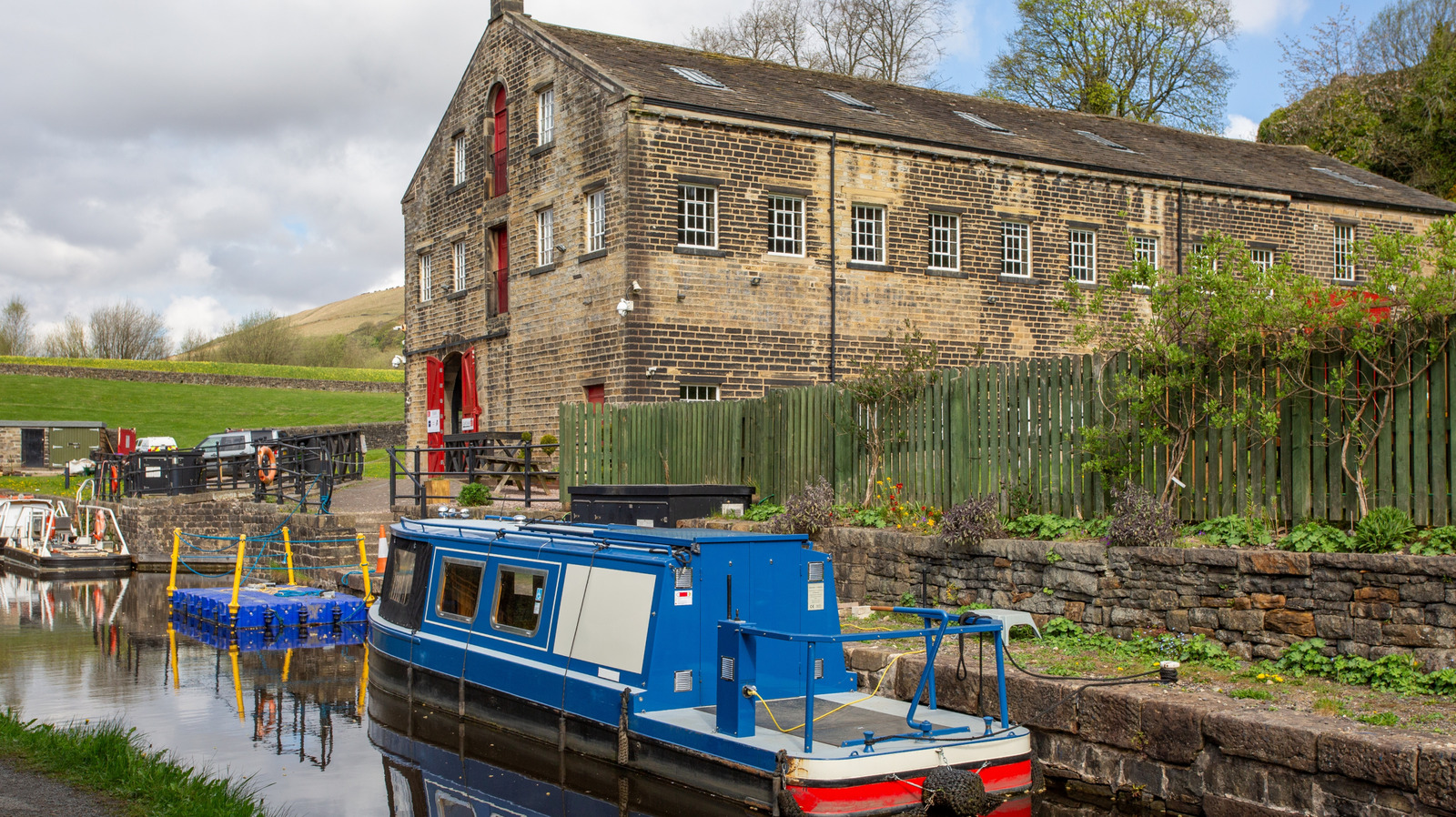
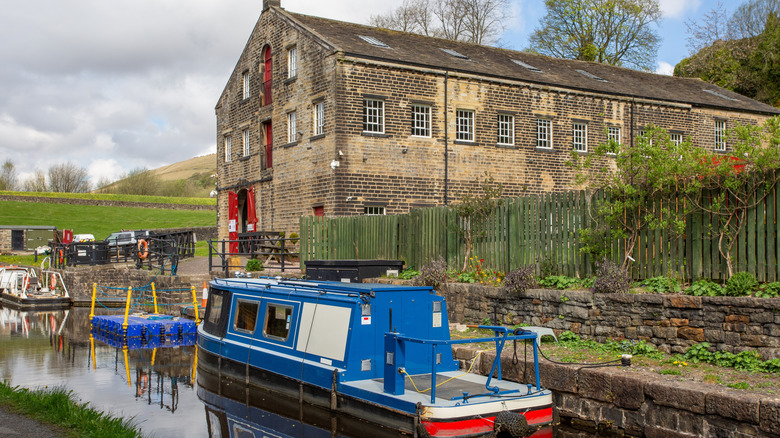
Straddling both the River Colne and the River Holme, Huddersfield’s historic reliance on water engineering is most evident along the Huddersfield Narrow Canal. Snaking directly through the urban landscape and stretching out into the verdant countryside, the canal offers approximately 19 miles of continuous, accessible walking trails.
A leisurely amble along the towpath—which can be comfortably enjoyed in manageable stretches over two to three hours—reveals a tranquil world of weeping willows, floating barges, and industrial heritage artifacts. A standout engineering marvel along this route is the Standedge Tunnel, the longest, highest, and deepest canal tunnel in all of Britain, cutting deep beneath the Pennine hills.
As walkers follow the canal out of the town center, the urban environment gently dissolves into rich wildflower fields, mature woodlands, and serene local reservoirs, such as the picturesque Slaithwaite Reservoir (locally pronounced "slaw-it"). Within the town itself, Greenhead Park—a sprawling Victorian-era green space established in 1884—offers meticulously manicured gardens, serene boating lakes, and an ornate, traditional bandstand.
Gateway to the Peak District
For travelers eager to trade industrial architecture for wild, untamed landscapes, Huddersfield serves as an ideal basecamp. Located a mere 12 miles south of the town lies the Peak District National Park—Britain’s very first national park, celebrated globally for its literary connections to Jane Austen, dramatic gritstone edges, and sweeping expanses of heather-covered moorland.
Furthermore, rail travelers can easily pair a trip to Huddersfield with an excursion to nearby Manchester or York. The trans-Pennine railway journey between Huddersfield and Manchester cuts across rugged upland terrain, offering window views of dramatic valleys that rival the scenic acclaim of Scotland’s legendary West Highland railway lines.
Official Statements and Tourism Perspectives
Regional tourism authorities and heritage preservation bodies have increasingly emphasized the importance of elevating secondary towns like Huddersfield to alleviate visitor congestion in major northern tourist magnets like York and Manchester.
"Huddersfield represents the authentic, beating heart of Yorkshire’s industrial legacy," notes a regional development spokesperson for West Yorkshire tourism initiatives. "While our major cities draw international acclaim, towns like Huddersfield offer travelers a profound, unfiltered connection to the Victorian architecture, engineering ingenuity, and natural landscapes that shaped modern Britain. The seamless integration of urban heritage trails with direct access to the Pennines and the Peak District makes it an indispensable component of any northern itinerary."
Architectural historians have similarly praised local conservation efforts. Following continuous investment in landmark structures such as the Byram Arcade and St. George’s Square, preservationists highlight Huddersfield as a model for sustainable urban heritage management.
"When you walk past three thousand protected structures in a single town, you are not merely viewing old buildings; you are reading an open-history textbook," shares a regional heritage conservation officer. "The town’s ability to repurpose Victorian textile warehouses and municipal spaces into thriving cultural hubs ensures that its industrial heritage remains a living, breathing part of daily life rather than a static museum piece."
Future Outlook
As domestic and international tourism trends increasingly favor sustainable travel, off-the-beaten-path exploration, and slow tourism, Huddersfield is strategically positioned for a renaissance.
Future infrastructure developments focus on enhancing green transit corridors, expanding cycling networks along the Huddersfield Narrow Canal, and completing ongoing restoration projects for major civic landmarks like the historic George Hotel. By championing its unique dual identity—as both a proud monument to Victorian industrial might and a welcoming gateway to the dramatic landscapes of the Southern Pennines and the Peak District—Huddersfield is successfully shedding its status as an overlooked transit town.
For travelers charting a course between Manchester and Leeds, stepping off the train at St. George’s Square is no longer just a pause in a journey; it is an invitation to discover one of Northern England’s most compelling and character-rich destinations.