





Executive Overview
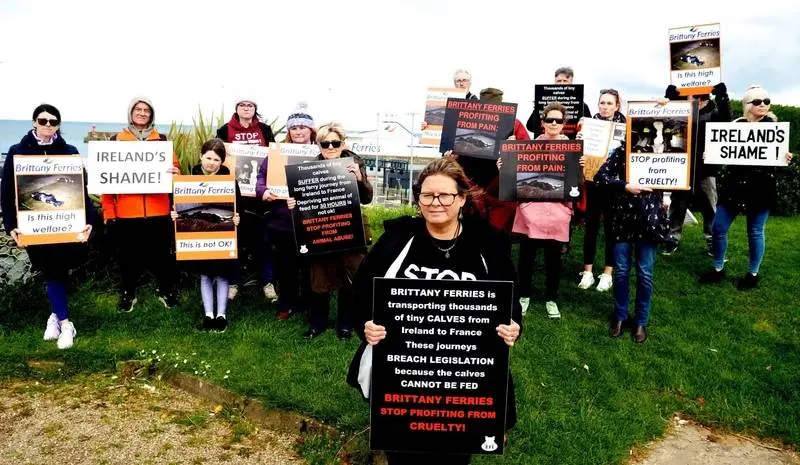
A profound structural shift is underway in the European agricultural logistics sector. On September 1, Brittany Ferries officially ceased the transport of live farm animals, including unweaned calves, across its maritime network. This decisive move represents a major victory for a coalition of international animal welfare non-governmental organizations (NGOs) that have spent years campaigning against the long-distance transport of vulnerable livestock.
The policy shift by Brittany Ferries is not an isolated corporate decision; rather, it is part of a rapid contraction of transport options for the Irish agricultural sector. It follows a similar announcement by Stena Line, which is scheduled to withdraw its live export services between Ireland and France by October 2025. With Brittany Ferries implementing its restrictions and Stena Line’s departure on the horizon, Irish Ferries remains the sole maritime operator still carrying unweaned calves from Ireland to mainland Europe.
This consolidation of transport restrictions has thrown the Irish dairy and calf export industries into a state of transition. For decades, the export of male dairy calves—often referred to as a byproduct of the intensive dairy sector—to continental Europe has served as an economic pressure valve for Irish farmers. However, a combination of shifting corporate ESG (Environmental, Social, and Governance) standards, escalating public outrage, and damning regulatory audits from the European Commission has made the maritime transport of these animals increasingly untenable.
As the logistics corridor closes, the spotlight has turned to the domestic agricultural practices of Ireland, the regulatory enforcement of the European Union, and the viable economic alternatives required to sustain the Irish farming model without relying on long-distance live export.
Detailed Chronology
The collapse of the maritime corridor for live animal transport between Ireland and the European mainland is the result of a coordinated, multi-year advocacy campaign and a series of regulatory interventions.
[2023] European Commission Audit identifies systemic breaches of Regulation 1/2005
  │
  ├──► [2023] Dutch Parliament passes motion citing "serious animal suffering"
  │
  ├──► [Oct 2025] Stena Line scheduled to withdraw Ireland-to-France live export services
  │
  ├──► [Sept 1, 2026] Brittany Ferries complete cessation of farmed animal transport (initiated Sept 1)
  │
  └──► [2028] Dutch Veal Industry pledged to completely halt Irish calf imports
The NGO Coalition and the Strategy of Corporate Pressure
The campaign to close the maritime route has been orchestrated by an alliance of animal welfare organizations, including:
- Ethical Farming Ireland
- Compassion in World Farming (CIWF)
- Eurogroup for Animals
- Eyes on Animals
- FOUR PAWS
- L214
- Southampton Animal Action
- Welfarm
Rather than relying solely on slow-moving legislative reforms at the EU level, this coalition targeted the logistics bottlenecks: the commercial ferry operators. By mobilizing public opinion and demonstrating that the transport of unweaned calves directly contradicts the corporate social responsibility policies of these shipping lines, campaigners successfully turned live animal transport into a significant reputational risk.
The Regulatory Domino Effect
The timeline of this transition is marked by several key milestones:
- 2023: The European Commission Audit. A pivotal audit conducted by the European Commission concluded that the transport of unweaned calves from Ireland to France was being carried out in direct violation of Council Regulation (EC) No 1/2005 on the protection of animals during transport. The audit highlighted that the unique design of roll-on/roll-off (Ro-Ro) ferries made it impossible to meet the basic physiological needs of the animals during the crossing.
- 2023: The Dutch Parliamentary Motion. In the Netherlands—the primary destination for Irish calves—the parliament passed a motion declaring that the long-distance transport of very young calves is inherently linked to "serious animal suffering." This motion laid the groundwork for future market closures.
- September 1: Brittany Ferries implemented its ban on live farm animal transport, with a complete phase-out of all farmed animal transport logistics scheduled for completion by September 1, 2026.
- October 2025: Stena Line is scheduled to officially withdraw its live export services on its routes between Ireland and France, further narrowing the options for exporters.
- 2025: The European Commission Report. A follow-up report from the European Commission formally acknowledged the systemic welfare failures of the trade, stating unequivocally that "calves are not fed at the required intervals" during these journeys.
- 2028: The Dutch Veal Industry Ban. The Dutch veal sector, bowing to domestic political and consumer pressure, pledged to stop importing calves from Ireland by 2028, effectively closing the largest market for these animals.
Supporting Context & Metrics
To understand the gravity of these transport bans, it is necessary to examine the scale of the trade, the biology of the animals involved, and the economic drivers that created this export pipeline.
The Scale of the Trade
Ireland’s dairy sector has expanded significantly since the abolition of EU milk quotas in 2015. To maintain continuous milk production, dairy cows must calve annually. While female calves are kept to replenish the milking herd, male calves of dairy breeds (such as Holstein-Friesian) have low commercial value for domestic beef production due to their slow growth rates and poor meat yield.
As a result, a massive export market emerged:
| Metric | Details |
|---|---|
| Annual Export Volume | Over 160,000 calves under six weeks old exported from Ireland in a single year. |
| Primary Destinations | The Netherlands (primarily for the veal industry), Spain, Poland, and Italy. |
| Age of Animals | Often between 15 and 42 days old (unweaned and highly vulnerable). |
| Primary Route | Road transport to Irish ports, roll-on/roll-off (Ro-Ro) ferry to Cherbourg (France), followed by long-distance road transport across Europe. |
The Physiology of the Unweaned Calf
The core of the ethical and legal controversy lies in the biology of the unweaned calf. At under six weeks of age, these animals are pre-ruminants. They do not have a fully developed rumen and cannot digest solid feed or hay. They rely entirely on warm milk or specialized milk replacer for hydration and nutrition.
[Irish Farm] ──► [Truck Transport to Port] ──► [Ro-Ro Ferry (approx. 18-20 hours)] ──► [French Port] ──► [Onward Road Journey]
                               ▲
                      THE FEEDING BOTTLENECK:
             Calves cannot be fed milk or replacer
             onboard Ro-Ro ferries, violating EU law.
Under Council Regulation (EC) No 1/2005, animals must be fed, watered, and rested at specific intervals. For unweaned calves, the maximum travel period without feeding is 9 hours, followed by a mandatory 1-hour rest period for feeding, after which they can be transported for another 9 hours.
During the maritime crossing from Ireland to France, which typically lasts between 18 and 20 hours, calves remain inside the transport trucks parked on the vehicle decks of Ro-Ro ferries. It is physically impossible for operators to safely feed milk replacer to hundreds of calves inside a tightly packed livestock truck on a moving vessel. Consequently, these animals endure prolonged periods of starvation, leading to severe stress, dehydration, and a compromised immune system.
Official Statements and Regulatory Friction
The escalating tension between economic interests and animal welfare standards is reflected in the statements of advocacy groups and regulatory bodies.
Caroline Rowley, spokesperson for Ethical Farming Ireland, welcomed the corporate decisions while calling for immediate regulatory enforcement:
"Thousands of unweaned calves are suffering and welfare legislation is being breached on these long sea journeys, so we strongly welcome the decision by two private companies to no longer be involved in this inhumane trade. We now look to Irish Ferries to immediately stop carrying calves onboard their ships and we call on the Irish Government and EU Commission to urgently enforce the EU legislation that is being breached during the journey from Ireland to France on roll-on roll-off ferries."
Rowley further highlighted the structural failure of the current maritime transport model:
"It is impossible for the calves to be fed, and it’s time the Commission acted on their audit that confirmed these journeys are not in line with EC Regulation 1/2005 on the protection of animals during transport."
The Regulatory Consensus
The European Commission’s own documentation supports these assertions. The 2025 EU Commission report explicitly notes that the current transport infrastructure fails to meet basic animal welfare standards, stating:
"…calves are not fed at the required intervals."
This is consistent with the Commission’s 2023 audit, which concluded that:
"…the transport of unweaned calves from Ireland to France is being carried out in breach of Council Regulation 1/2005 on the protection of animals during transport."
Despite these findings, formal infringement procedures against Ireland have been slow to materialize, prompting NGOs to target commercial entities directly. This strategy has proven highly effective. Currently, over 75,000 citizens have signed a petition coordinated by Compassion in World Farming targeting Irish Ferries, demanding that the company follow the precedent set by Brittany Ferries and Stena Line and end its involvement in the live export trade.
Future Outlook and Alternative Agricultural Models
The phased withdrawal of Brittany Ferries and Stena Line, combined with the impending 2028 Dutch import ban, means the long-distance export of unweaned calves from Ireland is nearing its end. The Irish agricultural sector must now rapidly adapt to a new reality.
Developing Domestic Alternatives
Fortunately, viable alternatives to the live export of unweaned calves already exist and are gaining traction within Ireland:
                  ┌──► 1. Sexed Semen & Beef-Cross Breeding (High-value dairy-beef)
                  │
Alternative Path ─┼──► 2. Domestic Rearing & Finishing Systems (Keeping male calves in Ireland)
                  │
└──► 3. Cow-Calf Contact Systems (High-welfare dairy farming)- Dairy-to-Beef Programs: There is a growing movement to integrate the dairy and beef sectors. By using sexed semen to produce high-value beef-cross calves (such as Angus or Hereford crosses) from dairy cows rather than pure dairy males, farmers can produce offspring that are highly viable for domestic beef finishing.
- Domestic Rearing and Finishing: Currently, approximately 25% of Irish dairy farmers retain all of their calves, rearing the males domestically for the beef market. Expanding these programs would eliminate the need for long-distance transport entirely.
- Cow-Calf Contact Systems: Ethical Farming Ireland and other organizations advocate for a transition to high-welfare dairy systems where calves remain with their mothers until they are naturally weaned. While this requires a shift in farm management, such systems are growing in popularity across Europe and globally, driven by premium consumer demand for ethical dairy products.
As Caroline Rowley of Ethical Farming Ireland notes:
"There is no reason why we can’t keep them all. Better still, we should be developing high welfare dairy systems where the calves stay with their mother until weaned. These types of farms are growing across Europe and across the world. Ireland is a laggard when it comes to animal welfare."
Conclusion
The decisions by Brittany Ferries and Stena Line mark the beginning of the end for the Irish live calf export trade. As commercial corridors close and regulatory scrutiny intensifies, the Irish agricultural sector faces a clear choice: proactively transition to sustainable, high-welfare domestic rearing systems, or risk economic disruption as the remaining transport routes inevitably close.