











Executive Overview
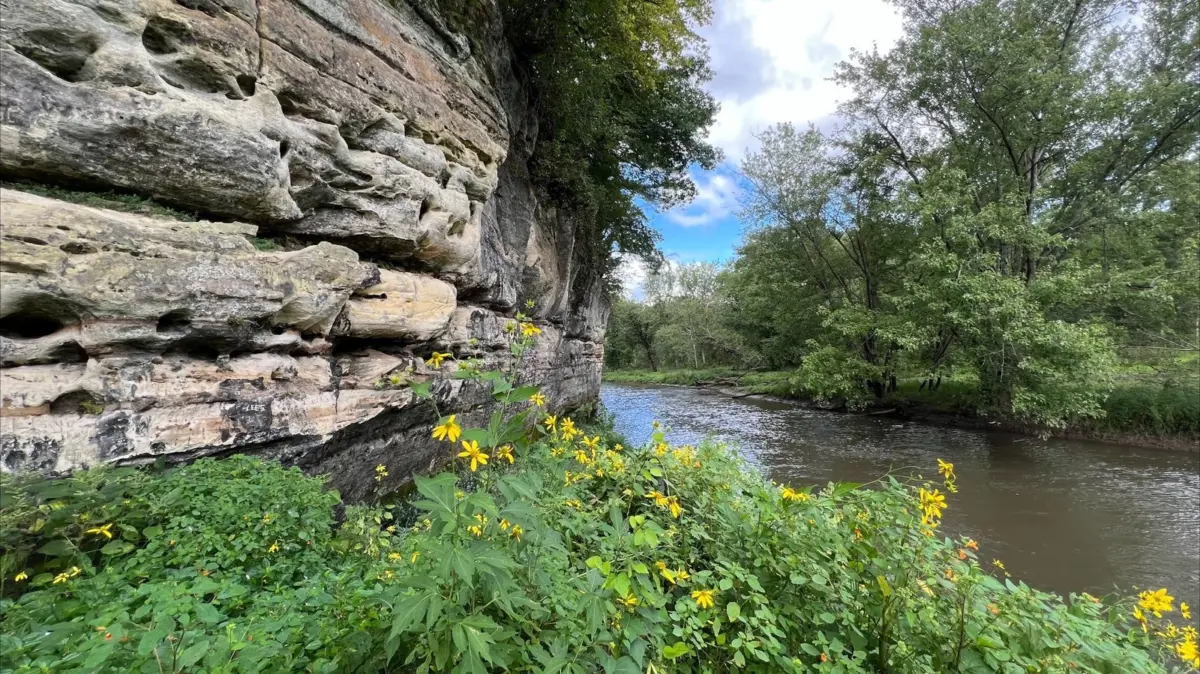
As the 430-mile-long Wisconsin River cuts its majestic path across America’s heartland, it acts as a sculptor of landscapes. It carves out massive sandstone cliffs, nourishes expansive hardwood forests, and whispers secrets of ancient civilizations preserved within ceremonial earthwork mounds. Yet, nestled along its lower stretches lies a destination that offers a rare synthesis of rugged wilderness and 19th-century industrial heritage: Tower Hill State Park.
Spanning a modest 77 acres in Spring Green, Wisconsin, this park drastically punches above its weight class. Despite ranking as Wisconsin’s third-least-visited state park in 2023 according to state recreation data compiled by the Milwaukee Journal Sentinel, Tower Hill packs an outsized punch. It provides an intimate, crowd-free sanctuary for travelers seeking a profound detox from modern life. Whether visitors are scaling steep bluff trails to inspect a historic 180-foot lead-shot tower, casting lines into the fertile waters of the Wisconsin River, or seeking out secluded tent sites beneath a dense forest canopy, the park delivers a remarkably authentic wilderness experience.
This report provides an in-depth examination of Tower Hill State Park, covering its unique geographic and historical footprint, the structural realities of its primitive camping facilities, its diverse ecological value for birdwatchers and anglers, and its ongoing operational outlook as managed by the Wisconsin Department of Natural Resources (WDNR).
Detailed Chronology and Historical Context
To truly understand Tower Hill State Park, one must step backward into the raw, frontier-era enterprise of the 1830s. Long before the land was designated a sanctuary for recreation and conservation, it was the site of a gritty industrial operation that supplied ammunition to the American frontier.
The Rise of the Shot Tower (1831–1840s)
In 1831, visionary entrepreneurs and mineralogists recognized the strategic potential of the towering bluffs overlooking the Wisconsin River. Lead mining was booming in the southwestern region of the territory, and transporting finished ammunition over rugged overland trails was costly and dangerous. The solution was ingeniously simple yet physically demanding: manufacture the lead shot directly on-site by capitalizing on gravity.
The operational architecture of the facility was revolutionary for its time. Workers constructed a smelting house atop the 180-foot limestone bluff. Molten lead was poured through a copper sieve at the summit, falling freely down a wooden-lined shaft that had been meticulously hand-mined straight down through the solid rock to a subterranean tunnel below. As the molten droplets plunged through the air, surface tension naturally pulled them into perfectly spherical shapes. They solidified before plunging into a vat of cold water at the bottom of the shaft.
According to historical archives maintained by the WDNR, life at the shot tower was grueling. A typical six-man crew processed upwards of 5,000 pounds of raw lead daily. However, due to rigorous quality control standards, only 600 to 800 pounds of the finished product were deemed structurally sound enough for commercial use; the deformed pellets were hauled back to the top for re-smelting.

Industrial Decline to State Park Preservation
The boom did not last indefinitely. Shifts in manufacturing technologies, fluctuating lead markets, and the turmoil surrounding regional conflicts such as the Black Hawk War ultimately transformed the site’s economic viability. By the mid-19th century, the industrial clatter fell silent, and the land was reclaimed by the encroaching hardwood forest.
Decades later, conservationists recognized the historical significance and natural beauty of the bluff. In 1922, the property was officially established as a state park, ensuring that the legacy of the pioneer ironworkers and the dramatic topography of the lower Wisconsin River valley would be preserved for future generations. Today, visitors traversing the 1.1-mile Shot Tower and Smelter House loop are walking in the exact footsteps of those 1930s-era pioneers, complete with historical markers and a faithful reconstruction of the original summit smelting house.
Supporting Context and Metrics: Access, Infrastructure, and Ecology
Operating on a compact 77-acre footprint requires efficient resource management. Tower Hill State Park’s operational metrics, visitor demographics, and physical infrastructure reveal a destination tailor-made for specific types of outdoor enthusiasts.
Visitation Metrics and Spatial Logistics
In an era where major national parks and premier state reserves grapple with over-tourism, trail erosion, and overcrowding, Tower Hill offers a stark, refreshing contrast. State data from 2023 highlighted the park as Wisconsin’s third-least-visited state park. For the discerning traveler, this translates to absolute tranquility. It is entirely possible to hike the bluffs, cast a line, or sit by a campfire without encountering another soul.
Geographically, the park serves as an accessible weekend escape. Situated in Spring Green, Wisconsin, it sits less than an hour’s drive west of Madison, making it a seamless afternoon trip for capital-region residents. For travelers originating from Milwaukee, the cross-state journey spans roughly two hours via major highway corridors.
Operational Access Notes:
- Year-Round Availability: The park grounds never officially close to pedestrian traffic.
- Seasonal Vehicle Restrictions: From Columbus Day weekend through mid-May, interior vehicle access is restricted. Visitors must park at the designated main entrance lot and walk in, adding a peaceful, short trek to off-season excursions.
Primitive Camping Infrastructure
For those looking to extend their stay, Tower Hill offers a strictly managed, rustic camping experience. The campground is intentionally kept small to preserve the natural soundscape and ecological integrity of the forest floor.
- Site Capacity: Exactly 10 primitive tent sites are available. There are zero walk-in options; reservations must be secured in advance.
- Utilities and Amenities: The campground features no electrical hookups, RV spaces, or large-trailer accommodations. Facilities are limited to a vault toilet system and seasonal water spigots operating from Memorial Day weekend through October.
- Provisions: Firewood is conveniently available for purchase on-site, minimizing the risk of invasive species transport.
Biodiversity and Avian Ecology
The convergence of the slow-moving Wisconsin River backwaters and mature upland hardwood forests creates an ecological ecotone—a transitional zone that attracts an incredible variety of wildlife.
- Avian Species: Birdwatchers frequent the park year-round, though seasonal migrations yield exceptional sightings. Spring brings an influx of vibrant yellow-rumped warblers, wild turkeys, mallards, and chipping sparrows. Summer introduces wading great blue herons and eastern wood peewees perched quietly in the canopy. Resident species—such as blue jays, northern cardinals, and downy woodpeckers—guarantee rewarding viewing experiences regardless of the calendar month.
- Aquatic Ecosystem: Anglers utilizing the riverbanks or launching hand-powered watercraft (such as canoes and kayaks, noting the park lacks a formal motorized boat launch) find a thriving aquatic ecosystem. Armed with a valid Wisconsin fishing license, visitors regularly pull walleye, smallmouth bass, northern pike, bluegill, and multiple catfish species from the main river channels and adjacent backwaters.
Official Statements and Perspectives
Park management and visitor accounts emphasize that Tower Hill’s charm lies precisely in its refusal to modernize excessively. It is a park that honors its past by remaining intentionally understated.
A representative of the Wisconsin Department of Natural Resources notes regarding the historical infrastructure:
"The preservation of the shot tower site is not merely about maintaining old stonework; it is about keeping a tangible anchor to the industrial roots of the Wisconsin territory alive. Visitors standing atop that 180-foot bluff are viewing the landscape through the exact strategic lens that pioneer industrialists used nearly two centuries ago."
Travelers who frequent the grounds echo this sentiment of unvarnished authenticity. One recent reviewer on Google Maps captured the park’s distinct appeal:
"It’s an incredible place to enjoy a view of the Wisconsin River and learn about real Wisconsin history from the 1830s. If you want a weekend where you can truly disconnect from digital noise, step onto these bluff trails."
Another camper underscored the intimacy of the campgrounds:
"An excellent way to spend a weekend here. The tent loops are quiet, cozy, and put you right at the edge of the river’s ecosystem without the distraction of massive RV generators or crowded amenity centers."
Future Outlook
As outdoor recreation trends evolve, managing a low-traffic, historically rich site like Tower Hill State Park presents unique opportunities and responsibilities for the Wisconsin Department of Natural Resources.
Conservation and Structural Maintenance
Looking ahead, the primary focus for Tower Hill State Park centers on sustainable trail maintenance and structural preservation of the historic shot tower shaft. Because the steep bluff trails feature natural limestone staircases and vulnerable earth, ongoing erosion control remains a top priority for park rangers. Trail reinforcement projects utilizing native materials will ensure that hikers can continue to safely access the summit without degrading the surrounding hillside flora.
Balancing Preservation with Low-Impact Tourism
Unlike high-capacity state parks that must continually expand parking lots and modern bathhouses, Tower Hill’s future lies in the preservation of its quietude. State parks officials anticipate steady, sustainable interest from travelers seeking "slow travel" experiences—trips centered around quiet camping, birdwatching, non-motorized paddling, and localized historical education.
By maintaining strict caps on its 10 primitive campsites and keeping vehicle access limited during the off-season, Tower Hill State Park is well-positioned to protect its delicate ecosystem. It will remain a hidden sanctuary along the Wisconsin River—a place where the echoes of 1830s lead-shot manufacturing blend seamlessly with the rustle of hardwood leaves and the silent flight of migrating warblers for generations to come.