









Executive Overview
Tucked high within the rugged ridgelines and densely timbered expanses of Northern California’s Tahoe National Forest, White Rock Lake offers an appealing contrast to the bustling, heavily commercialized tourism hubs of nearby Lake Tahoe. Perched at an elevation approaching 8,000 feet above sea level, this historic alpine reservoir rewards adventurous travelers who are willing to navigate rugged backcountry terrain in exchange for pristine waters, quiet shorelines, and sweeping views of the Sierra Nevada range.
Far from the luxury resorts and crowded beaches associated with lower-elevation mountain destinations, White Rock Lake remains a raw, undeveloped sanctuary. Featuring a handful of primitive campsites, cold high-elevation waters ripe for trout fishing, and direct trail access toward prominent regional landmarks like Mount Lola, the destination has quietly earned a reputation among seasoned backpackers, overlanders, and anglers. Yet, visiting this remote sanctuary requires careful logistical preparation. Reaching its shores demands a high-clearance four-wheel-drive vehicle, and campers must pack in all essential supplies—including potable water—due to a complete absence of modern infrastructure.
This comprehensive report examines the history, geography, recreational utility, and logistical realities of White Rock Lake. Drawing from historical archives, land management policies, and traveler insights, this piece serves as an authoritative guide for those looking to explore one of the Sierra Nevada’s best-kept backcountry secrets.

Detailed Chronology: From Gold Rush Engineering to Modern Wilderness Retreat
The existence of White Rock Lake is not merely a product of glacial carving or natural tectonic shifts; rather, it stands as a testament to the transformative and often disruptive engineering feats of the California Gold Rush era. Understanding the lake’s current ecosystem requires tracing its lineage back nearly two centuries.
The Mid-19th Century: Hydraulic Mining and Artificial Reservoirs
Around 1850, as thousands of prospectors flooded the Sierra Nevada foothills and high country in pursuit of mineral wealth, the demand for pressurized water to drive industrial mining operations skyrocketed. Traditional panning and river-diversion methods quickly gave way to hydraulic mining—a destructive technique that used high-pressure water cannons to blast apart ancient gravel beds, washing gold-bearing sediment down through sluice boxes.
To sustain these thirsty mining operations during the dry summer months, prospectors and regional developers looked to the high-elevation basins of the Sierra Nevada. According to historical records maintained by the U.S. Forest Service, miners constructed primitive rock barriers and flashboards across natural depressions and outlet streams in the area, artificially impounding water to create reservoirs like White Rock Lake. These makeshift dams allowed miners to control the timing and volume of water released downstream, fueling the economic engine of the Gold Rush while permanently altering the hydrology of the high country.
The 20th Century: Transition to Public Stewardship
As the California gold rush faded and industrial mining gave way to environmental regulation and conservation movements, the infrastructure created by 19th-century prospectors fell out of private hands. Throughout the 20th century, vast swaths of the Sierra Nevada—including the lands surrounding White Rock Lake—were consolidated under the management of the federal government, specifically the United States Forest Service, establishing the Tahoe National Forest as a protected public resource.
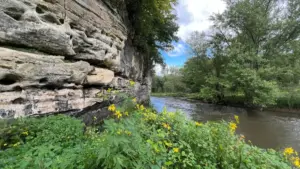
Rather than draining the historic reservoirs, federal land managers maintained many of them as high-elevation aquatic habitats, recognizing their value to regional wildlife, fire suppression efforts, and backcountry recreation. The original timber and rock structures were gradually stabilized or left to blend into the surrounding landscape, transforming industrial waterworks into tranquil, natural-appearing alpine lakes framed by dark evergreens.
The Modern Era: The Rise of Overlanding and Dispersed Recreation
In the 21st century, White Rock Lake has transitioned from a forgotten relic of industrial history into a coveted destination for modern outdoor enthusiasts. With traditional national park and state park campgrounds facing unprecedented reservation backlogs and overcrowding, travelers have increasingly turned to public lands managed by the U.S. Forest Service for true dispersed camping experiences.
Enhanced by digital mapping tools, peer-to-peer review platforms, and off-road vehicle communities, White Rock Lake has emerged as a premier waypoint for self-reliant adventurers. Despite this digital visibility, the physical barriers to entry—namely, rough four-wheel-drive roads and high-altitude weather volatility—have successfully insulated the lake from mass tourism, preserving the solitude that defined the region a century ago.
Supporting Context & Metrics: Geography, Access, and Ecosystem Dynamics
To successfully navigate and appreciate White Rock Lake, travelers must understand the geographic and environmental parameters that govern the destination.
Geographic Location and Regional Proximity
White Rock Lake is situated within the northern sector of the Tahoe National Forest in Nevada County, California. Its strategic location makes it an accessible yet deeply remote escape from major regional population centers:
- Truckee, California: Located approximately a one-hour drive to the south, Truckee serves as the primary gateway for last-minute supply runs, fuel, and gear acquisitions.
- Reno, Nevada: Situated roughly a two-hour drive to the east, Reno-Tahoe International Airport provides the nearest major commercial aviation hub for out-of-state travelers.
- Lake Tahoe Basin: While geographically proximate to the world-famous lake, White Rock Lake feels a world away, offering a stark contrast in visitor density and commercial development.
Elevation and Climate Dynamics
Sitting at an elevation of nearly 8,000 feet above sea level, White Rock Lake experiences extreme seasonal variations that dictate human access and ecological activity:
- Operating Season: According to the U.S. Forest Service, the typical access window runs from mid-June through late October.
- Snowpack and Road Closures: Winter storms in the Sierra Nevada routinely drop heavy snowpacks that render access roads impassable for months at a time. Spring snowmelt and lingering snow drifts can delay the opening of Forest Service access routes well into June.
- Diurnal Temperature Shifts: Even during peak summer months, high-elevation alpine environments experience dramatic temperature drops after sunset, frequently plunging near or below freezing even when daytime highs are warm.
Road Infrastructure and Vehicle Requirements
The primary factor preserving the tranquility of White Rock Lake is the condition of the approach roads. The final few miles leading to the lake traverse unpaved, highly uneven forest service roads characterized by deep ruts, exposed boulders, and loose gravel.
- Four-Wheel Drive Mandate: The U.S. Forest Service explicitly advises that reaching the lake requires a high-clearance, four-wheel-drive (4WD) or all-wheel-drive (AWD) vehicle. Standard sedan passenger cars, low-profile crossovers, and two-wheel-drive vehicles risk severe undercarriage damage, getting stuck, or requiring expensive towing services in an area with limited cellular reception.
Recreational Infrastructure and Amenities
White Rock Lake is managed for primitive, dispersed recreation. Consequently, visitor infrastructure is intentionally minimal:
- Campsites: There are approximately six dispersed campsites situated along the reservoir’s shoreline.
- Site Amenities: Each designated primitive site is equipped with a basic stone or metal fire ring and a rustic picnic table.
- Absence of Utilities: There is no potable drinking water, no electrical hookups, and no flush or vault restrooms on-site. Visitors must practice Leave No Trace principles, pack out all waste, and bring adequate water filtration systems or bottled supplies.
- Fees: Staying at White Rock Lake is entirely free, operating on a first-come, first-served basis with no reservation system required.
Official Statements and Land Management Guidelines
Navigating national forest lands requires adherence to federal regulations designed to protect fragile alpine ecosystems, prevent catastrophic wildfires, and ensure equitable access for all outdoor enthusiasts.
U.S. Forest Service Directives
The Tahoe National Forest administration emphasizes responsible stewardship across all dispersed recreation zones. In official advisories concerning White Rock Lake and surrounding high-country trails, Forest Service representatives stress the following protocols:
"Dispersed camping offers an authentic connection to the natural beauty of the Sierra Nevada, but it places the responsibility of environmental protection directly on the visitor. Travelers heading into remote sectors like White Rock Lake must come fully self-contained. Pack out everything you pack in, respect fire restrictions, and ensure your vehicle is mechanically suited for rugged mountain terrain to avoid stranding yourself and emergency rescue personnel."
California Department of Fish and Wildlife (CDFW) Regulations
Given that White Rock Lake supports aquatic wildlife and recreational angling, visitors engaging in fishing activities must comply with state environmental laws. The CDFW mandates:
- Licensing Requirements: Any individual aged 16 years or older must possess a valid California sport fishing license to fish in the reservoir or its feeder streams.
- Flexible Licensing Options: For tourists visiting the Sierra Nevada for a brief excursion, the state offers convenient one-day and two-day sport fishing licenses, available digitally or through authorized regional vendors.
- Species Protection: Anglers may encounter species such as brown trout and white crappie. Regulations regarding bag limits, catch-and-release protocols, and bait restrictions vary by season and water body; anglers are urged to consult the current California freshwater sport fishing regulations handbook before casting a line.
Leave No Trace Principles in Alpine Environments
Because White Rock Lake lacks trash receptacles, sanitation facilities, and on-site staff, land management agencies rely on visitor compliance with the seven Leave No Trace principles:
- Plan Ahead and Prepare: Check road conditions, weather forecasts, and fire restriction levels prior to departure.
- Travel and Camp on Durable Surfaces: Utilize established primitive campsites and existing fire rings to prevent expanding the footprint of human disturbance on delicate alpine flora.
- Dispose of Waste Properly: Pack out all garbage, food scraps, and hygiene products. Human waste must be buried in a cathole at least 6 to 8 inches deep and at least 200 feet from lakes, streams, and trails (or packed out using waste bags).
- Leave What You Find: Leave rocks, historical artifacts (such as remnants of 19th-century mining infrastructure), and native plants undisturbed.
- Minimize Campfire Impacts: Use established fire rings, keep fires small, ensure wood is dead and down, and completely extinguish fires with water until cold to the touch. Always check current local fire bans issued by the Forest Service.
- Respect Wildlife: Observe high-country wildlife—including black bears, mule deer, and nesting birds—from a safe distance and secure all food in bear-resistant containers.
- Be Considerate of Other Visitors: Maintain the peace and quiet of the backcountry by keeping noise levels minimal and yielding to other trail users.
Future Outlook: Balancing Accessibility, Preservation, and Sustainable Tourism
As outdoor recreation participation rates continue to climb across North America, destinations like White Rock Lake face a delicate balancing act between welcoming the public and preserving the very qualities that make them desirable.
The Rise of Digital Exposure and Overcrowding Pressures
Historically, high-elevation reservoirs with difficult four-wheel-drive access were protected by obscurity. Today, digital mapping platforms, social media geotagging, and overlanding blogs have democratized information regarding remote Sierra Nevada locations. While this transparency empowers travelers to discover lesser-known public lands, it also introduces new vulnerabilities:
- Infrastructure Strain: Increased vehicle traffic on fragile mountain roads accelerates erosion, creating deeper ruts and widening trails as drivers attempt to bypass obstacles.
- Sanitation Challenges: An influx of visitors without proper backcountry sanitation gear or waste-disposal habits can overwhelm primitive sites, threatening water quality in the reservoir and surrounding streams.
- Wildfire Risks: Unattended or improperly extinguished campfires remain one of the single greatest threats to the Tahoe National Forest, carrying catastrophic implications for both regional ecosystems and human communities.
Proactive Management and Infrastructure Adaptation
To safeguard White Rock Lake for future generations, land managers and conservation organizations are exploring adaptive management strategies. These initiatives focus on:
- Targeted Educational Campaigns: Utilizing digital platforms, trailhead signage, and ranger patrols to educate novice overlanders and campers on Tread Lightly! and Leave No Trace principles.
- Road Maintenance and Hardening: Periodically evaluating critical access routes to balance vehicle accessibility with environmental protection, ensuring that erosion is mitigated without paving over the rustic character of the backcountry.
- Seasonal Enforcement: Rigorously enforcing seasonal road closures to prevent vehicles from tearing up muddy, thawing soils during the spring transition period.
The Traveler’s Role in Sustainable High-Country Exploration
Ultimately, the future of White Rock Lake rests in the hands of the individuals who journey up its rocky mountain roads. For the self-reliant camper, the backcountry angler, and the overlanding enthusiast, visiting this Sierra Nevada sanctuary is both a privilege and a responsibility.
By respecting vehicular limitations, packing out all refuse, honoring state fishing laws, and treading lightly upon the fragile alpine shoreline, modern travelers can ensure that White Rock Lake remains what it has always been: a pristine, peaceful refuge where the towering evergreens meet the sky, and the waters of the Sierra Nevada continue to reward those willing to venture off the beaten path.