Executive Overview
Carnival Cruise Line, one of the world’s most prominent and recognizable ocean-vacation providers, has officially announced a significant overhaul of its Minor Guest Policy. Designed to reshape the onboarding experience, cabin allocation, and supervisory framework for younger travelers, these sweeping regulatory modifications introduce stringent new constraints regarding where minors may be berthed relative to their adult guardians. Additionally, the update drastically reduces the ratio of minor passengers to adult chaperones for group travel.
Scheduled to take effect for all newly created bookings on or after October 1, 2026, these adjustments arrive amid mounting industry-wide concerns regarding passenger conduct, behavioral incidents in public corridors, and the logistical challenges of managing large youth cohorts at sea. For decades, cruise lines have marketed themselves as premier family-friendly escapes, balancing the vibrant, high-energy demands of multi-generational travel with the tranquility expected by adult vacationers. However, recent high-profile security lapses, behavioral disruptions, and subsequent legal actions have forced major operators to reassess traditional onboard freedoms.
This comprehensive report examines the structural mechanics of Carnival’s newly revised policy, outlines the operational implications for families and group organizers, contextualizes the timeline of these rolling adjustments, and explores the broader socio-cultural pressures driving the modern cruise industry toward heightened accountability and supervision.
Detailed Chronology & Policy Specifications
To fully understand the gravity of the October 2026 updates, one must first examine Carnival’s core operational definition of youth demographics. Within the cruise line’s regulatory framework, a "minor" is formally designated as any individual under the age of 21 on the exact date of embarkation. To safeguard the wellbeing of these travelers and maintain order aboard its floating mega-resorts, Carnival enforces a foundational rule: with very few legal exceptions, any minor guest must embark in the company of a relative, custodian, or designated guardian who is at least 25 years of age on embarkation day. Crucially, this responsible adult does not need to be the minor’s legal parent or guardian, but they assume full legal and administrative responsibility for the conduct and safety of all minors attached to their specific booking profile.
The newly minted policy parameters—applicable strictly to all bookings initialized on or after October 1, 2026—introduce two primary pillars of restriction: stateroom proximity mandates and tightened adult-to-minor chaperone ratios.
1. Stateroom Proximity Mandates
Historically, older teenagers (specifically those aged 18 to 20) enjoyed considerable independence aboard Carnival ships. Under previous guidelines, these young adults could be booked into staterooms located virtually anywhere on the vessel, completely detached from the sleeping quarters of their supervising adults. This freedom allowed families to secure separate accommodations across different decks or fire zones to optimize space and budget.
Under the updated mandate, this operational flexibility is entirely eliminated:

- Minors Aged 14 and Younger: For children and young adolescents aged 14 and under, the supervising relative or guardian must occupy either the exact same stateroom as the minor or reside in a directly connecting stateroom. Physical separation is strictly prohibited.
- Minors Aged 15 to 20: For older adolescents and young adults aged 15 through 20, separate staterooms are permitted, but with a hard geographic ceiling. The minors’ stateroom can be separated by a maximum of three staterooms from the relative or guardian’s cabin.
Practically speaking, this means it is no longer possible for an 18-, 19-, or 20-year-old traveler to secure an independent stateroom on a separate deck or in an isolated zone of the vessel far removed from the adults accountable for their onboard behavior. The policy forces multi-cabin families into tight architectural proximity, ensuring that adult oversight is only a few doors away.
2. Group Chaperone Ratios
The second major policy revision targets group travel—encompassing family reunions, youth group outings, and collegiate or high-school celebratory sailings. Previously, Carnival’s organizational guidelines stipulated that group bookings required a minimum of one adult chaperone for every eight minors.
Recognizing the logistical strain and management deficits associated with supervising large packs of youths, Carnival has significantly tightened this metric. The new ratio demands one adult chaperone for every five minors (1:5). Group organizers booking post-October 1, 2026, itineraries will need to factor in substantially higher adult headcounts to comply with these strict administrative thresholds, directly impacting the financial and logistical viability of large youth group excursions.
Persistent Exemptions and Ancillary Rules
Despite these stricter boundaries, the broader framework of Carnival’s Minor Guest Policy remains stable. The cruise line continues to enforce specialized age-gating for premium accommodations, such as the exclusive Havana and Terrazza stateroom categories, which require all occupants to be 12 years of age or older. Furthermore, solo parents traveling with minor children are strongly encouraged to carry notarized documentation confirming travel consent from the non-traveling parent or official paperwork substantiating sole custody.
Exceptions to the strict 25-plus guardian rule remain narrow. Specifically, guests aged 18 through 20 who are legally married, or qualified active-duty military personnel, are permitted to travel without an older relative or guardian, provided they present proper legal and professional documentation upon embarkation.
Supporting Context & Metrics: The Evolution of Carnival’s Minor Policy
Carnival’s latest operational tightening does not occur in a vacuum; rather, it represents the latest chapter in a progressive crackdown on passenger conduct that began gathering steam in early 2025.
The February 2025 Precursor
For generations, the cruise industry operated on a largely hands-off philosophy regarding onboard adolescent autonomy, assuming that the immersive environment of a cruise ship would naturally keep youth entertained and well-behaved. However, post-pandemic sailings revealed a noticeable shift in demographic behavior, characterized by elevated friction between younger passengers and older cruisers.
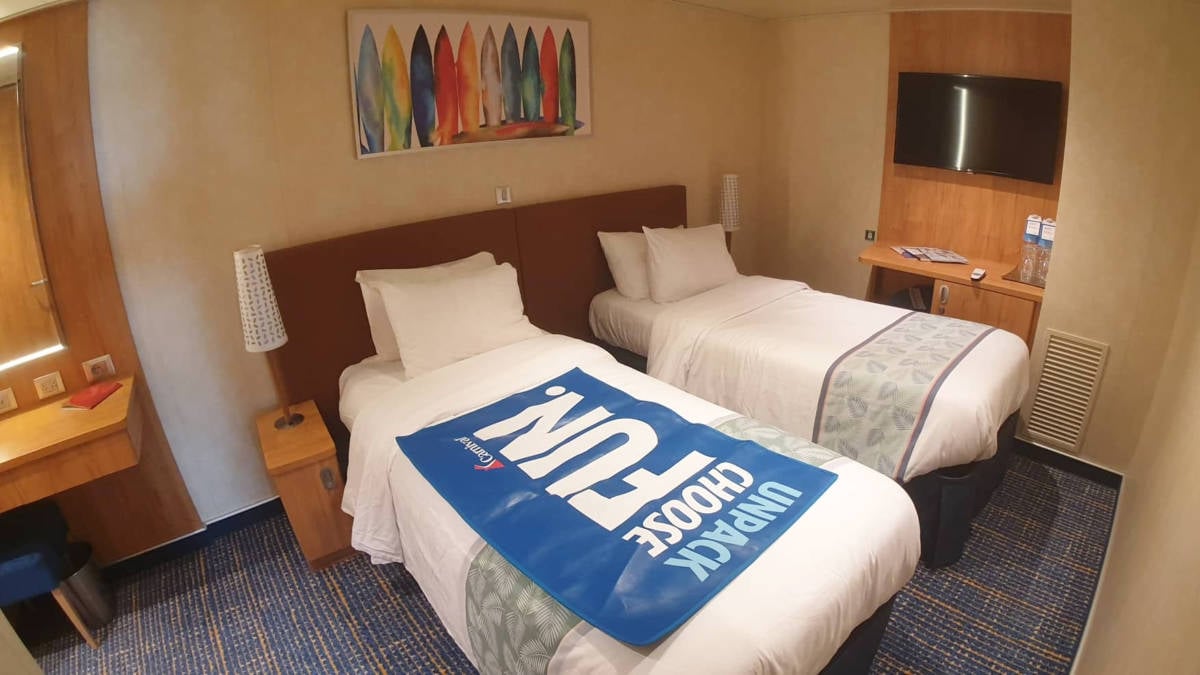
In February 2025, Carnival instituted its first-ever structural restrictions regarding where minors could sleep in relation to their guardians. That initial framework laid the groundwork for the more aggressive spatial and numerical limits introduced in the October 2026 update. The cruise line realized that physical distance between guardians and minors was a primary catalyst for nocturnal disturbances, as unsupervised teens utilized distant cabins as operational bases for late-night pranks, hallway congregations, and unauthorized gatherings.
Comparative Industry Benchmarks
Carnival is not alone in grappling with these challenges. Across the broader cruise landscape—including major players like Royal Caribbean International, Norwegian Cruise Line, and Celebrity Cruises—management teams have been forced to re-evaluate legacy policies.
- Royal Caribbean: Enforces strict policies requiring guests booking a stateroom to be at least 21 years of age, unless accompanied by a parent or legal guardian who is 21 or older. Unaccompanied minors are strictly forbidden from booking cabins without a supervising adult present in the same or adjacent room.
- Norwegian Cruise Line: Maintains a similar 21-year-old age requirement for primary stateroom occupants, with strict enforcement of parental supervision policies during evening hours.
By moving to a strict three-cabin separation limit and a 1:5 chaperone ratio, Carnival has effectively positioned itself at the vanguard of stringent corporate governance regarding youth travel at sea.
Official Statements and Industry Reactions
To date, Carnival Cruise Line executive leadership has maintained a measured, operational posture regarding the policy updates. Rather than framing the changes as a punitive reaction to bad behavior, corporate communications have consistently emphasized guest safety, comfort, and the preservation of the holistic family vacation experience.
However, industry analysts and seasoned travel agents note a profound subtext to the modifications. Cruise forums, travel advisory networks, and passenger advocacy groups have bubbled with commentary following the announcement. While multi-generational families accustomed to close supervision have largely welcomed the changes as a commonsense step toward restoring peace in public corridors, organizers of large youth groups and collegiate travel blocks have expressed concern over the soaring costs associated with the new 1:5 chaperone requirement.
Travel advisors have reported an influx of inquiries from clients attempting to modify existing bookings or understand how the rules apply to grandfathered reservations created prior to the October 1, 2026, cutoff date. Because the policy explicitly applies only to bookings generated on or after that date, voyages booked earlier remain governed by legacy parameters—a grandfathering clause designed to prevent immediate chaos in pre-existing travel pipelines.
The Catalyst for Change: Behavioral Incidents and Legal Pressures
While corporate discretion has kept Carnival from issuing an overt, point-by-point justification linking the policy updates to specific behavioral infractions, industry observers and maritime experts point to an undeniable accumulation of rowdiness, vandalism, and safety violations onboard.
The Problem of Onboard Rowdiness
Despite comprehensive organizational Codes of Conduct, passenger reports across social media and cruise-centric message boards have frequently highlighted the disruptive behavior of unsupervised teens. Common complaints include:
- Late-night hallway sprinting and loud disturbances that disrupt sleeping passengers.
- The theft or vandalism of personalized stateroom door decorations.
- Reckless physical stunts, including racing through public atriums, elevator tampering, and unsafe behavior around pool decks.
- Inappropriate utilization of open-air balconies, creating severe safety and liability hazards.
The Legal Catalyst: Carnival Jubilee and Federal Litigation
The breaking point for public scrutiny—and arguably the legal impetus for heightened operational oversight—crystallized in mid-2025. In June of that year, a deeply troubling incident aboard the flagship Carnival Jubilee made national headlines. According to legal filings, two teenage passengers were allegedly harassed and subjected to targeted intimidation by a pack of unruly young cruisers. The confrontation rapidly escalated from verbal abuse into physical violence, exposing glaring gaps in immediate security intervention and onboard containment protocols.
The fallout culminated in a federal lawsuit filed on March 31, 2026, against Carnival Cruise Line. The plaintiffs alleged gross negligence and an inadequate security response to onboard violence, forcing the corporate legal and risk-management departments to scrutinize every vector of minor supervision.
Legal experts suggest that tightening the Minor Guest Policy is a calculated risk-mitigation strategy. By legally binding minors within a three-cabin radius of an adult guardian aged 25 or older, and by enforcing a rigorous 1:5 chaperone ratio for groups, Carnival drastically curtails the "blind spots" where unsupervised youths traditionally congregate to engage in illicit or dangerous behavior. In the event of future litigation, these stringent internal protocols provide the cruise line with a robust defense, demonstrating proactive corporate duty of care.
Future Outlook: What the New Policy Means for the Future of Cruising
As the October 1, 2026 implementation date approaches, the cruising public is bracing for a new era of administrative compliance at sea. For everyday vacationers, the impacts will manifest in subtle yet noticeable ways:
- Stateroom Selection Limitations: Families booking cabins for mixed-age groups will no longer enjoy absolute freedom in selecting rooms across disparate decks. Advance booking strategies will require careful mapping of cabin inventory to ensure compliance with the three-room proximity rule.
- Increased Group Costs: Organizations planning youth trips, sports team celebrations, or large family reunions must budget for significantly higher adult chaperone counts, transforming the financial architecture of group cruising.
- Calmer Public Spaces: The ultimate goal of Carnival’s policy overhaul is the reclamation of public tranquility. By tightening the leash on unsupervised youth, the cruise line hopes to re-establish a harmonious environment where families, couples, and solo travelers can enjoy their voyages without the disruption of unruly peer groups roaming unchecked through the corridors.
Ultimately, Carnival Cruise Line’s updated Minor Guest Policy reflects a maturing industry forced to adapt to shifting social dynamics and heightened liability landscapes. While the days of unfettered teenage independence at sea are drawing to a close, these measures promise a safer, more orderly, and more enjoyable maritime experience for the millions of travelers who step aboard Carnival’s Fun Ships in the years to come.