








Executive Overview
Pittsburgh, Pennsylvania, is a city forged in the fires of heavy industry, defined by its iconic steel bridges, steep hills, and the indelible soot stains of a manufacturing heyday that once powered the American economy. Founded in 1758 at the confluence of the Allegheny, Monongahela, and Ohio rivers, the "Steel City" is decidedly old by American standards. Yet, beneath its rugged industrial exterior lies a vibrant, deeply rooted literary heritage that rivals any cultural capital in the United States.
While tycoons like Andrew Carnegie built an extensive network of free public libraries that democratized knowledge for the city’s working class, Pittsburgh quietly birthed and nurtured some of the most influential literary figures in American history. From the groundbreaking social journalism of Nellie Bly and the theatrical mastery of August Wilson to the pioneering environmentalism of Rachel Carson and the mystery innovations of Mary Roberts Rinehart, Pittsburgh has long been a crucible for exceptional storytelling.
Today, this legacy is experiencing a renaissance. Former steel mills, neighborhood blocks, and magnates’ estates have been meticulously repurposed into dynamic art spaces, house museums, and digital archives. For bibliophiles, historians, and cultural tourists alike, Pittsburgh offers an immersive literary pilgrimage. This investigation explores the historic landmarks, preserved homesteads, and cultural institutions that keep the city’s profound literary legacy alive, mapping how the grit of the Rust Belt continues to inspire generations of writers.
Detailed Chronology: From Industrial Boom to Modern Literary Landmarks
Pittsburgh’s literary evolution mirrors its rapid economic expansion and subsequent cultural transformation. The city’s narrative is best understood through a chronological exploration of the key figures who shaped its literary landscape and the physical landmarks that preserve their memories.
1. The Late 18th to Early 20th Century: Foundations and the Mystery Pioneer
Long before the mid-century poetic movements, Pittsburgh’s North Side—then an independent municipality known as Allegheny City—was quietly producing genre-defining authors.
- Mary Roberts Rinehart (1908–1954): Often celebrated as the "American Agatha Christie," Rinehart penned 60 books that sold upwards of 10 million copies, popularized the ubiquitous mystery trope "the butler did it," and created the costumed villain The Bat, which heavily influenced Bob Kane’s creation of Batman. Growing up at 954 Beech Avenue in a mid-Victorian house now listed on the National Register of Historic Places, Rinehart wrote her debut novel, The Circular Staircase. Later, her estate in Glen Osborne became the inspiration for what is now the Mary Roberts Rinehart Nature Park, featuring a StoryWalk trail and fairy-house installations.
- Gertrude Stein (Born 1874): Just a block away from Rinehart’s former home, at 850 Beech Avenue, avant-garde icon Gertrude Stein was born in 1874. Although her family departed for Europe when she was an infant, Stein proudly memorialized her birthplace, famously writing in her 1933 autobiography that she was "firmly born in Allegheny, Pennsylvania." Today, a plaque marks the white-painted row house in the Allegheny West Historic District, just blocks from City Books—Pittsburgh’s oldest operating used bookstore, which hosts annual celebrations honoring Stein’s literary innovations.
2. The Mid-20th Century: The Industrial Crucible and Social Realism
As the city’s mills roared through the industrial boom, writers turned their lenses toward both the natural environment and the complex social realities of working-class American life.
- Rachel Carson (Graduated Chatham University, 1929): Raised in the northeastern suburb of Springdale, Carson developed an intimate relationship with the natural world along the Allegheny River. After studying at Chatham University, she went on to pen Silent Spring (1962), a seminal work that exposed the devastating ecological impacts of synthetic pesticides and catalyzed the modern environmental movement. Today, the Rachel Carson Homestead offers docent-led tours, while the 46-mile Rachel Carson Trail and a dedicated yellow suspension bridge span the city’s geography, permanently linking her name to Pittsburgh’s infrastructure.
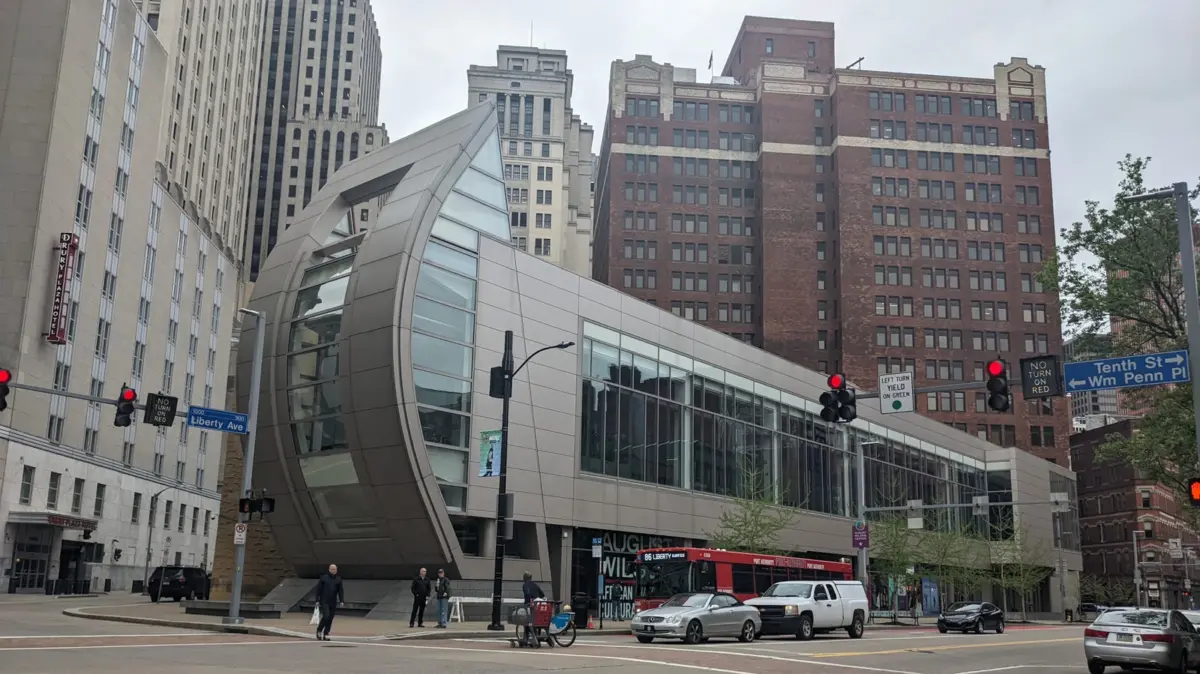
- August Wilson (1945–2005): Undoubtedly the city’s most iconic native playwright, Wilson chronicled the Black American experience through his celebrated 10-play "Century Cycle" (also known as the Pittsburgh Cycle), nine of which are set in the Hill District where he was raised. Today, his childhood home has been restored to its 1950s aesthetic as the August Wilson House, hosting community block parties and theatrical productions. Downtown, the August Wilson African American Cultural Center houses The Writer’s Landscape, a permanent, free-to-visit interactive exhibition featuring a replica of his home office and a café inspired by his neighborhood haunts.
3. The Contemporary Era: Modern Settings and Cinematic Adaptations
In the late 20th and early 21st centuries, Pittsburgh transitioned from a heavy manufacturing center to a hub for education, technology, and cinematic storytelling, serving as the atmospheric backdrop for defining modern novels.

- Michael Chabon (Early 1980s): While studying at the University of Pittsburgh, Chabon found creative fuel in the neighborhoods of Oakland, penning his breakthrough debut novel, The Mysteries of Pittsburgh (1988). Literary tourists can still trace the footsteps of his characters through the Hillman Library, the Bellefield Boiler Plant (the "Cloud Factory"), Schenley Park, and the Cathedral of Learning.
- Stephen Chbosky (Late 20th Century): Growing up in Upper St. Clair, Chbosky channeled his adolescent experiences into the coming-of-age classic The Perks of Being a Wallflower (1999). Fans frequently retrace the book and film’s most iconic scenes: driving through the Fort Pitt Tunnel while playing David Bowie’s "Heroes," visiting the West End Overlook for sweeping skyline views, and attending midnight cult screenings of The Rocky Horror Picture Show at Row House Cinema in Dormont.
Supporting Context & Metrics
To fully comprehend the depth of Pittsburgh’s literary footprint, one must examine the institutional investments and preservation metrics that sustain its cultural ecosystem.
- Carnegie Library System: Funded by industrialist Andrew Carnegie beginning in the late 19th century, Pittsburgh boasts a foundational public library network comprising 19 locations. This infrastructure provided early access to literature for working-class immigrants and homegrown authors alike.
- Literary Archival Holdings: The University of Pittsburgh’s Hillman Library houses extensive special collections, including the complete Mary Roberts Rinehart Papers, which have been fully digitized and made accessible to global scholars. Similarly, the Hill District Digital History Initiative maintains structured, multi-stop walking tours documenting August Wilson’s formative geography.
- Geographic and Trail Integration: Pittsburgh uniquely integrates literature into its physical layout. The Rachel Carson Trail spans 46 miles across Allegheny County, making it one of the longest urban-adjacent hiking trails in the region. Furthermore, the city honors its literary and cultural titans through its bridges—designating spans for Carson, baseball legend Roberto Clemente, and pop artist Andy Warhol.
- Accessibility and Tourism Metrics: Major cultural hubs, such as the August Wilson African American Cultural Center and the Rachel Carson Homestead, report rising heritage tourism numbers, drawing thousands of international readers, educators, and theater enthusiasts annually. Notably, key public galleries, including The Writer’s Landscape, maintain open-door, free-admission policies to ensure broad community access.
Official Statements and Cultural Perspectives
City planners, preservationists, and academic leaders emphasize that Pittsburgh’s literary landmarks are not merely dusty relics of the past, but active catalysts for modern urban revitalization.
Dr. Lawrence Glasco, a prominent historian specializing in Pittsburgh’s African American history and a close collaborator on August Wilson preservation efforts, noted the vital connection between the author’s physical environment and his creative output:
"August Wilson did not just write about the Hill District; he absorbed its rhythm, its speech patterns, its struggles, and its joys. When we restore the August Wilson House, we are preserving an artistic incubator that proves world-class literature can emerge from the very heart of working-class urban communities."
Local preservation advocates point out that adaptive reuse has been central to honoring figures like Mary Roberts Rinehart and Gertrude Stein. A spokesperson for the Allegheny West Historic District Conservancy remarked:
"Our 19th-century Victorian and row house architecture provides a living backdrop to American literary history. Visitors walking down Beech Avenue are treading the same sidewalks where Rinehart crafted psychological mysteries and where Stein spent her earliest infancy. Maintaining these structures is an essential investment in our collective cultural memory."
Environmental educators at the Rachel Carson Homestead Association emphasize the ongoing relevance of Carson’s scientific advocacy in her hometown:
"Rachel Carson taught the world to look closer at nature, to question unchecked industrial output, and to understand our fragile ecosystem. By preserving her childhood home and maintaining the Sensory Walking Trail, we aim to spark that exact same scientific curiosity in the next generation of environmental stewards."
Future Outlook
As Pittsburgh continues its transition from a post-industrial rust-belt city into a thriving hub for eds-and-meds, technology, and the arts, its literary infrastructure is poised for continued expansion.
Future urban planning initiatives aim to further institutionalize the city’s literary tourism routes. Proposals include expanding digital walking tour applications for the Hill District and Oakland districts, enhancing archival accessibility through university partnerships, and increasing public-private funding for neighborhood arts festivals—such as the annual May block party celebrating August Wilson’s birthday.
Moreover, independent institutions like City Books and Row House Cinema demonstrate that grassroots cultural spaces are thriving alongside major academic archives. By maintaining free public access to exhibits like The Writer’s Landscape and preserving historic homesteads along the Allegheny River, Pittsburgh ensures that its literary legacy remains dynamic, accessible, and deeply embedded in the daily life of its residents.
For the modern reader, writer, and historian, Pittsburgh stands as a living testament to the power of place—proving that the same grit and determination that once built America’s industrial empire can equally forge a timeless and enduring literary tradition.