









Executive Overview
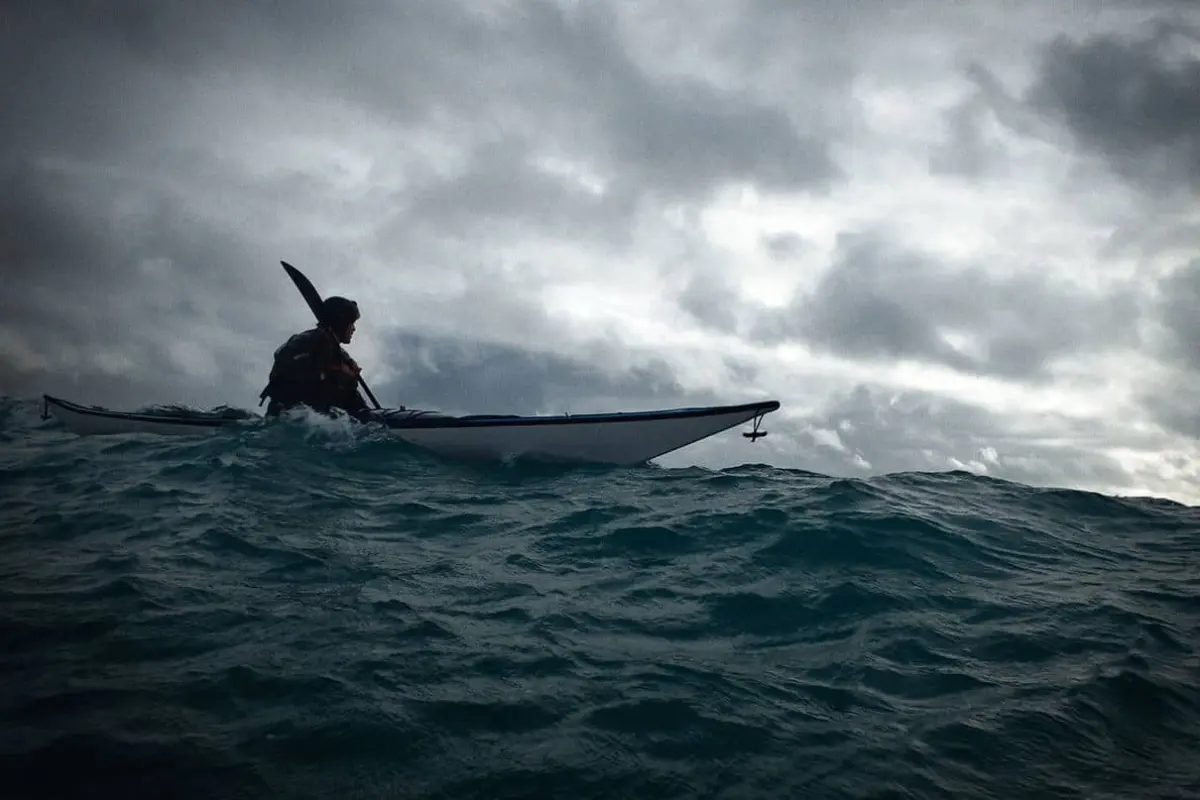
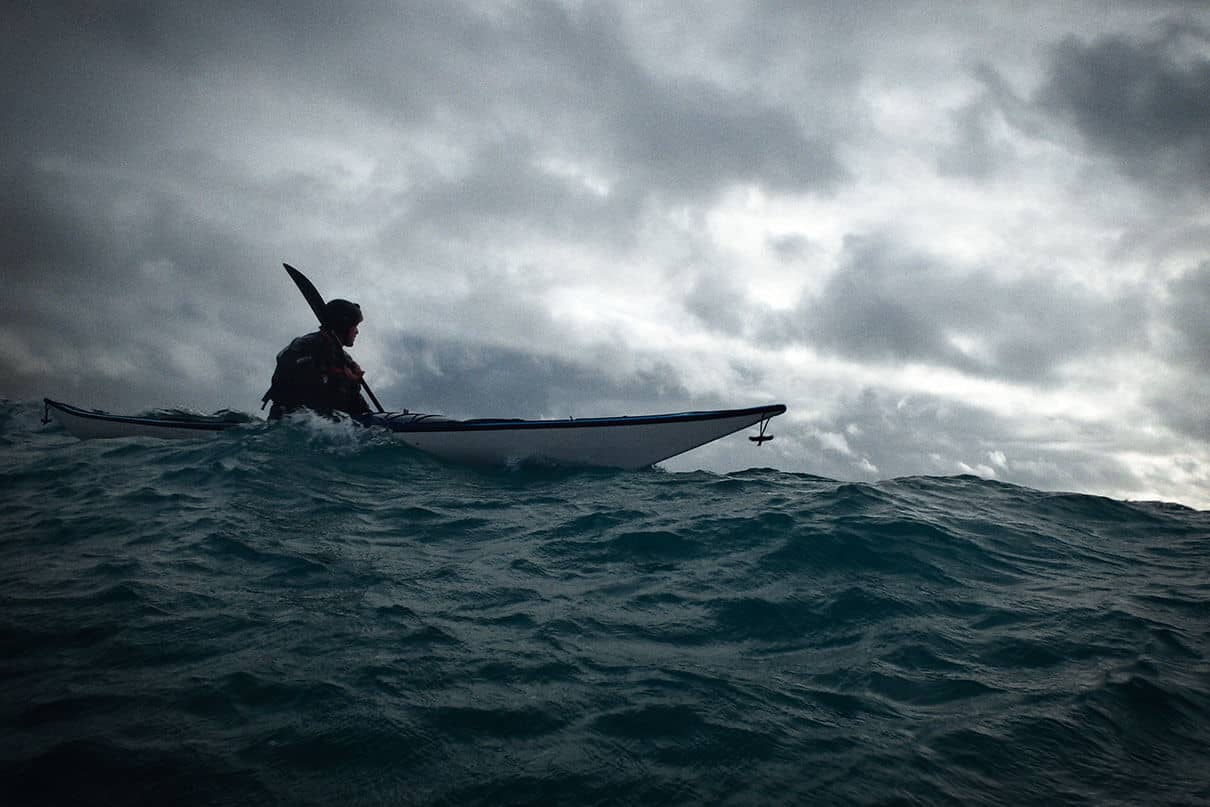
You are standing on a gravel beach at dawn, neoprene gloves already damp, eyeing a menacing swell. The morning sky is split between blinding sun and retreating banks of coastal fog. Ahead lies your most formidable objective of the trip: a committing navigation around a notoriously exposed headland—perhaps Cape Caution, the Brooks, or Cascade Head. Alternatively, you might be hunkered down in a protected cove, steeling yourself for a multi-mile open-water crossing, weighing the risks of Queen Charlotte Strait, the mouth of the Columbia River, or the mercurial waters of Baja’s Loreto.
Before reaching the shoreline, you performed the rituals of the modern expedition leader. You listened to marine forecasts, scrutinized nautical charts, cross-referenced current tables, and calculated tide heights. You likely checked at least four specialized digital platforms: Windy for localized wind modeling, Surf-Forecast for swell direction and wave energy, DeepZoom for micro-current anomalies, and Weather Underground for hourly barometric trends.
Yet, as you zip your spray skirt and seat yourself in the cockpit, a gnawing uncertainty persists. Is the tactical plan truly sound? Will the fog roll back in mid-crossing, blinding you to navigation markers? Will thermal winds jack up faster than predicted, turning a manageable chop into breaking whitecaps? Are there submerged hazards that this specific swell height and tide cycle will conspire to render impassable?
If you had consulted Dr. Samantha Kleinberg before embarking on this digital data-gathering binge, you would realize a counterintuitive truth: you would have been far better off with significantly less information.
In a world drowning in real-time metrics, hyper-local radar loops, and constant algorithmic updates, wilderness travelers, outdoor leaders, and high-stakes decision-makers are suffering from the paralyzing effects of information overload. Rather than increasing safety, the relentless pursuit of more data is quietly eroding our ability to make sound, rational judgments when it matters most.
Detailed Chronology: The Anatomy of a Modern Coastal Decision
To understand how modern adventurers arrive at the edge of paralysis, we must examine the step-by-step evolution of expedition planning in the digital age.
Phase 1: The Gathering Storm of Data
Historically, wilderness travel was bounded by information scarcity. Mariners and mountaineers relied on rudimentary barometer readings, shipping forecasts broadcast via static-heavy VHF radios, and direct visual observation of the horizon.

Today, the pendulum has swung violently to the opposite extreme. The smartphone has transformed the campsite into a command center. A typical day-of-launch chronology for a sea kayaker or backcountry explorer now unfolds across multiple digital touchpoints hours before touching water:
- 05:00 AM: Reviewing satellite weather loops and convective outlooks.
- 05:30 AM: Cross-referencing wind vector models across competing meteorological engines.
- 06:00 AM: Analyzing hourly tidal flow vectors and bathymetric charts for hidden reef interactions.
- 06:30 AM: Seeking peer validation on online paddling forums or messaging apps, soliciting real-time local knowledge from strangers who may or may not understand the specific capabilities of the group.
Phase 2: The Fall into System 1 Thinking
When faced with consequential wilderness decisions, outdoor leadership curricula universally advocate for a structured pause: assess the environment, evaluate the group dynamics, review the route, and weigh subjective versus objective risks.
This methodology is fundamentally designed to act as an intentional speed bump. It resists the human compulsion to charge ahead blindly simply because "that was the original plan." In mountaineering, this psychological trap is known as summit fever; in alpine skiing, it is the dangerous allure of untracked powder luring recreationalists straight into avalanche terrain.
Nobel Prize-winning psychologist Daniel Kahneman famously categorized human cognition into two distinct systems:
- System 1: Fast, automatic, instinctive, emotional, and heavily prone to cognitive biases and errors.
- System 2: Slow, rational, deliberate, effortful, and analytical.
True System 2 processing requires temporal space, dispassionate analysis, and relevant data. Crucially, it is meant to be executed in a calm environment—such as inside a tent on a sheltered beach—not frantically rafted up on an exposed, surging coastline while the barometer plummets and whitecaps begin to form.
Phase 3: The Breaking Point at the Shoreline
As the timeline progresses from digital preparation to physical execution, the expedition encounters two distinct systemic failures inherent to wild environments.
First, despite our digital tools, wilderness environments are defined by chronic information gaps. Broad meteorological forecasts cannot definitively answer whether the micro-window between morning fog burn-off and afternoon wind acceleration will be wide enough for a safe crossing.
Second—and far more insidiously—we are easily bamboozled by irrelevant variables disguised as critical data points. When the human mind is overwhelmed by competing streams of information, it loses its ability to filter signal from noise.
Supporting Context & Metrics: The Science of Less Is More
The cognitive trap facing paddlers and wilderness explorers has been rigorously mapped by psychological research. In their landmark book Less Is More, cognitive scientists Dr. Samantha Kleinberg (Stevens Institute of Technology) and Dr. Jessecae Marsh investigated how information architectures shape human decision-making quality.
Their findings challenge foundational assumptions about education and communication. Kleinberg and Marsh discovered that simple, highly targeted information yields optimal decision-making. The moment extraneous, tangential, or surplus information is introduced into a decision matrix, overall judgment quality drops precipitously.
[Zero Information] ──> High Error Rate (Guesswork)
[Too Much Data]    ──> High Error Rate (Paralysis & Confusion)
[Targeted Data]    ──> Optimal Decision-Making (Clarity)
According to Kleinberg’s empirical studies, the absolute worst decisions are consistently made by two groups: those who sought out the most complex, multi-variable information architectures, and those who delusionally believed they required no information at all.
The Danger of the Surplus Variable
"What’s really remarkable is that even a tiny amount of surplus information has a big negative effect on our decision-making," Kleinberg writes. "If you get too much information, your decision-making quickly becomes as bad as if you’d gotten no information at all."
To illustrate this in a clinical setting, Kleinberg points to medical communication. When physicians inform patients that excessive sodium intake damages cardiovascular health, but needlessly tack on auxiliary facts—such as the physiological mechanisms of how drinking water reduces thirst—patients frequently experience cognitive fatigue. The extraneous detail interferes with their capacity to process and execute simple, healthy dietary changes.
The underlying issue is not merely that humans are overwhelmed by raw quantitative volume. Rather, we struggle fundamentally to isolate which components of an information model deserve our attention.
Applying the Bias to Wilderness Expeditions
It is effortless to see how this cognitive vulnerability manifests on a coastal expedition. Consider the internal rationalizations outdoor enthusiasts use to justify pushing forward into marginal conditions:
- "I have to be back at my desk job on Monday morning."
- "The campsite we are aiming for tonight has incredible sunset views."
- "Our original itinerary explicitly stated we would reach milestone X today."
None of these personal, logistical, or emotional desires bear any direct physical relevance to whether open-water crossing conditions fall safely within the collective technical capacity of the group. Yet, because these factors are woven into the grand narrative of the trip plan, our brains fail to recognize them as hazardous, extraneous noise.
Official Insights & Expert Perspectives
Dispassionate medical professionals advising patients can struggle to streamline information; wilderness leaders attempting to manage a tired, eager team face an exponentially steeper challenge. When a trip leader desperately wants to reach a picturesque island destination, objective data filtering becomes deeply compromised by personal motivation.
The Checklist Protocol
To combat this cognitive vulnerability, field practitioners rely on systematic reduction. A veteran strategy used by seasoned expedition leaders is the deployment of minimalist, laminated physical checklists stored inside an easily accessible day hatch.
Rather than scrolling through live web portals on a bouncing deck, leaders evaluate a strict triad of core parameters:
- Immediate environmental vectors: Wind velocity, surface currents, fog density, swell height, and energy.
- Human factors: Physical and psychological strength of the group.
- Trend analysis: Are local weather and sea conditions actively improving or deteriorating?
"If you give people the opportunity to overthink, even when they explicitly ask for additional information, things go poorly," notes Kleinberg.
Pattern Recognition and Expert Intuition
For elite practitioners, another powerful—though elusive—cognitive mechanism comes into play. Psychologists define this as Recognition-Primed Decision-Making (RPD), while veteran National Outdoor Leadership School (NOLS) instructor Ian McCammon refers to it simply as pattern recognition.
Individuals possessing extensive, domain-specific experience—such as veteran wilderness guides, structural firefighters, and high-risk financial traders—frequently bypass slow, analytical System 2 processing entirely. Instead, they intuitively recognize an emerging configuration of environmental cues and instantly execute the appropriate tactical response.
"Typically, the expert is unaware of the exact pattern that triggers their response; they just know it when they see it," McCammon wrote in an outdoor risk management journal.
An expert’s subconscious mind rapidly indexes a vast internal database of historical experience, sorting subtle anomalies, extrapolating forward trajectories, and instantly signaling what action must be taken.
However, pattern recognition carries strict boundaries. First, the individual must be a genuine expert within that exact discipline. Second, expertise is notoriously non-transferable. A world-class alpine mountaineer possesses little intuitive pattern recognition for managing tidal rapids in a sea kayak. Similarly, the rapid-reading skills of a whitewater kayaker do not cleanly translate to the complex, multi-directional swell dynamics of the open ocean.
Future Outlook: Navigating the Noise in an Over-Connected Wilderness
As consumer satellite communication devices (such as Garmin inReach and Starlink Mini units) become ubiquitous in remote expeditions, the boundary between civilization’s constant data stream and the wild frontier is dissolving. Weather models are updating faster, apps are becoming more granular, and the temptation to continuously refresh forecasts from the shoreline will only intensify.
Yet, the biological limitations of the human brain remain entirely unchanged.
For the modern adventurer standing on the beach and eyeing the swell, the prescription moving forward is clear: Keep it rigorously simple.
If you are a certified expert in the specific marine environment you inhabit, strip away the digital noise, quiet your devices, and trust your hard-earned intuition. If you are not an expert, streamline your intelligence-gathering. Rely on rapid, verified, and strictly relevant metrics. Think critically, but fiercely resist the urge to overthink.
Strip your tactical decisions down to the bare essentials. When you finally return to civilization, a team of behavioral psychologists will applaud your restraint. After all, just because a digital ecosystem offers endless data doesn’t mean it’s good for your survival—much like a tub of ice cream, more is rarely the correct prescription.
Published in collaboration with archival insights from Paddling Magazine.