





Executive Overview
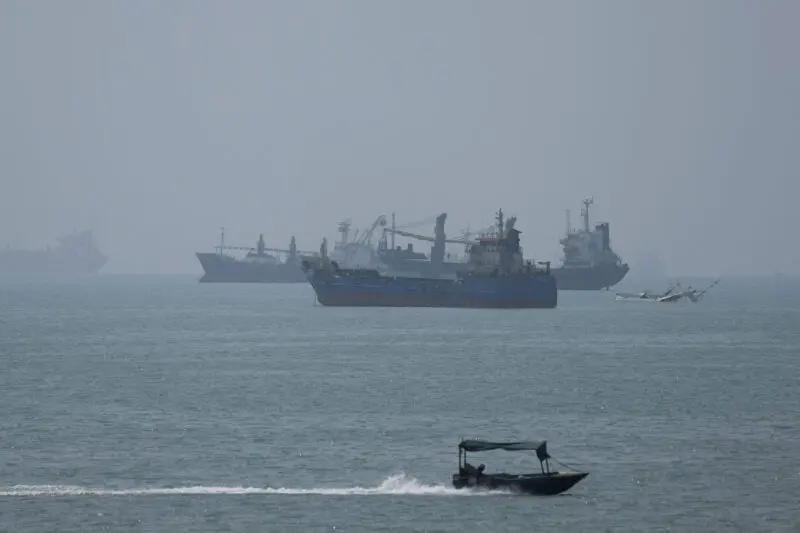
The Strait of Hormuz, the world’s most critical maritime energy chokepoint, is experiencing a dramatic and dangerous contraction in commercial shipping traffic. According to real-time shipping and commodity data, the number of visible commodity vessels transiting the narrow waterway plummeted to a mere five per day over the final weekend of August 2026. This stark decline comes as commercial shipowners and operators exercise extreme caution in response to a volatile mix of drone and missile attacks, a tightening U.S.-led naval blockade against Iran, and direct military clashes between American forces and Iranian assets.
While official tracking systems paint a picture of an empty waterway, maritime intelligence analysts warn that the actual volume of shipping may be higher. To survive transit through these contested waters, an increasing number of merchant vessels are engaging in "dark transits"—switching off their Automatic Identification Systems (AIS) to evade detection and targeting by hostile forces. This tactic, once reserved for the "shadow fleet" bypassing international sanctions, has now been adopted by mainstream commercial operators, including major crude carriers, as a desperate self-defense measure.
The immediate catalyst for this weekend traffic collapse is a rapid escalation in kinetic actions. Over the span of a single week, three separate commercial vessels were targeted within the strait, culminating in a projectile strike on an inbound tanker. In response, U.S. Central Command (CENTCOM) forces launched targeted airstrikes against Iranian missile launchers on Larak Island, marking the first direct American strikes on Iranian territory since late July. With the U.S. Navy actively enforcing a strict blockade, redirecting dozens of ships, and boarding suspicious vessels, the Strait of Hormuz has effectively transformed from a commercial highway into an active theater of naval warfare.
Detailed Chronology of the Escalation (August 24–31, 2026)
The collapse of visible shipping traffic over the weekend of August 29–30 was the culmination of a week marked by intensifying military engagements, maritime strikes, and aggressive blockade enforcement. Below is a detailed chronological breakdown of the events that brought the Strait of Hormuz to a near-standstill.
[Aug 24-27: Two Unspecified Attacks] ──> [Aug 28: VLCC Goes Dark] ──> [Aug 29: Tanker Struck & U.S. Larak Island Strikes] ──> [Aug 30: Traffic Drops to 5 Ships/Day]The Prelude of Unseen Peril (August 24–27, 2026)
During the early and middle parts of the week, regional maritime security agencies reported a palpable rise in electronic interference, GPS spoofing, and aggressive patrolling by the Islamic Revolutionary Guard Corps Navy (IRGCN). Two separate, lower-profile attacks on commercial vessels were reported by regional security firms, raising anxiety levels among international insurers and shipowners. By mid-week, war risk insurance premiums for transiting the Persian Gulf began to climb rapidly, prompting several boards of directors to advise their fleets to avoid the region or prepare for emergency security protocols.
Friday, August 28, 2026: The "Dark" Exodus
On Friday, a total of 14 vessels were recorded transiting the Strait of Hormuz. However, this number belied the severe security maneuvers taking place behind the scenes. Among the vessels exiting the Persian Gulf was a Very Large Crude Carrier (VLCC) laden with approximately two million barrels of Qatari crude oil. As the massive tanker approached the narrowest bottleneck of the strait, its crew disabled its AIS transponder, disappearing from global commercial tracking screens.
This tactical "going dark" by a mainstream, state-aligned cargo vessel underscored the severity of the threat environment; operators were no longer willing to trust that neutral flags or non-Iranian cargo would guarantee safe passage.

Saturday, August 29, 2026: The Third Strike and the Larak Island Response
On Saturday, an inbound tanker transiting the northern lanes of the Strait of Hormuz was struck by an unknown projectile. The United Kingdom Maritime Trade Operations (UKMTO) received emergency communications from the vessel, which reported localized damage but managed to continue its journey under close watch. This incident marked the third confirmed attack on commercial shipping within the strait in a seven-day period, signaling a systematic effort by regional actors to disrupt the flow of global trade.
Hours after the strike, the conflict escalated into direct state-on-state violence. U.S. military assets, acting under standing rules of engagement to protect international shipping lanes, launched a precision strike against two active Iranian missile and rocket launchers situated on Larak Island. This highly strategic landmass sits directly at the throat of the Strait of Hormuz, overlooking the primary shipping lanes. The strikes destroyed the launchers, which U.S. intelligence identified as the source of the immediate threat to inbound commercial vessels.
Sunday, August 30, 2026: The Blockade Tightens and Traffic Evaporates
By Sunday, the psychological and physical deterrents had taken full effect. Visible commercial transits fell to a historic low of just five vessels. According to data compiled by the commodity intelligence firm Kpler, the weekend’s visible traffic was restricted almost entirely to smaller, specialized vessels.
These included two liquefied petroleum gas (LPG) carriers. One of these vessels opted to hug the Iranian coastline to secure safe passage through local coordination, while the other disabled its AIS transponders under the cover of darkness, slipping out of the strait en route to its destination in India.
Simultaneously, U.S. Central Command released official data regarding its ongoing blockade operations in the Arabian Sea and the Gulf of Oman. CENTCOM confirmed that naval forces, including the guided-missile destroyer USS Delbert D. Black (DDG 119) and embarked MH-60S Sea Hawk helicopters, had aggressively enforced shipping restrictions designed to choke off clandestine Iranian weapons shipments and illicit oil exports.
Supporting Context & Maritime Metrics
To understand the scale of the current crisis, it is essential to analyze both the physical geography of the Strait of Hormuz and the operational metrics of the current U.S. naval blockade.
| Metric / Parameter | Operational Value / Status | Impact on Global Markets |
|---|---|---|
| Normal Daily Transit Volume | ~20–30 large commercial vessels | Carrier of 20%+ of global petroleum |
| Weekend Transit Volume (Aug 29–30) | 5 visible vessels per day | Immediate spike in regional spot freight rates |
| CENTCOM Blockade Redirects | 83 commercial vessels | Disruption of suspected sanction-busting routes |
| Vessels Disabled/Boarded | 3 disabled; multiple boarded | Extreme caution forced on regional operators |
| Primary Chokepoint Width | 21 miles (shipping lanes are 2 miles wide) | Vulnerability to land-based shore-to-ship missiles |
The Mechanics of "Dark Transits"
The practice of disabling AIS transponders is governed strictly by the International Maritime Organization (IMO) under the International Convention for the Safety of Life at Sea (SOLAS). Normally, turning off AIS is considered a major safety violation because it drastically increases the risk of mid-sea collisions, particularly in congested waterways like the Strait of Hormuz.
However, SOLAS guidelines allow captains to deactivate the system if they have reasonable grounds to believe that keeping it active compromises the safety or security of their ship.
In the current environment, keeping AIS active provides hostile shore-based radar installations and drone operators with real-time targeting data, including:
- Vessel name and MMSI number
- Precise GPS coordinates, speed, and heading
- Cargo type and destination
By going dark, tankers force hostile forces to rely on visual identification or active radar scanning, both of which are more difficult to coordinate, especially at night or during heavy dust storms. The downside is that these "dark" vessels become invisible to friendly naval forces, making it far more difficult for U.S. and allied warships to provide rapid assistance in the event of an attack.
The Strategic Importance of Larak Island
Larak Island has long been a heavily fortified outpost for the IRGCN. Situated just off the coast of Bandar Abbas, the island sits adjacent to Qeshm Island and Hormuz Island. Its elevated terrain provides an unobstructed line of sight over both the inbound and outbound traffic separation schemes of the Strait of Hormuz.
By placing mobile anti-ship missile systems (such as the Qader or Gadir cruise missiles) and loitering munition launchers on Larak Island, Iranian forces can strike any vessel in the strait within minutes of launch. The U.S. decision to strike these installations directly represents a significant escalation, shifting from defensive escort operations to active pre-emptive destruction of hostile offensive infrastructure.
Official Statements
The escalating crisis has drawn sharp responses from military commanders, maritime security agencies, and industry trade groups, highlighting the deep divide over the legality of the ongoing blockade and military strikes.
U.S. Central Command (CENTCOM)
In an official statement accompanied by operational footage from the Arabian Sea, CENTCOM detailed its enforcement of the blockade:
"As of August 30, 2026, CENTCOM forces, in coordination with international coalition partners, have redirected 83 commercial vessels determined to be operating in violation of established maritime security protocols, disabled 3 vessels actively resisting lawful orders, and conducted multiple non-compliant boardings. The United States Navy remains committed to preserving the free flow of commerce while denying hostile actors the ability to fund regional instability through illicit maritime networks."
United Kingdom Maritime Trade Operations (UKMTO)
The UKMTO issued a stark warning to all mariners operating in the Middle East Gulf and Gulf of Oman:
"UKMTO has noted a significant increase in maritime security incidents within the Strait of Hormuz and surrounding waters. Vessels transiting the area are advised to exercise extreme caution, maintain a vigilant lookout, and report any suspicious activity immediately. Operators should review their security plans and consider implementing non-visible transit protocols where appropriate."
Commercial Shipping Associations
A spokesperson for an international shipping coalition, representing major tanker owners, expressed deep concern over the lack of safe passage:
"The safety of our seafarers is paramount. We are facing a situation where one of the world’s primary energy arteries is becoming functionally impassable for civilian crews. While we understand the security imperatives of state navies, the presence of active blockades, boarding actions, and shore-to-ship projectile strikes makes the risk profile unacceptable for many standard commercial operations. We urge all parties to de-escalate immediately to prevent a catastrophic loss of life or an environmental disaster in the strait."
Future Outlook & Risk Assessment
The situation in the Strait of Hormuz is rapidly approaching a critical tipping point. The convergence of a drop in visible shipping, the widespread adoption of "dark transits," and direct military actions on Iranian soil suggests that the crisis will likely worsen before any stabilization occurs.
[Continued Blockade & Strikes]
              │
              ▼
[Insurance Premiums Skyrocket] ──> [Shippers Reroute via Africa] ──> [Global Energy Supply Shock]
1. The Economic and Energy Fallout
If the daily visible transit volume remains at or below five vessels for an extended period, global energy markets will experience severe supply disruptions. While some Gulf producers can divert a portion of their crude via overland pipelines to the Red Sea (such as Saudi Arabia’s East-West Pipeline), these alternatives lack the capacity to handle the full volume of Persian Gulf exports.
As a result:
- Crude Oil Price Spikes: Brent and WTI crude futures are expected to trade at a significant "geopolitical risk premium," potentially pushing prices toward multi-year highs.
- Refinery Bottlenecks in Asia: Major Asian economies—most notably India, China, Japan, and South Korea—are highly dependent on Middle Eastern crude and LPG. Prolonged disruptions will force these nations to draw down strategic reserves or seek more expensive supplies from West Africa, the North Sea, or the Americas.
- Soaring Insurance Costs: Underwriters are poised to declare the entire Persian Gulf a "no-go zone" for standard commercial policies, forcing shipowners to pay exorbitant war-risk surcharges that will ultimately be passed down to consumers.
2. The Risk of Maritime Collisions and Miscalculation
The surge in "dark transits" introduces a dangerous new operational risk to the Strait of Hormuz. Because the shipping lanes are narrow (only two miles wide in each direction, separated by a two-mile buffer zone), the risk of physical collisions between large, unlit tankers is high, particularly at night.
Furthermore, a "dark" vessel is highly vulnerable to misidentification. A U.S. or allied warship enforcing the blockade, or an Iranian coastal defense battery, could easily mistake a silent, non-broadcasting commercial tanker for a military vessel or an active threat, leading to a tragic friendly-fire or escalatory engagement.
3. Geopolitical Trajectory
The U.S. strike on Larak Island has set a new precedent for the conflict. By targetting sovereign Iranian territory in response to attacks on shipping, the United States has signaled that it will no longer restrict its defensive actions to international waters.
If Iran responds by deploying more sophisticated anti-ship assets, such as submarine-launched torpedoes or swarms of fast-attack explosive boats, the conflict could quickly expand beyond a localized blockade into a full-scale regional naval war. The international community now watches the Strait of Hormuz with bated breath, recognizing that the fate of global economic stability hangs on the decisions made by commanders patrolling these highly volatile waters.