






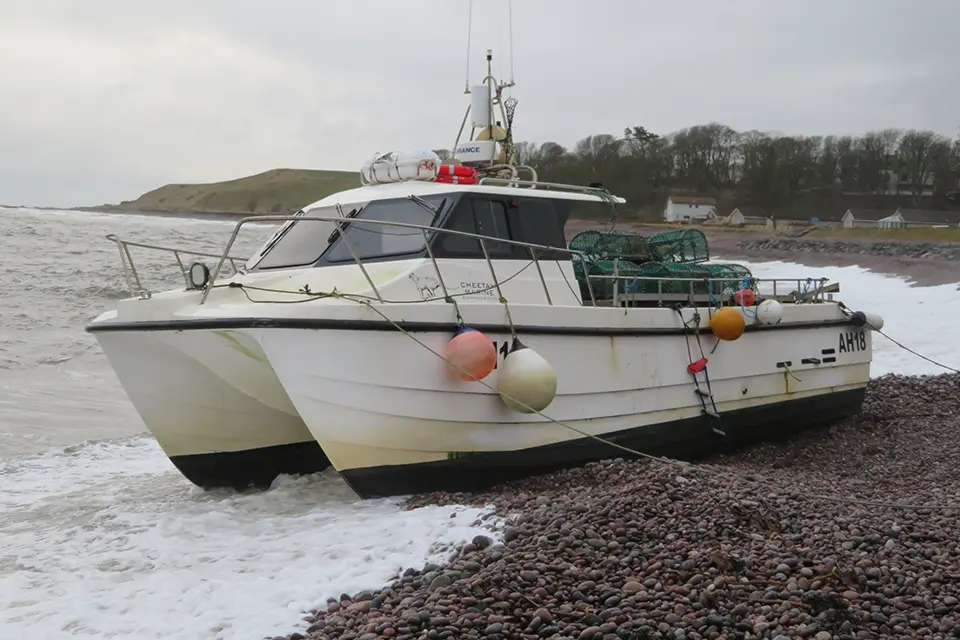
Published by: Marine Accident Investigation Branch (MAIB)
Date: August 20, 2026
Location: Southeast of Montrose, Scotland
Subject: Investigation Report into the Tragic Loss of Life Aboard the Sea Eagle (AH18)
Executive Overview
The Marine Accident Investigation Branch (MAIB) has officially released its comprehensive accident investigation report regarding a fatal man-overboard incident that occurred on December 20, 2025. The tragedy involved the Sea Eagle (AH18), a lone-operated creel fishing vessel operating in the North Sea waters approximately southeast of Montrose, Scotland. The incident, which resulted in one presumed fatality, highlights the severe, inherent risks faced by commercial fishers who operate single-handed vessels in treacherous marine environments.
The publication of this report brings to light the critical safety vulnerabilities associated with solitary maritime labor, particularly within the UK’s shellfish and creel fishing sectors. By dissecting the chain of events that led to the skipper entering the water—and the subsequent emergency response—the MAIB report aims to educate the maritime community, address systemic safety gaps, and push for vital operational reforms. This article provides an in-depth breakdown of the MAIB’s findings, explores the broader context of lone working within the fishing industry, details the safety recommendations issued, and outlines the urgent path forward for coastal safety governance.
Detailed Chronology of Events
While the full technical sequence of events is meticulously detailed in the official MAIB report, the timeline of the December 20, 2025 incident underscores the rapid, unforgiving nature of open-water accidents.
Preparation and Departure
On the morning of December 20, 2025, the Sea Eagle departed from its usual port to tend to a string of creels (fish traps) located southeast of Montrose. As a lone-operated vessel, the skipper—who also served as the sole crew member—bore the entire operational burden of navigating, hauling, baiting, and shooting the gear. Weather conditions in the North Sea during mid-December are notoriously volatile, characterized by low water temperatures, biting winds, and choppy seas that demand constant vigilance.
The Critical Incident
Investigators determined that the incident unfolded while the Sea Eagle was actively engaged in hauling or shooting creels. In single-handed operations, the physical demands of managing hauling machinery, ropes, and heavy wire-framed creels create a high-risk working environment. At a critical juncture during the deck operations, the skipper went overboard.
Because the vessel was operating in single-handed mode without automated man-overboard (MOB) detection systems or an active engine-kill switch tether linked to the operator, the Sea Eagle continued on its course or drifted away from the victim, leaving the skipper stranded in the frigid North Sea waters.

Executive Overview
The Emergency Response
Concern was raised when the Sea Eagle failed to return or check in at its expected time, prompting concerned shore contacts to alert Her Majesty’s Coastguard. A coordinated search and rescue (SAR) operation was immediately launched, involving lifeboats from the Royal National Lifeboat Institution (RNLI), rescue helicopters, and nearby commercial and fishing vessels.
Despite an exhaustive search grid deployed across the designated sector southeast of Montrose, adverse sea conditions and the passage of time hampered rescue efforts. The skipper was not recovered during the initial operational window, leading to the heartbreaking transition from a rescue operation to a recovery mission, and ultimately resulting in the official classification of the event as a presumed fatality.
Supporting Context & Metrics: The Danger of Lone Working in Fisheries
The tragedy involving the Sea Eagle is not an isolated event; rather, it underscores a persistent, systemic safety crisis within the UK commercial fishing industry. To fully understand the weight of the MAIB’s findings, it is necessary to examine the broader context of maritime safety metrics, particularly regarding single-handed operations.
The Predominance of Small and Single-Handed Vessels
The UK fishing fleet is heavily skewed toward smaller vessels. Statistically, vessels under 10 meters in length—many of which are operated by a single person—account for the vast majority of the registered fleet. Shellfish and creel fishing, in particular, attract lone operators due to economic pressures and the operational feasibility of managing smaller strings of gear independently.
However, the economic model of single-handed fishing comes with an immense human cost. Operating alone strips away the fundamental safety net of having a second set of eyes on deck. If a lone fisherman falls overboard, suffers a medical emergency, or becomes entangled in hauling gear, there is no one on board to sound an immediate alarm, throw a life ring, execute a man-overboard recovery maneuver, or stop the vessel’s machinery.
Risk Factors in Creel Fishing
Creel fishing presents specific, compounding hazards:
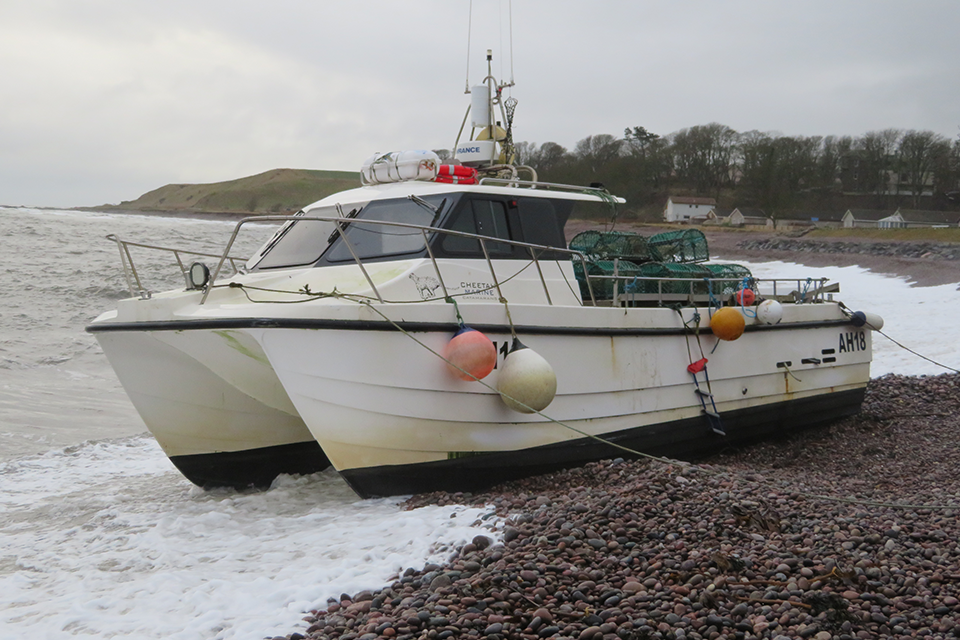
- Heavy Gear: Creels (pots) are heavy, awkward, and often waterlogged. They are deployed via mechanized haulers that present severe entanglement risks.
- Deck Layout: Small working decks are often cramped, slippery due to fish slime and sea spray, and exposed to the elements.
- Environmental Exposure: Winter operations in Scottish waters mean hypothermia is an immediate and lethal threat. Water temperatures in December routinely hover near single digits, drastically reducing an unsuited person’s survival time to mere minutes.
Historical MAIB Data
Year after year, MAIB safety data highlights man-overboard incidents as one of the leading causes of preventable deaths in the commercial fishing sector. Despite widespread educational campaigns advocating for the wearing of Personal Flotation Devices (PFDs) and the use of personal locator beacons (PLBs) or engine kill-cords, compliance among older, independent fishermen remains inconsistent. The Sea Eagle report serves as another stark reminder that voluntary guidelines are frequently insufficient to prevent fatal outcomes.
Official Statements and MAIB Findings
The release of the Sea Eagle accident report was accompanied by formal notifications from the Marine Accident Investigation Branch, emphasizing accountability, procedural review, and the imperative for behavioral change within the fleet.
In its published overview, the MAIB stated:
"Today, we have published our accident investigation report into the man overboard from the lone-operated creel fishing vessel Sea Eagle (AH18) on 20 December 2025, resulting in one presumed fatality. The report contains details of what happened, subsequent actions taken, and recommendations designed to prevent similar tragedies in the future."
Key Safety Insights from the Report
While the full report delves into the precise mechanical and environmental factors of the Sea Eagle incident, MAIB investigations into single-handed vessel accidents typically focus on several core analytical pillars:
- Vessel Control and Recovery Systems: Evaluating whether the vessel was equipped with dead man’s switches, automated engine kill mechanisms, or remote-activation shutdowns that could prevent a runaway vessel from leaving a fallen crew member behind.
- Personal Safety Equipment: Analyzing whether a PFD was being worn at the time of the incident, and whether the skipper carried a Personal Locator Beacon (PLB) capable of transmitting an immediate distress signal via satellite to the Coastguard.
- Operational Risk Assessments: Reviewing the adequacy of safety management systems for solo operators, including communication protocols with shore-based contacts and expected return-time tracking.
Future Outlook: Preventing Future Tragedies
The true value of an MAIB investigation lies not just in documenting past failures, but in shaping a safer future for the maritime community. The findings and recommendations stemming from the Sea Eagle (AH18) report carry vital implications for regulators, vessel owners, and individual fishers alike.
Technological Advancements and Mandatory Safeguards
Industry stakeholders are increasingly looking toward technological solutions to mitigate the risks of single-handed operations. Innovations such as wearable electronic kill-cords, automatic engine-stop transponders, and highly reliable MOB alarm systems are becoming more accessible. However, industry advocates argue that regulatory bodies must move beyond recommendation and consider stricter mandates for single-handed vessels operating in high-risk conditions.
Cultural Shifts in Safety Practices
Technology alone cannot eliminate risk; a cultural shift within the fishing community is equally paramount. Fishing is traditionally steeped in a culture of self-reliance and stoicism, traits that can sometimes translate into a dangerous reluctance to adopt new safety gear or admit vulnerability. Educational initiatives spearheaded by organizations like the Fishermen’s Mission, the RNLI, and maritime safety authorities continue to work tirelessly to normalize the routine use of PFDs and PLBs as non-negotiable tools of the trade.
Recommendations for Regulators and Fishers
Following the publication of the Sea Eagle report, the MAIB has urged all single-handed operators to review their onboard safety protocols. Key takeaways for the industry include:
- Always Wear a PFD: Ensuring that a buoyancy aid or lifejacket is worn at all times while working on deck, regardless of weather conditions or perceived comfort.
- Adopt Electronic Safety Aids: Equipping oneself with a personal beacon and ensuring that engine cutoff mechanisms are integrated into daily routines.
- Establish Robust Shore Contacts: Maintaining strict communication schedules with family members or shore authorities so that an overdue vessel triggers an immediate, localized search response.
Conclusion
The tragic loss associated with the creel fishing vessel Sea Eagle serves as a sobering milestone in ongoing efforts to improve maritime safety in Scottish waters and across the wider UK coastline. As the fishing community digests the findings of the MAIB report, the overarching hope is that this tragedy will spur renewed commitment to safety compliance, technological adoption, and operational vigilance. Only through a collective dedication to protecting the lives of those who harvest the sea can the industry hope to eliminate the devastating toll of man-overboard incidents.
For further details, the complete Marine Accident Investigation Branch report on the Sea Eagle (AH18) incident can be accessed directly via the official GOV.UK report portal.
Media representatives seeking further information or official commentary from the MAIB can contact their media office during office hours at 01932 440015, or via their out-of-hours service at 0300 7777878.