






Executive Overview
Every year, millions of recreational boaters, commercial mariners, and anglers take to the inland lakes, coastal waterways, and open oceans. While the vast majority of voyages conclude uneventfully, the marine environment remains inherently unpredictable. Rapidly shifting weather patterns, mechanical failures, structural damage, and unexpected medical emergencies can quickly transform a relaxing day on the water into a life-threatening crisis. When disaster strikes, the immediate priority for any mariner is establishing contact with rescue authorities and guiding them precisely to the scene.
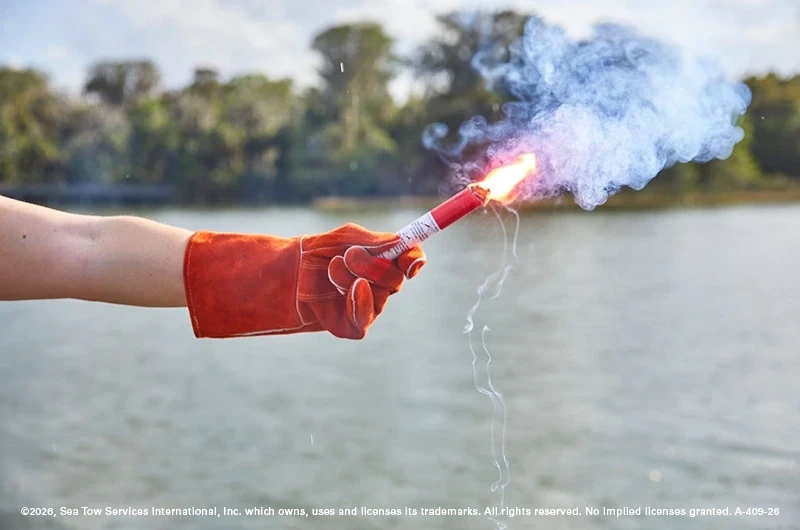
At the core of this life-saving communication protocol are Visual Distress Signals (VDS). These specialized devices—ranging from traditional pyrotechnic flares and buoyant smoke canisters to modern electronic signaling lights and high-visibility flags—serve as the universal language of distress. They alert nearby vessels, signal aircraft, and allow ground- or water-based rescue units to pinpoint a vessel in distress when radio communication is compromised, batteries are depleted, or precise coordinates are unknown.
Despite their critical importance, compliance with federal and state VDS regulations is frequently misunderstood by recreational boaters. Laws governing what equipment must be carried onboard vary dramatically depending on the vessel’s length, the body of water being navigated, the time of day, and even regional exceptions. Furthermore, the operational limits of specific safety gear—such as the crucial distinction between daytime and nighttime requirements—are often overlooked until an emergency is already unfolding.
This comprehensive guide offers an authoritative examination of marine visual distress signals. Drawing on the latest maritime safety standards, regulatory frameworks, and expert guidance from on-water assistance leaders like Sea Tow, this article explores the legal mandates governing VDS equipment, evaluates the mechanics and safety considerations of pyrotechnic versus electronic devices, outlines best practices for storage and deployment, and details how modern electronic rescue beacons integrate with traditional visual tools to ensure complete on-water survivability.
Detailed Chronology: The Evolution and Regulatory Framework of Marine Distress Signaling
To understand why modern vessels are required to carry specific combinations of visual distress equipment, it is necessary to examine how maritime signaling evolved from rudimentary visual customs into a highly regulated, standardized science.
From Smoke and Sails to Standardized Regulations
Long before the advent of marine radios, satellite positioning, or chemical pyrotechnics, mariners relied on primitive, improvised methods to signal distress. Historical accounts document ships firing cannons, flying upside-down national flags (the international symbol of distress), setting fires on deck, or burning barrels of pitch to catch the attention of passing vessels. While these methods occasionally worked within congested shipping lanes, they lacked reliability, precision, and urgency.
The introduction of chemistry to marine safety in the 19th and 20th centuries revolutionized distress signaling. The invention of colored pyrotechnic compositions allowed manufacturers to produce bright, highly visible chemical flares that could pierce through darkness, fog, and heavy precipitation. However, the lack of uniformity created confusion; different countries and naval authorities used varying colors and signal patterns, sometimes leading to tragic misunderstandings at sea.

Executive Overview
The Establishment of Modern Federal Standards
Recognizing the need for a unified system, maritime nations collaborated to standardize distress signaling protocols. In the United States, the U.S. Coast Guard established rigorous regulatory frameworks under Title 33 of the Code of Federal Regulations (CFR), specifying exactly which vessels must carry visual distress signals, what performance standards those devices must meet, and how they must be maintained.
Over the decades, these regulations have continuously adapted to technological advancements. The inclusion of Coast Guard-approved electronic visual distress signal devices (eVDSDs) in recent years represents a major milestone, offering mariners a reusable, non-pyrotechnic alternative for nighttime signaling that eliminates the expiration dates and fire hazards associated with traditional chemical flares. Today, the regulatory landscape balances traditional pyrotechnic reliability with modern electronic innovation, ensuring that mariners have access to dependable tools regardless of their vessel type or operating environment.
Supporting Context & Metrics: Understanding Legal Mandates and Equipment Requirements
Navigating the complex web of federal and state VDS requirements is a fundamental responsibility for vessel operators. Failure to carry the correct equipment—or maintaining gear that has expired or malfunctioned—can result in hefty fines, safety citations, or, worst of all, an inability to summon help during an emergency.
When Are Visual Distress Signals Required?
Under U.S. Coast Guard regulations, visual distress signal requirements apply to specific vessels operating on the high seas, the Great Lakes, territorial seas, and connecting waters directly communicating with them.
- Vessel Size Exceptions: Generally, recreational boats under 16 feet in length are exempt from carrying daytime distress signals, but they must carry nighttime distress signals if they are operated on applicable waters between sunset and sunrise. Recreational boats 16 feet and over must carry approved devices for both day and night use at all times.
- Exempted Watercraft: Certain specialized vessels—such as manually propelled boats (canoes, kayaks, and rowboats) and open sailboats under 21 feet that are not equipped with propulsion machinery—are typically exempt from daytime requirements, but they must still comply with nighttime signaling rules if operating after dark.
- State-Specific Laws: In addition to federal rules, individual states often enforce their own marine safety statutes. Boaters must verify local requirements before departing, as state regulations can be more restrictive than federal baselines.
Daytime vs. Nighttime Capabilities
A foundational rule of marine safety is that visual distress signals are categorized by their operational window:
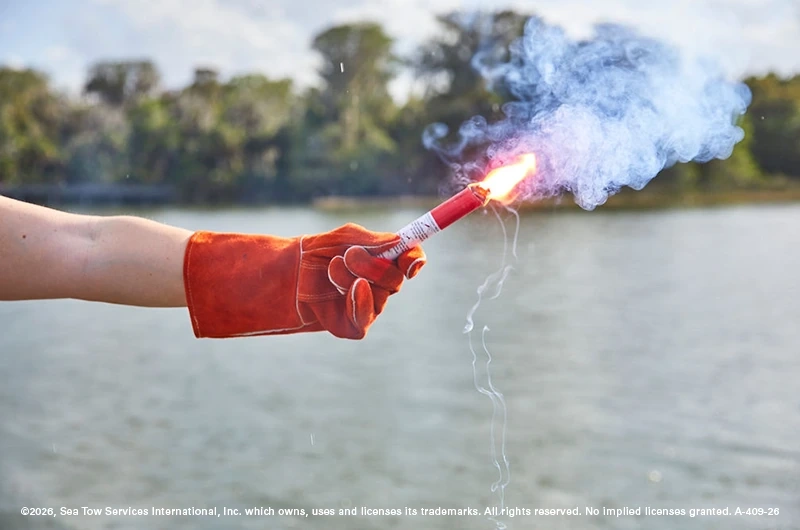
- Daytime Signals: These devices must be highly visible against bright sunlight and the surrounding horizon. Examples include orange smoke signals, orange distress flags marked with a black square and circle, and daytime-rated pyrotechnic aerial flares. Carrying only a daytime flag does not satisfy nighttime requirements, as flags are virtually invisible after dark.
- Nighttime Signals: These devices produce brilliant illumination that can be spotted across miles of dark water. Examples include handheld red flares, red meteor aerial displays, and Coast Guard-approved electronic distress lights. A light intended for nighttime use is generally useless in bright sunlight.
- Dual-Purpose Equipment: Boaters who operate around the clock must carry equipment that covers both conditions. Many pyrotechnic devices are certified for both day and night use. Alternatively, mariners can carry a combination of single-purpose devices—such as an approved orange daytime flag paired with an approved electronic nighttime distress light.
Evaluating the Equipment: Pyrotechnic vs. Electronic
When outfitting a vessel, skippers must choose between traditional chemical pyrotechnics and modern electronic alternatives. Each category possesses distinct operational advantages and limitations:
| Feature / Metric | Pyrotechnic Marine Flares | Electronic Visual Distress Signals (eVDSDs) |
|---|---|---|
| Primary Function | Day/Night signaling (flame, smoke, light) | Nighttime signaling (repeating light pattern) |
| Lifespan / Expiration | Typically expires 42 months from manufacture date | Indefinite (contingent on battery health and maintenance) |
| Environmental Impact | Single-use; leaves chemical residue and slag | Reusable; zero chemical waste or hot slag |
| Regulatory Status | Universally recognized; mandatory for many fleets | Approved for nighttime use when paired with a day flag |
| Safety Risks | Fire hazard, burn risk, improper handling dangers | Low risk; requires proper battery storage and care |
Official Statements and Expert Perspectives
Maritime safety organizations, law enforcement agencies, and rescue professionals consistently emphasize that having safety equipment onboard is only half the battle; knowing how to select, store, and deploy that equipment is what ultimately saves lives.
The Sea Tow Foundation and on-water assistance experts stress that emergency signaling requires a holistic mindset. According to maritime safety briefings:
"A complete distress signaling plan relies on a trifecta of communication, location, and visual confirmation. Mariners must carry approved day and night devices tailored to their specific route, maintain their batteries and pyrotechnics meticulously, and ensure that every passenger onboard knows exactly where the equipment is stowed and how to operate it under pressure."
Furthermore, experts emphasize the absolute necessity of reserving distress signals for genuine emergencies. A recurring issue highlighted by the U.S. Coast Guard and marine patrols is the accidental or improper activation of pyrotechnic flares.
"Never fire a flare for practice or amusement unless operating within a controlled training environment authorized by local authorities," safety officials caution. "A false distress signal triggers an immediate, resource-intensive emergency response, puts rescue personnel at risk, creates unnecessary financial burdens on taxpayers, and diverts life-saving assets away from real emergencies."
Experts also draw a hard line between routine non-emergency assistance—such as running out of fuel, experiencing a minor engine stall, or requiring a routine tow—and true grave danger. Boaters are strongly advised to utilize marine VHF radios, cellular phones, or assistance apps (such as the Sea Tow app) for routine breakdowns, reserving pyrotechnic flares strictly for situations involving sinking, fire, severe medical crisis, or imminent peril.
Future Outlook: The Next Generation of Marine Rescue Technology
As marine engineering and electronics continue to advance, the future of visual distress signaling and emergency response is shifting toward greater integration, reliability, and precision.
The Convergence of Electronics and Satellite Networks
While traditional pyrotechnic flares have protected mariners for generations, their inherent limitations—such as short burn times, strict expiration dates, and fire risks—are driving a steady migration toward electronic alternatives. Modern Coast Guard-approved electronic visual distress signals (eVDSDs) are becoming increasingly sophisticated, utilizing high-output LED arrays that flash the internationally recognized SOS distress pattern. Because these devices feature infinite shelf lives (requiring only periodic battery replacement), they offer unmatched long-term value and safety.
Concurrently, personal locator beacons (PLBs) and emergency position-indicating radiobeacons (EPIRBs) are becoming smaller, more affordable, and universally integrated with global satellite constellations like Cospas-Sarsat. While beacons are not visual distress signals—they transmit digital distress data rather than emitting light or smoke—they represent the ultimate starting point for rescue operations.
Looking forward, the future outlook points toward a seamless multi-layered safety ecosystem:
- Satellite Beacons (EPIRBs/PLBs): Trigger the initial emergency response and provide precise GPS coordinates to rescue coordinators.
- Marine VHF / Digital Selective Calling (DSC): Maintain verbal and digital communication with nearby vessels and rescue authorities.
- Electronic Visual Distress Signals (eVDSDs): Provide continuous, long-duration nighttime visual confirmation without pyrotechnic hazards.
- High-Visibility Flags and Daytime Flares: Guide approaching rescue vessels and aircraft visually during daylight hours.
By embracing this comprehensive, multi-tiered approach to emergency preparedness, mariners can ensure that no matter what challenges they encounter on the water, they remain fully equipped to signal for help, protect their passengers, and return safely to shore.