








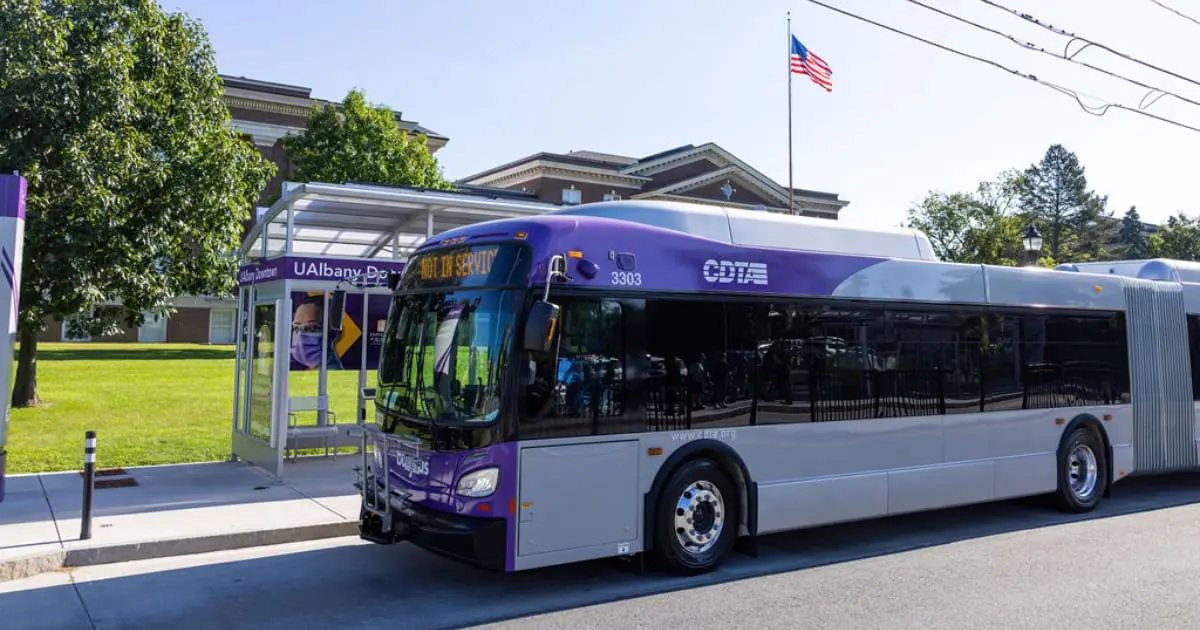
ALBANY, N.Y. — In an era defined by fluctuating commuting patterns, post-pandemic operational recalibrations, and fiscal stewardship, public transit authorities across the United States face a formidable balancing act. Agencies must reconcile community demands for expansive geographic reach with the hard realities of operating budgets, labor pools, and evolving passenger habits. Few regional operators have navigated this intricate matrix as proactively as the Capital District Transportation Authority (CDTA).
Releasing its highly anticipated annual Route Performance Report for Fiscal Year 2026, the CDTA has offered a transparent, data-driven window into its operational health. The comprehensive review highlights a year defined by targeted strategic restraint, marked by a slight, manageable dip in raw ridership matched by notable gains in systemic productivity and schedule reliability. Rather than retreating in the face of fiscal headwinds and shifting demographic currents, the CDTA has leaned into a philosophy of resource optimization—ensuring that every bus running through Albany, Troy, Schenectady, Amsterdam, and Glens Falls delivers maximum value to the taxpaying public and daily riders alike.
This deep-dive analysis examines the core findings of the CDTA’s FY2026 report, tracing the chronology of its service rebalancing initiatives, contextualizing the metrics that define modern transit efficiency, and outlining the agency’s trajectory as it steers toward the 2027 fiscal year and beyond.
Executive Overview: Balancing Volume with Precision
At first glance, a superficial reading of the headline numbers from the FY2026 report might prompt questions regarding trajectory. The authority recorded approximately 18 million boardings over the course of the fiscal year, representing a modest 2% decrease compared to the record-shattering benchmark of 18.4 million boardings achieved in FY2025.
However, in the context of modern public transportation analytics, raw ridership volume is only part of the equation. To view the 2% contraction as a sign of weakness would be to misread the deliberate strategy engineered by CDTA leadership. In August 2025, the agency embarked on a comprehensive service rebalancing initiative—a calculated operational pivot designed to align routes, fleet deployment, and human resources with genuine, verifiable demand rather than historical inertia.
The results of this strategic pivot validate the agency’s approach. Even with a minor reduction in total boardings, the CDTA’s systemwide productivity surged by 6%, reaching an impressive 22.9 boardings per revenue hour. This metric underscores a vital operational truth: the CDTA is carrying more customers per hour of service deployed, eliminating empty or underutilized seat miles, and optimizing every dollar of public and private investment.
Simultaneously, service reliability—historically a primary friction point for public transit agencies nationwide—saw measurable gains. Systemwide on-time performance increased by 1.9% year-over-year. For commuters depending on the system to reach employment centers, educational institutions, and healthcare appointments, this improvement in punctuality translates directly into enhanced trust and usability.

Detailed Chronology: The Evolution of CDTA’s Service Rebalancing Strategy
To understand how the CDTA achieved a 6% jump in productivity amidst a slight decline in total ridership, one must examine the chronological rollout of the agency’s operational reforms. The genesis of these changes lies in the CDTA’s comprehensive Transit Development Plan (TDP), a multi-year blueprint meant to audit every mile of the system and identify systemic inefficiencies.
Spring and Summer 2025: Laying the Groundwork
As FY2025 drew to a close, CDTA analysts and planners utilized data from automated passenger counters, fare collection systems, and community outreach to map out structural adjustments. The TDP made it abundantly clear that certain legacy routes, while historically significant, no longer justified the allocation of high-capacity vehicles and frequent headways. Conversely, rapidly developing commercial corridors and denser residential zones were experiencing capacity constraints.
August 2025: The Launch of Phase Rebalancing
In August 2025, the CDTA formally initiated its service rebalancing initiative. This rollout was designed with surgical precision to:
- Match service hours and fleet resources directly to verified ridership demand.
- Protect and enhance funding-secure, high-frequency corridors.
- Optimize resource allocation to match available operational funding without degrading core network integrity.
By trimming frequency on historically low-performing branches while injecting those recovered resources into high-demand trunk lines and the iconic BusPlus rapid transit network, the agency effectively reshaped its operational footprint. The high-performing routes—particularly those anchored by the BusPlus arterial network—absorbed the redirected resources seamlessly, maintaining robust passenger counts while consuming fewer total operating hours.
August 2026: Phase 4 and Glens Falls Adjustments
The evolutionary process continued into the latter half of calendar year 2026. On Sunday, August 23, 2026, the CDTA rolled out Phase 4 of its ongoing service rebalancing strategy alongside Phase II of specific Glens Falls route adjustments.
These late-2026 adjustments were explicitly crafted to reinforce the momentum established throughout the fiscal year. By scaling back lingering unproductive segments in outlying areas and doubling down on urban core corridors with heavy reliance, the CDTA positioned its network to maintain a structurally balanced budget heading into the FY2027 planning cycle.
Supporting Context and Metrics: Decoding the Numbers
A rigorous evaluation of the FY2026 Route Performance Report requires examining the underlying macroeconomic and regional shifts that influence Capital District mobility.
Sustaining Post-Pandemic Momentum
It is worth noting that despite the 2% year-over-year adjustment, CDTA’s FY2026 ridership remains remarkably close to the historic 18.4 million peak of FY2025. More importantly, the system continues to comfortably exceed pre-pandemic passenger volumes. While numerous transit agencies across the United States remain mired in permanent ridership deficits—struggling to recover 70% to 80% of their 2019 baseline numbers—the CDTA has successfully retained its core demographic. This resilience is largely attributable to proactive institutional partnerships, network redesigns, and a reputation for cleanliness, safety, and reliability.
Productivity Gains and Efficiency Analysis
The core metric of the FY2026 report—22.9 boardings per revenue hour—serves as the primary indicator of system health. In transit economics, revenue hours measure the exact time a transit vehicle is in active service with doors open to the public, excluding deadheading or layovers.
By increasing productivity by 6% while trimming underperforming route miles, the CDTA demonstrated a masterclass in resource stewardship. Instead of running empty buses through low-density suburban loops to satisfy geographic equity mandates at the expense of fiscal solvency, the agency concentrated its assets where the public actually uses them. The data confirms that the agency’s frequent-service corridors and the BusPlus network functioned as the undeniable backbone of the system, carrying the weight of the network efficiently.
Schedule Reliability and On-Time Performance (OTP)
Reliability is the currency of public transit. A bus that arrives early is nearly as disruptive to a commuter’s schedule as a bus that arrives late—or not at all. The 1.9% systemwide increase in on-time performance across the CDTA’s operational zones—spanning Albany, Troy, Schenectady, Amsterdam, and Glens Falls—is not an accidental statistical bump. It is the direct downstream benefit of schedule optimization.
By analyzing dwell times, traffic bottleneck zones, and layover recovery periods, CDTA planners adjusted timetables to reflect actual street-level conditions rather than theoretical best-case scenarios. The resulting schedule integrity has reduced passenger wait times at transfer hubs and minimized cascading delays throughout the network.
Universal Access: The Engine Driving One-Third of Ridership
No analysis of the CDTA’s operational success is complete without examining the Universal Access Program. In FY2026, this program proved to be a foundational pillar of the authority’s ridership model, generating an extraordinary 5.6 million rides. This single program accounts for 31% of the system’s total annual ridership.
The Mechanics of Universal Access
Operating through strategic partnerships with 56 distinct regional organizations, the Universal Access Program removes financial friction at the point of entry. Eligible students, employees, and organizational members can board CDTA vehicles simply by presenting a valid institutional ID or pass, completely bypassing individual fare collection mechanisms.
Key institutional participants powering this program include:
- The University at Albany (UAlbany): Providing thousands of students, faculty, and staff with seamless campus-to-city mobility, reducing parking congestion on campus while supporting regional economic activity.
- Albany City School District: Ensuring that students and educational personnel have reliable transit options for educational and extracurricular access.
- New York State Office of General Services (OGS): Facilitating green commuting options for thousands of state civil servants working in the downtown Albany capital core.
Social Equity and Economic Mobility
Beyond the raw metrics of boardings and operational revenue, the Universal Access Program serves as a vital instrument of social equity. For thousands of Capital District residents, the elimination of transportation cost as a barrier means unhindered access to employment opportunities, higher education, medical appointments, and civic life. By institutionalizing transit access through collective institutional agreements, the CDTA guarantees a stable, predictable baseline of fare revenue while directly improving the quality of life across the region.
Future Outlook: Navigating FY2027 and Beyond
As the ink dries on the FY2026 report, the CDTA’s leadership is already looking ahead to the challenges and opportunities defining the FY2027 operating and capital plans. The strategic roadmap moving forward rests on three primary pillars: fiscal discipline, technological integration, and continuous network refinement.
Maintaining Fiscal Equilibrium
Public transit authorities across the nation face a looming "fiscal cliff" as federal pandemic-era relief funds dry up, inflation drives up maintenance and labor costs, and farebox recovery remains below historical norms. The CDTA’s aggressive service rebalancing initiative is, at its core, a proactive defense against these pressures. By proving that the system can increase productivity and maintain high ridership while trimming unproductive service hours, the agency has established a sustainable fiscal model. The ongoing implementation of Phase 4 and Glens Falls route refinements will continue to ensure that every dollar spent directly serves high-demand travel corridors.
Capital Investments and Fleet Modernization
Looking toward FY2027, the CDTA is not merely managing cuts or tightening belts; it is actively investing in modernization. The authority’s approved operating and capital plans emphasize the continued expansion of zero-emission electric bus technology, smart-card infrastructure, and enhanced passenger information systems. These investments are designed to make riding the bus as intuitive and frictionless as calling a rideshare, attracting choice riders who might otherwise rely exclusively on private automobiles.
A Model for Regional Transit
The CDTA’s FY2026 Route Performance Report ultimately tells a story of maturity and adaptability. In a post-pandemic landscape that has fractured traditional commuting habits, the authority has refused to rely on business-as-usual complacency. Through rigorous data analysis, strategic partnership cultivation via the Universal Access Program, and an uncompromising commitment to schedule reliability, the CDTA has charted a sustainable course forward.
As the agency transitions deeper into the FY2027 operating cycle, it stands as a compelling model for regional transit authorities nationwide: proving that less can indeed be more when service is deployed with absolute precision, operational discipline, and an unwavering focus on the customer.