







Executive Overview
In the highly competitive and capital-intensive world of commercial shipbuilding, the margin between operational excellence and costly mechanical failure is razor-thin. As naval architects, shipyards, and vessel owners push the boundaries of efficiency, cargo capacity, and environmental compliance, a recurring vulnerability continues to plague newbuilds and retrofits alike: the drivetrain. Often treated as a secondary procurement package rather than a primary design driver, the driveline—comprising engines, couplings, gearboxes, shafts, and thrusters—is highly sensitive to torsional vibration, structural misalignment, and dynamic marine environments.
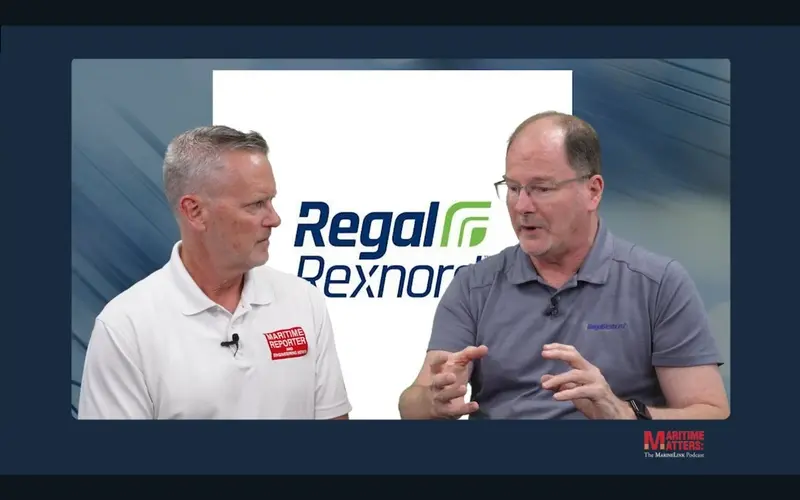
To address these systemic vulnerabilities, industry experts are advocating for a paradigm shift in how marine power transmission systems are conceptualized. In a recent episode of Maritime Matters: The MarineLink Podcast, Bob Lennon, Business Development Manager at Regal Rexnord and a 40-year veteran of the marine engineering industry, laid out a compelling case for engaging driveline specialists at the earliest stages of vessel design.
The core thesis is clear: waiting until a hull form is finalized or when machinery spaces are locked in to select driveline components is a high-risk strategy. By integrating powertrain expertise early and often, vessel owners can systematically eliminate harmful torsional vibrations, mitigate structural noise, protect expensive machinery from premature wear, and guarantee a smoother, quieter, and more reliable vessel. This investigative report explores the technical, financial, and operational imperatives of early-stage driveline engineering, backed by engineering metrics, historical contexts, and expert insights.
Detailed Chronology: The Evolution of Maritime Driveline Engineering
The methodology of maritime propulsion design has undergone a profound transformation over the past half-century. Understanding this evolution is critical to recognizing why traditional procurement sequences are no longer viable for modern vessels.
[Traditional Shipbuilding Model]
Conceptual Design ➔ Hull Optimization ➔ Engine Selection ➔ LATE Driveline Procurement ➔ Operational Vulnerability

[Modern Collaborative Model]
Conceptual Design ➔ Concurrent Driveline Engineering & TVA ➔ Integrated Structural Design ➔ Operational Excellence
The Era of Over-Engineering (Pre-1990s)
For decades, marine propulsion systems relied on slow-speed, high-displacement diesel engines driving heavy steel shafts directly connected to fixed-pitch propellers. These systems were characterized by massive safety margins and heavy, rigid hulls. Because the structures were stiff and the engines operated at lower, more predictable brake mean effective pressures (BMEP), driveline alignment was relatively forgiving. Torsional vibration analysis (TVA) was performed, but components were often over-engineered to withstand unanticipated forces.
The Shift to High-Efficiency and Light-Weighting (1990s–2010s)
With the introduction of stricter environmental regulations, rising fuel costs, and the demand for faster, lighter vessels, the maritime industry shifted toward high-speed, medium-speed, and common-rail diesel engines. Hulls became more flexible as shipyards optimized steel and aluminum thicknesses to reduce displacement.
While these advancements improved fuel efficiency and cargo capacity, they introduced a highly volatile variable: hull deflection. A flexible hull bends and twists under the influence of cargo loading, sea states, and thermal expansion. This structural movement directly impacts the alignment of the driveline, transferring severe radial, axial, and angular loads to engine crankshafts and gearbox bearings.

The Modern Era of Complexity: Hybrids and Alternative Fuels (2020s and Beyond)
Today, the maritime sector is navigating an unprecedented transition toward decarbonization. Modern propulsion plants are no longer simple linear systems; they are highly complex, multi-modal systems featuring:
- Hybrid Diesel-Electric Systems: Utilizing Power Take-In (PTI) and Power Take-Off (PTO) gearboxes.
- Variable-Speed Engines: Operating across wide RPM bands, which increases the likelihood of encountering critical torsional resonance frequencies.
- Alternative Fuels: Engines running on methanol, ammonia, or hydrogen, which exhibit different combustion characteristics and cylinder pressure profiles, altering the torsional excitation forces acting on the crankshaft.
In this highly complex landscape, treating the driveline as a catalog-ordering exercise at the end of the design phase is a recipe for operational failure.
Supporting Context & Metrics: The Cost of Vibration and Mechanical Failure
To appreciate the urgency of early driveline engagement, one must examine the physics of torsional vibration and the financial consequences of system failures.
The Physics of Torsional Vibration
Every reciprocating engine produces a pulsating torque output rather than a smooth, continuous rotational force. These torque fluctuations excite the natural frequencies of the shafting system. If the excitation frequency of the engine matches the natural frequency of the driveline, resonance occurs.
Without proper dampening, resonance can cause:
- Torsional Stress Spikes: Exceeding the fatigue limits of steel shafts, leading to sudden, catastrophic structural failure.
- Gear Tooth Damage: Rapid wear, pitting, and tooth breakage within the gearbox due to gear clatter.
- Coupling Degradation: Extreme heat generation in elastomeric elements, leading to premature coupling failure.
+-------------------------------------------------------------------------+
|                  CONSEQUENCES OF UNMITIGATED VIBRATION                  |
+------------------------------------+------------------------------------+
| Technical Impact                   | Financial & Operational Impact     |
+------------------------------------+------------------------------------+
| • Shaft fatigue & snapping         | • Drydocking costs ($50k-$250k/day)|
| • Gear tooth pitting & spalling    | • Loss of charter hire revenue     |
| • Crankshaft journal wear          | • Cargo delivery delays & penalties|
| • Structural hull noise (NVH)      | • Crew fatigue & safety hazards    |
+------------------------------------+------------------------------------+
The Economics of Late-Stage Redesign
The cost of resolving a driveline issue escalates exponentially as a vessel moves through the design, construction, and operational phases.
[Design Phase]          Cost to resolve: $ (Simple drawing/coupling change)
[Construction Phase]     Cost to resolve: $$ (Modifying foundations, delayed delivery)
[Sea Trials Phase]       Cost to resolve: $$$ (Drydocking, replacing damaged parts)
[Operational Phase] Cost to resolve: $$$$ (Catastrophic failure at sea, loss of hire)- The Design Phase (Low Cost): If a Torsional Vibration Analysis (TVA) conducted during conceptual design reveals a critical resonance within the operating speed range, the solution is simple. A driveline expert can select a coupling with a different torsional stiffness (e.g., shifting from a medium-stiffness elastomer to a highly flexible dual-stage coupling). This shifts the critical speed outside the vessel’s operating profile. The cost of this change is virtually zero, requiring only a revision of the component specification.
- The Construction Phase (Moderate to High Cost): If the TVA is performed late, after the engine and gearbox have already been purchased and foundations welded, resolving a resonance issue becomes incredibly difficult. It may require relocating bulkheads, changing engine mounts, or sourcing custom, expensive, non-standard couplings that fit into a restricted physical envelope. This can delay vessel delivery by weeks or months, resulting in liquidated damages.
- The Operational Phase (Catastrophic Cost): If a vessel goes to sea with unresolved driveline issues, the consequences are severe. A snapped shaft or destroyed gearbox at sea not only endangers the crew and cargo but also incurs massive drydocking fees, towing costs, lost charter revenue, and brand damage. Repairing a major propulsion failure on an active vessel can easily cost hundreds of thousands of dollars, dwarfing the initial cost of early-stage engineering consultation.
Official Statements & Expert Analysis: Insights from Bob Lennon
With four decades of hands-on experience in marine power transmission, Bob Lennon of Regal Rexnord brings an authoritative perspective to this engineering challenge. In his discussion with Maritime Matters: The MarineLink Podcast, Lennon emphasized that the path to a quiet, vibration-free, and reliable vessel begins with communication and early collaboration.
Overcoming the "Silo" Mentality in Shipbuilding
Lennon points out that traditional shipbuilding contracts often isolate key stakeholders, preventing the seamless exchange of technical data required for optimal driveline design.
"Historically, there has been a disconnect between the naval architect, the engine manufacturer, the shipyard, and the driveline component supplier," Lennon observed. "Each party works within their specific scope. The architect focuses on hull resistance and stability; the engine supplier focuses on power output and emissions; the shipyard focuses on steel fabrication and ease of assembly. The driveline—the critical system that links all of these elements together—often falls through the cracks."
By the time a driveline specialist is brought in, the physical dimensions of the engine room are set, the shaft line is fixed, and the engine-gearbox configuration is locked. This severely limits the engineering options available to mitigate vibration and alignment issues.
The Role of Torsional Vibration Analysis (TVA)
Lennon advocates for the universal adoption of early-stage, iterative TVAs. A TVA is a mathematical simulation of the dynamic behavior of the entire propulsion train. It requires detailed mass-elastic data from every component supplier, including the engine’s gas pressure curves, the inertia of the gearbox gears, the stiffness of the flexible coupling, the mass of the shafting, and the hydrodynamic damping of the propeller.
"A Torsional Vibration Analysis is not a box to be checked at the end of a project just to satisfy a classification society," Lennon explained. "It is a living design tool. When we are engaged early, we can run multiple iterations of the TVA during the conceptual phase. If we see a potential vibration issue, we can proactively recommend changes to the coupling design or shaft diameters to tune the system safely away from critical resonance points."
Addressing the Silent Threat: Noise, Vibration, and Harshness (NVH)
Beyond mechanical survival, passenger and crew comfort is a critical design metric for modern commercial vessels, particularly in the cruise, ferry, research, and superyacht sectors. Furthermore, international regulatory bodies are placing stricter limits on Underwater Radiated Noise (URN) to protect marine ecosystems.
Lennon highlighted how early driveline engineering directly impacts NVH mitigation:
"A poorly designed driveline acts as a direct conduit for noise and vibration, transmitting mechanical energy through the engine mounts and shaft bearings straight into the hull structure. This results in an uncomfortable ride for passengers, crew fatigue, and increased underwater noise signatures. By selecting the right elastomeric couplings and engine mounting systems early in the design process, we can isolate these forces at the source, ensuring a quiet, smooth ride that meets the highest comfort and environmental standards."
Future Outlook: Decarbonization, Hybridization, and the Next Generation of Drivetrains
As the maritime industry marches toward a zero-carbon future, the complexity of driveline engineering will only increase. The transition to alternative fuels and hybrid propulsion systems presents new challenges that make early-stage driveline expertise more critical than ever.
The Hybrid Propulsion Challenge
Hybrid vessels utilize multiple power sources—such as diesel generators, battery banks, and direct-drive engines—operating in various configurations (e.g., transit mode, electric-only loitering, boost mode). Each of these operating modes changes the mass-elastic profile of the driveline.
+-----------------------------------------------------------------------------+
|                     HYBRID PROPULSION MODE CHALLENGES                       |
+----------------------+----------------------+-------------------------------+
| Operating Mode       | Active Power Source  | Driveline Dynamics            |
+----------------------+----------------------+-------------------------------+
| Electric-Only        | Battery / Electric   | High, instant torque; low     |
|                      | Motor                | structural vibration          |
+----------------------+----------------------+-------------------------------+
| Mechanical-Only      | Diesel Engine        | High reciprocating forces;    |
|                      |                      | classic torsional vibration   |
+----------------------+----------------------+-------------------------------+
| Boost Mode           | Diesel + Electric    | Dual-input torque; complex    |
|                      | Motor                | multi-frequency resonance     |
+----------------------+----------------------+-------------------------------+
A coupling that is perfectly tuned for a diesel engine running at 1,800 RPM may be completely unsuited for an electric motor operating at variable speeds, or for a combined mode where both power sources feed into a single gearbox. Driveline specialists must design multi-stage, highly flexible couplings that can adapt their torsional stiffness depending on which power source is active. This level of customization is impossible to achieve without deep, early-stage engineering integration.
Digital Twins and Predictive Maintenance
Looking ahead, the integration of smart sensors into driveline components is set to revolutionize vessel operations. Regal Rexnord and other industry leaders are pioneering the use of "smart couplings" and intelligent bearing systems.
By embedding torque, temperature, and vibration sensors directly into flexible couplings, operators can monitor the health of the driveline in real-time. This data feeds into a digital twin of the vessel’s propulsion system, allowing predictive maintenance algorithms to detect the earliest signs of coupling degradation, shaft misalignment, or bearing wear.
[On-Vessel Sensors] ➔ [Real-Time Data Stream] ➔ [Cloud-Based Digital Twin] ➔ [Predictive Maintenance Alerts]This shift from reactive to predictive maintenance can completely eliminate unplanned downtime, but its success depends on the sensor systems being integrated into the driveline components during the initial design phase.
Conclusion: A Call to Action for Vessel Owners
The message from industry veterans like Bob Lennon is clear: the traditional, linear approach to vessel procurement is obsolete. To build vessels that are efficient, reliable, quiet, and ready for the green transition, the maritime industry must embrace a collaborative, integrated design philosophy.
Vessel owners must mandate that driveline specialists are brought to the table during the initial conceptual design phase, alongside naval architects and engine OEMs. By investing in early-stage driveline engineering, owners can secure their capital investments, protect their crews, and ensure their vessels deliver a quiet, vibration-free ride for decades to come.