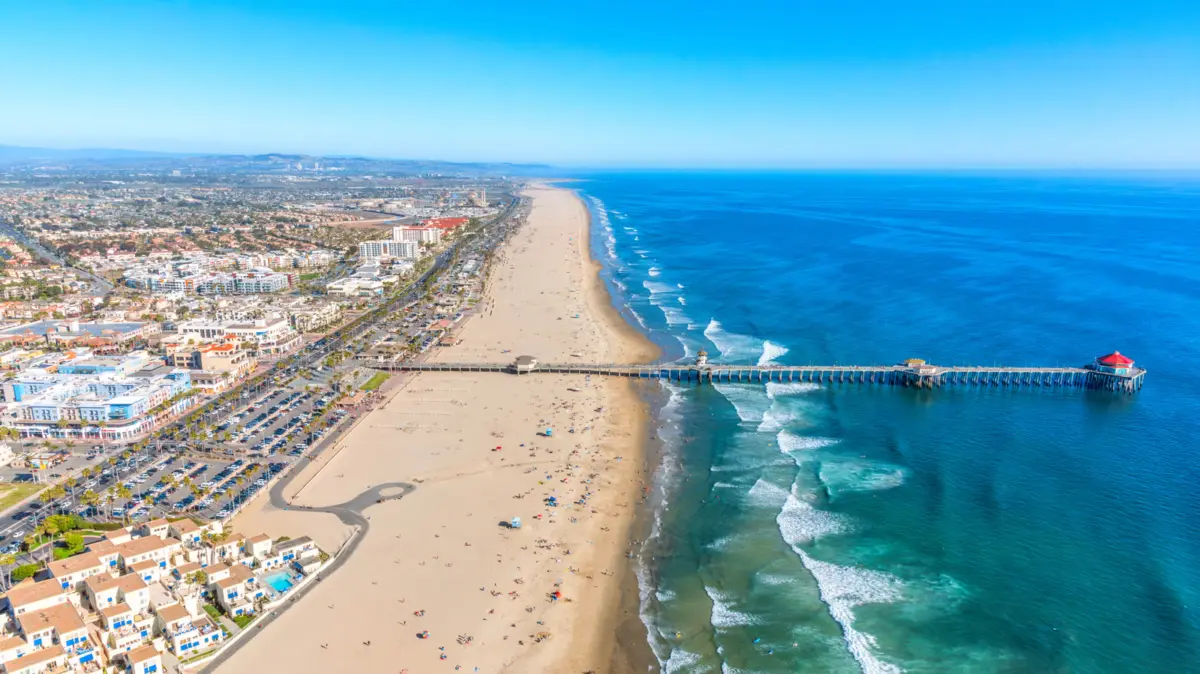
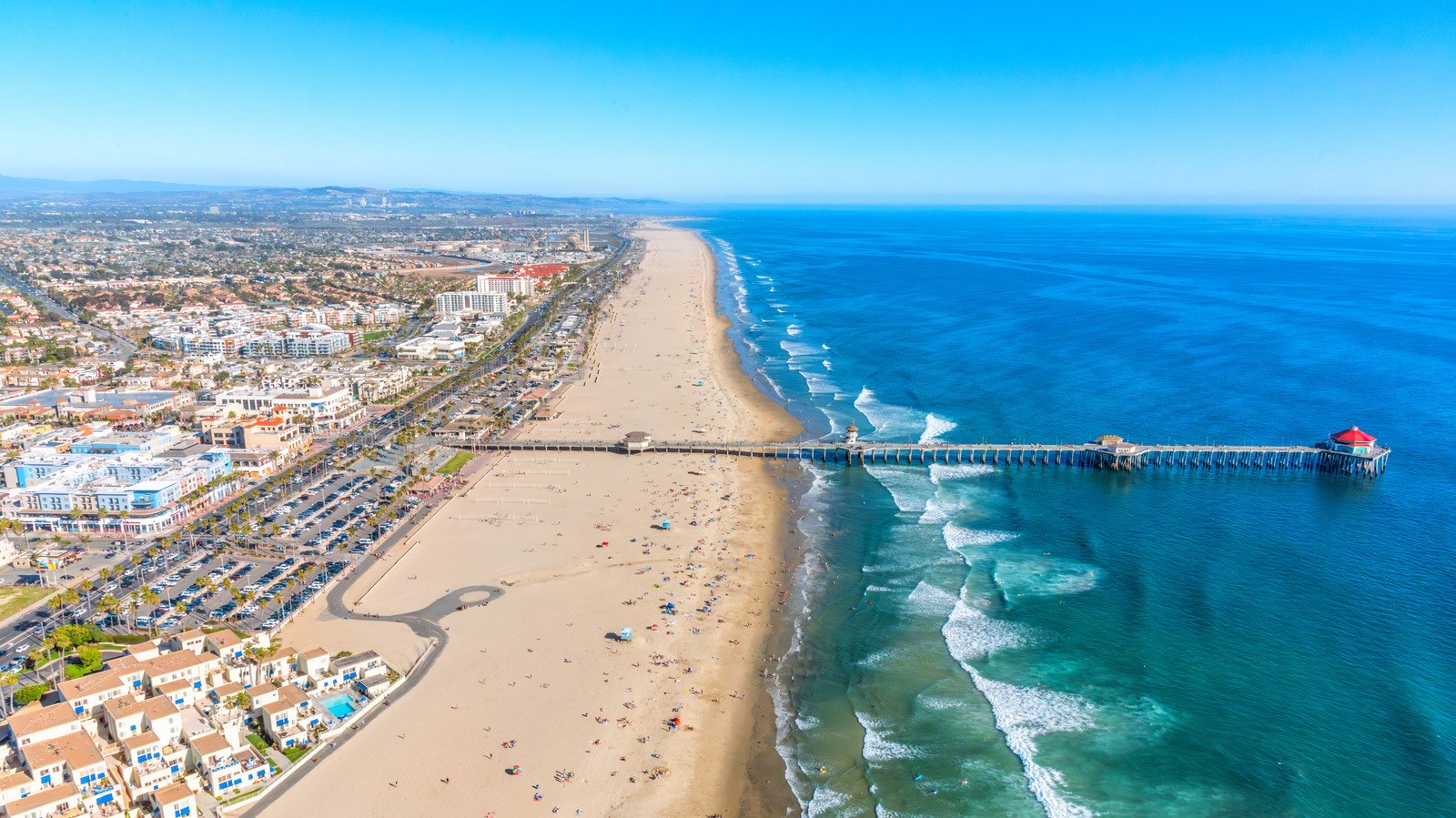
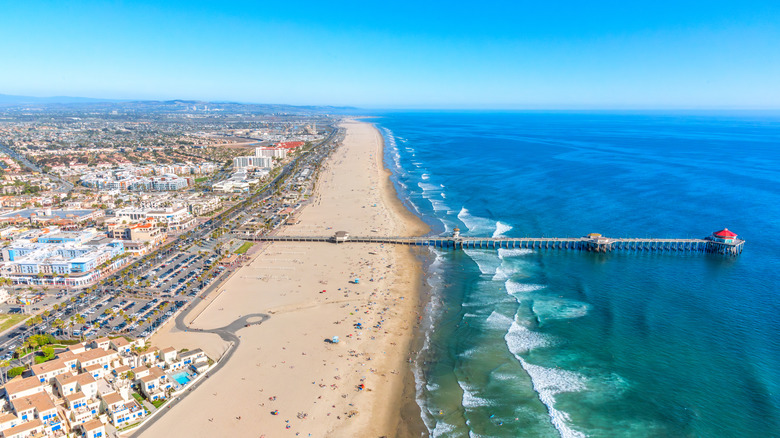
In the highly competitive arena of coastal travel, few designations carry as much prestige as a top-tier placement on the annual global beach indices. For 2026, the international spotlight has illuminated the sun-drenched shores of Southern California, cementing Huntington Beach as the premier coastal destination on the American West Coast. According to the newly released Global Beach Index 2026—compiled by Beach.com through rigorous methodologies encompassing expert nominations, verified user reviews, predictive weather pattern analyses, water clarity metrics, and infrastructure accessibility—Huntington Beach secured the 15th spot globally, outperforming hundreds of elite coastal rivals to reign supreme across the Western United States.
Located approximately an hour south of downtown Los Angeles by car, Huntington Beach seamlessly blends relaxed California counterculture with world-class coastal amenities. Welcoming an estimated 8 million visitors annually across its sprawling 3.5 miles of municipal sand (expanding to 8.5 miles when including adjacent shoreline), the city has long embraced its moniker, "Surf City, U.S.A." This designation is more than a clever marketing slogan; it is a foundational pillar of the community’s identity. From its iconic, wave-carved breaks to its historic pier and thriving culinary scene, Huntington Beach represents the quintessential modern American beach town—one that honors its rich heritage while continuously evolving to meet the expectations of modern travelers.
Detailed Chronology and Historical Evolution
To understand how Huntington Beach attained its elite status in 2026, one must examine the meticulous trajectory that transformed a sleepy coastal settlement into an international surfing mecca.
Long before it became a destination for millions of international travelers, the area was inhabited by the Tongva people, who utilized the bountiful Pacific coastline for sustenance and community. In the late 19th and early 20th centuries, the land underwent rapid transformation, transitioning from agricultural holdings to a burgeoning seaside resort town originally named Pacific City before incorporating as Huntington Beach in 1909.
The true turning point for the city’s global identity arrived in the mid-20th century, coinciding with the post-World War II boom in Southern California car culture and the popularization of modern surfing. Buoyed by consistent, well-defined swells created by offshore underwater topography, Huntington Beach quickly became a laboratory for board-shaping, wave-riding innovation, and coastal lifestyle branding.
Institutionalizing the Surf Heritage
As the decades progressed, Huntington Beach actively institutionalized its connection to the sport. The establishment of the Surfing Walk of Fame—where bronze plaques and pavestones commemorate global surf legends—and the Huntington Beach International Surfing Museum cemented the city’s status as a living archive of surf history. The museum famously houses engineering marvels, including the world’s largest surfboard, measuring an astonishing 42 feet in length, 11 feet in width, and 1 foot in thickness.
Furthermore, the city’s calendar became anchored by premier athletic competitions, most notably the annual U.S. Open of Surfing. This multi-week event draws the world’s elite professional surfers and hundreds of thousands of spectators, turning the coastline into a dynamic arena of athletic excellence, youth culture, and brand activations. The cumulative effect of these historical milestones created the resilient, surf-centric foundation that judges of the Global Beach Index 2026 evaluated and ultimately rewarded.
Supporting Context & Metrics: Decoding the 2026 Global Beach Index
The Global Beach Index 2026 is not merely a subjective collection of travel writer recommendations; it is an empirical, multifaceted evaluation framework designed to quantify what makes a destination truly exceptional.
The Methodology of Evaluation
The index evaluates beaches across five core pillars:
Expert Nominations: Qualitative assessments from veteran marine biologists, environmentalists, and global travel journalists.
User Sentiments: Aggregated data from millions of verified digital reviews regarding cleanliness, safety, and crowd management.
Hydrological Metrics: Advanced water quality testing, clarity tracking, and temperature profiling.
Accessibility & Infrastructure: Ease of navigation, proximity to major international transit hubs, parking capacity, and the availability of hospitality amenities.
Huntington Beach by the Numbers
Global Ranking: 15th overall worldwide; #1 on the U.S. West Coast.
Shoreline Length: 3.5 miles within city limits (8.5 miles of continuous public beach).
Annual Footfall: Approximately 8 million visitors per year.
Pier Dimensions: 1,850 feet—standing as one of the longest concrete piers on the West Coast.
Transit Proximity: 25 minutes from John Wayne Airport (SNA) and roughly 60 minutes from Los Angeles International Airport (LAX).
Seasonal Dynamics: Winter Swells vs. Summer Leisure
The metrics also highlight the distinct seasonal duality that defines the visitor experience in Huntington Beach. During the winter months—particularly January—the Pacific yields powerful, imposing swells driven by deep-ocean storm systems. This is when elite, professional-grade surfers claim the waters, testing their mettle against challenging wave heights.
Conversely, the late spring through early fall period offers milder, more approachable conditions. These months are ideally suited for novice surfers looking to catch their first waves under the guidance of local surf schools, as well as families seeking sun-drenched relaxation on the wide, white sands.
Official Statements and Industry Insights
The recognition of Huntington Beach as America’s Best West Coast Beach of 2026 has prompted celebratory remarks from municipal leaders, tourism boards, and hospitality executives, all of whom emphasize the collaborative effort required to maintain a world-class coastal destination.
Kelly Miller, President and CEO of Visit Huntington Beach, released a statement following the publication of the index:
"Being named the top West Coast beach in the 2026 Global Beach Index is a testament to the enduring spirit of our community. Huntington Beach is more than just a geographic coordinate; it is a feeling, a cultural touchstone, and a steward of the ocean environment. From the legendary breaks that define our athletic heritage to the vibrant culinary and hospitality scene lining our coast, this achievement reflects the dedication of our local businesses, lifeguards, and residents who ensure that every visitor experiences the authentic magic of ‘Surf City, U.S.A.’"
Urban planners and environmental stakeholders have also highlighted the city’s proactive approach to coastal preservation. Dr. Elena Vance, a coastal geomorphologist tracking West Coast marine environments, noted:
"What sets Huntington Beach apart in contemporary environmental assessments is its balance between heavy recreational use and ecological management. Maintaining pristine water clarity and broad, resilient sand dunes alongside millions of annual visitors requires sophisticated infrastructure and continuous municipal oversight. Huntington Beach has successfully navigated this delicate equilibrium."
Hospitality leaders point to the recent culinary and architectural enhancements along the coastline as key drivers of the destination’s elevated ranking. The integration of high-end dining experiences directly onto iconic civic spaces—such as the arrival of the Broad Street Oyster Co. at the terminal end of the Huntington Pier—demonstrates a commitment to modernizing the visitor experience without sacrificing historic charm.
Future Outlook: Sustainable Tourism and Coastal Preservation
As Huntington Beach steps into its reign as the premier West Coast beach destination of 2026, the focus of city planners, local entrepreneurs, and environmental advocates shifts toward the future. Maintaining this standard of excellence in an era marked by climate variability and shifting tourism patterns presents both challenges and opportunities.
Environmental Stewardship and Resilience
Rising sea levels and coastal erosion remain persistent threats to Southern California’s beachfront ecosystems. In response, Huntington Beach has accelerated investments in smart coastal infrastructure. Initiatives include advanced sand replenishment programs, enhanced municipal recycling and waste diversion mandates along the strand, and stormwater capture systems designed to prevent urban runoff from degrading nearshore water quality. These measures ensure that the turquoise-tinged waters and wide sandy expanses will remain pristine for generations of future beachgoers.
Smart Tourism and Crowd Management
With 8 million annual visitors placing continuous demands on local transit networks and parking facilities, the city is actively exploring smart tourism initiatives. Plans include expanded micro-mobility corridors—such as optimized electric bike paths running parallel to the six-mile coastal stretch—and real-time digital parking and crowd-density tracking apps designed to disperse visitors evenly across the extended shoreline, reducing localized congestion during peak summer weekends.
Culinary and Cultural Expansion
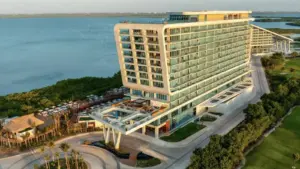
Looking ahead, the economic horizon of Huntington Beach points toward a sophisticated fusion of casual surf culture and elevated coastal luxury. The success of upscale rooftop venues like Offshore 9 at the Waterfront Resort and casual-chic dining concepts like Shor at the Hyatt Regency signals a broader evolution in the city’s hospitality landscape. While its heart will forever beat to the rhythm of the waves, Huntington Beach is rapidly maturing into a comprehensive, multi-generational luxury destination.
Ultimately, the 2026 Global Beach Index ranking validates what Californians have known for decades: Huntington Beach is a singular coastal paradise. By harmonizing a legendary surf pedigree with forward-thinking environmental stewardship and world-class hospitality, "Surf City, U.S.A." has secured its place not only at the pinnacle of the West Coast, but firmly within the upper echelon of global coastal destinations.