







Executive Overview
The Panama Canal Authority (ACP) has announced a significant, temporary relaxation of key elements within its Neopanamax booking system. This regulatory pivot is designed to provide global shipping lines with greater operational flexibility to secure transit slots as the critical waterway braces for a period of severely reduced physical capacity and persistent hydrological stress.
Beginning August 30, for transit dates starting September 13, the ACP will lift previous restrictions, allowing shipping companies to obtain multiple Neopanamax reservations for the same booking date and secure transit slots on consecutive days.
This policy adjustment represents a pragmatic, market-responsive intervention by the ACP. The canal is currently caught in a vice: global demand for its maritime highway remains exceptionally strong, yet the freshwater reservoirs that feed its lock systems are experiencing unprecedented depletion. By introducing these changes, the ACP aims to equitably redistribute available transit capacity across diverse market segments.
Crucially, the new rules incentivize maximum water efficiency. By utilizing metrics like the Transit TEU Allowance (TTA), the authority is prioritizing vessels that can move the highest volume of cargo per cubic meter of freshwater consumed.
The stakes for global logistics could not be higher. As the canal prepares to slash daily transits to conserve water ahead of an expected eight-month El Niño cycle, the booking system has become the sole guarantee against indefinite delays. For vessels operating without reservations, the alternative is a hyper-competitive, high-priced auction market—where single transit slots have recently commanded bids upward of $5.3 million—or long, costly diversions around the Cape of Good Hope or through the Suez Canal.
                  ┌──────────────────────────────────────────┐
                  │      Panama Canal Hydrological Vice      │
                  └─────────────────────┬────────────────────┘
                                        │
                    ┌───────────────────┴───────────────────┐
                    ▼                                       ▼
       [ High Global Cargo Demand ]           [ Severe Freshwater Deficit ]
                    │                                       │
                    └───────────────────┬───────────────────┘
                                        │
                                        ▼
                  ┌──────────────────────────────────────────┐
                  │       ACP Strategic Intervention         │
                  │   (Flexible Bookings + TTA Incentives)   │
                  └──────────────────────────────────────────┘
Detailed Chronology
The current crisis and the ACP’s subsequent regulatory adjustments are the culmination of several months of worsening meteorological conditions and shifting maritime traffic patterns.
  Late Spring / Summer               Mid-August                  August 30                 September 3                September 13                September 15
───────────┬─────────────► ──────────────┬──────────────► ───────────┬─────────────► ───────────┬─────────────► ───────────┬─────────────► ───────────┬─────────────►
           │                             │                           │                           │                           │                           │
     El Niño Begins                Auction Bids                New Rules Go                Neopanamax transits         New booking rules          Panamax transits
     Rainfall drops                hit record $5.3M;           into effect;                cut to 9/day;               officially take            drop further
     below historical              unreserved arrivals         booking window              Panamax cut to              effect for                 to 23/day.
     averages.                     climb to 20-25%.            opens.                      25/day.                     transits.
The Onset of the Water Deficit
Throughout the late spring and summer months, rainfall across the Panama Canal watershed fell significantly below historical averages. The Gatun Lake and Alajuela Lake reservoirs, which supply the millions of gallons of freshwater required for each lock cycle, failed to reach their normal wet-season levels. Recognizing the impending deficit, the ACP began implementing incremental draft restrictions and gradual reductions in daily vessel transits.

The August Escalation
By mid-August, the gap between available transit slots and vessel demand widened dramatically. Canal Administrator Ricaurte Vásquez warned that the percentage of vessels arriving without pre-booked reservations had surged from a historical baseline of roughly 10% to between 20% and 25%. This influx of unreserved vessels triggered intense bidding wars in the daily slot auctions, culminating in a record-breaking $5.3 million bid by one operator to bypass the mounting queue.
The Policy Pivot (August 30)
In response to mounting industry feedback and the unsustainable spike in auction prices, the ACP announced on a Friday that it would temporarily ease booking restrictions. This administrative shift allowed operators to bypass the one-slot-per-customer-per-day restriction for Neopanamax vessels, effective August 30 for transit dates commencing September 13.
Physical Capacity Reductions (September 3)
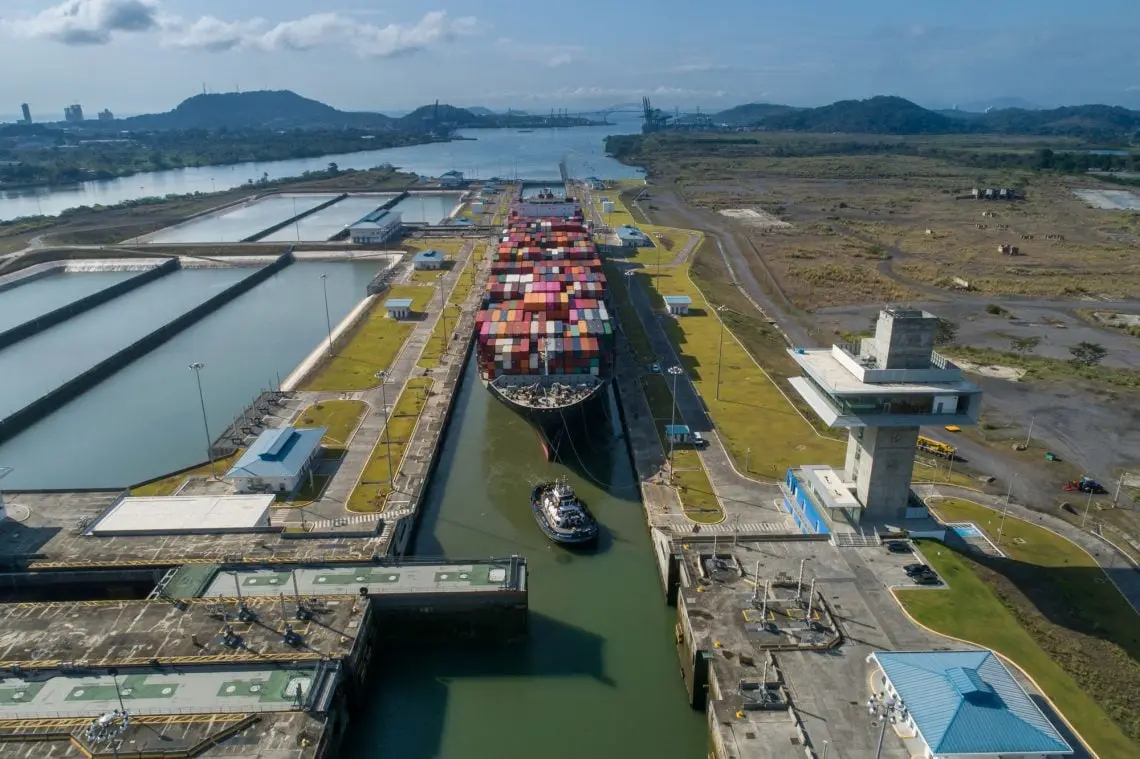
Just days after the booking system adjustments were announced, the physical capacity of the canal was tightened. On September 3, the ACP reduced the number of daily Neopanamax transit slots to nine. Simultaneously, Panamax-class vessel transits were capped at 25 per day.
The New Booking Era (September 13)
The relaxed reservation rules officially took effect for transits transiting on or after this date. This provided a crucial buffer for container lines, liquefied petroleum gas (LPG) carriers, and liquefied natural gas (LNG) operators to coordinate their schedules under the new allocation framework.
Further Capacity Squeezes (September 15)
The physical contraction of the canal’s capacity continued on September 15, when daily Panamax transits were further dialed back from 25 to 23 slots per day, intensifying the reliance on the newly structured reservation system.
Supporting Context & Metrics
To understand the operational realities of the revised booking system, it is necessary to examine the specific metrics and allocation structures the ACP has put in place. The authority is managing a highly complex logistics puzzle, balancing the demands of different vessel classes against a finite, shrinking volume of water.
Weekly Slot Allocations and Segment Minimums
Under the revised framework, the ACP will offer a total of 63 Neopanamax reservation slots per week. This pool includes capacity allocated through the canal’s Long-Term Slot Allocation (LoTSA) program, as well as its environmentally focused NetZero initiatives.
To ensure equitable distribution across different shipping sectors, the ACP has established strict minimum allocations per booking date and week:
| Vessel Segment | Minimum Allocation | Frequency |
|---|---|---|
| Full Containerships | 5 slots | Per Booking Date |
| LPG Carriers | 3 slots | Per Booking Date |
| LNG Carriers | 3 slots | Per Week |
| Vehicle Carriers / RoRos / Bulkers / Others | 3 slots | Per Week |
This targeted distribution prevents any single sector from monopolizing the limited Neopanamax slots, ensuring that critical supply chains—ranging from consumer goods in containers to heating fuels in gas carriers—remain functional.
                  ┌──────────────────────────────────────────┐
                  │    Weekly Neopanamax Slots Available     │
                  │                 (63 Total)               │
                  └─────────────────────┬────────────────────┘
                                        │
         ┌──────────────────────────────┼──────────────────────────────┐
         ▼                              ▼                              ▼
 ┌──────────────┐               ┌──────────────┐               ┌──────────────┐
 │Containerships│               │ LPG Carriers │               │ LNG & Others │
 │ (Min 5/day)  │               │ (Min 3/day)  │               │ (Min 6/week) │
 └──────────────┘               └──────────────┘               └──────────────┘
The Mechanics of Redistribution and Swaps
Recognizing that market demand fluctuates, the ACP built an inherent flexibility mechanism into the new rules. If a specific vessel segment does not utilize its allocated slots, the surplus capacity is systematically redistributed to other sectors. For example, unused containership slots are offered first to LNG and LPG carriers, and subsequently to vehicle carriers, Ro-Ro vessels, and dry bulkers.
Furthermore, the ACP has relaxed its rules regarding vessel swaps and substitutions. Shipping lines operating within alliances or Vessel Sharing Agreements (VSAs) can now swap secured slots or substitute vessels, provided:
- The replacement vessel possesses an equal or greater Transit TEU Allowance (TTA) capacity than the original.
- The transaction does not cause any single operator to exceed their prescribed segment slot limits.
- Booking dates are adjusted under similarly rigorous water-neutral conditions.
The Role of Transit TEU Allowance (TTA)
The inclusion of the TTA metric is a critical innovation in the canal’s hydrological management. For containerships, slots are distributed based on the vessel’s TTA, which measures the cargo-carrying efficiency of the ship relative to its draft and water displacement.
By favoring vessels with higher TTAs, the ACP is effectively forcing ocean carriers to maximize the utilization of every vessel. Rather than running two half-empty ships, carriers are incentivized to consolidate cargo into a single, highly efficient Neopanamax vessel that maximizes the cargo moved per cubic meter of freshwater discharged into the ocean during the lockage process.
Official Statements & Strategic Rationale
The strategic shift by the ACP is a direct response to feedback from global shipping alliances, which have faced escalating operational chaos as slot availability dwindled. The authority’s statements reflect a delicate balancing act: maintaining the canal’s status as a reliable global trade route while managing a severe environmental crisis.
In an advisory to shipping companies, the ACP made the stakes of the current situation clear:
"While the water deficit continues in the Canal watershed, the Transit Reservation (Booking) System remains the only way to guarantee a transit date. Vessels without a reservation may therefore face indefinite delays."
This blunt warning underscores the authority’s intent to drive as much traffic as possible through the structured booking system, thereby reducing the unpredictable queues of unreserved ships that clog the canal’s entry points.
The focus on water efficiency as a primary allocation metric was further illuminated by Panama Canal Administrator Ricaurte Vásquez. In an interview discussing the canal’s long-term hydrological planning, Vásquez detailed the mathematical reality facing the waterway:
"We are asking them to try to consolidate cargo so you can bring a larger vessel to transit at a given draft. We are increasingly looking at cargo moved per cubic meter of water."
Vásquez’s comments reveal a fundamental shift in how the canal views its operations. Historically, the ACP measured success by vessel transits and net tonnage. In the era of climate-induced water scarcity, the primary metric of efficiency has become the volume of global commerce moved per unit of freshwater consumed.
       [ Historical Metric ]                  [ Modern Crisis Metric ]
    ┌─────────────────────────┐             ┌──────────────────────────┐
    │  Total Vessel Transits  │     ───►    │  Cargo Volume per Cubic  │
    │    & Net Tonnage        │             │  Meter of Water Consumed │
    └─────────────────────────┘             └──────────────────────────┘
The relaxation of the booking rules also addresses the economic distortions caused by the auction system. While the record $5.3 million auction bid demonstrated the extreme value of the canal to certain time-sensitive cargoes, it also signaled a market under severe duress. By allowing alliance partners to swap slots and book consecutive dates, the ACP is attempting to cool the auction market, providing a more predictable and financially viable path for scheduled liner services.
Future Outlook
The immediate future of the Panama Canal, and by extension the global maritime supply chains that rely upon it, remains tethered to meteorological patterns. With El Niño conditions projected to persist for at least eight months, the region is bracing for an extended dry season that will test the limits of the ACP’s water conservation strategies.
Operational Adjustments and Alternative Routes
As daily transits remain capped at 9 Neopanamax and 23 Panamax slots, global shipping alliances are actively restructuring their networks. The maritime industry is likely to witness several structural shifts:
- Cargo Consolidation: Container lines will increasingly deploy larger vessels at shallower drafts, maximizing their TTA to secure booking priority under the new ACP rules.
- Route Diversion: For bulk cargo, LNG, and certain lower-margin containerized goods, the unpredictable delays and high auction costs at the Panama Canal will make alternative routes more attractive. Shipowners will increasingly opt for the longer voyage around the Cape of Good Hope or utilize the Suez Canal, despite the geopolitical risks currently associated with the Red Sea transit.
- Land-Bridge Utilization: Some shippers will bypass the canal entirely by utilizing U.S. West Coast ports and transporting cargo overland via rail and truck intermodal networks to the East Coast, reversing a decade-long trend of shifting cargo directly to East Coast ports via the expanded Panama Canal locks.
Long-Term Hydrological Engineering
The current crisis has laid bare the vulnerability of the Panama Canal’s freshwater-dependent design. Unlike the Suez Canal, which is a sea-level ditch, the Panama Canal operates as a freshwater bridge, lifting ships 85 feet above sea level over the continental divide using gravity-fed water from Gatun Lake. Each transit dumps roughly 50 million gallons of freshwater into the sea.
To ensure its long-term survival, the ACP is evaluating several multi-billion-dollar infrastructure projects:
                             ┌───────────────────────┐
                             │  ACP Long-Term Water  │
                             │  Resilience Options   │
                             └──────────┬────────────┘
                                        │
         ┌──────────────────────────────┼──────────────────────────────┐
         ▼                              ▼                              ▼
 ┌──────────────┐               ┌──────────────┐               ┌──────────────┐
 │ New Reservoir│               │  Deepening   │               │   Advanced   │
 │ Construction │               │  Gatun Lake  │               │Recycling Tech│
└──────────────┘ └──────────────┘ └──────────────┘- New Reservoir Construction: The most prominent proposal involves damming the Indio River to create a new reservoir, which would then be connected to Gatun Lake via a multi-mile tunnel to provide a secondary freshwater source during dry spells.
- Deepening Gatun Lake: Dredging the existing lake bed would allow the canal to store more water during the rainy season and maintain deeper drafts during droughts.
- Advanced Water Recycling: The Neopanamax locks already utilize water-saving basins that recycle approximately 60% of the water used per transit. The ACP may look to expand this technology or implement pumping systems to return water from the oceans back into the lake system, though this carries the risk of salinizing the freshwater ecological system.
Conclusion
The temporary easing of the Neopanamax booking system is a vital short-term safety valve for an industry under immense pressure. By fostering flexibility, allowing segment-specific slot redistribution, and leveraging the Transit TEU Allowance, the Panama Canal Authority is attempting to optimize a diminishing natural resource.
However, these administrative adjustments are ultimately temporary fixes for a structural, climate-driven challenge. As the shipping industry navigates the coming dry season under the shadow of El Niño, the Panama Canal’s transition from a high-throughput transit channel to a highly managed, water-efficient bottleneck represents a critical turning point in modern global trade.