









By Courtney Subramanian and Catherine Lucey
Executive Overview
The fragile prospects for peace in the Middle East have suffered a severe and potentially irreversible setback. President Donald Trump has officially declared that the United States has no interest in extending the expiring temporary truce with Iran. This critical diplomatic mechanism—a memorandum of understanding (MOU) signed in June—was designed to provide a 60-day window for Washington and Tehran to negotiate a comprehensive, long-term peace agreement. With the agreement set to expire, both sides have pronounced the deal defunct, setting the stage for a dangerous new phase in a conflict now approaching its six-month mark.
The collapse of the diplomatic track comes amid a sharp escalation of hostilities across multiple regional fronts. In Lebanon, heavy fighting has flared anew following targeted Israeli airstrikes, while the strategic Strait of Hormuz remains a highly volatile flashpoint. The geopolitical fallout was immediately felt in global energy markets, where Brent crude spiked above $90 a barrel on Monday. Investors are increasingly pricing in the likelihood of a prolonged conflict that threatens to permanently disrupt one of the world’s most vital maritime energy corridors.
As the Trump administration struggles to find an off-ramp for an increasingly unpopular war, domestic political pressures are mounting ahead of November’s crucial midterm elections. With the diplomatic channel collapsing, Washington is pivoting back to aggressive economic warfare, preparing a suite of unprecedented sanctions designed to completely isolate the Iranian economy. Meanwhile, Tehran is reportedly utilizing the recent lull in direct fighting to prepare for a broader, sustained military confrontation, signaling that the window for a negotiated settlement may have closed.
Detailed Chronology: The Path to Escalation
[June 2026] ────► [Mid-August 2026] ──► [Late August 2026] ──► [September 2026]
MOU Signed        Truce Expires         Assassination of        Midterm Elections
(60-Day Window)   (Trump Says "No")     Abu Hassan Alaa         Political Pressure
The Expiration of the June Memorandum
The current crisis is rooted in the expiration of the June memorandum of understanding. The temporary truce was intended to halt active hostilities and allow diplomats from the U.S., Iran, and regional intermediaries to draft a permanent framework for maritime security and sanctions relief. However, negotiations quickly stalled over the U.S.-led naval blockade of Iranian ports and the terms surrounding the reopening of the Strait of Hormuz.
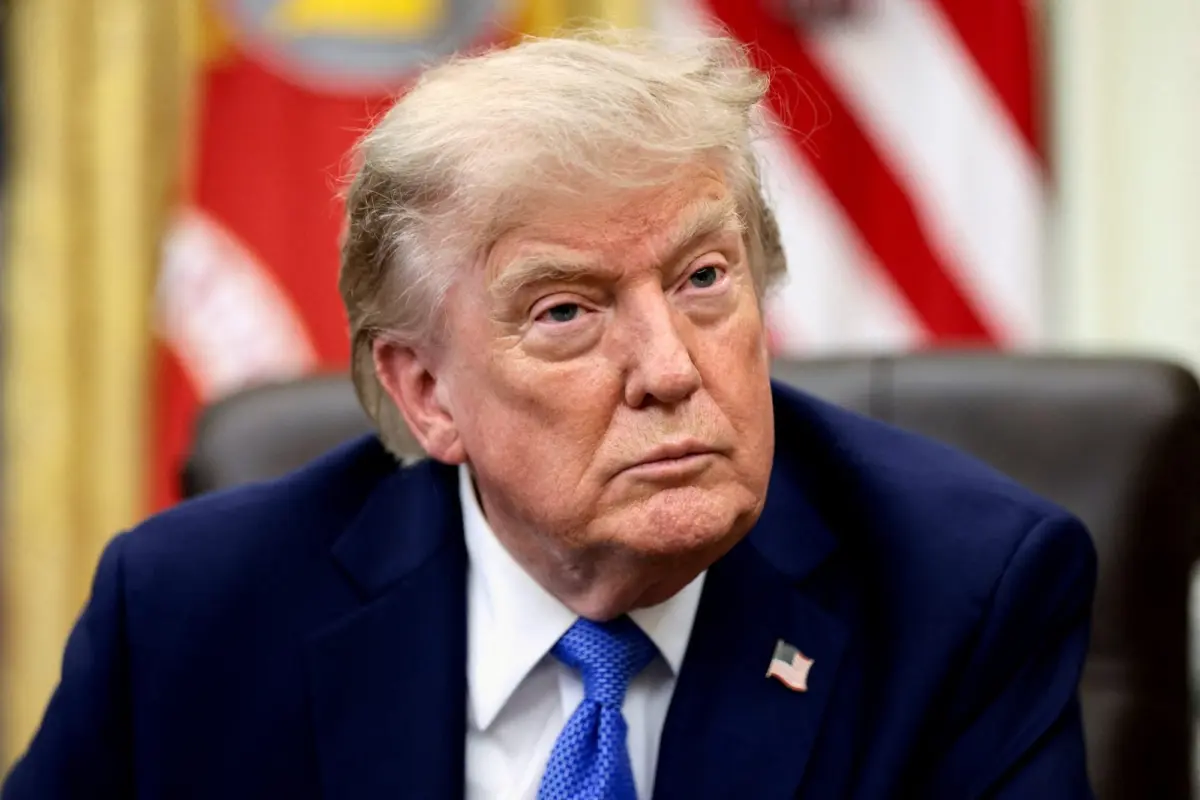
On Monday, when asked by reporters whether he would seek a last-minute extension of the MOU, President Trump responded with a flat "No." The declaration officially ended the formal diplomatic pause, reverting both nations to an active state of hostility.
The Spark in Southern Lebanon
Simultaneously, the northern front of the regional conflict erupted over the weekend. The Israeli military confirmed it had successfully targeted and killed Abu Hassan Alaa, a senior commander of the Iran-backed militant group Hezbollah, in southern Lebanon. The precision strikes on Saturday resulted in the deaths of eleven people.
Israeli Prime Minister Benjamin Netanyahu defended the operation, stating it was direct retaliation for a recent Hezbollah attack that had seriously injured three Israeli soldiers. The strikes have triggered renewed artillery duels and rocket fire across the Blue Line, threatening to drag Lebanon into a full-scale ground war.
Diplomatic Maneuvers in Cairo and Jerusalem
Against this backdrop of escalating violence, Jared Kushner, Trump’s son-in-law and special peace envoy, arrived in the region on a high-stakes mission to salvage a parallel ceasefire in Gaza.
- Sunday (Cairo): Kushner held unpublicized talks with Hamas chief Khalil al-Hayya in Egypt to discuss terms for a pause in hostilities and hostage releases.
- Monday (Jerusalem): Kushner, alongside former British Prime Minister Tony Blair and Nickolay Mladenov—the top envoy for the U.S.-created Board of Peace—met with Prime Minister Netanyahu to pressure the Israeli government into accepting a transition roadmap.
Despite these high-level meetings, Hamas issued a sharp statement calling on international mediators to "compel" Israel to adhere to the proposed roadmap, highlighting the deep mistrust stymieing the negotiations.
Supporting Context & Market Metrics
Energy Markets and the Hormuz Bottleneck
The immediate casualty of the diplomatic breakdown was the global energy market. Brent crude rose by more than 7% over the past week, crossing the threshold of $90 per barrel on Monday.
Brent Crude Oil Price Movement (August 2026)
==================================================
Early August:   $84.00/bbl
Mid-August:     $90.50/bbl  ▲ (+7.7% weekly gain)
==================================================
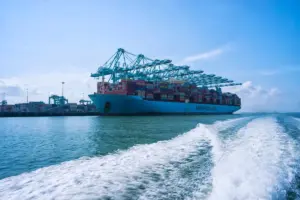
This rapid appreciation reflects deep anxiety over the Strait of Hormuz, a maritime chokepoint through which approximately 20% of the world’s liquefied natural gas (LNG) and petroleum transited prior to the outbreak of the war. With the passage effectively blocked to commercial traffic and several merchant vessels recently struck by unidentified projectiles, shipping lanes remain paralyzed.
| Metric | Pre-War Level | Current Status under Blockade |
|---|---|---|
| Strait of Hormuz Daily Transit | ~21 Million Barrels/Day | Negligible / Heavily Restricted |
| Iranian Crude Exports | ~1.5 Million Barrels/Day | Approximately Zero |
| U.S. Regional Extraction | N/A | 8 to 9 Million Barrels/Day (U.S. Military Managed) |
| Brent Crude Price | ~$75.00 / Barrel | $90.50+ / Barrel |
Economic Warfare and Domestic Pressures
The Trump administration is attempting to leverage its naval dominance to offset the domestic political fallout of rising fuel prices. Treasury Secretary Scott Bessent announced that the administration is preparing to roll out a new package of economic measures aimed at the total economic isolation of Iran. Bessent characterized these upcoming sanctions as "like have never been seen," designed to permanently sever Tehran’s remaining financial lifelines.
However, the domestic political clock is ticking. The war is entering its sixth month, and public dissatisfaction with the prolonged military deployment is growing. Republican strategists are concerned that sustained high energy prices and the threat of a wider war could severely damage the party’s prospects in the upcoming November midterm elections. This political vulnerability has forced the administration to project absolute strength while quietly searching for an asymmetric advantage.
Official Statements and Diplomatic Friction
The View from Washington
President Trump has maintained a highly combative posture, dismissing the need for diplomatic compromise and asserting that the U.S. holds all the leverage due to its naval blockade. During an interview with Fox News, Trump reiterated his highly controversial proposal to declare the Strait of Hormuz an "American territory," claiming that the U.S. military retains "total control" over the international waterway.
When questioned about ongoing independent negotiations between the Sultanate of Oman and Iran regarding shipping management, Trump issued a blunt warning:
"If Oman gets in the way, we’ll bomb the s— out of them."
While Oman is not a formal treaty ally of the United States, it has historically acted as a critical security partner and diplomatic backchannel between Washington and Tehran. Trump’s aggressive rhetoric has shocked regional diplomats and threatened to alienate one of the few neutral actors capable of mediating a truce.
In the same interview, Trump claimed that backchannels between U.S. officials and the Islamic Revolutionary Guard Corps (IRGC) remained open and active.
The View from Tehran
Iranian officials quickly moved to counter Trump’s assertions. A spokesman for the Iranian government, speaking through the state-run IRNA news agency, dismissed Trump’s claims of active backchannels with the IRGC as a complete "delusion."
At a press conference in Tehran, Foreign Ministry spokesman Esmail Baghaei blamed the collapse of the shipping talks on the "obstructionist behavior of destructive elements" within the U.S. coalition. While Baghaei confirmed that a technical "shipping map" had been drafted to govern traffic in the Strait of Hormuz, he emphasized that no deal would be implemented until the United States completely dismantled its naval blockade.
"A technical agreement on paper will not translate into the reopening of the Strait of Hormuz while our ports remain under siege. The United States must remove its illegal blockade if it wishes to see global commerce resume."
— Esmail Baghaei, Iranian Foreign Ministry Spokesman
Further compounding the rhetorical battle, U.S. Energy Secretary Chris Wright defended the administration’s strategy on Fox News. Wright claimed that the U.S. military is successfully "bringing out eight or nine million barrels of oil per day" from the region to stabilize global markets, while successfully reducing Iranian crude exports to "zero barrels."
Future Outlook: A Region on the Brink
Iran’s Preparation for a Broader War
Intelligence reports suggest that Iran is not planning to back down under the pressure of the U.S. blockade. According to reporting from the Wall Street Journal, which cited both Iranian and Arab officials, Tehran has utilized the relative lull in direct military clashes over the summer to prepare for a wider, high-intensity conflict.
Rather than capitulating to sanctions, the Iranian leadership has:
- Restructured National Security: Hardline military veterans and ideologues have been installed in key positions within the defense ministry and the IRGC.
- Accelerated Defense Production: Domestic factories have significantly ramped up the manufacturing of advanced ballistic missiles, loitering munitions, and attack drones.
- Hardened Infrastructure: Key industrial and military assets have been decentralized and moved deeper underground to withstand potential U.S. or Israeli airstrikes.
Despite decades of economic sanctions, Tehran’s command over proxy forces—ranging from Hezbollah in Lebanon to the Houthis in Yemen—remains robust. The Houthis have continued to target commercial shipping in the Red Sea, demonstrating that Iran retains the capability to disrupt global supply chains at multiple geographic chokepoints simultaneously.
The Kushner Mission and the Regional Wildcard
The success of Jared Kushner’s diplomatic mission remains highly uncertain. While the "Board of Peace" is attempting to force a structured ceasefire in Gaza, Prime Minister Netanyahu is facing his own domestic pressures. Radical Israeli settler groups have recently laid siege to Palestinian communities in the West Bank, drawing widespread international condemnation. While Netanyahu has downplayed the violence, attributing it to a "small number of radicals," the growing internal instability makes a coordinated, regional peace deal highly unlikely.
Without a breakthrough in the Gaza ceasefire talks, the conflict is poised to expand. The expiration of the U.S.-Iran MOU on Monday removes the last formal diplomatic barrier preventing a direct military confrontation. With global oil prices climbing, diplomatic channels closing, and both militaries actively preparing for escalation, the Middle East is entering its most volatile period since the outbreak of the war.