










Executive Overview
Nine months after it was first teased to the public, Google’s much-anticipated agentic hotel booking feature is officially making its debut. Beginning this week, travelers in the United States interacting with Google’s AI Mode will no longer be limited to browsing search results or being redirected to external platforms. Instead, they will be able to discover, compare, select, and seamlessly pay for their lodging arrangements directly within the conversational interface.
This launch represents a significant evolutionary leap in how consumers interact with digital travel aggregators. By integrating end-to-end transaction capabilities into an AI-powered conversational assistant, Google is stepping further into the transactional fabric of the travel industry. However, the rollout is bound to raise eyebrows across the sector. Skeptics and industry veterans immediately draw parallels between this new agentic feature and Google’s now-defunct "Book on Google" tool—a product that faced immense regulatory scrutiny, friction with online travel agencies (OTAs), and eventual quiet sunsetting.
Despite these historical echoes, Google insists that its new iteration is fundamentally different. Rather than attempting to bypass hoteliers and OTAs to own the entire customer relationship, the tech giant is positioning itself as an intelligent conduit. Major hospitality brands and booking giants—including Booking.com, Choice Hotels, Expedia, Hilton, Hotels.com, IHG, Marriott, Priceline, Trip.com, and Wyndham—have signed on as launch partners.
While the marketing terminology heavily leans into the buzzword-heavy concept of "agentic AI," Google is careful to clarify the boundaries of its autonomy. The system does not act as a rogue agent booking trips completely unprompted; rather, it handles complex, multi-step orchestration behind the scenes. This in-depth report explores the mechanics of the new launch, the lessons learned from past failures, the strategic alignment with major travel conglomerates, and the future outlook for AI-driven travel commerce.
Detailed Chronology: From Teaser to Transaction
The journey toward Google’s agentic hotel booking capability did not happen overnight. It is the culmination of a multi-year strategy to embed artificial intelligence deeper into the travel discovery and booking funnel.
November: The Initial Tease
The concept was first publicly unveiled in late November during a major product showcase. At the time, Google executives teased a vision of the future where search engines would transform into active digital concierges. The narrative centered around "agentic workflows"—systems capable of executing complex goals on behalf of users rather than simply presenting a list of blue links. Travel, with its myriad variables, fragmented pricing, and endless filtering options, was showcased as the ultimate proving ground for this technology.
However, when the initial announcement was made, critical operational details were missing. How would payments be handled? Who would own customer support? Would OTAs rebel against Google keeping users on its platform? For nearly nine months, the industry speculated on how Google would bridge the gap between AI-driven inspiration and back-end transaction processing.

The Spring and Summer Build-Up
Throughout the spring and summer, rumors and developer leaks indicated that Google was quietly testing the infrastructure with a select cohort of hospitality partners. Unlike previous proprietary efforts, Google recognized that alienating the travel ecosystem would spell doom for the project. The company engaged in extensive back-room negotiations with major hotel chains and OTAs to establish a framework that protected their direct relationships while leveraging Google’s interface gravity.
The Launch: What Happens Today
Beginning Thursday, the feature goes live for U.S. users engaging with Google’s AI Mode. The workflow is designed to be frictionless:
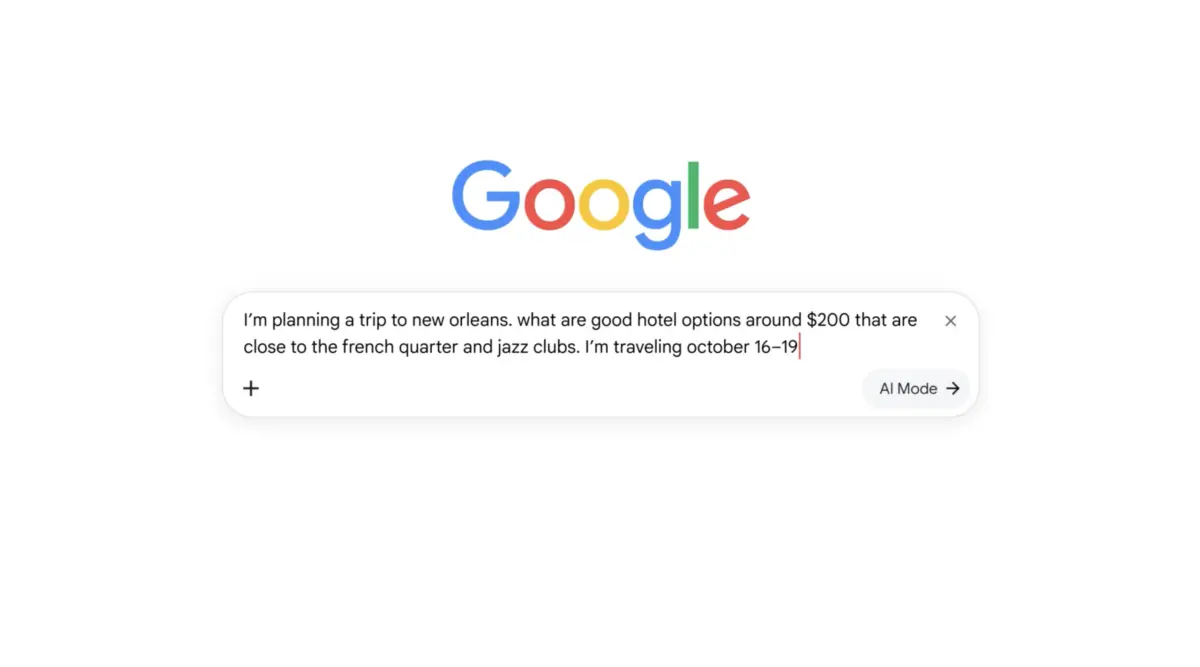
- Conversational Discovery: A user might prompt the AI with a complex query, such as: "Find me a pet-friendly boutique hotel in downtown Chicago under $300 a night with a rooftop pool for next weekend."
- Filtering and Comparison: Instead of returning a grid of standard web links, the AI parses the inventory, cross-references live rates, and presents tailored options complete with conversational summaries of why each property fits the user’s specific constraints.
- Policy Review: The user can ask follow-up questions regarding cancellation terms, resort fees, and parking availability. The AI extracts this fine print instantly.
- Checkout: Once a decision is made, the transaction is finalized via Google Pay directly within the chat window.
Crucially, the physical transaction processing and customer data ownership remain with the partner. The hotel or OTA officially charges the user’s card, issues the confirmation, and assumes responsibility for post-booking customer service, modifications, and on-property support.
Supporting Context & Metrics: The Shadow of "Book on Google"
To fully understand the significance of this launch, one must examine Google’s past missteps in the travel booking ecosystem.
The Ghost of "Book on Google"
For years, Google operated "Book on Google," a feature that allowed users to complete airline and hotel transactions directly on Google’s interface without navigating to an airline or OTA website. While popular with consumers who appreciated the speed and convenience, the tool was deeply controversial within the travel industry.
Major OTAs and hotel chains argued that Google was abusing its monopoly power as the primary gateway to the internet. By keeping users on its pages, Google was accused of hoarding valuable customer data, bypassing direct brand touchpoints, and effectively forcing travel companies to compete on Google’s terms while still paying for advertising. Under mounting antitrust pressure, regulatory scrutiny from the European Union and the United States, and shifting strategic priorities, Google quietly phased out the tool.
Why Google Believes This Time Is Different
Industry analysts are naturally asking: Why would hoteliers and OTAs support this new AI-driven booking tool if it looks suspiciously like the old one?
Google’s answer lies in the shifting nature of consumer behavior and the economics of AI traffic acquisition. Key differences in the current rollout include:
- The Rise of Conversational Intent: Consumers are increasingly turning to generative AI to plan their lives. If Google did not offer a native transaction capability within its AI Mode, users would inevitably migrate to specialized AI travel planners or alternative conversational interfaces (such as ChatGPT or Perplexity), cutting Google out of the discovery-to-transaction loop entirely.
- Preserving Brand Equity: In the previous "Book on Google" model, the user experience often felt abstracted from the underlying brand. In the new agentic model, the partner remains front and center. The hotel or OTA processes the payment, sends the confirmation email, and owns the guest profile from the moment the booking is secured.
- Ecosystem Alignment: The roster of launch partners reads as a literal who’s who of the global travel industry. By bringing giants like Expedia, Booking Holdings, Marriott, and Hilton into the fold on day one, Google has insulated itself against accusations of predatory displacement. These companies realize that participating in Google’s AI ecosystem is no longer optional if they want to capture high-intent travelers who bypass traditional search.
The Economic Landscape of Travel Search
According to recent digital marketing benchmarks, travel brands continue to spend billions annually on Google Ads to capture high-intent search traffic. However, user habits are fragmenting. Gen Z and Millennial travelers frequently start their research on social platforms like TikTok or dedicated AI chat interfaces rather than traditional search engines. By embedding booking capabilities directly into AI Mode, Google is attempting to recapture dominance over the entire travel funnel—from initial dream state to financial commitment.
Official Statements and Industry Perspective
The rollout has triggered widespread commentary across the travel technology and hospitality sectors. While tech optimists view it as the dawn of hyper-personalized travel planning, industry veterans maintain a cautious, "trust-but-verify" posture.
Google’s Positioning: "Agentic" vs. "Autonomous"
A central point of clarification from Google revolves around the definition of "agentic." In tech marketing vernacular, agentic AI often implies an autonomous agent that acts independently without human oversight. However, Google’s product leads are quick to define the scope of their system narrowly.
"When we call this an agentic tool, we do not mean that AI Mode is acting as a rogue travel agent booking trips completely on its own accord," a Google product spokesperson noted during a background briefing. "The agentic work happens behind the scenes. The AI orchestrates complex data retrieval, synthesizes disparate sources, manages dynamic UI states, and streamlines the handoff. But the human user remains firmly in the driver’s seat, making the final selections and executing the authorization."
This distinction is crucial for regulatory compliance and consumer trust. By ensuring that the AI never commits funds or finalizes reservations without explicit user confirmation, Google avoids liability issues related to erroneous bookings or misunderstood preferences.
Partner Perspectives: Cautious Optimism
The inclusion of major hospitality brands at launch indicates that hotel executives have calculated the risk-reward ratio and found it favorable.
- The OTA Viewpoint: OTAs like Expedia and Booking.com have historically walked a tightrope with Google—viewing the tech giant simultaneously as their biggest customer (via ad spend) and their most dangerous competitor. By securing integration partnerships where they retain the financial relationship with the customer, OTAs ensure they do not get disintermediated by the AI layer.
- The Hotel Chain Viewpoint: For hotel groups like Marriott, Hilton, IHG, and Wyndham, direct bookings are the holy grail because they eliminate OTA commissions and build direct loyalty database assets. Because Google’s new tool funnels the final transaction back to the brand’s payment gateway, these chains view the integration as an innovative acquisition channel rather than a direct threat to their loyalty ecosystems.
Future Outlook: What’s Next for AI Travel Commerce?
The launch of agentic hotel booking in Google’s AI Mode is not an endpoint; it is the opening salvo in a much larger transformation of digital commerce. As we look toward the remainder of the decade, several key trends are likely to emerge:
1. Expansion Beyond Hotels
While lodging is the logical starting point due to its standardized inventory and high search volume, the underlying agentic infrastructure can easily be adapted for other verticals. Industry insiders expect flights, car rentals, experiential tours, and dining reservations to be integrated into Google’s AI booking ecosystem within the next 12 to 18 months. The ultimate vision is a unified conversational itinerary builder where an entire multi-city vacation—flights, hotels, rental cars, and restaurant reservations—can be negotiated, finalized, and paid for within a single chat thread.
2. The Evolution of Loyalty Integration
One of the most pressing questions for frequent travelers is how loyalty programs will interact with AI-driven bookings. If a user books a Marriott property through Google’s AI Mode, will they still earn Marriott Bonvoy points? Will elite status benefits be recognized? For the current launch, participating partners have assured that standard booking channels apply, meaning traditional loyalty mechanics should function as normal. However, as AI agents become more sophisticated, integrating personal loyalty credentials, credit card rewards optimization, and member-exclusive pricing directly into the AI prompt will become the next battleground for consumer loyalty.
3. Regulatory Watchdogs on High Alert
Despite Google’s careful structuring of the partner ecosystem, antitrust regulators in the United States and Europe will undoubtedly monitor the rollout closely. The core concern remains self-preferencing—whether Google’s AI will subtly steer users toward properties that yield higher advertising revenues for Google or prioritize its own integrated services over competitors. Maintaining algorithmic transparency and ensuring fair access for boutique, independent hotels that lack enterprise partnerships will be critical regulatory flashpoints in the near future.
4. The Changing Role of the Human Travel Agent
As conversational AI grows more capable of handling complex logistical puzzles, the role of human travel advisors is forced to evolve. Routine, transactional bookings—such as booking a chain hotel for a business trip or securing a standard weekend getaway—will almost entirely migrate to automated systems like Google’s AI Mode. Consequently, human travel advisors will increasingly pivot toward high-end, bespoke, experiential travel planning where human empathy, deep personal connections, and insider access cannot be replicated by an algorithm.
Conclusion
Google’s introduction of agentic hotel booking in AI Mode marks a pivotal milestone in the intersection of artificial intelligence and digital commerce. By learning from the regulatory and commercial stumbles of "Book on Google," the company has crafted a collaborative framework that brings major hospitality brands and OTAs along for the ride rather than leaving them behind.
While the term "agentic AI" may carry a heavy load of tech industry hype, the underlying reality is pragmatic: travelers want less friction when planning and booking complex journeys. By blending conversational discovery with seamless, secure checkout while preserving the vital brand-to-consumer relationship on the back end, Google has positioned its AI chat interface as a formidable new player in the travel booking funnel.
As U.S. travelers begin testing the feature this week, the entire industry will be watching closely. The success or failure of this rollout will establish the blueprint for how artificial intelligence mediates commercial transactions for the foreseeable future, proving whether AI can truly act as an effective travel concierge without disrupting the delicate economic balance of the global tourism ecosystem.