






Published by the Sea Tow Editorial Team
Originally Created: August 7, 2026 — Updated: August 11, 2026
Executive Overview
For any mariner, the sight of water contaminating a boat’s engine oil is one of the most alarming discoveries that can be made during routine checks or out on the water. Healthy marine engine oil should consistently present as a clean, amber, or dark brown fluid with a clear viscosity designed to coat and protect high-tolerance internal moving parts. When that oil transforms into a cloudy, frothy, light brown, or milky emulsion, it signals an immediate mechanical emergency.
Water intrusion into a lubrication system is not a minor maintenance issue to monitor, log, and deal with at the end of the weekend; it is a critical failure that demands the immediate shutdown of the powerplant. Running an engine with water-contaminated oil strips away essential lubrication within minutes, generating catastrophic friction, warped components, and—ultimately—total engine seizure.
This comprehensive report examines the structural causes of water intrusion, outlines field identification techniques, details the physics of why contaminated oil destroys machinery, and establishes the protocol for safely managing an on-water breakdown. Furthermore, it outlines how professional maritime assistance networks, such as Sea Tow, step in when mechanical integrity is compromised, ensuring that a disabled vessel returns safely to port without escalating into a financial or physical disaster.
Detailed Chronology: How Water Intrusion Escalates From Warning to Catastrophe
Understanding the timeline of a water intrusion event helps boaters recognize why immediate action is non-negotiable. When a seal breaches, a gasket fails, or saltwater breaches an exhaust manifold, the breakdown of the engine occurs in a rapid, cascading sequence.
Phase 1: The Breach (The Inciting Incident)
Water enters the lubrication system through one of several mechanical vulnerabilities. Whether it is a hairline crack in an exhaust riser caused by cumulative saltwater corrosion, a blown head gasket resulting from a localized thermal overload, or residual water remaining after a vessel takes on a heavy wave or experiences a temporary submersion, foreign fluid gains access to the crankcase or valvetrain.
Phase 2: Emulsification (The Transformation)
As the crankshaft rotates, it acts like an industrial blender, whipping the engine oil and the newly introduced water together at high RPMs. Because oil and water do not naturally blend, mechanical agitation forces them into an emulsion. This chemical and physical transformation creates the classic "milkshake" appearance on the dipstick. More importantly, this mixture loses its film strength—the critical barrier that prevents metal-on-metal contact between bearings, cylinder walls, and piston rings.

Phase 3: Lubrication Collapse and Thermal Spike
With the protective oil film compromised, friction skyrockets. Metal surfaces begin to rub against one another without adequate cushioning or heat dissipation. Microscopic metal shavings begin to shed into the contaminated fluid, accelerating internal wear. Temperatures inside the combustion chambers and lower engine blocks rise exponentially, frequently triggering secondary thermal alarms and warp conditions.
Phase 4: Mechanical Lockup or Catastrophic Failure
If the operator continues to run the engine, the friction becomes so intense that tight-tolerance parts—such as piston skirts and cylinder walls—weld themselves together through thermal expansion, causing an abrupt engine seizure. Alternatively, connecting rods may snap, punching a hole directly through the engine block. At this juncture, a repairable component failure has escalated into a complete, high-cost engine replacement.
Supporting Context & Metrics: Diagnostic Indicators and Root Causes
Recognizing the precursor events and physical signs of water intrusion can save a mariner thousands of dollars in repair bills and prevent dangerous offshore emergencies.
Identifying the Warning Signs on the Water
Mariners must cultivate the habit of checking fluid levels before every departure. The primary and most definitive sign of water intrusion is visual:
- The Dipstick Test: Pulling the dipstick and finding a light brown, creamy, or opaque white-to-gray fluid instead of amber or dark brown oil.
- Abnormal Engine Performance: Rough idling, unexpected stalling, or a noticeable drop in power.
- Unexplained Fluid Loss: Constantly needing to top off freshwater cooling reservoirs without any visible external leaks.
- Exhaust Anomalies: Excessive white smoke or steam billowing from the exhaust discharge long after the engine has reached normal operating temperatures (distinct from normal condensation on a cold morning).
[Normal Oil: Amber / Dark Brown]  --->  [Water Contamination: Milky / Light Brown]
                                              |
                                              v
[Immediate Shutdown Required]     --->  [Severe Friction & Bearing Failure]
Primary Pathways of Water Intrusion
Water does not enter an engine by accident; it requires a structural failure of a physical barrier separating the cooling/external environment from the lubrication pathways.
- Blown Head Gaskets: The head gasket seals the combustion chambers to the engine block while managing coolant and oil channels. When a head gasket blows—often due to localized overheating—coolant or raw water can cross paths directly into the oil galleries.
- Cracked Engine Blocks and Exhaust Manifolds: Extreme freezing temperatures left un-winterized, or sudden thermal shock from running dry, can crack cast-iron or aluminum engine blocks. Similarly, saltwater exhaust manifolds and risers corrode from the inside out over time, eventually wearing thin enough to let cooling water seep down into the cylinders and past the piston rings into the oil pan.
- Submersion, Flooding, and Grounding Impacts: Vessels that take on substantial water from heavy seas, bilge pump failures, or severe groundings can ingest water through low-mounted air intakes or exhaust ports. Even if the engine is dried out externally, residual water trapped in the crankcase will silently ruin the internal components if fired up without an oil change.
Official Guidelines: Immediate Protocols When Water is Discovered
When a boater confirms or strongly suspects water in their engine oil, a strict protocol must be enacted to safeguard human life and protect the machinery.
Step 1: Immediate Shutdown
Do not hesitate. Shut the engine off the exact second the diagnosis is confirmed or strongly suspected. Resist the temptation to "limp back to the dock" or see if the engine smooths out. Every additional revolution of the crankshaft increases the likelihood of irreversible internal damage.
Step 2: Safety Assessment and Drift Evaluation
Once the motor is dead, your vessel is effectively a floating hull subject to wind, tide, and passing commercial traffic.
- Drop anchor if you are in shallow enough water to prevent drifting toward shoals, rocks, or breaking surf.
- Put on your personal flotation devices (PFDs) if weather conditions are deteriorating.
- Assess your exact geographical coordinates using onboard GPS or chartplotters.
Step 3: Determine Propulsion Status
Evaluate whether the vessel can operate safely under auxiliary power (such as a kicker motor or twin-engine configuration, provided the second engine is entirely independent and uncontaminated). If the vessel is single-engine, or if both engines are compromised, troubleshooting ends, and professional assistance must be summoned.
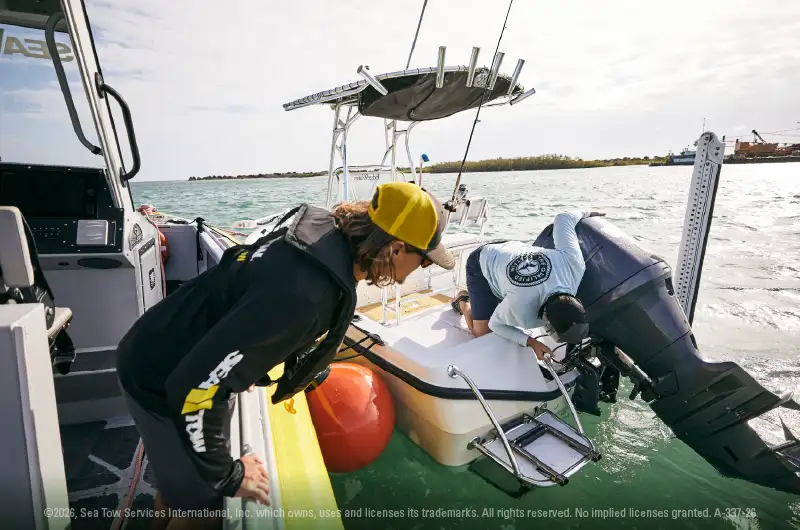
The Reality of On-Water Repairs
A common question among stranded boaters is whether they can flush the oil, change the filters, and fix a blown head gasket or cracked manifold while anchored or drifting on the water.
The definitive answer is no.
Performing a temporary patch on a severe mechanical failure in a marine environment introduces unacceptable safety risks. Engine repair requires specialized tools, torque wrenches, clean working conditions free from saltwater spray and humidity, and replacement parts that are rarely on hand in a tackle box. Attempting to tear down an engine while rocking on open water often results in lost fasteners, environmental fluid spills, and prolonged exposure to hazardous weather.
Furthermore, simply draining milky oil and refilling it with fresh oil does not solve the root cause. If a head gasket is blown, the fresh oil will turn milky within seconds of startup. Professional repairs must be conducted dockside or within a controlled marine service facility.
Professional Maritime Assistance: How Sea Tow Protects Boaters
When mechanical failure leaves a vessel dead in the water, attempting makeshift repairs or drifting toward danger is entirely unnecessary when professional assistance is only a call away. Sea Tow provides 24/7 nationwide on-water towing and assistance, acting as a reliable safety net for recreational and commercial mariners alike.
Why Professional Towing Outweighs "Limping Back"
Attempting to nurse a damaged, water-contaminated engine back to port frequently turns a manageable service bill into a total loss. By engaging a professional towing service, boaters prevent:
- Total engine seizure midway through a channel.
- Allisions with docks, navigational aids, or other vessels due to a lack of steerage.
- Putting passengers at risk in heavy seas or restricted visibility.
Services Provided by Expert Captains
Licensed Sea Tow Captains arrive on the scene equipped to handle distressed vessels securely. Instead of risking further mechanical breakdown, they provide:
- Safe, secure towing lines and bridle setups tailored to your hull type.
- Navigation through congested fairways, inlets, and narrow channels.
- Direct transit to your home slip, boatyard, or a local service facility equipped to handle engine teardowns.
The Value of Preparation and Membership
Unexpected marine repairs are stressful enough without worrying about out-of-pocket towing expenses. Maintaining an active Sea Tow membership ensures that members receive priority service without paying exorbitant hourly towing rates out on the water. Reviewing membership tiers and benefits prior to stepping foot on a boat is a fundamental tenet of responsible seamanship—preparation is always less costly and stressful than reacting in an emergency.
Frequently Asked Questions
What does milky oil mean in a boat engine?
Milky, frothy, or light brown oil indicates that water has mixed with your lubrication system, typically caused by a blown head gasket, cracked exhaust manifold, or water ingestion. It requires an immediate engine shutdown.
Can water in engine oil ruin my boat engine?
Yes. Water destroys the film strength of engine oil, leading to extreme friction, warped components, bearing failure, and potential engine seizure within minutes of operation.
Is it safe to run a boat with water in the oil?
No. Running an engine with contaminated oil accelerates internal wear and can quickly transform a repairable mechanical issue into a complete engine replacement.
Can Sea Tow tow my boat if my engine is damaged?
Yes. Sea Tow provides professional on-water towing and assistance when mechanical failures prevent safe navigation under your own power.
How do I request a tow from Sea Tow if my engine fails?
If you require immediate on-water assistance, you can contact Sea Tow via VHF Marine Radio on Channel 16, by calling 800-4-SEATOW (800-473-2869), or directly through the Sea Tow mobile app.
Future Outlook: Modern Diagnostics and Preventative Maintenance
As marine propulsion technology evolves, the integration of smart sensors and digital engine monitoring systems is changing how boaters detect mechanical anomalies before they become critical failures. Modern electronic control modules (ECMs) are increasingly capable of monitoring oil pressure fluctuations, abnormal temperature spikes, and coolant loss trends in real-time.
However, technology cannot replace diligent pre-departure inspections. The future of safe boating relies on combining advanced preventative maintenance—such as annual cooling system flushes, timely replacement of exhaust manifolds every few seasons, and regular dipstick checks—with trusted on-water support networks. By staying vigilant, respecting mechanical warning signs, and knowing when to call for professional assistance, mariners can ensure that a potential engine disaster remains nothing more than a manageable detour on an otherwise great day on the water.