







Executive Overview
The Rolex Sydney Hobart Yacht Race is universally recognized as one of the most grueling, unforgiving 628-nautical-mile offshore events on the global sailing calendar. Pitting elite crews against the volatile, tempestuous Tasman Sea and the notoriously treacherous Bass Strait, the race is an undisputed test of human endurance and marine architecture.
For the 80th anniversary edition of the race—which set sail on December 26 (Boxing Day)—meteorological forecasts promised conditions even more menacing than usual. A volatile mix of powerful, sustained southerly winds colliding head-on with the rapid, southward-flowing East Australia Current (the Southern Hemisphere’s equivalent of the Gulf Stream) guaranteed chaotic, mountainous seas, particularly during the opening 24 hours. A race official summarized the ominous outlook on the eve of the start: "It’s going to be cold, wet, and bumpy. People will get seasick."
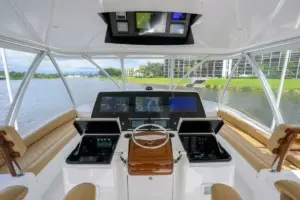
Yet, while hundreds of professional and Corinthian sailors prepared to tackle this marine gauntlet aboard high-tech racing monohulls, a unique auxiliary mission was unfolding alongside them. Tasked with shadowing the fleet, capturing media updates, and testing the limits of modern luxury motor yacht design, the Palm Beach 65 sedan cruiser Palm Beach XII set out to conquer the exact same course.
Staffed by seasoned offshore veterans—including skipper David “Tower” Sampson and marine media professionals—Palm Beach XII embarked on a journey that would push engineering, seamanship, and psychological endurance to their absolute limits. Transiting the notorious Bass Strait in relentless 10- to 12-foot seas while maintaining a blistering 17-knot pace, the Palm Beach 65 did not merely survive; it delivered an authoritative masterclass in seaworthiness, proving that world-class luxury and extreme offshore capability can coexist in a single hull.
Detailed Chronology: From Sydney Harbour to the Derwent River
Day One: The Madhouse Start and the First Wall of Water
Under slate-gray skies and an unseasonably chilly Australian summer temperature hovering around 60 degrees Fahrenheit, Sydney Harbour transformed into a chaotic theater of marine activity. Hundreds of spectator boats buzzed the starting line, while media helicopters whirled overhead, rotor wash whipping up the surface waters.
For the crew aboard Palm Beach XII, the atmosphere was remarkably pleasant during the initial exit through the Heads at the mouth of the harbor. However, the moment the yacht turned south into the open ocean alongside the racing fleet, the mood shifted instantly. As local mariners would say, "It was all on for young and old."
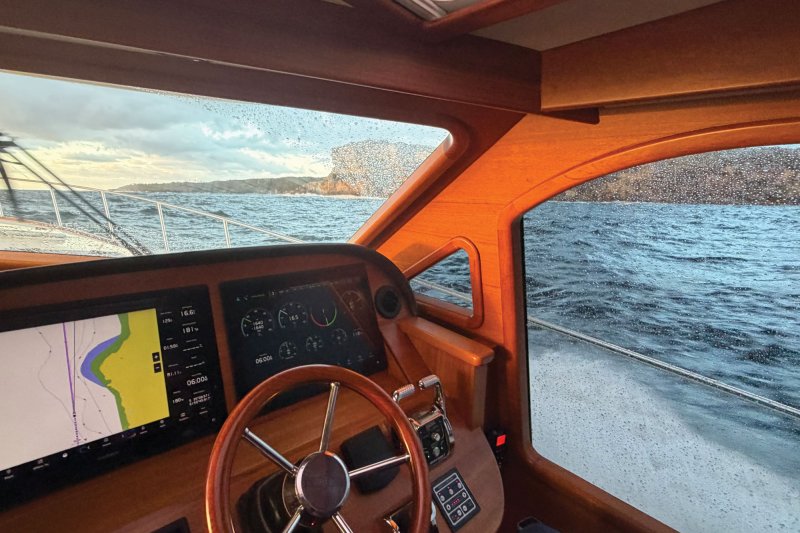
The ocean reared up in short, sharp, violently steep waves measuring a clean 10 to 12 feet. The hydrodynamic pounding was unlike anything veteran offshore sailors had encountered in displacement sail craft. Walking about the cabin became an impossibility. Torrential green water regularly swept the entire length of the 65-foot vessel, turning the windshield wipers into overwhelmed ornaments. It was frequently difficult to determine whether the crew was operating a surface vessel or a submerged submarine.

Despite the punishing conditions—and tucking inshore of the racing fleet to seek marginal relief from the roaring East Australia Current—Palm Beach XII dialed in a steady 1,700 RPM, holding a relentless, confidence-inspiring 17-knot ground track. After five hours of relentless abuse, even skipper David Sampson acknowledged that the crew required a tactical respite, ducking into the sheltered, calm waters of Jervis Bay. After a brief window for rest, however, the mission called: at 06:00 on Day Two, the bow swung back into the fray.
Day Two: Pushing South to Eden
Re-entering the open ocean, the Palm Beach 65 pressed southward through seven hours of jarring, rhythmic impacts, ultimately rolling into the historic fishing and whaling town of Eden, located roughly 125 miles down the coast.
Eden offered two essential commodities: a welcoming local pub and a fuel truck ready to dispense diesel. The crew took on 300 gallons of fuel to top off the tanks alongside a round of local lagers. With Hobart still 400 miles distant, the window for hesitation was narrow. Following a brief sleep cycle, the crew cast off into the dark at 01:00 on Day Three.
Day Three: The Bass Strait Gauntlet
The hundred-mile stretch of open water separating mainland Australia from the island of Tasmania is known globally as the Bass Strait—a graveyard of historic shipping wrecks and a notorious meteorological blender.
In the pre-dawn hours, the Bass Strait presented a roiled, chaotic mess. Describing the motion challenges conventional nautical terminology; it felt less like wave action and more like driving blindfolded through a multi-car pileup across an endless expanse of sub-surface potholes.
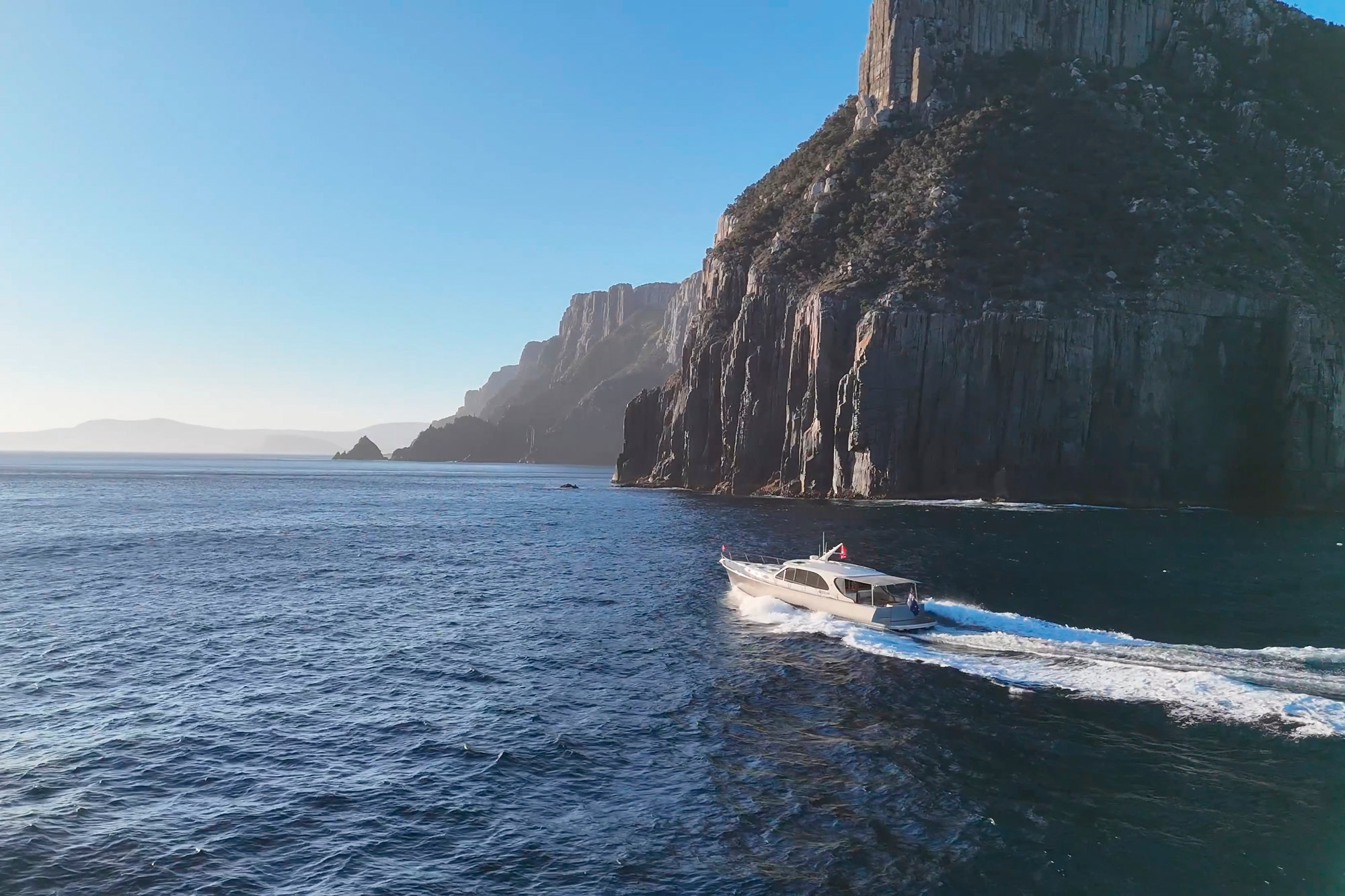
Yet, skipper Tower’s meteorological intuition held true. As morning transitioned into afternoon, the predicted northerly wind shift finally materialized. The oppressive gray skies parted, the blinding whitecaps subsided, and the ocean flattened into a rolling swell. Pods of dolphins materialized alongside swirling flocks of seabirds, escorting the vessel past the rugged, cragged, and breathtaking coastline of Tasmania.
As daylight faded, the yacht encountered the dramatic spires of Organ Pipes National Park at sunset. Bathed in golden, cinematic light, skipper Tower deployed a drone to capture striking imagery of the sleek cruiser gliding through pristine southern waters, washing away the memory of the brutal gauntlet left in their wake.
Arrival in Hobart: A Toast to Resilience
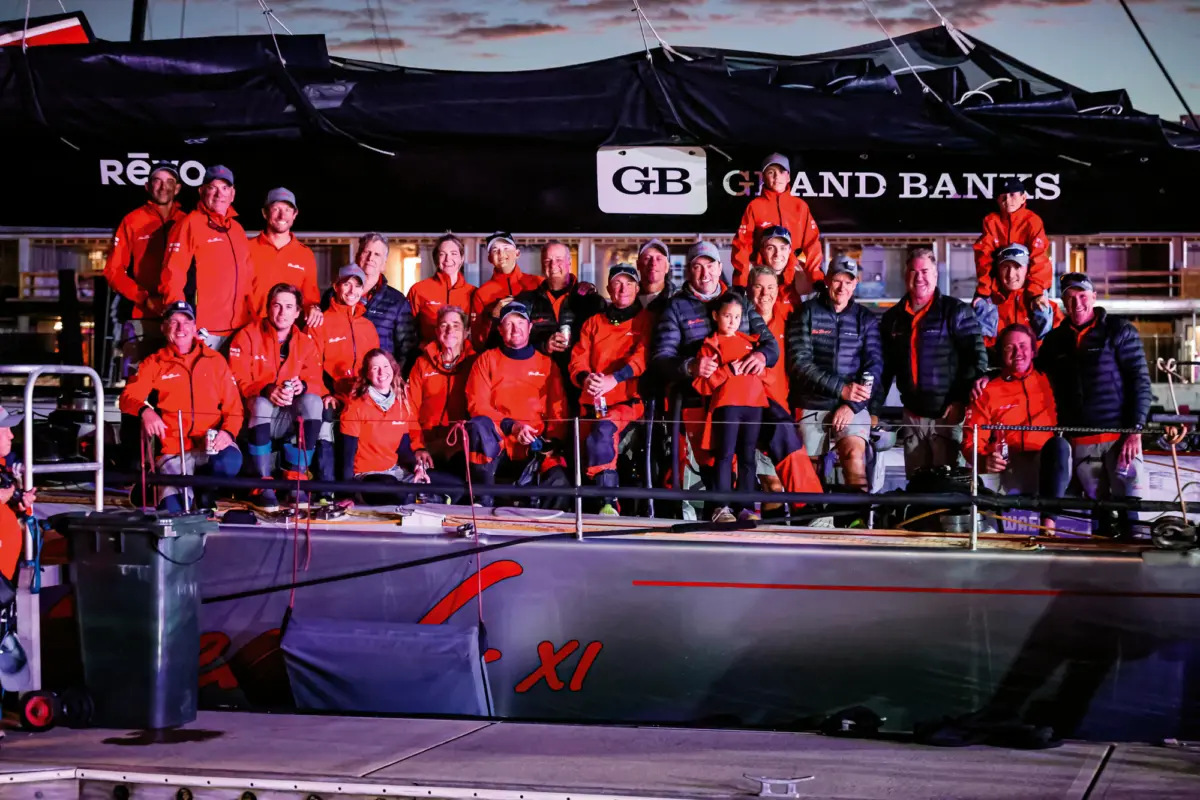
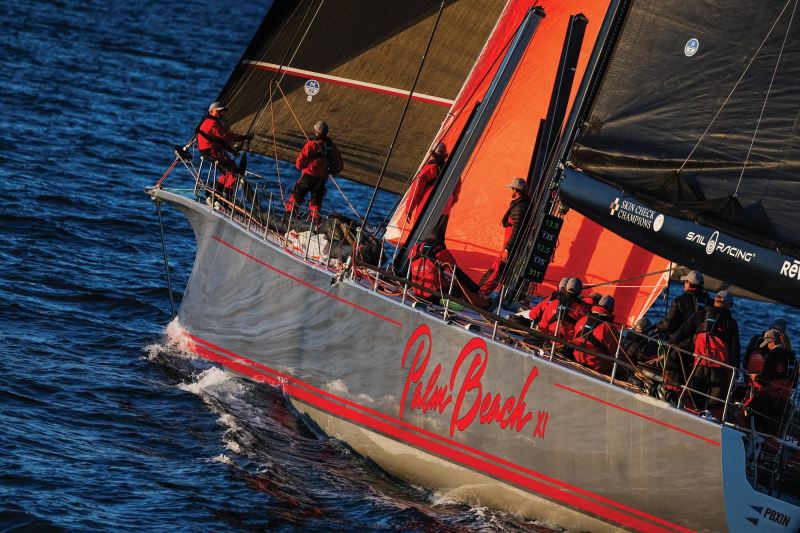
Navigating up the Derwent River, Palm Beach XII slipped past the flashing lights of downtown Hobart to tie up alongside the race village. While they had narrowly missed catching Palm Beach XI—the revamped 100-foot racing maxi owned and skippered by Mark Richards, which finished an impressive fifth overall—the celebratory party was already in full swing. That first victory pint tasted of hard-earned triumph.
Supporting Context & Metrics: Engineering the Seaworthy Hull
The success of Palm Beach XII in conditions that would cause structural anxiety on lesser craft is no accident. It is the direct result of uncompromising naval architecture, advanced composite construction, and an obsessive focus on center-of-gravity optimization.
Performance and Sea-Keeping Metrics
- Vessel Model: Palm Beach 65 Sedan Cruiser (Palm Beach XII)
- Route Covered: Sydney Harbour to Hobart via Jervis Bay and Eden (approx. 628 nautical miles)
- Cruising Speed in Heavy Seas: 17 knots at 1,700 RPM
- Sea State Encountered: 10- to 12-foot short, steep Tasman Sea waves; chaotic Bass Strait cross-swells
- Fuel Capacity Management: Topped off with 300 gallons in Eden to sustain high-speed, long-range offshore transits
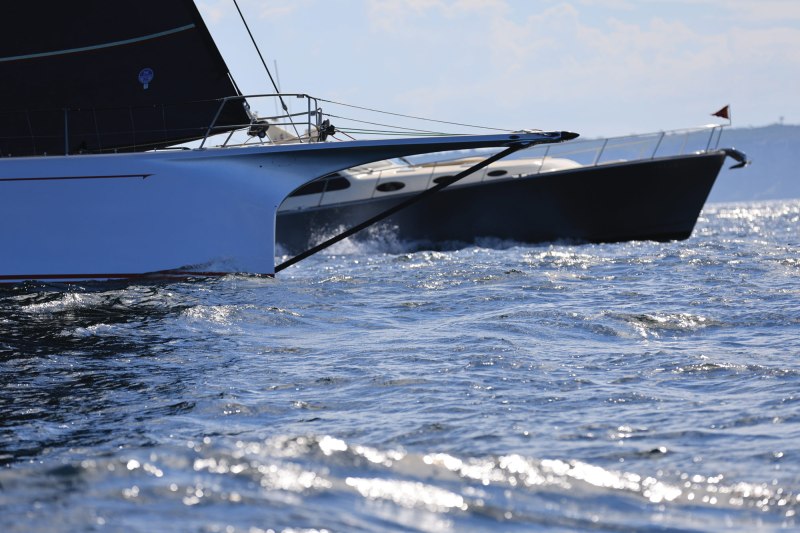
The hull form of the Palm Beach 65 utilizes a proprietary semi-displacement configuration designed to slice cleanly through wave faces rather than violently slap over them. By keeping weight centralized and utilizing lightweight, infusion-molded carbon fiber and E-glass composites over a structural core, the vessel achieves a high power-to-weight ratio that maintains directional stability in quartering and following seas.
Official Statements & Industry Perspectives
Reflecting on the grueling passage, the crew’s perspective underscored the profound respect earned by the vessel.
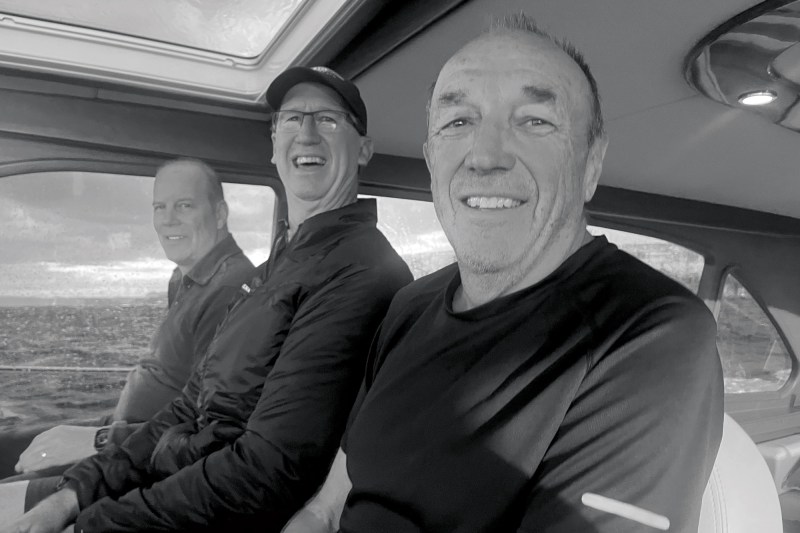
"I’ve always said that I love a boat that’s better than I am," noted veteran offshore writer and crewmember Herb McCormick. "Aboard Palm Beach XII, which used equal parts grace and power to handle everything the ocean dished up, that was certainly the case."
The philosophy behind the build traces directly back to Palm Beach Motor Yachts founder Mark Richards, whose professional background bridges elite ocean racing and luxury production boatbuilding.
Future Outlook: Expansion and Heritage
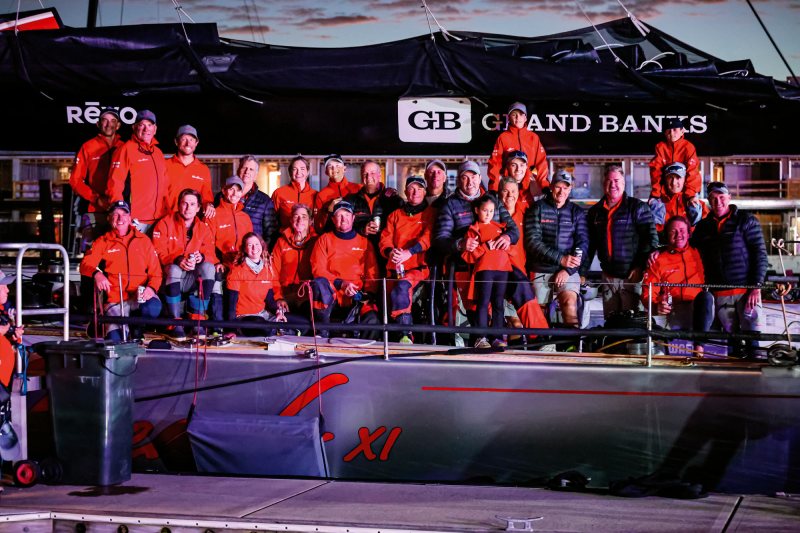
The triumph of the Palm Beach 65 during the 80th Sydney Hobart race underscores a broader corporate evolution for Palm Beach Motor Yachts and its parent company, Grand Banks Yachts.
The Sailing CEO: Mark Richards
Mark Richards’ dual pedigree—spanning 25 years of high-stakes ocean racing (including multiple America’s Cup campaigns and Sydney Hobart victories) alongside his role as Chief Designer and CEO of Grand Banks and Palm Beach—ensures that every hull carrying the badge is infused with genuine offshore DNA. Performance is not simulated on a computer alone; it is validated in the harshest waters on Earth.
Corporate Heritage and Global Production
Originating from a modest beachside factory in Pittwater—an estuary north of Sydney where Richards was raised—Palm Beach initially carved its reputation building elite racing sailboats before transitioning to world-class power cruisers. In 2014, Palm Beach Motor Yachts formally merged with Grand Banks Yachts. Today, the unified brand constructs its vessels in a state-of-the-art, recently expanded manufacturing facility in Malaysia, maintaining rigorous quality control standards that satisfy the demands of blue-water captains.
Expanding Footprint: The New Newport Base
To better serve its growing clientele in North America, Grand Banks and Palm Beach have significantly expanded their operational footprint. Alongside an established full-service facility in Stuart, Florida, the brand recently acquired the former Casey’s Marina—a premier 10,000-square-foot property situated on Spring Wharf in downtown Newport, Rhode Island. This strategic waterfront facility provides dedicated reserved berths, advanced haul-out capabilities, luxurious client lounges, and premium guest accommodations, solidifying the brand’s presence in the heart of the American yachting capital.
As Palm Beach XII demonstrated in the punishing waters of the Tasman Sea, the legacy of Australian offshore racing lives on—not just under sail, but through the uncompromising power, elegance, and unyielding seaworthiness of modern motor yacht engineering.