






Executive Overview
The global luxury yachting landscape is undergoing a profound structural evolution, driven by simultaneous demands for high-performance day-cruiser versatility, transatlantic capability, zero-emission hotel loads, and ultra-silent cruising. As shipyards worldwide prepare for and reflect upon major international exhibitions—most notably the prestigious Cannes Yachting Festival—naval architects and design houses are redefining the intersection of maritime engineering, high-end residential interiors, and advanced propulsion systems.
This comprehensive review examines six defining vessels shaping the modern fleet: the Pardo GT65, Pershing GTX90, Sirena 118, Riviera 645 SUV Series II, Forte 47 Gran Turismo, and Numarine 27XP. Together, these watercraft illustrate a broader industry trend toward hybridization, lightweight composite and aluminum construction, expansive outdoor-indoor connectivity, and multi-functional hull design. Whether examining the sleek, sporty crossover aesthetics of Italian day-cruisers or the transoceanic quietude of Turkish expedition flagships, contemporary yacht building is proving that luxury and technical utility are no longer mutually exclusive.
Detailed Chronology & Vessel Profiling
Pardo GT65: Sporty Aesthetics Meet Cruiser Practicality
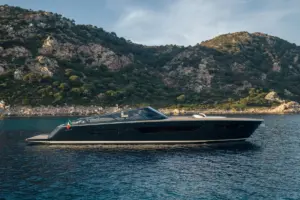
Pardo Yachts continues to expand its acclaimed GT series—a lineup bridging the gap between open day-yachts and long-range cruising vessels—with the introduction of the Pardo GT65. Positioned securely between its smaller sibling, the 52, and its larger counterpart, the 75, the GT65 utilizes exterior lines and interior layouts crafted by Milan-based Nauta, working in tandem with the established naval architecture expertise of Zuccheri Yacht Design.
The exterior profile maintains the unmistakable Pardo DNA: a striking plumb bow, a reverse-slanted windshield, and a deckhouse wrapped entirely in continuous structural glazing. This emphasis on glass not only maximizes interior natural light but also frames sweeping views of the marine environment. Key operational and lifestyle features include an integrated tender garage, a cantilevered sunbed aft for direct engagement with the water, a discreetly concealed outdoor grill, and a lower-deck galley configuration. By relocating the galley below, designers freed up significant square footage on the main salon deck, optimizing flow and entertainment capabilities. Accommodations below deck feature a luxurious three-stateroom layout. Powered by twin Volvo Penta D13 IPS1350 engines, the GT65 is engineered to deliver an impressive top speed of 35 knots, ensuring rapid passage-making between anchorages.
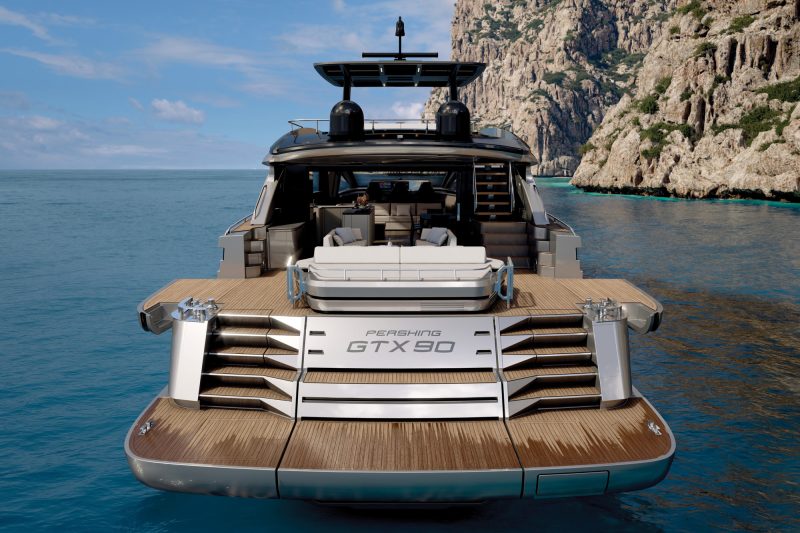
Pershing GTX90: Redefining Sportbridge Living
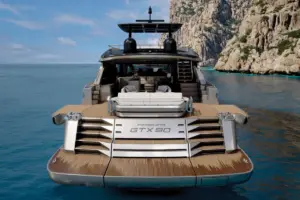
Representing the fourth and newest iteration in Pershing’s dynamic GTX series—which spans lengths from 70 to 116 feet—the Pershing GTX90 introduces a fresh perspective on alfresco entertainment and dynamic performance. Designed as a four-stateroom luxury yacht, the GTX90 features a raised cockpit configuration that enhances command visibility and lower-deck volume.
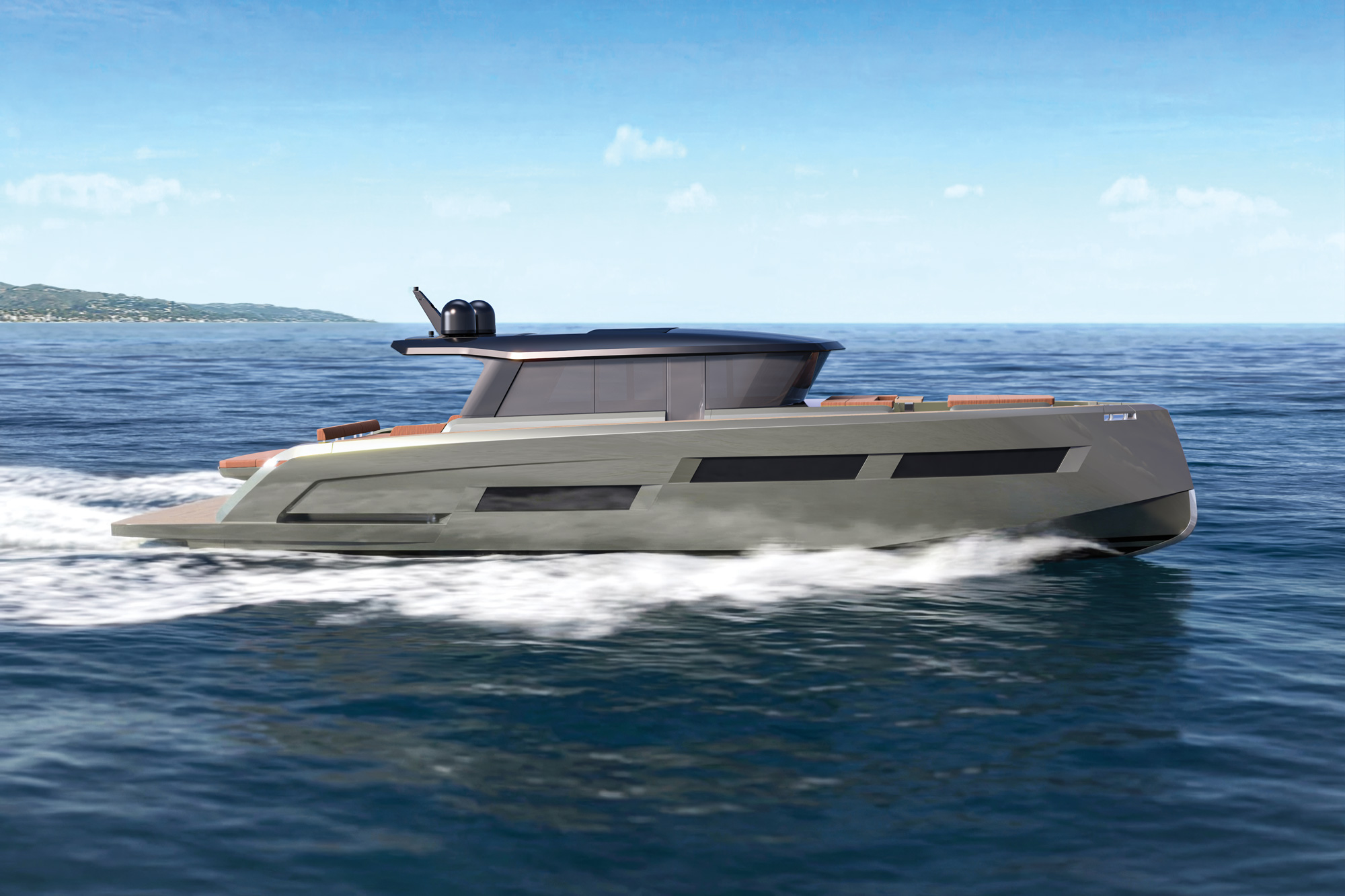
A primary engineering triumph of the GTX90 lies in its transformable deck space. When the side terraces are folded out, the aft entertainment and relaxation zone expands to nearly 400 square feet. This expansive deck provides guests with ample room to prepare for water sports, including snorkeling, paddleboarding, and handling Seabobs stored neatly beneath the aft sunpad.
Up top, the sportbridge offers dedicated outdoor relaxation spaces, featuring aft sunbathing zones and an integrated dining area sheltered beneath a robust hardtop. Eschewing the cluttered deck profile common on vessels of this class, the GTX90 houses its auxiliary watercraft entirely out of sight within a double garage, which accommodates both a Williams SportJet 395 and a Sea-Doo Spark Trixx. To ensure maximum guest comfort while underway or at anchor, Hull No. 1 is outfitted with dual Seakeeper 18 gyrostabilizers.
Sirena 118: The New Turkish Flagship
The docks of the Cannes Yachting Festival served as the high-profile stage for the world premiere of the Sirena 118, establishing a commanding new flagship for the Turkish builder. Combining in-house exterior styling with the legendary naval architecture of Germán Frers and sumptuous interior design by Cor D. Rover, the 118 is a composite build meticulously engineered to remain comfortably under the critical 300-gross-ton regulatory threshold.
The layout versatility of the Sirena 118 is extraordinary. Owners can configure the yacht to accommodate up to six distinct guest staterooms, or opt for a dramatic two-level loft suite. This flagship suite physically connects the main-deck owner’s stateroom with a private lower-deck retreat boasting direct, private water access.
Performance-wise, the standard propulsion package consists of twin 3,100 hp MAN V-12 diesel engines, yielding a cruising profile and a reported top speed of 16 knots. For owners demanding faster transit times, an optional 3,800 hp MAN V-12 package pushes the vessel’s top-end speed to 21 knots, balancing long-range displacement cruising with semi-planing velocity.
Riviera 645 SUV Series II: Evolution of an Adventure Yacht
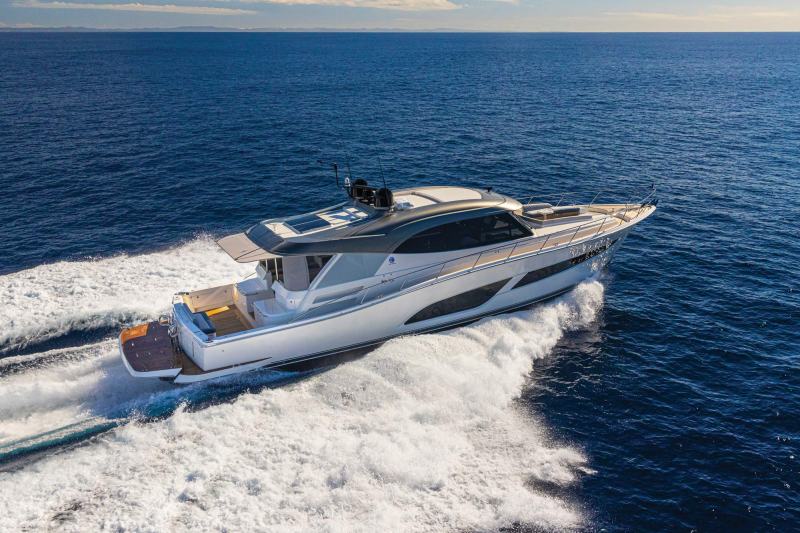
In the marine industry, proven hulls rarely disappear; instead, they undergo rigorous evolutionary updates. The Riviera 645 SUV Series II stands as a prime example of this philosophy, marking the next generation of the rugged adventure yacht that originally debuted in 2021.
While the core bluewater hull geometry remains unchanged—retaining its legendary offshore capabilities—the interior spaces have undergone a total redesign. Furthermore, the Series II integrates modern smart technology, including high-speed Starlink satellite internet connectivity and an advanced Praxis Composite Solar charging system to support off-grid domestic loads. Customization opportunities have also been significantly expanded for prospective owners.
The hallmarks of the Riviera SUV line remain fully intact: an expansive, highly versatile cockpit engineered for serious watersports, deep-sea fishing, and large-scale entertaining, coupled with a seamless single-level main-deck layout. Accommodations are available in three- or four-stateroom configurations. Power is supplied by robust engine options comprising twin MAN diesels rated at either 1,300 hp or 1,500 hp.
Forte 47 Gran Turismo: Aluminum High-Performance Outboards
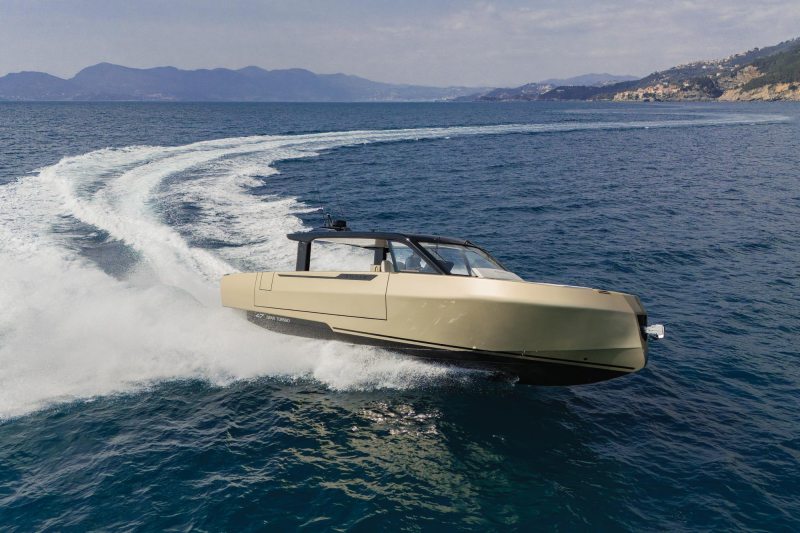
Marking the official market debut of Forte Yachts—an Italian brand backed by West Navaltech, renowned for crafting high-performance aluminum vessels and precision superyacht components—the 47 Gran Turismo brings raw speed and avant-garde styling to the sub-50-foot segment.
The Gran Turismo represents the outboard-powered variant of Forte’s 47 platform, which is alternatively offered as a Lounge Deck version equipped with an inboard Volvo Penta IPS setup. Engineered by Umberto Tagliavini, with striking styling by designer Paolo Giordano, the aluminum-hulled cruiser features drop-down side terraces that significantly expand the cockpit’s relaxation footprint when stationary.
Propelled by a formidable triple-outboard configuration consisting of Mercury V-12 Verados producing a combined 1,800 horsepower (three 600 hp units), the Forte 47 Gran Turismo achieves an exhilarating top speed of 47 knots. Below deck, the vessel features a standard two-stateroom, two-head layout that remains heavily customizable to individual owner preferences.
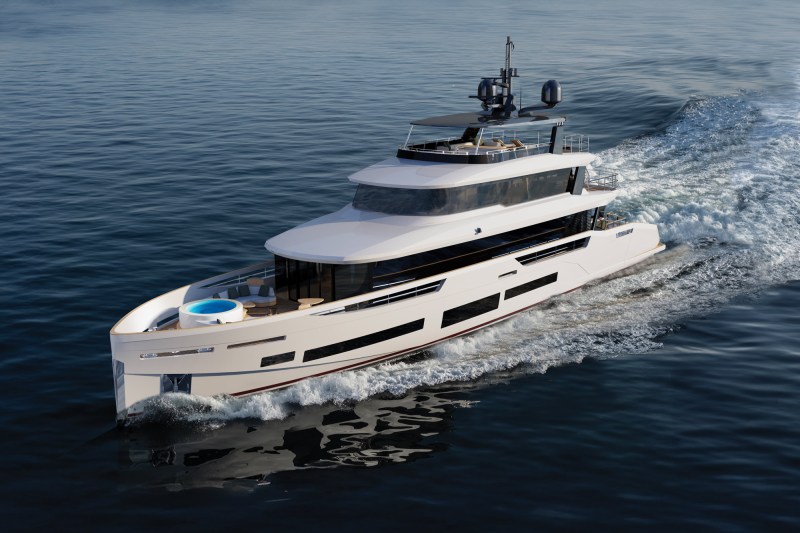
Numarine 27XP: Pioneering Super-Silent Cruising
Making its world premiere at Cannes alongside the European debut of its 40MXP stablemate, the Numarine 27XP demonstrates strong market validation, with five hulls already sold prior to its official showcase. Featuring comprehensive interior and exterior design by Can Yalman and naval architecture by Umberto Tagliavini, the 27XP is an expedition-style yacht engineered for serene, efficient voyaging.
The standout engineering feature of the 27XP is Numarine’s proprietary Mk2 Super Silent Pack, developed in close collaboration with the engineering team at Sleipner. This system utilizes an advanced 48-volt energy architecture paired with an integrated hybrid power center. The setup combines a massive 92.8 kWh lithium-iron-phosphate battery bank with 5.6 kW of rooftop solar generation. According to the builder, this architecture drastically minimizes electrical transmission energy loss while delivering exceptionally quiet, vibration-free, and stable hotel-load performance at anchor or during silent nighttime cruising.
Supporting Context & Technical Metrics
To provide a comprehensive comparative analysis of these diverse watercraft, the following matrix outlines their primary specifications, design houses, and performance metrics:
| Vessel Name | Length Class | Naval Architect / Designer | Primary Propulsion | Top Speed | Standout Feature |
|---|---|---|---|---|---|
| Pardo GT65 | Crossover | Zuccheri / Nauta | Twin Volvo Penta D13 IPS1350 | 35 Knots | Glazed deckhouse & lower galley |
| Pershing GTX90 | Sportbridge | Pershing Design | Inboard Diesels | High Performance | 400 sq. ft. expanded terrace space |
| Sirena 118 | Flagship | Germán Frers / Cor D. Rover | Twin MAN V-12 (3,100–3,800 hp) | 16–21 Knots | Two-level loft suite with water access |
| Riviera 645 SUV SII | Bluewater SUV | Riviera In-House | Twin MAN (1,300–1,550 hp) | Planing Speeds | Starlink & solar hybrid integration |
| Forte 47 GT | High-Speed Open | Tagliavini / Giordano | Triple Mercury V-12 Verado (600 hp ea.) | 47 Knots | Aluminum hull & drop-down terraces |
| Numarine 27XP | Expedition | Tagliavini / Can Yalman | Hybrid Architecture | 13.5 Knots | Mk2 Super Silent Pack (92.8 kWh battery) |
The juxtaposition of these vessels highlights a clear bifurcated strategy among premier shipyards. On one hand, builders like Forte and Pardo are pushing the boundaries of velocity and day-boating utility, utilizing high-output outboard arrays and advanced pod drives to break the 35-to-45-knot threshold. Conversely, shipyards like Sirena and Numarine are redefining displacement and semi-displacement efficiency, prioritizing transatlantic autonomy, massive battery banks, and acoustic isolation for long-term cruising comfort.
Industry Perspectives & Official Statements
Naval architects and yard executives interviewed across the international boat show circuit emphasize that modern buyers are prioritizing flexibility and autonomy above all else.
Speaking on the debut of the flagship Sirena 118, company representatives emphasized the extensive feedback loop maintained with their client base: "Owners today are no longer satisfied with traditional compartmentalized layouts. The demand is for architectural integration—blurring the lines between interior saloons and the surrounding marine ecosystem, whether through multi-level loft suites or vast expanses of structural glazing."
Similarly, regarding the integration of sustainable technologies such as Numarine’s Mk2 Super Silent Pack, engineering leads note a definitive shift in consumer consciousness: "Silence is the ultimate luxury on the water. The elimination of generator noise at anchor through high-capacity lithium-iron-phosphate battery banks and integrated solar arrays is no longer a futuristic concept; it is an immediate market baseline for modern explorers."
On the performance front, representatives for Forte Yachts and Pardo highlighted the persistent demand for responsive handling and multi-role capability. The ability to transition seamlessly from a high-speed inter-island transit vessel to a refined, stabilized evening cruiser remains the definitive benchmark of contemporary naval engineering.
Future Outlook & Emerging Trends
As the marine industry looks beyond current production cycles, several key technological and design trajectories are poised to dominate the next decade of yacht manufacturing:
- Advanced Hybridization and Energy Harvesting: Driven by stricter environmental regulations in protected cruising grounds and consumer demand for silent anchorages, hybrid propulsion systems paired with high-yield solar arrays (such as those seen on the Riviera 645 SUV Series II and Numarine 27XP) will transition from optional packages to standard engineering configurations.
- Lightweight Materials Optimization: The increased utilization of aerospace-grade aluminum (championed by builders like Forte) and advanced carbon-composite infusions (utilized in sub-300-GT flagships like the Sirena 118) will continue to enhance fuel efficiency, structural rigidity, and speed without compromising interior luxury volume.
- Immersive Indoor-Outdoor Connectivity: Fold-out terraces, sliding glass partitions, and lowered galleys will remain standard across multiple size classes, reflecting an overarching cultural shift toward active, outdoor-centric yachting lifestyles.
- Smart-Ship Integration: High-speed maritime satellite communications (Starlink) and advanced digital switching ecosystems will increasingly form the nervous system of modern luxury vessels, ensuring uninterrupted connectivity and remote diagnostic capabilities anywhere in the world.
In conclusion, the current generation of luxury yachts demonstrates an extraordinary level of refinement. By harmonizing raw performance with sustainable engineering and residential-grade interior architecture, shipyards are ensuring that the future of yachting is faster, quieter, and more versatile than ever before.