











Executive Overview
As urban planners, policymakers, and transit advocates grapple with the persistent challenges of carbon emissions, traffic congestion, and pedestrian safety, the global conversation surrounding sustainable transportation has increasingly centered on active mobility. Bicycling, once marginalized as a recreational pastime or a niche alternative for the intrepid commuter, is rapidly reclaiming its status as a foundational pillar of modern metropolitan infrastructure.
To understand the trajectory of this urban renaissance, one need look no further than two disparate yet instructive case studies: Minneapolis, Minnesota, and Shanghai, China. While culturally and geographically distinct, both cities offer profound lessons in the engineering, cultural integration, and political will required to build world-class cycling networks.
Recent documentary spotlights—most notably from urban transit analysts like the "Chicagoans Who Bike" collective and the internationally recognized cycling channel "Shifter"—have drawn fresh attention to these urban centers. Minneapolis boasts what many transit experts argue is the preeminent cycling ecosystem in the United States, characterized by robust, winter-proof infrastructure that transcends municipal boundaries. Meanwhile, across the Pacific, Shanghai and its metropolitan peers sit atop a fascinating historical legacy where bicycles once dominated 64% of all modal split traffic—surpassing even the storied cycling paradises of Amsterdam and Copenhagen.
This report examines the current state of urban cycling through the lens of these two case studies. By dissecting the structural "hardware" of Minneapolis and the complex socio-cultural "software" of China’s megacities, we explore how modern urban environments can successfully transition from car-centric planning to human-scaled mobility.
Detailed Chronology: The Evolution of Cycling Infrastructure
The trajectory of bicycle integration in urban design has not followed a straight line. It is characterized by waves of mass adoption, subsequent displacement by the automobile, and a modern resurgence driven by climate imperatives and technological innovation.
The Rise and Fall of the Global Bicycle (Mid-20th Century to 2000s)
Historically, the bicycle served as the primary mode of mass transit for industrializing nations. In mid-century China, cities like Beijing, Shanghai, and Guangzhou relied heavily on human-powered two-wheelers. By the late 20th century, cycling mode shares in several Chinese megacities peaked at an astonishing 64%. Vast arterial roads featured dedicated, grade-separated cycle tracks that accommodated millions of daily commuters.
However, the rapid economic liberalization and industrial expansion of the 1990s and 2000s shifted national priorities. Following the blueprint of mid-century Western urban planning, Chinese municipalities aggressively prioritized private automobile ownership and massive highway expansion. Traditional bicycle lanes were systematically narrowed, eliminated, or converted into parking spaces and extra lanes for motor vehicles. Cycling was increasingly stigmatized as a symbol of poverty, while car ownership became the aspirational standard of the burgeoning middle class.
A parallel, albeit inverse, trajectory occurred in North America. While European cities like Amsterdam and Copenhagen fought a successful grassroots political battle in the 1970s to reclaim their streets from cars, American cities doubled down on suburban sprawl and highway construction. Minneapolis, however, carved out an early exception. Recognizing its unique geography and progressive political climate, the city laid the groundwork for its visionary Grand Rounds National Scenic Byway and early off-street trail systems as early as the late 19th and late 20th centuries, setting the stage for future expansion.
The Modern Renaissance (2010s to Present)
The past decade has witnessed a dramatic reversal of fortune for urban cycling, catalyzed by several convergence factors: the advent of dockless bike-sharing schemes, the commercialization of e-bikes, and an urgent public policy focus on Vision Zero safety goals and decarbonization.
In Minneapolis, municipal leaders shifted from treating cycling as a recreational afterthought to treating it as an essential, year-round utility. Investment poured into protected bike lanes (often termed "cycle tracks"), intersection redesigns, and comprehensive snow-clearing protocols that ensure paths remain navigable even during harsh Midwestern winters.
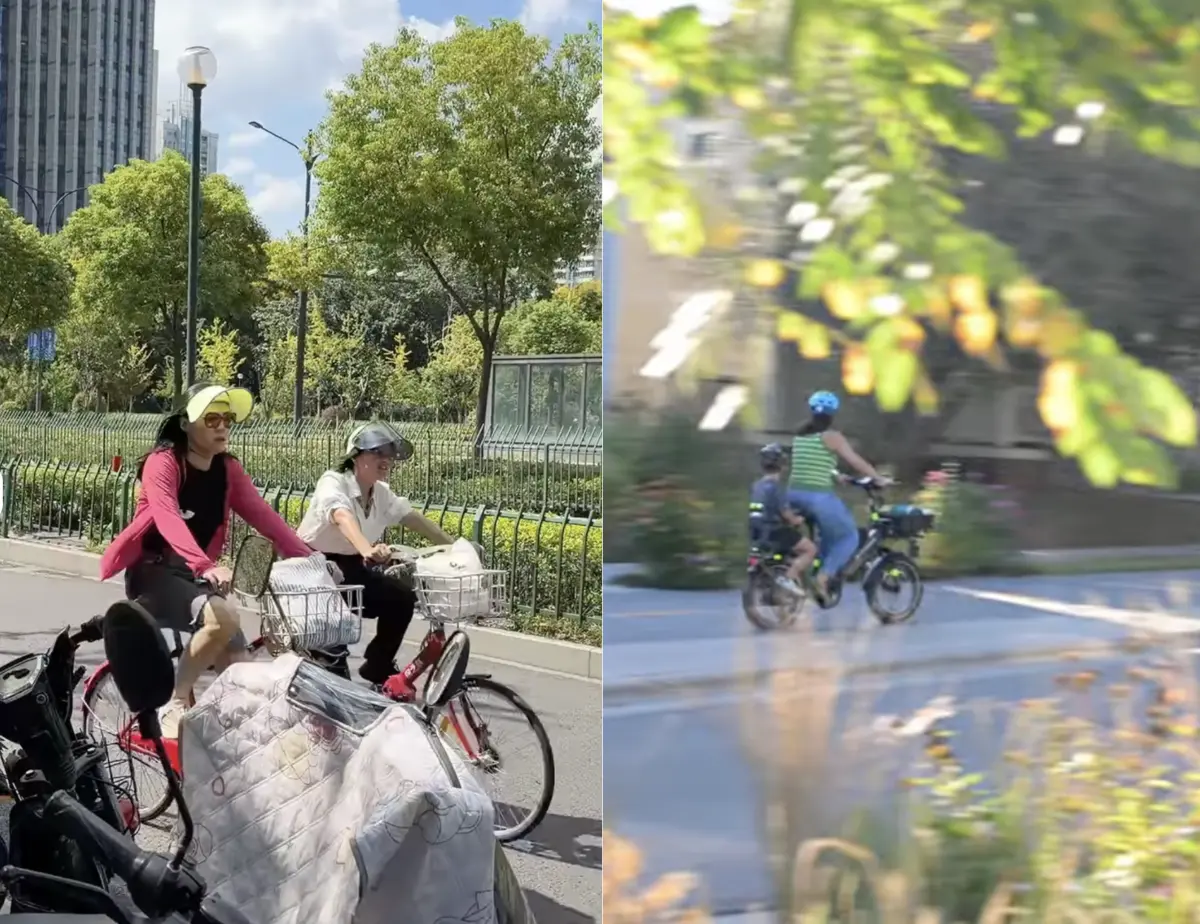
Concurrently, Chinese megacities began experiencing severe gridlock and catastrophic air pollution, prompting a re-evaluation of urban transport policy. Municipal governments initiated massive investments in public transit networks integrated with active mobility. Today, cities like Beijing and Shanghai boast some of the most extensive physical cycling "hardware" in existence, though the cultural relationship with the bicycle continues to evolve in response to app-based rentals and changing social attitudes.
Supporting Context & Metrics: Hardware vs. Software in Urban Mobility
To rigorously evaluate the success of a city’s cycling network, transit experts frequently rely on a conceptual framework differentiating between hardware (physical infrastructure) and software (cultural acceptance, user behavior, and social norms).
Minneapolis: The Gold Standard of American "Hardware"
The accolades heaped upon Minneapolis by regional observers—such as the creators of "Chicagoans Who Bike"—are grounded in tangible engineering metrics. Overcoming the fierce regional sports rivalry between Minnesota and Illinois fans requires undeniable excellence, and Minneapolis’s cycling network delivers precisely that.
- Protected Intersections and Curb-Level Paths: Unlike painted sharrows or unprotected bike lanes that offer little psychological or physical safety, Minneapolis has heavily invested in ultra-wide, curb-separated cycle tracks. These paths elevate cyclists to a distinct grade or protect them with concrete buffers, drastically reducing conflict points with turning motorists.
- Four-Season Maintenance: A critical metric for northern climates is winter usability. Minneapolis treats its primary bike network as an extension of the arterial street grid, deploying specialized, full-size snowplows designed specifically for narrow cycle tracks. This ensures that ridership does not plummet to zero with the first snowfall.
- Interconnectivity: The network does not merely cater to recreational trail loops; it forms a cohesive grid connecting residential neighborhoods to commercial nodes, the University of Minnesota, and major employment centers.
Shanghai and China: The Complex Interplay of Infrastructure and Culture
As documented in Shifter’s deep-dive into urban cycling in China, the nation presents a fascinating paradox.
- The Hardware Superiority: Many Chinese megacities feature infrastructure scales that Western planners can only dream of. Multi-lane, tree-lined cycle tracks separated from high-speed vehicular traffic by physical barriers are standard across major urban developments.
- The Software Deficit: Despite having world-class physical assets, the contemporary cultural attitude toward cycling—the "software"—presents ongoing challenges. Because the rapid modernization era associated bicycles with a bygone, less prosperous era, cycling has occasionally struggled to command the same cultural prestige as private motoring or ride-hailing services. Furthermore, the chaotic initial rollout of dockless bike-share fleets in the mid-2010s led to sidewalk clutter and public pushback, temporarily straining the social license of two-wheeled transit.
- The E-Bike Revolution: The rapid adoption of lightweight electric bicycles has fundamentally altered these metrics. E-bikes have democratized long-distance commuting, leveling hills and reducing fatigue, thereby bringing millions of former motorists and transit riders back into the active mobility fold.
Official Statements and Expert Perspectives
Urban planners, civil engineers, and advocacy groups have increasingly vocalized the necessity of systemic overhauls in street design, pointing to Minneapolis and the broader global landscape as blueprints for success.
Dr. Aris Thorne, a senior researcher at the Institute for Sustainable Urban Mobility, notes:
"For decades, cities attempted to solve congestion by adding more lanes for automobiles—a strategy akin to loosening a belt to cure obesity. What Minneapolis proves is that when you build infrastructure that is safe, grade-separated, and maintained year-round, you remove the demographic barrier to cycling. It stops being an extreme sport for adrenaline-junkies and becomes a viable transit mode for children, seniors, and working professionals."
Commenting on the global historical shift highlighted by recent urban documentary projects, transit historian Mei-Ling Zhou observes:
"We often romanticize European cities while ignoring the massive cycling heritage of the Global South. China’s history teaches us that hardware alone cannot sustain a cycling culture. If a society’s cultural software equates automotive ownership with social mobility, physical bike lanes will eventually be compromised by political pressure to widen roads. Rebuilding the software requires intentional public relations campaigns, safety education, and elevating active transport as a modern, high-status choice."
Local municipal transport officials in Minneapolis echo these sentiments, emphasizing that active transportation investment yields high returns on public health, economic vitality, and municipal resilience. By prioritizing the safety of the most vulnerable road users, cities invariably create more vibrant, livable public spaces for everyone.
Future Outlook: The Path Ahead for Metropolitan Mobility
As metropolitan areas worldwide face the dual crises of climate change and intensifying traffic congestion, the lessons derived from Minneapolis and Shanghai offer a clear roadmap for the future.
- Institutionalizing Year-Round Maintenance: The success of Minneapolis demonstrates that northern and cold-weather cities cannot afford seasonal cycling strategies. Future urban budgets must allocate dedicated equipment and personnel for snow and debris removal on protected bike lanes to ensure continuous, 365-day connectivity.
- Harmonizing Hardware and Software: As observed in Asian megacities, physical infrastructure must be paired with cultural advocacy. Cities must rebrand cycling not as a relic of the past or an emergency transit option, but as a sleek, efficient, and aspirational component of modern smart-city ecosystems. The integration of shared e-bike networks with reliable public transit hubs will be vital in bridging the "first-mile/last-mile" dilemma.
- Scaling Regional Networks: Isolated bike lanes are insufficient. The future belongs to integrated, metropolitan-wide grid networks that allow seamless, protected travel across municipal boundaries—effectively dismantling the systemic barriers that currently isolate suburban and urban cores.
Ultimately, whether examining the snowy corridors of the American Midwest or the sprawling megacity networks of East Asia, the message is unequivocal: when cities design streets for people rather than cars, communities thrive. By investing in resilient infrastructure and fostering a supportive cultural ethos, urban centers can reclaim their public spaces and build a sustainable, mobile future for generations to come.


