








Executive Overview
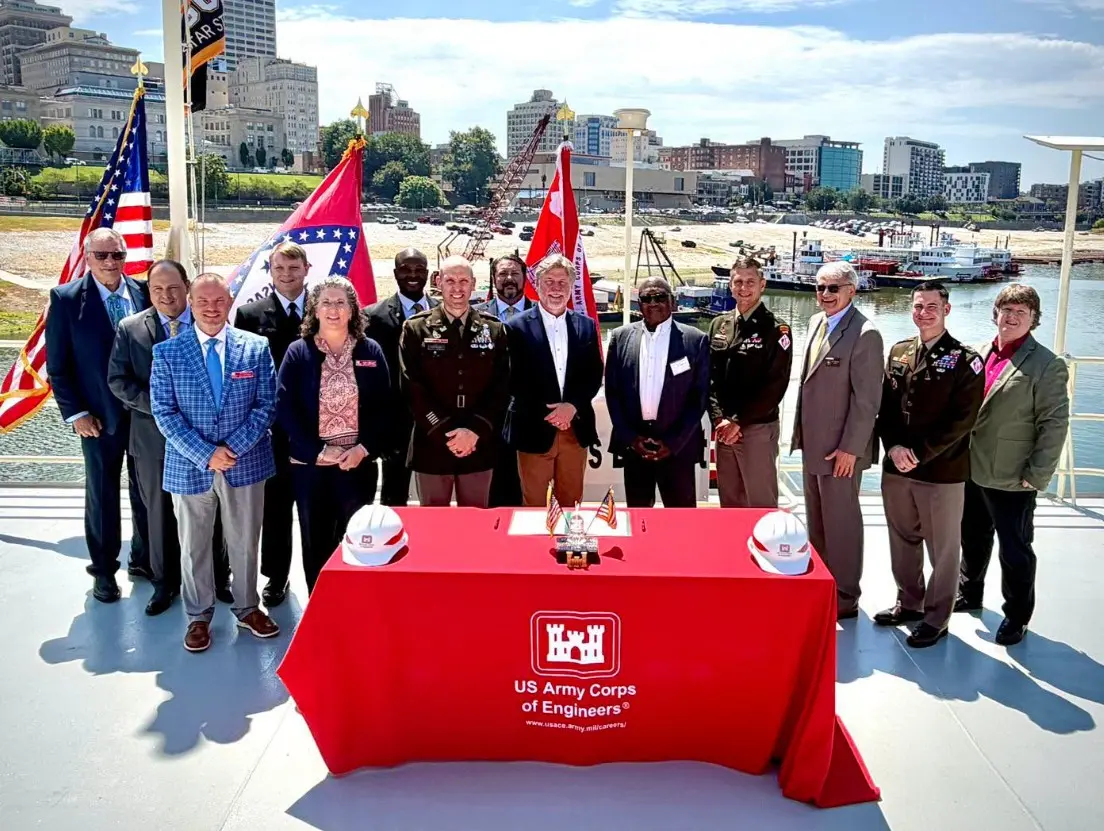
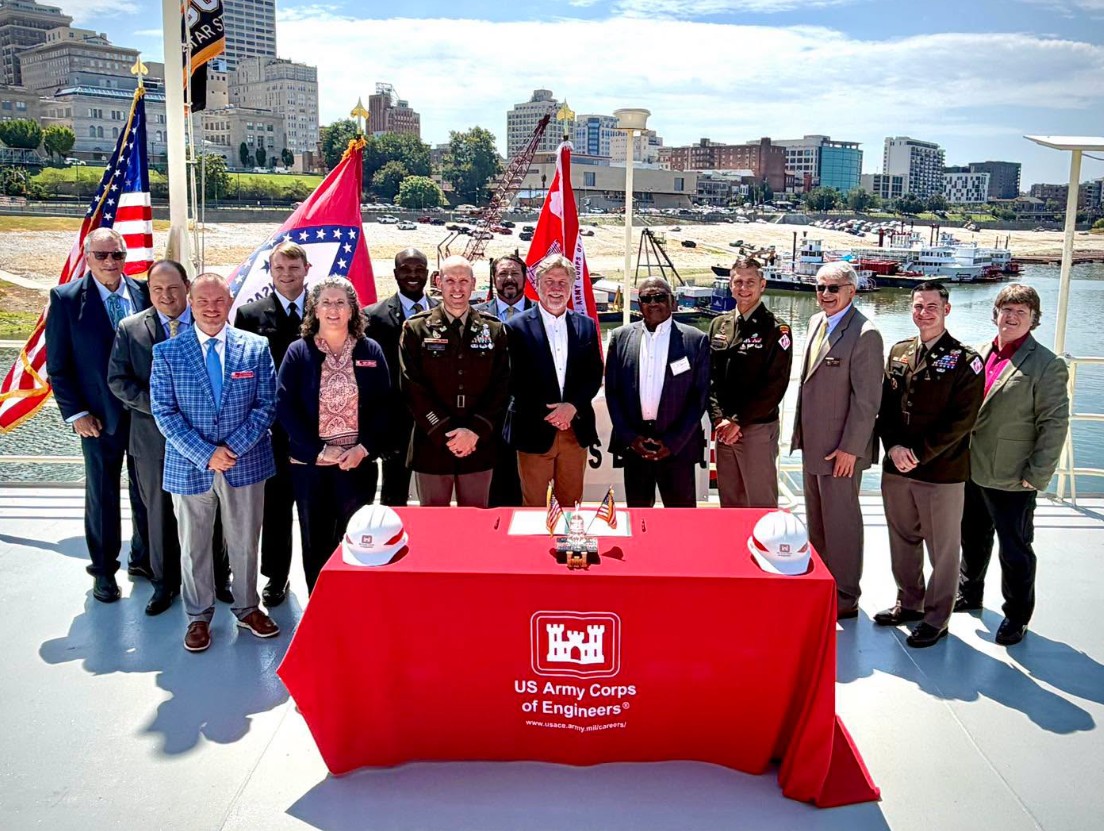
The United States Army Corps of Engineers (USACE) Memphis District, alongside key local stakeholders and federal representatives—most notably Arkansas Congressman Rick Crawford—officially finalized a critical Project Partnership Agreement (PPA) for the Osceola Harbor Extension project. This agreement transitions the long-planned infrastructure initiative from conceptual planning into the execution phase, marking a monumental milestone for the region’s marine logistics, industrial capacity, and economic competitiveness.
Executed last week, the PPA formalizes the federal and local cost-sharing partnership required to deepen, widen, and extend the harbor’s navigable waters. The timing of this agreement is far from coincidental; it arrives precisely as eastern Arkansas rapidly transforms into one of the preeminent steel manufacturing hubs in North America. For decades, Osceola Harbor functioned primarily as a reliable, regional conduit for agricultural exports. However, unprecedented private-sector investments—totaling billions of dollars in steel production facilities—have completely rewritten the logistical requirements of the region.
Under the provisions of the PPA, the project will be executed under the auspices of the U.S. Army Corps of Engineers’ Section 107 Continuing Authority Program (CAP). This specialized federal program enables the Corps to partner with non-federal sponsors to plan, design, and construct small navigation projects that boast clear, demonstrable economic justifications.
With initial construction funding secured through the 2026 Energy and Water Appropriations Act and backed by matching funds from the Osceola Port Authority, the project is poised to alleviate crippling capacity bottlenecks. By extending the federal navigation channel by 3,000 feet and introducing a second state-of-the-art turning basin, the Osceola Harbor Extension will safeguard the region’s supply chains, accommodate massive commercial barge traffic, and anchor thousands of high-paying industrial jobs for decades to come.
Detailed Chronology: From Regional Port to Industrial Powerhouse
The journey toward the Osceola Harbor Extension has been characterized by meticulous engineering assessments, legislative advocacy, and rapid industrial scaling. Understanding the trajectory of this infrastructure project requires tracing its evolution through distinct phases of development.
The Historical Baseline: Agricultural Exports
For much of its operational history, Osceola Harbor served a vital yet relatively narrow economic purpose. Situated strategically along the vital artery of the Mississippi River navigation system, the port was predominantly utilized for the outloading of regional agricultural commodities. Soybeans, corn, and cotton harvested across the fertile acreage of eastern Arkansas and the broader Mississippi Delta were transported via truck and rail to the harbor, where they were transferred onto barges for downstream transit toward global export terminals.
While the baseline tonnage hovered around a respectable 500,000 tons annually, the physical infrastructure of the harbor—featuring a single turning basin and a limited channel length—was entirely sufficient for the modest volume of agricultural bulk carriers. Traffic management was manageable, and congestion was virtually non-existent. However, the economic landscape of Mississippi County, Arkansas, was on the precipice of a dramatic paradigm shift.
The Industrial Boom and Capacity Cracks
Over the past decade, eastern Arkansas began attracting historic capital investments, particularly within the heavy metals and metallurgical sectors. Known increasingly as the "Steel Capital of the Nation," Mississippi County steadily lured massive manufacturing plants seeking strategic access to domestic distribution networks, abundant water resources, and favorable business climates.
As industrial mega-projects broke ground, local logistics experts and federal observers quickly realized that a harbor optimized for grain barges would fundamentally buckle under the weight of millions of tons of structural steel, scrap metal, coils, and industrial raw materials. The impending traffic surge threatened to create severe maritime gridlock, delaying shipments, inflating transport costs, and jeopardizing the multi-billion-dollar investments made by private manufacturers. Recognizing the impending bottleneck, local leaders, the Osceola Port Authority, and USACE Memphis District engineers initiated intensive planning sessions to design an expanded marine highway capable of absorbing the impending industrial shockwave.
The Feasibility Breakthrough (December 2025)
The formal catalyst for the recent PPA signing occurred in December 2025, when USACE released its comprehensive and highly anticipated feasibility study for the harbor extension. The study served as the analytical bedrock for the project, evaluating engineering feasibility, environmental compliance, and—most importantly—projected economic returns.
The findings of the December 2025 feasibility study stunned even seasoned infrastructure analysts. The report demonstrated that for every single dollar invested in the capital dredging and construction of the Osceola Harbor Extension, the American economy would reap an astonishing $11.70 in return. This extraordinary cost-benefit ratio immediately catapulted the initiative to the upper echelons of priority within the Corps’ Continuing Authority Program, clearing the path for legislative appropriations and federal-local partnership structuring.
The August 2026 PPA Execution
Culminating months of rigorous intergovernmental negotiations, the formal signing of the Project Partnership Agreement took place in August 2026. Attended by representatives of the USACE Memphis District, municipal leaders, and Arkansas Congressman Rick Crawford, the ceremony legally codified the project’s parameters, set the financial cost-sharing ratios, and authorized the immediate mobilization of engineering crews. With the stroke of a pen, the theoretical blueprints of late 2025 were officially transformed into an active, federally backed construction endeavor slated to redefine the economic geography of the American Heartland.
Supporting Context & Metrics: The Scale of Transformation
The true significance of the Osceola Harbor Extension cannot be fully grasped without examining the staggering economic metrics and industrial data underpinning the initiative. The project is an operational necessity designed to support a massive influx of heavy industrial production.
The Catalyst Investments: Hybar LLC and U.S. Steel
The transformation of Osceola’s maritime traffic is primarily driven by two colossal capital investments that have fundamentally altered the industrial identity of the region:
- The Hybar LLC Rebar Facility: Representing a state-of-the-art $700 million investment, Hybar LLC’s new rebar production facility is designed to inject cutting-edge, environmentally sustainable steel manufacturing capacity directly into the local economy. The plant relies heavily on inbound raw scrap and outbound distribution of finished reinforcement bars, placing an immediate, high-volume demand on local transport networks.
- U.S. Steel’s Mega-Investment: In an even more sweeping validation of the region’s industrial potential, U.S. Steel has committed to a staggering $11 billion investment program in the area through 2028. This capital outlay encompasses advanced flat-rolled steel production capabilities, technological upgrades, and massive supply chain integrations that necessitate world-class logistical support.
Tonnage Projections: A Tenfold Increase
The convergence of these industrial expansions will trigger an exponential surge in harbor utilization. According to logistical projections cited by the U.S. Army Corps of Engineers:
- Historical Volume: ~500,000 tons of agricultural exports annually.
- Projected Volume: ~5.5 million tons of steel and industrial commodities annually.
- Growth Factor: An 11-fold (1,100%) increase in total cargo throughput.
Employment and Economic Impact
Beyond raw cargo metrics, the project is inextricably linked to regional labor market vitality. The infrastructure improvements are projected to directly and indirectly support over 4,700 jobs across manufacturing, logistics, supply chain management, and ancillary service sectors. By ensuring that raw materials can arrive smoothly and finished steel can depart without delay, the harbor extension protects these high-wage industrial positions and insulates the local economy against supply chain volatility.
Financial Engineering and the $11.70 Return on Investment
The financial architecture of the Osceola Harbor Extension is a masterclass in efficient public-private cooperation. The initial phase of construction is being kickstarted by an infusion of $6.5 million allocated through the 2026 Energy and Water Appropriations Act. This federal funding is paired with mandatory, cost-share matching funds provided locally by the Osceola Port Authority, ensuring local buy-in and shared accountability.
The aforementioned return on investment (ROI) of $11.70 for every $1 invested places the Osceola Harbor Extension among the highest-yielding civil works projects within the entire USACE portfolio. This exceptional economic return is driven by avoided roadway maintenance costs (as heavy freight shifts from deteriorating highways to efficient barge transport), reduced shipping delays, lowered input costs for regional manufacturers, and the macroeconomic multiplier effect of thousands of stable industrial jobs.
Official Statements and Stakeholder Perspectives
The significance of the Osceola Harbor Extension has drawn widespread praise from federal lawmakers, military engineers, and regional economic development leaders, all of whom recognize the project as a vital pillar for national industrial resilience.
Congressional Leadership and Advocacy
Arkansas Congressman Rick Crawford, who has been a vocal champion of regional infrastructure development and transportation efficiency, lauded the finalization of the PPA.
"The transformation of eastern Arkansas into a premier steel manufacturing powerhouse is one of the great economic success stories of our time, but our infrastructure must keep pace with our ambition," Congressman Crawford emphasized during discussions surrounding the project. "The signing of this Project Partnership Agreement ensures that our waterways will not become a bottleneck for American industrial might. By cutting red tape, securing federal appropriations, and working hand-in-hand with the Army Corps of Engineers, we are delivering an economic engine that will support thousands of families and secure supply chain independence for generations to come."
U.S. Army Corps of Engineers Perspective
Leadership within the USACE Memphis District has consistently highlighted the meticulous analytical rigor that justified the project’s rapid advancement. In an official statement following the PPA execution, the Corps underscored the extraordinary metrics revealed in their ongoing evaluations:
"The new $700 million Hybar LLC rebar facility and U.S. Steel’s $11 billion investment by 2028 are expected to increase harbor traffic from 500,000 tons of agricultural exports to 5.5 million tons of steel, effectively supporting over 4,700 jobs," the USACE stated. "Furthermore, our December 2025 feasibility study predicted the project would have an economic return of $11.70 for every $1 invested, making it quite simply one of the most cost-effective and economically impactful programs in our entire national portfolio."
Local Authority and Regional Stakeholders
The Osceola Port Authority, serving as the non-federal sponsor for the initiative, has expressed profound readiness to execute its financial and administrative responsibilities under the PPA. Local port officials noted that the integration of the 3,000-foot channel extension and the second turning basin will solve immediate operational bottlenecks and position the port to aggressively pursue future maritime opportunities. By establishing a dual-basin turning architecture, commercial vessels will be able to maneuver, dock, load, and depart simultaneously without creating navigational deadlocks—a critical capability for a port anticipating an 11-fold increase in cargo volume.
Future Outlook: Engineering Specifications and Strategic Horizons
With the Project Partnership Agreement officially signed and initial appropriations secured, attention now turns to the ground-level engineering execution and the long-term strategic outlook for the port and the surrounding region.
Engineering Scope of Work
The physical construction of the Osceola Harbor Extension under the Section 107 Continuing Authority Program involves several critical civil engineering components:
- Channel Extension: Dredging and civil earthworks to extend the federal navigation channel by 3,000 feet, opening up new waterfront real estate and accommodating modern, high-capacity industrial barge strings.
- Second Turning Basin Construction: Excavation and stabilization of a brand-new turning basin. This addition is vital for relieving maritime congestion, allowing vessels to safely reverse direction, stage for loading, and clear out of active channels without disrupting ongoing port operations.
- Shoreline Stabilization and Environmental Mitigation: Implementing state-of-the-art erosion control, bank reinforcement, and ecological preservation measures to ensure that intensive industrial dredging does not negatively impact local aquatic habitats or adjacent riparian ecosystems along the Mississippi River corridor.
Timeline and Milestones (2026–2028)
- Late 2026: Initial site preparation, engineering design finalization, and deployment of contractor equipment utilizing the $6.5 million from the 2026 Energy and Water Appropriations Act and local matching funds.
- 2027: Primary dredging operations, channel extension excavation, and commencement of turning basin construction. Coordination with regional industrial plants to align port readiness with early phases of plant ramp-ups.
- 2028: Final operational testing of the extended channel and second turning basin, coinciding with the projected maturation of U.S. Steel’s $11 billion investment cycle. Full commercial opening of the expanded harbor facilities to handle the anticipated 5.5 million tons of annual throughput.
Broader Implications for American Manufacturing and Logistics
The Osceola Harbor Extension serves as a microcosm of a broader national trend: the strategic revitalization of domestic heavy industry paired with the modernization of inland waterway logistics. As global supply chains face persistent vulnerabilities, bolstering America’s internal river systems—specifically the Mississippi River basin—provides a secure, highly efficient, and environmentally sustainable mode of freight transportation.
Barge transport remains vastly superior to rail and truck in terms of carbon emissions per ton-mile and sheer volume capacity. By ensuring that Osceola Harbor can seamlessly transition from a modest agricultural port into a heavy-industrial titan, the project secures the logistical backbone of the American steel sector.
Ultimately, the PPA signing for the Osceola Harbor Extension is much more than a local civil works agreement. It is a forward-looking, high-yield investment in American economic resilience. By bridging public-sector engineering expertise with visionary private-sector capital, Osceola, Arkansas, is cementing its status as a vital anchor of national manufacturing prowess—proving that when infrastructure meets opportunity, the economic dividends can change the course of a region for generations.